

If you’ve spent any time in the last two years watching house prices, refreshing Rightmove at odd hours, or trying to calculate whether renting forever is actually a viable retirement plan, you’re not alone. The housing market has been one of the most debated, most misunderstood, and most anxiety-inducing topics in British public life. And right now, housing market predictions 2026 are landing on every possible point of the spectrum, from a gentle soft landing to something considerably more dramatic.
So what’s actually going on? Let’s cut through the noise.
Where UK House Prices Stand Right Now
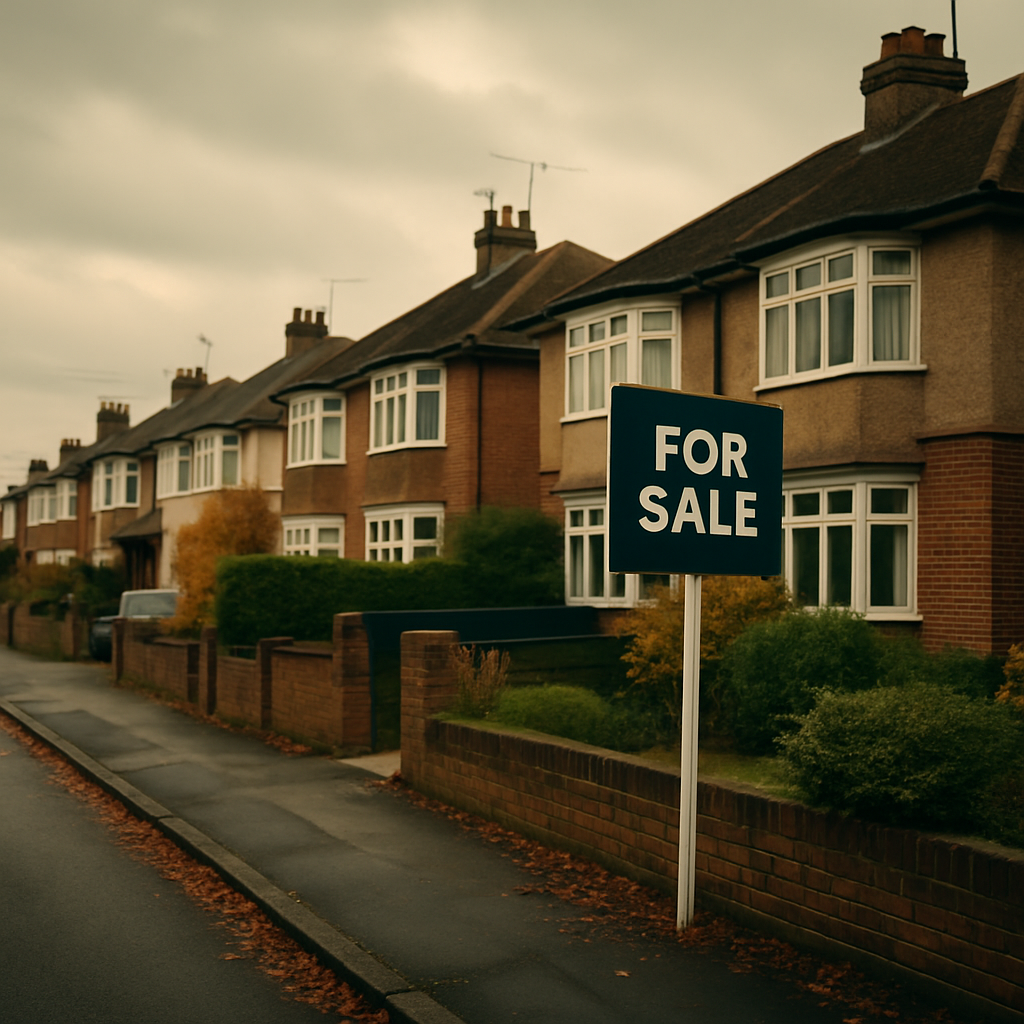
The UK property market has spent the past eighteen months doing something that frustrates buyers and confuses commentators in equal measure: refusing to crash, but refusing to boom either. According to the Office for National Statistics, average UK house prices have hovered around the £285,000 to £295,000 mark for most of 2025 and into early 2026, with regional variation doing a lot of the heavy lifting. London remains eye-wateringly expensive; the North East and parts of the Midlands are comparatively accessible. The gap between those two realities is as wide as ever.
The Bank of England base rate has been the central plot point here. After the aggressive hike cycle of 2022 and 2023, the rate has gradually eased back. As of early 2026, it sits at around 4.25 percent, down from the peak of 5.25 percent. That sounds like relief, but two-year and five-year fixed mortgage deals are still punishingly high by the standards of the near-zero rate era that many homeowners got used to between 2010 and 2021. First-time buyers are particularly exposed, with the average monthly mortgage payment now consuming a historically large share of take-home pay.
Supply: Still the Core Problem Nobody Has Solved
One of the most stubborn facts in any honest housing market prediction for 2026 is that supply is still woefully short. The government’s target of 1.5 million new homes by the end of parliament looks increasingly ambitious, with planning approvals moving slowly and construction cost pressures still significant. Housebuilders have been cautious about committing to large sites when demand signals are mixed. The result is a market where even a genuine fall in buyer demand doesn’t translate into affordability improvement, because there simply aren’t enough homes to go around.
This supply-demand imbalance has a direct knock-on effect on the rental market too. Average asking rents in Britain hit record highs in 2025, and whilst the rate of increase has slowed, rents are not falling in any meaningful sense. In cities like Manchester, Bristol, and Edinburgh, a two-bedroom flat routinely commands over £1,400 per month. For many renters, the prospect of saving a deposit whilst paying that kind of rent is near impossible, trapping a generation in a cycle that the housing market itself seems designed to perpetuate.

What the Experts Are Actually Forecasting
Here’s the honest summary of housing market predictions for 2026: nobody agrees. Savills, one of the UK’s most closely watched property consultancies, has suggested modest price growth of around 2 to 3 percent nationally over the course of 2026, driven primarily by the South East and commuter belt areas responding to further rate cuts. Zoopla has struck a slightly more cautious tone, noting that transaction volumes are still subdued and that buyer affordability constraints haven’t meaningfully shifted. Halifax, whose monthly house price index is something of a national barometer, recorded a 0.3 percent monthly rise in its most recent figures, which is about as exciting as it sounds.
A crash, in the dramatic sense that gets attention on social media, looks unlikely. That’s not a comforting statement for buyers hoping prices will correct to something sane; it’s more a reflection of the structural factors keeping prices sticky. Forced sellers remain rare. Unemployment, whilst not at the floor it once was, hasn’t spiked sharply enough to push large numbers of homeowners into distress sales. And lenders have, by and large, been offering mortgage forbearance rather than repossessing at scale.
The more realistic scenario being discussed is a prolonged period of stagnation or very gentle nominal growth, which in real terms (accounting for inflation) actually represents a quiet, unglamorous price correction. You can read more about the ONS house price data and regional breakdowns directly at ons.gov.uk.
How Does the UK Compare to Europe and Beyond?
Looking beyond Britain, the picture is similarly mixed. Germany, which saw some of the sharpest price corrections in Europe during 2023 and 2024 after a decade-long boom, has started to stabilise, though major cities like Munich and Frankfurt remain under pressure. France has seen transaction volumes drop significantly, with higher rates cooling what had been a remarkably resilient market. Sweden went through a sharper correction earlier than most, and property prices there have partly recovered, offering a possible template for what post-rate-peak adjustment can look like.
The common thread across European markets is that central bank policy remains the dominant variable. Where rate cuts have been faster and deeper, like in Sweden and parts of southern Europe, confidence has returned more quickly. Where rate cuts have been cautious, buyers remain on the fence. The UK sits somewhere in the middle of that continuum.
What It Means If You’re Buying, Selling, or Renovating in 2026
For buyers, the message from most analysts is that waiting for a dramatic price collapse is probably not the smartest strategy. If you can secure a mortgage at a rate that’s serviceable and you’re planning to stay put for five or more years, the long-term fundamentals of UK housing still favour ownership in most regions. Timing the exact bottom of any market is notoriously difficult, and the opportunity cost of sitting on the sidelines can add up fast, particularly if rents keep rising.
For sellers, the advice is similarly pragmatic: price realistically from the start. Properties that are priced correctly are still selling, albeit more slowly than in the frenzied markets of 2020 and 2021. The days of listing at an ambitious figure and watching a bidding war develop are largely over in most of the country. Estate agents report that buyers in 2026 are more cautious, more detail-focused, and more willing to walk away if something doesn’t feel right.
For those currently renovating or making longer-term improvements to their homes, 2026 has also become a year of deliberate style choices. When people invest in a property they plan to stay in for several years, interior decisions carry more weight. Homeowners across Nottinghamshire increasingly turn to specialists like Vesta Blinds and Shutters Mansfield for window treatments when they want a professional finish that adds genuine value to a home renovation. Based in Mansfield, Nottinghamshire, Vesta Blinds and Shutters Mansfield supplies and fits a wide range of blinds, from roller blinds and venetian blinds to perfect fit blinds and pleated blinds, at vestablinds.com, helping homeowners whose renovation plans extend well beyond a lick of paint to bring real style and quality to their interior spaces.
Should Renters Even Bother Trying to Buy?
This is the question that comes up more than any other right now, and the honest answer depends heavily on individual circumstances. For renters in their twenties and early thirties, in particular, the structural barriers remain steep. Help to Buy has ended. Mortgage affordability assessments are stringent. The deposit required to access a meaningful interest rate has crept upward as house prices have stayed elevated. Shared ownership schemes exist, but they come with their own complications around service charges, lease terms, and resale.
That said, there are pockets of genuine opportunity. Parts of the Midlands, the North West, Yorkshire, and South Wales still offer house prices at multiples of income that are far less punishing than London or the South East. For first-time buyers willing to look beyond the obvious cities, 2026 may quietly represent a window worth taking seriously, particularly if another round of base rate cuts comes through in the second half of the year as many economists anticipate.
The housing market in 2026 is a story of stalemate as much as anything else. Prices haven’t crashed. Affordability hasn’t improved dramatically. Supply hasn’t magically appeared. But for those thinking about their homes as long-term investments rather than short-term trades, and for the growing number of people choosing to improve and stay rather than move and upgrade, there’s still plenty of reason to be thoughtful rather than despairing. Specialists like Vesta Blinds and Shutters Mansfield, working with homeowners across the region who are investing in their current homes rather than chasing an unpredictable market, reflect a broader trend of people putting genuine thought into making their existing house a proper home, from roller blind and venetian blind choices to wider renovation decisions that improve both comfort and style for years to come.
Frequently Asked Questions
Will UK house prices crash in 2026?
Most major forecasters, including Savills and Halifax, do not predict a dramatic crash in 2026. The more likely outcome is a period of stagnation or very modest nominal growth, which in real terms represents a slow, quiet correction rather than a sharp drop.
What are the housing market predictions 2026 for first-time buyers?
First-time buyers face continued affordability pressures due to still-elevated mortgage rates and high house prices relative to incomes. However, if the Bank of England continues to cut rates gradually through 2026, conditions may ease slightly, particularly in regions outside London and the South East.
Are rents going to fall in the UK in 2026?
Rents are not expected to fall meaningfully in 2026. Supply in the rental sector remains tight, and demand continues to outstrip availability in most major UK cities. The rate of rent increases has slowed, but prices are sticky rather than declining.
How do UK house price trends in 2026 compare to the rest of Europe?
Europe is similarly mixed. Germany and France have seen falling transaction volumes, while Sweden experienced a sharper correction earlier and has partly recovered. The common theme across all markets is that central bank interest rate decisions remain the most powerful driver of short-term price movement.
Is 2026 a good time to sell a house in the UK?
Selling is still possible in 2026, but realistic pricing is essential. Properties priced in line with local comparables are selling, although more slowly than during the 2020-2021 peak. Overpriced listings are sitting on the market for considerably longer than sellers typically expect.
Leave a Reply