Category: Tech

  • Deepfake Elections: How AI-Generated Political Ads Are Rewriting the Rules of Democracy

    Deepfake Elections: How AI-Generated Political Ads Are Rewriting the Rules of Democracy

    Something has shifted in the way political campaigns are run, and it happened faster than most people noticed. AI-generated political ads, cloned voices, fabricated video footage of real candidates saying things they never said, and synthetic rallies that never took place have all appeared in real election cycles over the past two years. This is not a distant hypothetical. It is already happening, and the pace is accelerating.

    Oli and I have been watching this space closely, and every time we think we have a grip on how far it has gone, another story lands that pushes the boundary further. The technology is moving quicker than the laws designed to control it, and in a year when major elections are either ongoing or on the horizon across Europe and beyond, that gap matters enormously.

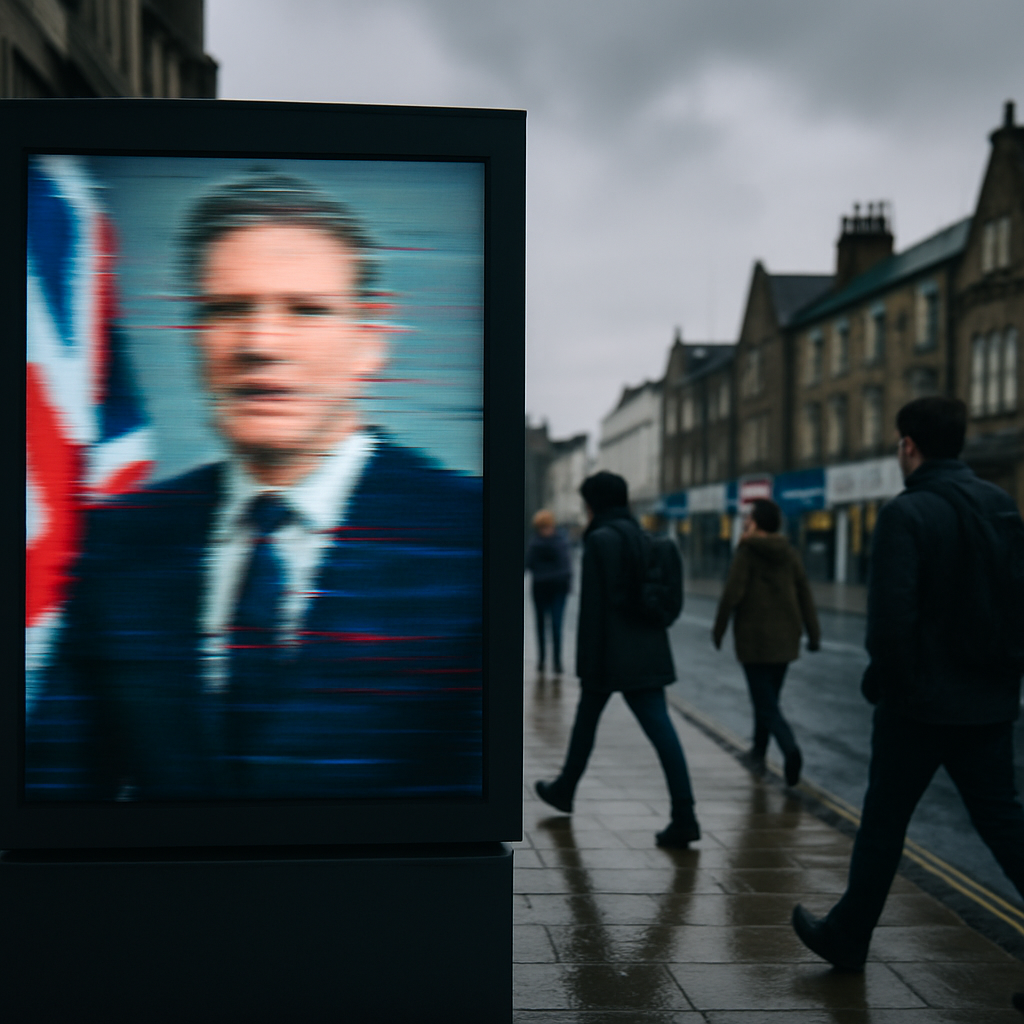
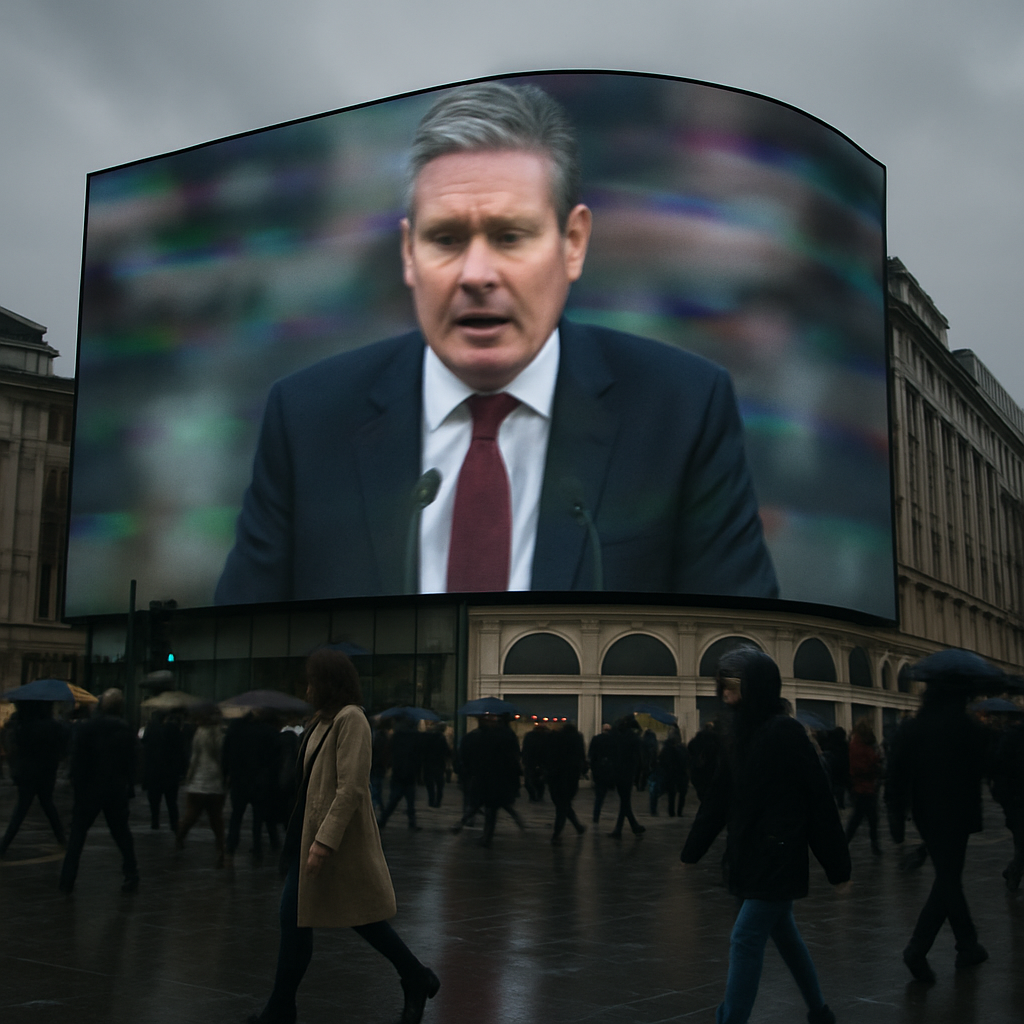
    Digital screen on a UK high street showing distorted political imagery, illustrating the spread of AI-generated political ads
    Digital screen on a UK high street showing distorted political imagery, illustrating the spread of AI-generated political ads

    What AI-Generated Political Ads Actually Look Like in 2026

    The term “deepfake” has become something of a catch-all, but the reality is more varied than a single word suggests. AI-generated political ads can take several forms. There are audio deepfakes, where a candidate’s voice is cloned and used to deliver a message they never recorded. There are video deepfakes, where a politician’s face is mapped onto another body or their lips are resynced to match fabricated speech. And there are entirely synthetic personas, computer-generated spokespeople who look completely real but do not exist at all.

    In the 2024 Romanian presidential election, a viral TikTok campaign using AI-generated content helped push a relatively unknown far-right candidate to an unexpected first-round lead, prompting the Constitutional Court to annul the result entirely. It was one of the clearest examples yet of synthetic media directly influencing a democratic outcome. Closer to home, during the UK general election campaign of 2024, a fake audio clip purporting to feature Sir Keir Starmer berating Labour party staff circulated widely on social media before being debunked. The clip was crude by current standards. By 2026 standards, a convincing fake would be orders of magnitude harder to detect.

    Why Elections Are Particularly Vulnerable to Synthetic Media

    Elections operate on a compressed timeline. A piece of damaging content released 48 hours before polling day does not need to survive rigorous fact-checking. It simply needs to travel fast enough to plant doubt. That is the specific vulnerability that AI-generated political ads exploit. The correction rarely travels as far as the original lie.

    Social media platforms are the primary distribution mechanism, and despite years of promises, their track records on removing synthetic political content remain patchy at best. Meta introduced a policy requiring disclosure on AI-generated political advertising across Facebook and Instagram, but enforcement is inconsistent and the rules only apply to paid ads, not organic posts shared by ordinary accounts. A convincing deepfake posted by a private individual and reshared thousands of times sits in a largely unregulated space.

    There is also a psychological dimension that makes this particularly insidious. Research from University College London found that people who encounter a false claim are more likely to believe future versions of it, even after being told it was false. This is sometimes called the illusory truth effect, and AI-generated content is precisely engineered to trigger it at scale.

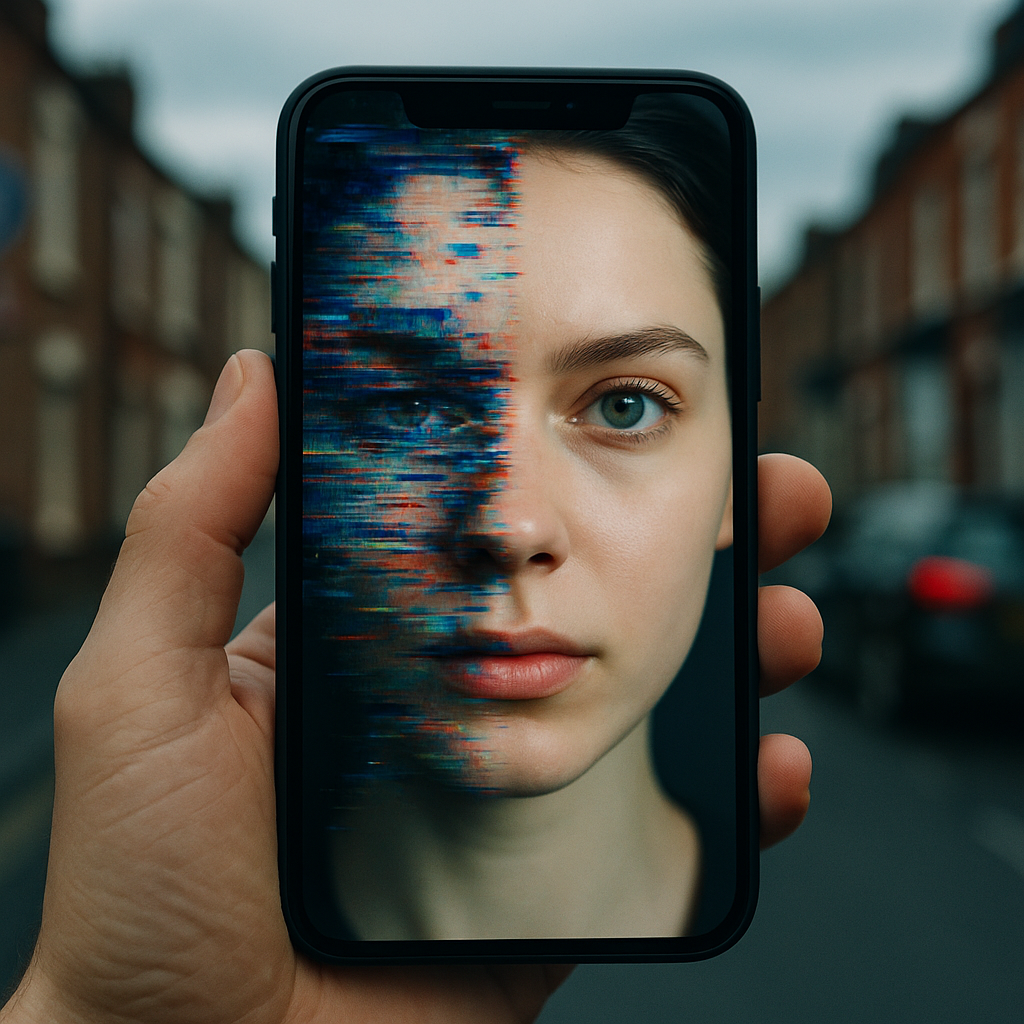
    Hands holding a smartphone displaying a deepfake political video, representing AI-generated political ads on social media
    Hands holding a smartphone displaying a deepfake political video, representing AI-generated political ads on social media

    What Regulators in the UK and Europe Are Actually Doing

    The regulatory picture is fractured. In the UK, the Electoral Commission has limited powers when it comes to digital content, and the Online Safety Act 2023, which came into force through 2024 and 2025, does not specifically address synthetic political media. Ofcom, which oversees the Act’s implementation, has consulted on rules around harmful content, but critics argue the provisions are too broad to be meaningfully applied to fast-moving deepfake scenarios during a live election.

    The European Union’s AI Act, which is now being phased in across member states, does include provisions requiring disclosure when AI is used to generate content depicting real people. Under those rules, AI-generated political ads must carry clear labelling. Whether that labelling actually changes voter behaviour is another question entirely, and enforcement across 27 member states with varying levels of digital literacy is a serious logistical challenge.

    The UK government has indicated it will look at further legislative steps, but progress has been slow. A cross-party group of MPs raised concerns in early 2026 about the lack of specific offences relating to election-targeted deepfakes, pointing to proposals that have stalled in committee. You can follow the Electoral Commission’s published guidance on this at electoralcommission.org.uk, though even they acknowledge the framework needs updating.

    Can Technology Fight Back Against Synthetic Media?

    Detection tools exist, but this is an arms race in which the offensive technology is currently winning. Companies like Sensity AI and Hive Moderation offer deepfake detection services, but their accuracy drops when synthetic content has been compressed through social media platforms, which is exactly how most people encounter it. The signal that gives away a deepfake often gets lost in the noise of a low-resolution share.

    Content provenance systems offer some hope. The Coalition for Content Provenance and Authenticity (C2PA), backed by major tech firms including Adobe, Microsoft, and the BBC, is developing standards that attach verifiable metadata to digital files, showing their origin and any modifications made. If a video was shot on a camera that supports C2PA, its chain of custody can be traced. The problem is that this only works if the original content is captured by a C2PA-compliant device, and the metadata can be stripped when content is downloaded and reuploaded. It is a partial solution at best.

    Some campaigns are now using pre-emptive disclosure, voluntarily publishing behind-the-scenes footage and raw audio to establish baseline authenticity for their candidate’s voice and appearance. It sounds counterintuitive, but it creates a reference point that makes fakes easier to challenge. It is worth noting that schools working on media literacy, for instance through a climate action plan for schools in the midlands, are increasingly incorporating digital literacy into broader civic education frameworks, recognising that the next generation of voters needs to understand how synthetic media works.

    The Bigger Question Nobody Wants to Answer

    Underneath all the technical detail sits a harder problem. If AI-generated political ads become indistinguishable from real ones, and if the public gradually absorbs the lesson that any video or audio of a politician might be fake, what happens to trust in political communication altogether? Some researchers call this the liar’s dividend: the mere existence of deepfake technology gives bad actors a plausible deniability defence. A real recording of a politician doing something wrong can now be dismissed as fabricated. The technology does not just create false content; it poisons the well for genuine content too.

    That is the really unsettling part. Oskar and I keep coming back to it. The danger is not just the fakes that fool people. It is the real things that people stop believing. There is no easy legislative fix for a collapse in epistemic trust, and right now, the political will to take this seriously seems to arrive only after the damage is done.

    Regulation will tighten. Detection technology will improve. Platforms will, eventually, be held more accountable. But election cycles do not pause for any of that. The voters going to polling stations across Europe this year are navigating a media environment that is fundamentally different from any that came before it, and most of them have no idea.

    Frequently Asked Questions

    What are AI-generated political ads and how do they work?

    AI-generated political ads use machine learning tools to create synthetic audio, video, or images of real politicians saying or doing things they never actually did. The technology can clone voices from existing recordings and map faces onto different footage with increasing realism. They are produced quickly, cheaply, and can be distributed across social media within hours.

    Are deepfake political videos illegal in the UK?

    There is currently no specific UK law that criminalises deepfake political videos used in election campaigns. The Online Safety Act 2023 covers some harmful synthetic content but does not directly address fabricated political material. Campaigners and MPs have called for dedicated legislation, but as of 2026 it has not been passed.

    How can you tell if a political video has been generated by AI?

    Common signs include unnatural blinking, inconsistent lighting around the face, slightly off lip-sync, and audio that sounds subtly processed. However, the latest generation of AI tools produces output that is extremely difficult to detect without specialist software. Content provenance tools, like those developed by the C2PA coalition, can help verify authentic footage.

    Which elections have already been affected by AI-generated content?

    The 2024 Romanian presidential election is the most dramatic example, where AI-boosted synthetic campaigning contributed to the Constitutional Court annulling the first-round result. The 2024 UK general election also saw fake audio of Sir Keir Starmer circulating online. Similar incidents occurred in elections in Slovakia, Pakistan, and Bangladesh in 2024 and 2025.

    What are social media platforms doing about AI political disinformation?

    Meta requires paid political advertisers to disclose AI-generated content on Facebook and Instagram, while YouTube has mandatory disclosure policies for synthetic election-related videos. However, these rules largely apply to paid advertising and are inconsistently enforced, meaning organic sharing of deepfakes remains a significant unaddressed loophole.

  • The Rise of AI Governments: Are Algorithms Already Making Policy Decisions in 2026?

    The Rise of AI Governments: Are Algorithms Already Making Policy Decisions in 2026?

    Something significant has shifted in how governments operate, and most people haven’t fully noticed yet. Quietly, almost incrementally, artificial intelligence has moved from being a tool that helps civil servants do their jobs to something that is actively shaping the decisions those jobs produce. AI in government decision-making is not a future concern. It is a present reality, and 2026 has brought it sharply into focus.

    This isn’t just about chatbots answering queries on council websites or automated systems processing passport renewals. We’re talking about algorithms that help determine who gets welfare payments, which border crossings get flagged, how police resources are allocated, and even how national budgets are modelled. The scale of this shift is enormous, and the public conversation around it is, frankly, nowhere near keeping pace.

    Government building representing AI in government decision-making processes in the UK
    Government building representing AI in government decision-making processes in the UK

    What Does AI in Government Actually Look Like Right Now?

    Let’s get specific, because the abstract conversation about AI tends to obscure what’s actually happening on the ground. In the UK, the Department for Work and Pensions has been using automated decision-support tools to assist in fraud detection and benefit eligibility assessments for several years. The Home Office uses algorithmic tools in visa processing. Local councils across England have trialled predictive analytics to identify households at risk of homelessness, or children potentially at risk of harm. These systems are live. They are influencing real outcomes for real people.

    Elsewhere in Europe, Estonia has long been celebrated as a digital governance pioneer, with AI embedded throughout public services. Denmark uses algorithmic models to predict school dropout rates. In parts of the Middle East and Asia, AI tools are actively informing infrastructure investment decisions, sometimes with remarkably little democratic oversight or transparency.

    The picture that emerges is not one of a single dramatic handover of power to the machines. It’s a series of smaller, quieter integrations, each one individually defensible, collectively transforming the nature of government accountability.

    The Accountability Problem Nobody Has Solved

    Here’s the crux of it. When a human official makes a bad decision, there is, in theory, a chain of accountability. You can question the official. You can appeal to a tribunal. You can vote someone out. When an algorithm makes a bad decision, accountability becomes genuinely murky. Who is responsible? The team that built the model? The minister who approved its deployment? The company that sold the software to the government?

    In 2020, the Dutch government’s childcare benefits scandal became a landmark case study in algorithmic harm. An automated fraud detection system wrongly accused tens of thousands of families of fraud, leading to devastating financial consequences. The Dutch government ultimately fell, in part, over the affair. But the lesson wasn’t universally learnt. Governments continued to adopt similar tools, sometimes with better safeguards, sometimes without.

    The UK’s own record here is mixed. The A-level grades algorithm debacle of 2020 remains a fresh memory for a generation of students. The government deployed a statistical model to replace cancelled exams, it downgraded thousands of predicted grades, disproportionately affecting pupils from state schools, and had to reverse course within days under enormous public pressure. The BBC’s coverage at the time captured the fury of students and teachers alike, and it remains one of the clearest examples of what happens when algorithmic outputs are treated as if they carry the weight of human judgement without any of the empathy.

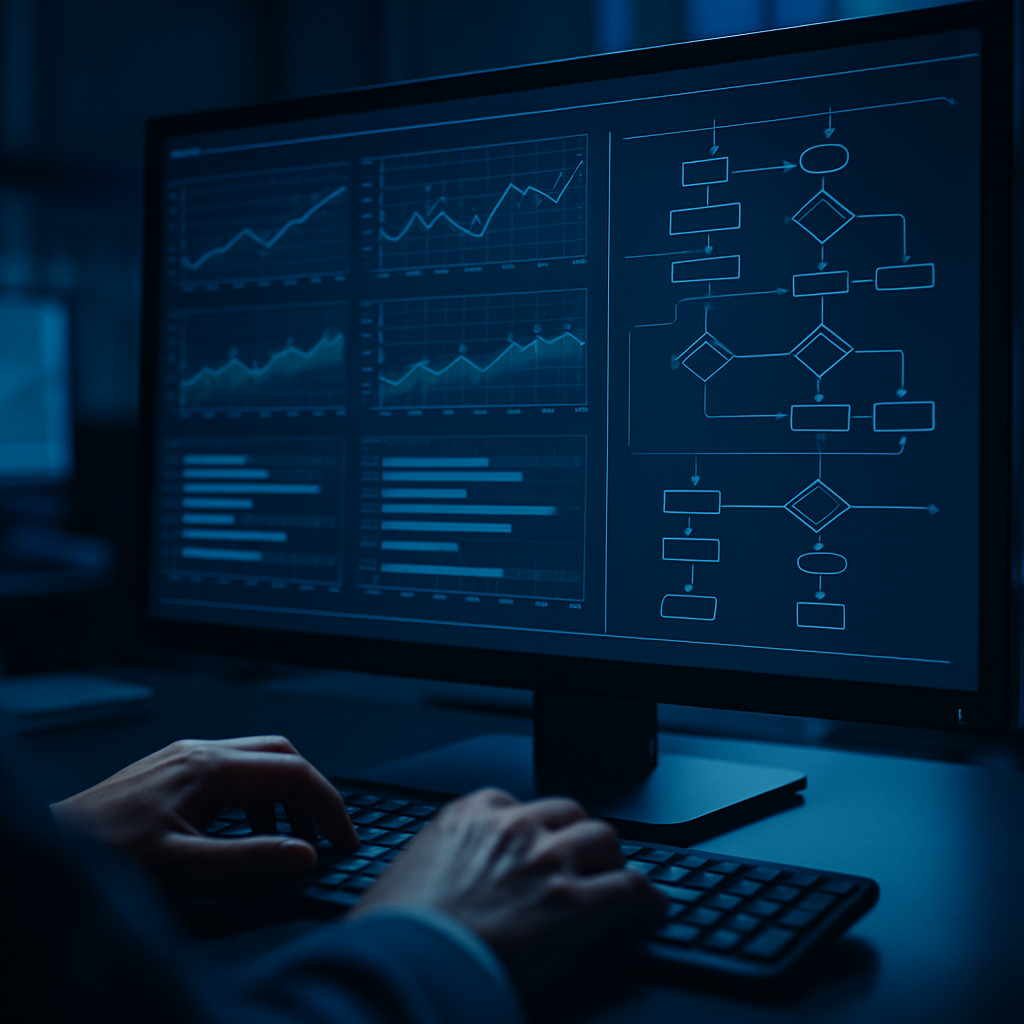
    Data analytics dashboard illustrating AI in government decision-making systems
    Data analytics dashboard illustrating AI in government decision-making systems

    Border Control and Biometrics: The Highest-Stakes Arena

    If welfare and education feel serious, border control is where AI in government decision-making carries the sharpest edge. Across Europe and beyond, AI-powered biometric systems, facial recognition, behavioural analysis tools, and risk-scoring algorithms are now embedded in border security infrastructure. The UK’s e-passport gates use facial recognition at major airports. The Home Office applies risk-scoring models to visa applications.

    The problem is that these systems inherit the biases of the data they’re trained on. Facial recognition technology has been repeatedly shown to perform less accurately on darker skin tones, on women, and on older faces. When these errors occur in a border control context, the consequences can mean wrongful detention, missed flights, or worse. Civil liberties organisations, including Liberty in the UK, have consistently raised the alarm about the deployment of such technology without adequate legal frameworks governing its use.

    And yet the systems keep expanding. Because they are faster, cheaper, and politically easy to justify as security measures. Nobody gets voted out for being tough on border security.

    Budget Allocations and the Quiet Power of Predictive Modelling

    Perhaps less visible but equally consequential is the role of AI in fiscal and budget decisions. HM Treasury and the Office for Budget Responsibility both use sophisticated economic models to forecast spending and revenue. These are not, strictly speaking, AI systems in the machine learning sense, but they are algorithmic at their core, and the outputs shape policy in profound ways.

    More directly, local authorities have increasingly turned to predictive analytics platforms to model the impact of budget cuts. Which services can be trimmed? Which communities will feel it most? These models can sound rational, even compassionate, when framed as ways to protect the most vulnerable. But the inputs, assumptions, and weightings built into such models carry inherent political values, and those values are rarely made explicit to the public or to elected representatives who vote on those budgets.

    It’s a form of governance that can make ideological choices look like technical ones. And that, more than anything, is what concerns political theorists and democracy advocates right now.

    Is There a Way to Do This Properly?

    The answer isn’t to reject AI in public administration wholesale. Used well, with transparency and genuine human oversight, these tools can improve services, identify inequalities, and help governments allocate limited resources more fairly. The question is whether the political will exists to build the right frameworks before the technology outruns them.

    The EU’s AI Act, which began phasing in from 2024 onwards, is the most ambitious attempt globally to regulate high-risk AI applications, including those in government contexts. The UK, post-Brexit, has so far taken a more sector-by-sector approach, which critics argue lacks the coherence needed to address cross-cutting risks. The government’s own AI Safety Institute does important work, but its remit is heavily tilted towards frontier AI research rather than the day-to-day algorithmic systems already embedded in public services.

    For anyone building digital infrastructure, whether in the public or private sector, visibility matters enormously. Just as a local business might search for a reliable seo company near me to ensure they’re found and understood online, governments need to think hard about how their digital systems are discovered, scrutinised, and held to account by the people they serve. Transparency is the baseline. Everything else follows from it.

    AI in government decision-making is neither automatically sinister nor automatically progressive. It is a set of tools, deployed by humans, reflecting the values and blind spots of those humans. The urgent task in 2026 is building the accountability structures that ensure when an algorithm gets something badly wrong, someone answers for it. That is, at its core, what democracy requires.

    Frequently Asked Questions

    How is AI currently being used in UK government decision-making?

    The UK government uses AI and algorithmic tools across several departments, including the DWP for benefit fraud detection, the Home Office for visa processing, and various local councils for predicting homelessness risk or safeguarding concerns. These systems assist human decision-makers but increasingly influence final outcomes.

    What are the biggest risks of AI in government policy?

    The main risks include lack of accountability when systems make errors, the embedding of biases from historical data, and the opacity of algorithmic decision-making which can obscure politically loaded choices behind a veneer of technical neutrality. The Dutch childcare benefits scandal and the UK’s A-level grades algorithm are two prominent real-world examples of these risks playing out.

    Is AI in government decision-making regulated in the UK?

    The UK has taken a sector-by-sector regulatory approach rather than a single overarching AI law, unlike the EU’s AI Act. The government’s AI Safety Institute focuses primarily on frontier AI research. Critics argue the UK lacks a coherent legal framework specifically governing algorithmic systems already deployed in public services.

    Can citizens challenge decisions made by government algorithms?

    In theory, yes, through existing legal routes such as judicial review or appeals to tribunals. In practice, it is difficult because governments are not always required to disclose which algorithmic tools were involved in a decision or how they work. Campaigners are pushing for stronger transparency and algorithmic impact assessment requirements.

    Does facial recognition at UK borders work equally well for everyone?

    Research has repeatedly shown that facial recognition technology performs less accurately for darker skin tones, women, and older individuals. This raises serious fairness concerns when deployed in high-stakes settings like border control, where errors can lead to wrongful detention or denial of entry. Liberty and other UK civil liberties groups have called for stronger legal safeguards.

  • Deepfakes and Disinformation: How Fake Content Is Threatening Democracy in 2026

    Deepfakes and Disinformation: How Fake Content Is Threatening Democracy in 2026

    Something shifted around 2024. The deepfakes stopped being funny. No longer were they novelty clips of celebrities saying absurd things or viral pranks doing the rounds on social media. By 2026, the technology had matured into something genuinely dangerous, and the consequences for democracy, journalism, and basic public trust are hard to overstate. Deepfakes disinformation 2026 is not a niche concern for tech researchers anymore. It is a mainstream political problem, and most people have no idea how bad it has already got.

    Digital screen showing distorted political video illustrating deepfakes disinformation 2026 threat to democracy
    Digital screen showing distorted political video illustrating deepfakes disinformation 2026 threat to democracy

    How Deepfake Technology Has Evolved Since 2024

    Two years ago, a trained eye could still spot a deepfake. The skin looked waxy. Teeth blurred at the edges. Blinking was slightly off. Those tells are largely gone now. The models generating synthetic video have improved so dramatically that even professionals armed with detection software are struggling to keep up. A 2025 report from the Alan Turing Institute found that human reviewers correctly identified AI-generated video only 52% of the time, barely better than a coin flip.

    Audio has followed the same trajectory. Voice cloning tools that once required hours of training data can now replicate a person’s voice from a 30-second sample. We have seen this used to fabricate phone calls, interviews, and parliamentary soundbites. The gap between what is real and what is synthetically produced has effectively closed for the average listener or viewer.

    The Impact on UK Elections and Political Trust

    The May 2026 local council elections in England saw the first confirmed, large-scale use of deepfake video clips designed to influence voters. Clips purporting to show senior councillors making inflammatory statements circulated on WhatsApp groups and Telegram channels in the days before polling. By the time fact-checkers had published rebuttals, millions of people had already seen the originals. The Electoral Commission launched a formal review, and the results in three constituencies were contested on the grounds of electoral interference.

    This is not uniquely a British problem, but Britain is no longer watching it happen elsewhere. The BBC’s Technology desk has documented a steady increase in synthetic media incidents tied to British political events since 2023. Public confidence in what politicians actually say has taken a measurable hit. YouGov polling from early 2026 found that 61% of UK adults said they were now unsure whether video clips of politicians they see online are genuine.

    That number should alarm anyone who cares about how democracies function. Disinformation does not need everyone to believe a lie. It only needs enough people to doubt the truth.

    Journalist using forensic video analysis tools to detect deepfakes disinformation 2026 in a UK newsroom
    Journalist using forensic video analysis tools to detect deepfakes disinformation 2026 in a UK newsroom

    What This Means for Journalism

    Journalists are caught in an uncomfortable position. The old verification rule, that footage from a credible source could be trusted, no longer holds unconditionally. Newsrooms now have to build in deepfake detection as a standard step in the verification process, sitting alongside the usual checks on provenance and source reliability.

    Some outlets are managing this better than others. The Guardian, Channel 4 News, and the BBC have all invested in synthetic media detection tools and partnered with academic labs working on forensic analysis. Smaller regional outlets, already stretched thin after years of funding cuts, simply do not have those resources. And that disparity matters enormously. Local journalism is where the electorate gets information about the things that directly affect them: planning decisions, council budgets, NHS trust performance. If local reporting is flooded with disinformation it cannot effectively counter, the consequences reach far beyond abstract concerns about trust.

    What Platforms Are Actually Doing About It

    The platforms have made promises before. Meta, YouTube, and X (formerly Twitter) all have policies requiring disclosure of AI-generated content in political advertising. In practice, enforcement is patchy at best. A deepfake does not always arrive as paid advertising. It circulates organically, shared by real accounts, buried in group chats, forwarded without context.

    Watermarking and content credentials, developed through the Coalition for Content Provenance and Authenticity (C2PA), are being adopted by some camera manufacturers and major platforms. The idea is to cryptographically tag authentic content at the point of creation, so any modification is detectable downstream. It is a promising framework, but adoption is slow and it solves nothing for the enormous backlog of existing unverified content already in circulation.

    On deepfakes disinformation 2026 specifically, the EU’s AI Act has applied meaningful pressure on platforms operating in European markets, including the UK’s closest trading partners. The UK government’s own AI Safety Institute has published guidance but the legislative levers remain limited. The Online Safety Act 2023 created some obligations around harmful synthetic content, but critics argue the enforcement mechanisms are still not robust enough to keep pace with the technology.

    What Individuals Can Do Right Now

    Oli and I have talked about this a fair bit between ourselves, and the honest answer is that individual media literacy only goes so far when the fakes are genuinely indistinguishable. That said, there are habits worth building.

    Slow down before sharing. Deepfake clips almost always spread fastest in the first few hours, before fact-checkers can respond. If something feels designed to provoke a strong emotional reaction, that is worth treating as a flag rather than a prompt to share immediately. Check the source. Not just the account that posted it, but whether any named news organisations are reporting the same thing. Use reverse image and video search tools. InVID and Google Lens can sometimes surface the original context for manipulated clips. And treat audio alone with particular scepticism; voice cloning is ahead of video cloning in terms of accessibility and realism.

    The Bigger Picture: Is There a Way Back?

    The pessimistic read is that we have already passed a point of no return. Once a significant portion of the population decides that any inconvenient video could be a deepfake, the technology does not even need to produce fakes anymore. Genuine footage can be dismissed as synthetic. That is, arguably, the more dangerous long-term outcome: not that people believe fabrications, but that they stop believing anything.

    The optimistic read, and it does exist, is that society has adapted to previous information crises. The tabloid era. The era of photo manipulation. The early days of social media. None of those destroyed democracy entirely, and each produced new norms, tools, and regulations that eventually brought some order. The challenge with deepfakes disinformation 2026 is that the cycle has accelerated dramatically. The technology moves faster than institutions do.

    Legislation, platform accountability, investment in public media literacy, and proper funding for independent journalism all matter. None of them alone is sufficient. But the alternative, treating this as someone else’s problem to solve, is how things genuinely get worse. The threat to democracy is not hypothetical. It is happening in real constituencies, in real elections, right now.

    Frequently Asked Questions

    What is a deepfake and how is it made?

    A deepfake is a synthetic video, audio, or image created using artificial intelligence, typically deep learning models that have been trained on real footage of a person. Modern tools can generate convincing results from surprisingly little source material, sometimes just a short video clip or voice recording. The technology has become far more accessible since 2023, with consumer-grade applications available online.

    How are deepfakes affecting UK elections?

    By 2026, deepfake clips have been confirmed in UK local election campaigns, with fabricated video of politicians circulating on messaging apps before fact-checkers could respond. The Electoral Commission has reviewed several cases, and public confidence in political video content has measurably declined. The Online Safety Act 2023 created some obligations around harmful synthetic media, but enforcement remains a work in progress.

    Can you tell the difference between a deepfake and a real video?

    Increasingly, no. Research from the Alan Turing Institute found human reviewers identified AI-generated video correctly only about half the time. Specialist detection software performs better but is not infallible, and the gap is narrowing as generative models improve. Tools like InVID and Google reverse video search can help surface context clues, but there is no foolproof method available to ordinary viewers.

    What are UK platforms and the government doing about deepfake disinformation?

    The UK’s AI Safety Institute has published guidance, and the Online Safety Act places some duties on platforms around harmful synthetic content. Internationally, the C2PA watermarking standard is being adopted gradually, and the EU’s AI Act applies pressure on major platforms. Critics argue UK legislation still lacks sufficient enforcement muscle to keep pace with how quickly the technology evolves.

    How can I protect myself from being misled by deepfakes?

    Pause before sharing any video that provokes a strong emotional reaction, particularly around election periods. Cross-reference with established news outlets to see whether they are reporting the same claim. Use tools like InVID or Google Lens to check video provenance. Be especially cautious with audio-only clips, as voice cloning is currently among the most realistic and accessible forms of synthetic media.

  • AI-Generated Disinformation: How Fake News Got Smarter and What You Can Do About It

    AI-Generated Disinformation: How Fake News Got Smarter and What You Can Do About It

    The landscape of misinformation has shifted dramatically. AI fake news in 2026 is no longer the clunky, obviously fabricated content that was relatively easy to dismiss a few years ago. It is polished, contextually convincing, and spreading across platforms at a speed that human fact-checkers simply cannot match. Understanding how this works, and what you can do about it, has become one of the more pressing media literacy challenges of our time.

    Person scrutinising online news headlines while trying to identify AI fake news in 2026
    Person scrutinising online news headlines while trying to identify AI fake news in 2026

    How AI Is Supercharging the Spread of Misinformation

    Generative AI tools have made it trivially easy to produce fake articles, fabricated quotes, deepfake video clips, and synthetic audio recordings that mimic real public figures. What once required a team of skilled editors and video producers can now be accomplished by a single person with a laptop and a free-tier AI account. The result is a content ecosystem flooded with material that looks credible on the surface but has no factual foundation whatsoever.

    Social media algorithms make the problem considerably worse. These systems are tuned to reward engagement, and emotionally charged, outrage-inducing content, whether true or false, consistently outperforms measured, factual reporting. A fabricated story claiming a politician made a shocking statement can accumulate hundreds of thousands of shares before a correction reaches even a fraction of that audience. By then, the false version has already settled into people’s understanding of events.

    News outlets are not immune either. Several smaller online publications have been caught republishing AI-generated stories fed through automated content pipelines, sometimes without any human editorial review at all. The blurring line between legitimate journalism and AI-produced content farms is one of the defining information problems we are navigating right now.

    What Makes AI Fake News in 2026 So Hard to Detect

    Earlier AI-generated text had telltale signs: awkward phrasing, repetitive sentence structures, and a curious inability to pin down specific dates or local details. Modern large language models have largely overcome these weaknesses. Fabricated articles now include plausible citations, realistic-sounding source names, and even invented quotes that match a real person’s known communication style closely enough to fool a casual reader.

    Deepfake video and synthetic audio have followed a similar trajectory. Lip-sync technology has reached a point where fabricated video of a well-known figure requires frame-by-frame forensic analysis to debunk. Audio cloning tools can replicate a person’s voice from only a few seconds of real recordings. These capabilities are not theoretical; they are being deployed actively across political campaigns, health disinformation networks, and financial fraud schemes.

    The health space is particularly vulnerable. Fabricated medical advice dressed up as breaking research spreads rapidly through wellness communities and parenting groups. Providers such as HealthPod Mansfield, a health and wellbeing service operating in Nottinghamshire, have noted the real-world consequences of patients arriving with convictions formed by AI-generated health content they encountered online, sometimes refusing evidence-based guidance as a result.

    Smartphone showing social media news feed illustrating the spread of AI fake news in 2026
    Smartphone showing social media news feed illustrating the spread of AI fake news in 2026

    Practical Ways to Spot AI-Generated Fake News Before You Share

    The good news is that a handful of reliable habits go a long way towards protecting you from spreading disinformation, even when the content appears highly convincing.

    Check the source before anything else

    Before reading past the headline, look at the publication name. Search for it independently rather than clicking through from a social media post. A credible outlet will have an established presence, named journalists, and a clear editorial contact. Anonymous blogs or news-like sites with generic names and no author credits are immediate red flags.

    Look for corroboration from multiple outlets

    If a genuinely significant story has broken, more than one credible news organisation will be covering it. If a dramatic claim appears on only one obscure site, treat it with scepticism until you find independent verification. This single step stops the vast majority of viral misinformation in its tracks.

    Use reverse image and video search tools

    Images and video clips are frequently stripped from their original context and repurposed to illustrate false narratives. Google Lens and tools like InVID allow you to check where an image or video originally appeared. A photograph described as showing a recent event may turn out to be years old or taken in an entirely different country.

    Pay attention to emotional manipulation

    AI fake news in 2026 is engineered to provoke a strong emotional reaction, typically anger, fear, or moral outrage. If a piece of content makes you feel an urgent need to share it immediately, that urgency itself is worth pausing on. Genuine journalism rarely relies on making you furious within the first two sentences.

    Check dates and specific local details

    AI-generated content sometimes struggles to anchor itself convincingly in local or recent specifics. Vague references to unnamed officials, unverifiable locations, or suspiciously round statistics can indicate machine-generated text. Cross-reference any named institutions, dates, or figures against known reliable sources.

    Why This Matters Beyond the Political Sphere

    Much of the conversation around disinformation focuses on politics, but AI-generated fake news causes serious harm across other domains too. Health misinformation built on fabricated research drives people away from effective treatments. Financial misinformation, including fake announcements attributed to real executives, is used to manipulate markets. Even local community news can be distorted, with synthetic content designed to inflame neighbourhood disputes or undermine trust in local services.

    The team at HealthPod Mansfield, which provides accessible health consultations and wellbeing support in the East Midlands, has spoken publicly about how synthetic health content circulating on platforms like Facebook and TikTok directly affects patient decision-making. When a convincing but entirely fabricated post tells people that a widely used medication causes a particular side effect, the downstream effect on trust and treatment compliance is measurable and harmful.

    Media literacy is not a niche skill for journalists or academics anymore. Knowing how to evaluate the credibility of what you read and watch online is as essential as any other form of everyday literacy. The tools and habits described above require no specialist knowledge, only the willingness to slow down for thirty seconds before hitting share. In an environment where AI fake news spreads faster than corrections ever can, those thirty seconds matter more than ever.

    Frequently Asked Questions

    How can I tell if a news article was written by AI?

    Look for vague sourcing, an absence of named journalists, repetitive or overly smooth sentence structures, and claims that cannot be corroborated elsewhere. Many AI-generated articles also lack genuinely specific local detail or credible publication history. Running suspicious text through a detection tool like GPTZero can also help, though no tool is foolproof.

    What is a deepfake and how does it relate to fake news?

    A deepfake is a synthetic video or audio recording generated by AI to make it appear that a real person is saying or doing something they never did. They are increasingly used to spread political misinformation, fabricate statements by public figures, and lend false credibility to invented stories. Always check whether video of a controversial statement has been reported by credible outlets before accepting it as genuine.

    Are social media platforms doing enough to stop AI-generated misinformation?

    Most major platforms have introduced AI content labelling policies and have expanded their fact-checking partnerships, but enforcement is inconsistent and reactive rather than proactive. False content often circulates for hours or days before any action is taken, by which point significant damage to public understanding may already be done. Platform policies remain well behind the pace of AI-generated content creation.

    What are the best fact-checking websites to use in the UK?

    Full Fact is the UK’s leading independent fact-checking charity and covers a broad range of claims across politics, health, and public life. BBC Reality Check and Channel 4 FactCheck are also reliable resources. For global claims, Snopes and Reuters Fact Check are widely respected. Cross-referencing across two or more of these significantly improves your ability to verify a claim.

    Why is health misinformation spread by AI particularly dangerous?

    AI-generated health misinformation can mimic the tone and structure of genuine medical research, making it highly convincing even to educated readers. When people act on fabricated medical advice, the consequences range from avoiding effective treatments to taking unsafe remedies. The harm is compounded by the fact that corrections tend to reach a much smaller audience than the original false claim.

  • How Local Apps Are Quietly Transforming UK High Streets

    How Local Apps Are Quietly Transforming UK High Streets

    If you care about the future of your high street, you should be paying attention to local apps for town centres. Across the UK, a quiet digital shift is changing how we discover shops, support independents and plan our days out – and it is happening in your pocket.

    Why local apps for town centres are suddenly everywhere

    For years we have heard the story that the high street is dying. Yet look closer and a different picture is emerging. Councils, business improvement districts and traders are experimenting with local apps for town centres to pull people back into real places, not just screens.

    These apps typically bundle together listings for independent shops, food and drink, markets, cultural events and practical info like parking or public transport. Some add loyalty points, click and collect, or push notifications for flash offers. Platforms such as TownCentre.app are part of this new wave of tools trying to stitch digital habits back into physical streets.

    From Oli and Oskar’s perspective as unapologetic high street lurkers, the most interesting thing is not the tech itself, but how it reshapes behaviour: fewer aimless scrolls, more intentional trips into town with a clear plan of where to go and what to try.

    What makes a good town centre app actually useful?

    Not every experiment works. Some apps launch with a flourish, then slowly fade from home screens. The ones that stick tend to nail three things:

    • Genuinely comprehensive listings – not just the usual chains, but the quirky independents, pop ups and community venues you would otherwise miss.
    • Up to date information – opening hours, menus, events and offers that reflect reality, not last summer’s launch.
    • Real local personality – photos, stories and recommendations that feel like they were written by people who actually live there.

    When local apps for town centres get this right, they become the digital front door to a place. Tourists use them to orient themselves, residents use them to break out of their routines, and small businesses finally get a way to be discovered without needing a huge marketing budget.

    How these apps are changing behaviour on the high street

    There are three subtle but important shifts Oli and Oskar keep seeing whenever a town seriously embraces a well designed app.

    1. From random wandering to purposeful visits

    Instead of drifting into town and hoping for the best, people arrive with a mini itinerary. They have spotted a new coffee shop, a late opening bookshop and an evening event, and they plan a route that links them all. That means longer dwell times and more varied spending.

    2. From big brands to hidden independents

    Search results in a global map app will always favour whoever can pay to be most visible. Local platforms level the playing field. A tiny vegan bakery, a repair cafe or a makers’ market can appear right alongside the big names. The result is more money circulating within the local economy.

    3. From passive consumers to active neighbours

    Good apps do not just list businesses – they surface volunteering opportunities, local campaigns and community events. The line between shopper and citizen blurs a little, and town centres feel less like shopping machines and more like shared spaces again.

    What towns need to get right next

    There is still plenty to figure out. Local apps for town centres only work if they are easy for traders to update, affordable to maintain and properly promoted in the real world with signage, window stickers and word of mouth. They also need to stay inclusive for people who are not glued to their phones, with printed maps or noticeboards mirroring the same information.

    As Oli and Oskar see it, the most exciting future is not digital replacing physical, but digital quietly supporting the streets we already love. If your town has a fledgling app, it is worth downloading, poking around and actually using it. If it does not, the conversation about what one could look like is a powerful way to start reimagining your high street.

    The high street story is not finished. It is being rewritten, screen in hand, one local decision at a time.

    Busy UK town centre market scene with a shopper checking local apps for town centres
    Independent shop owner on a UK high street benefiting from local apps for town centres

    Local apps for town centres FAQs

    What are local apps for town centres?

    Local apps for town centres are mobile apps that bring together information about shops, food and drink, services, events and practical details in a specific town or city centre. They aim to make it easier for residents and visitors to discover what is nearby, support independent businesses and plan trips into town more efficiently.

    How do local apps for town centres help small businesses?

    These apps give small businesses a shared digital shop window without each one needing to build and maintain their own complex online presence. They can list opening hours, menus, offers and events in one place where locals are already looking, helping them reach new customers and encouraging repeat visits through loyalty schemes or notifications.

    Do I need to live in a big city to use local apps for town centres?

    No. Local apps for town centres are increasingly being developed for smaller towns and suburban high streets, not just major cities. Many are driven by councils, business groups or community projects that want to highlight local traders and events, so it is worth checking if your nearest town already has one or is planning a launch.

  • Why Deepfake Scams Are Exploding And How To Spot Them

    Why Deepfake Scams Are Exploding And How To Spot Them

    Oli here, with Oskar peering over my shoulder, and today we are diving into something that suddenly feels everywhere: deepfake scams. From fake celebrity investment videos to cloned voices demanding urgent bank transfers, the line between real and fabricated has never been thinner.

    What are deepfake scams and why are they exploding?

    Deepfakes are synthetic audio or video clips created using artificial intelligence to mimic real people. In the early days, they needed serious computing power and technical skill. Now, off-the-shelf tools and apps can generate convincing fakes in minutes, which is why deepfake scams are spreading so quickly.

    Scammers use cloned voices, faces and even mannerisms to trick people into sending money, sharing passwords, or revealing sensitive information. The tech has improved faster than most people’s ability to recognise it, and that gap is exactly where criminals thrive.

    How deepfake scams work in real life

    To understand the threat, it helps to look at how these cons actually unfold. Oskar has been tracking the most common patterns:

    • CEO voice scams: An employee gets a call that sounds exactly like their boss, urgently asking for a confidential transfer. The number may even be spoofed to look genuine.
    • Family emergency calls: A parent receives a panicked phone call from what sounds like their child, claiming to be in trouble and needing money immediately.
    • Fake celebrity endorsements: A video appears on social media showing a familiar public figure praising a new investment, crypto platform or miracle product.
    • Romance and dating cons: Scammers enhance or entirely fabricate video calls to appear more trustworthy or to pretend to be someone else.

    In each case, the scam relies on emotion and urgency. The tech is impressive, but the psychology is classic: rush people so they do not stop to think.

    Red flags that a deepfake might be targeting you

    You do not need to become a digital forensics expert to protect yourself from deepfake scams. A handful of practical red flags can go a long way:

    • Odd eye and face movement: Blinking that seems off, eyes not quite tracking naturally, or expressions that do not match the words.
    • Strange audio quality: The voice may sound slightly robotic, with odd pauses or unnatural emphasis, especially on certain words or names.
    • Low resolution or compression: Scammers often use slightly blurred or compressed video, which conveniently hides the glitches.
    • Refusal to switch channel: If someone will not move from one app to a normal phone call, or refuses a quick video chat from another angle, be suspicious.
    • High pressure and secrecy: Demands to act immediately, keep things confidential, or bypass normal procedures are classic warning signs.

    Practical ways to protect yourself from deepfake scams

    Oli’s rule of thumb: never rely on a single channel of communication when money or sensitive data is involved. Here are simple habits that make a huge difference:

    • Use a second verification step: If your “boss” calls about a transfer, hang up and call them back on a known number. If a family member sounds in trouble, message them separately or contact another relative.
    • Agree code words with loved ones: Families can set a simple phrase or question that only they know, to confirm identity in emergencies.
    • Slow everything down: Say you need 10 minutes to check something. Genuine people will understand. Scammers will push harder.
    • Follow official processes at work: Stick to documented approval chains for payments, even if a senior person appears to be insisting otherwise.
    • Be sceptical of viral videos: Treat sensational clips of politicians, celebrities or business leaders as suspect until verified by trusted news outlets.

    What governments and platforms are doing about deepfake scams

    Policymakers are scrambling to catch up. Many countries are exploring rules that would require clear labelling of AI-generated media, especially in political advertising and financial promotions. Social platforms are rolling out tools to detect and flag suspected fakes, although the tech is still far from perfect.

    There is also a growing push for companies to protect employees with training on these solutions, particularly in finance, HR and customer support roles. The idea is to treat synthetic media as a standard security risk, just like phishing emails.

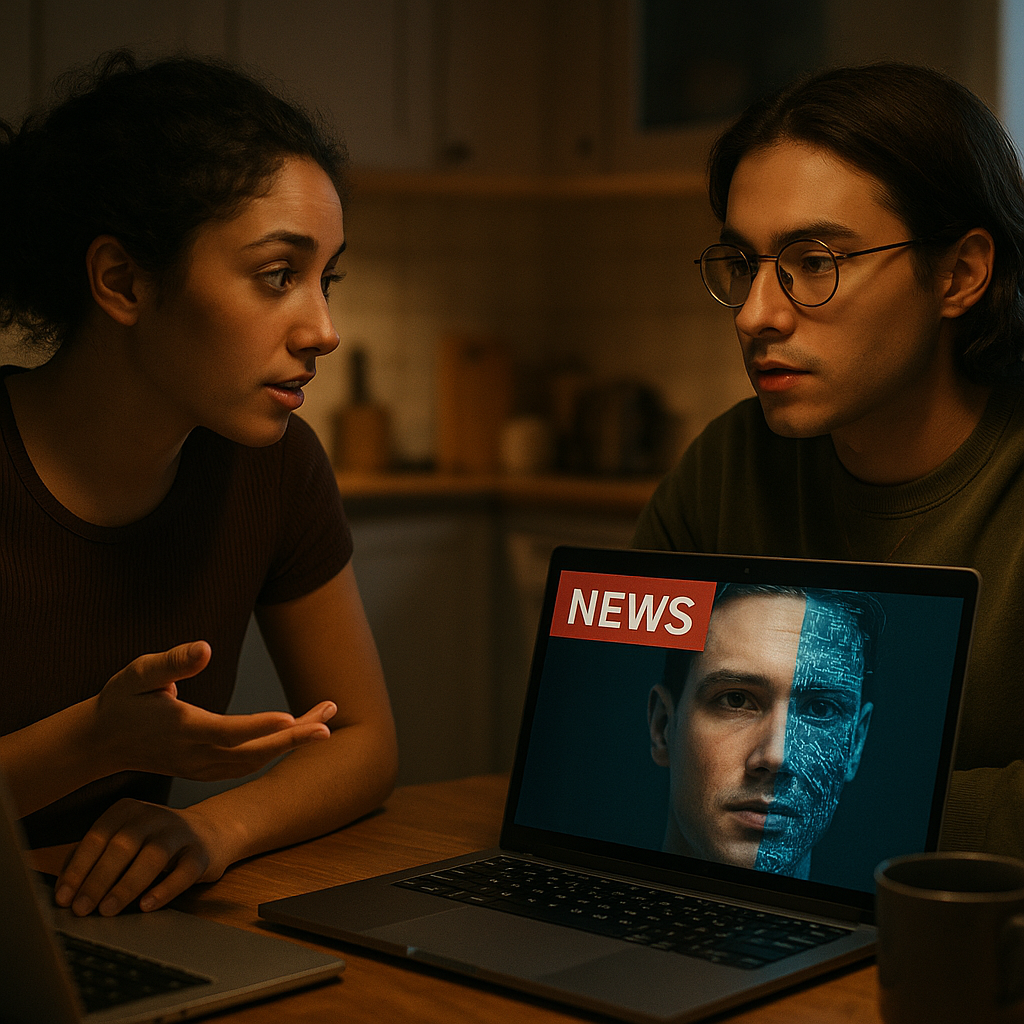
    Two friends researching online how to protect themselves from deepfake scams
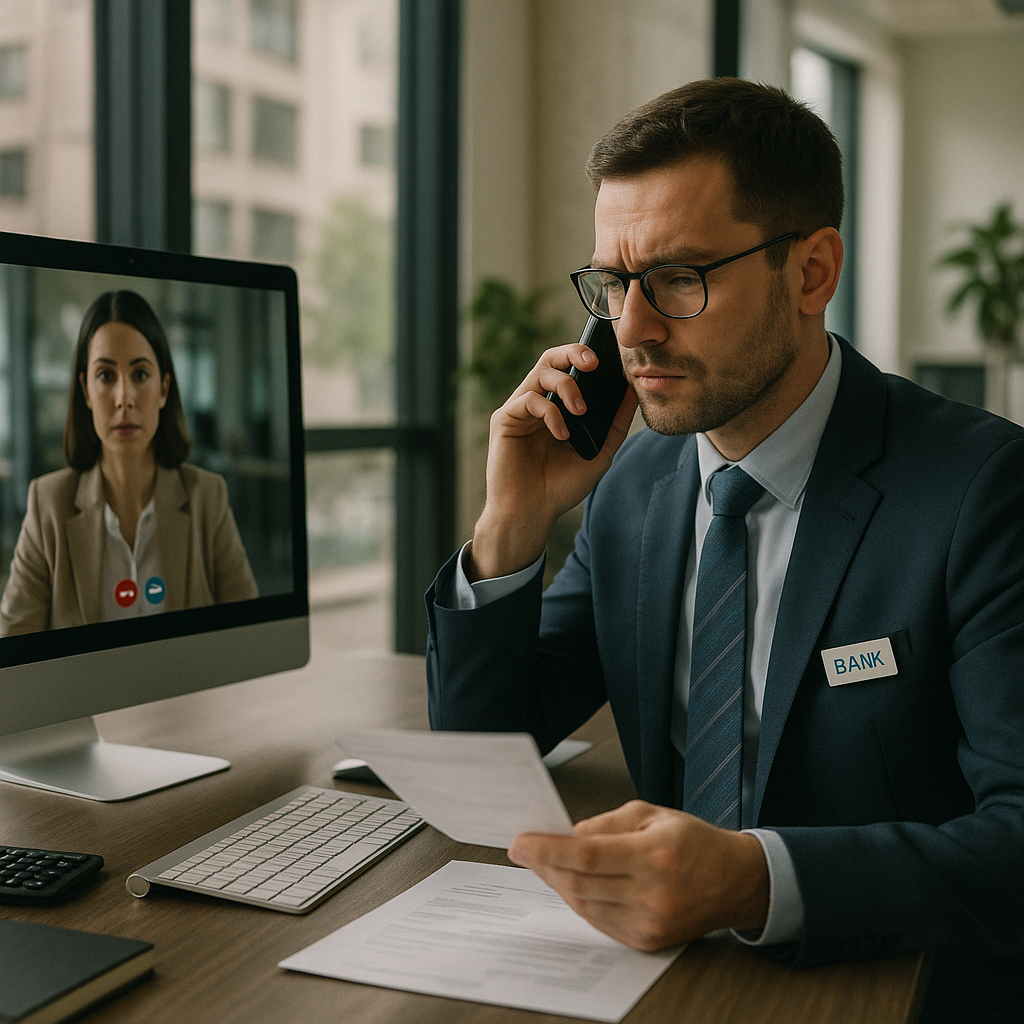
    Office worker verifying a suspicious payment request to avoid deepfake scams

    Deepfake scams FAQs

    How common are deepfake scams now?

    Deepfake scams are still less common than traditional phishing emails or text fraud, but they are growing quickly as the tools become cheaper and easier to use. Criminals are starting to combine voice cloning, video fakes and number spoofing, which makes the attacks feel very convincing. You are most likely to encounter them in high value situations, such as business payments, investment pitches or urgent family money requests.

    Can normal people realistically spot deepfake scams?

    Yes, in many cases. While the technology is improving, most deepfake scams still have small giveaways: slightly off lip sync, strange lighting, odd pauses in speech, or a refusal to switch to another communication channel. The strongest defence is not perfect detection, but process: always verify important requests through a second trusted route before acting.

    What should I do if I think I have been targeted by a deepfake scam?

    First, stop all communication with the suspected scammer and do not send any money or personal details. Take screenshots or recordings if possible, then contact your bank immediately if financial information was shared. Report the incident to the relevant fraud reporting service in your country and to the platform where the deepfake appeared. Sharing your experience can help others recognise similar deepfake scams in future.

  • Why Everyone Is Talking About Deepfake Election Ads

    Why Everyone Is Talking About Deepfake Election Ads

    Oli and Oskar here, diving into a story that feels like it has leapt straight out of science fiction: the rapid rise of deepfake election ads. They are slick, convincing, and increasingly hard to spot – and they are already changing how campaigns are fought and how voters see the world.

    What are deepfake election ads, really?

    Deepfakes use artificial intelligence to copy a person’s face, voice, or mannerisms and then generate new video or audio that looks and sounds real. When you plug that into political messaging, you get deepfake election ads: clips that appear to show a candidate saying or doing things they never actually did.

    Some are obvious satire, but the worrying ones are subtle: a slightly altered speech, a fabricated phone call, a short clip timed to drop just before a big vote. In an age where most of us scroll quickly and rarely double check sources, a convincing 20 second video can do serious damage.

    Why deepfake election ads are so dangerous

    The real threat is not just that people might believe one fake clip. It is that repeated exposure to manipulated content undermines trust in everything. If any video could be fake, then every video becomes questionable. That is a gift to anyone who wants to dismiss genuine evidence as fabricated.

    There are three big dangers that keep experts awake at night. First, targeted disinformation: tailored videos designed to inflame specific groups of voters. Second, last minute smears: a fake scandal dropped hours before polls open, leaving no time for fact checking. Third, plausible deniability: real recordings can be brushed off as deepfakes, giving politicians a handy escape hatch.

    How easy is it to make a deepfake now?

    Only a few years ago, you needed serious computing power and technical skills to generate a passable fake. Now, user friendly tools can create eerily convincing results from a handful of photos and a few minutes of audio. Quality still varies, but the trend is clear: the barrier to entry is falling fast.

    Campaigns do not even need to produce the videos themselves. Supporters, trolls, or foreign actors can do the dirty work, while official teams keep their hands technically clean. That creates a murky ecosystem where responsibility is hard to pin down and accountability is even harder.

    Can we spot and stop deepfake election ads?

    Governments and tech platforms are scrambling to respond, but they are playing catch up. Some countries are pushing rules that require political ads to disclose when AI has been used. Others are considering outright bans on synthetic media in campaign material. The challenge is writing laws that are tough on deception without crushing satire, art, or legitimate commentary.

    On the tech side, researchers are developing tools to detect manipulated content by looking for tiny inconsistencies in lighting, reflections, or audio patterns. Platforms are experimenting with labels and automated filters. But detection is an arms race: as the tools improve, so do the fakes.

    What voters can do right now

    While the law and technology catch up, ordinary voters are the last line of defence. A few simple habits can make a big difference. Be sceptical of emotionally explosive clips that appear from nowhere, especially close to an election. Check whether reputable outlets are covering the same story. Look for the original source of a video, not just a repost.

    It also helps to slow down. Deepfake election ads thrive on speed and outrage. If you pause before sharing, you cut off a major route for misinformation to spread. Talk to friends and family about the existence of deepfakes too – awareness alone makes people less likely to be fooled.

    The future of truth in politics

    We are heading into a period where seeing is no longer believing by default. That sounds bleak, but it could also push us towards healthier habits: checking sources, valuing trustworthy journalism, and demanding transparency from platforms and politicians alike.

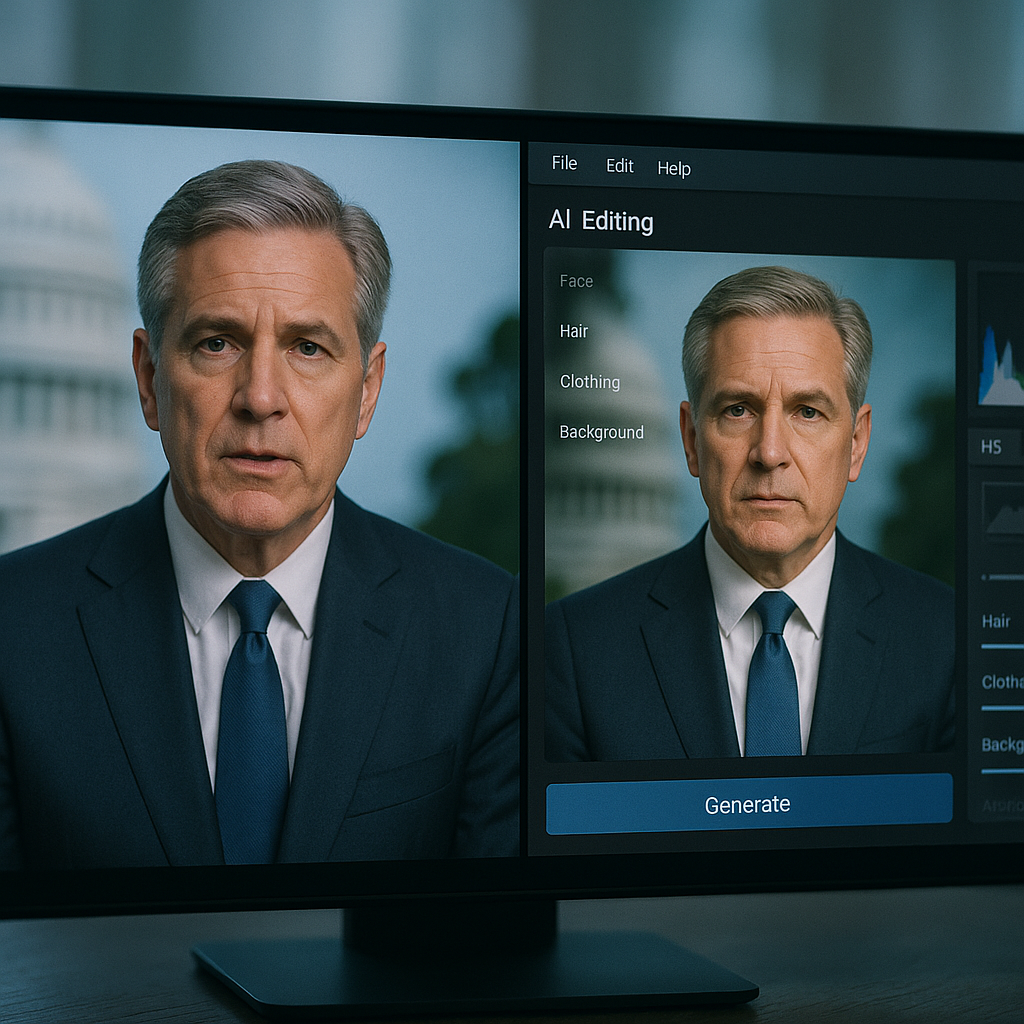
    Conceptual image contrasting real footage and AI tools used to create deepfake election ads
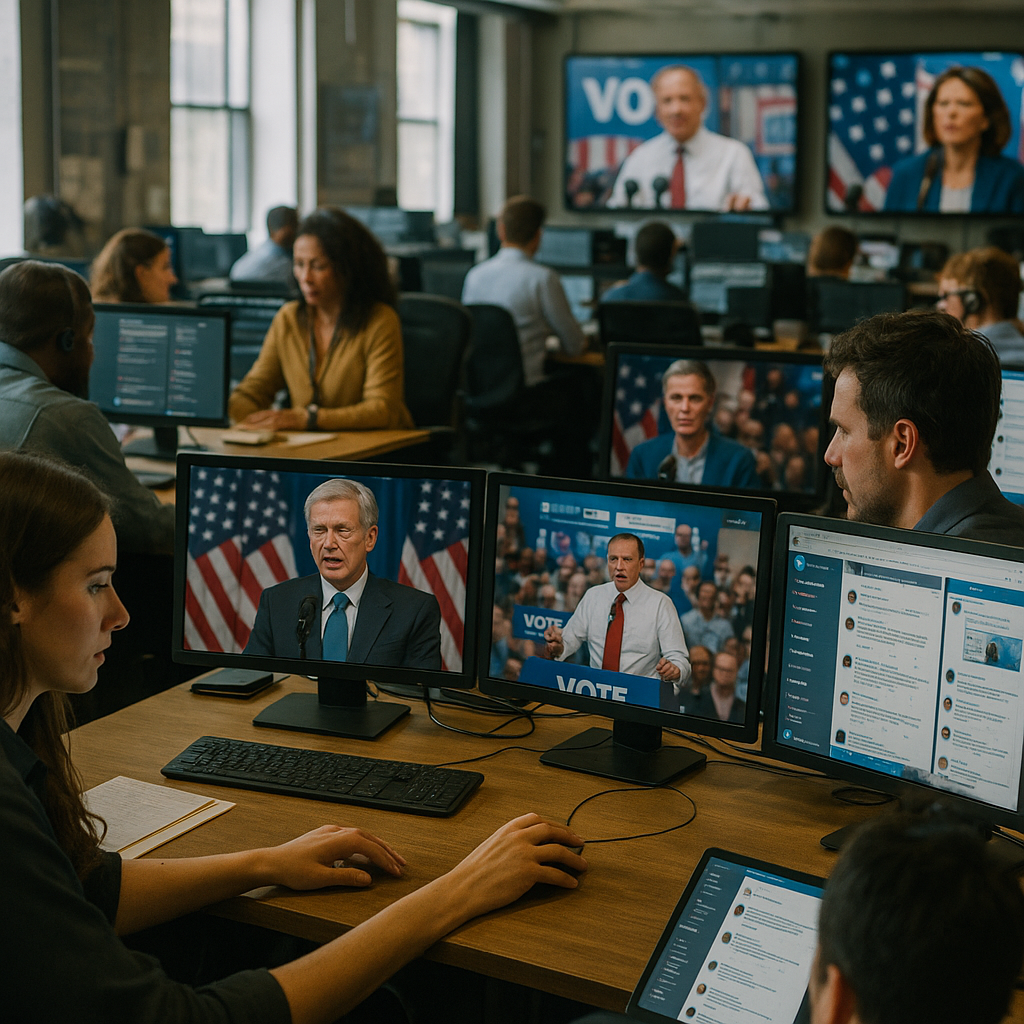
    Journalists in a newsroom tracking misinformation and deepfake election ads during a campaign

    Deepfake election ads FAQs