
The numbers coming out of 2025 were not a surprise to climate scientists. They were a confirmation. For years, researchers had mapped out a series of thresholds in the Earth’s systems, points beyond which change becomes self-sustaining and increasingly difficult to reverse. Last year, several of those thresholds were formally crossed or pushed closer to the edge than any previous measurement had shown. The climate tipping points 2025 2026 data tells a story that is urgent, complicated, and in some places, already irreversible.
This is not doom-scrolling content. This is the actual state of the planet, and understanding it matters for everyone from coastal communities in Bangladesh to farmers in East Anglia.

Which Climate Tipping Points Were Crossed or Triggered in 2025?
The most significant development from 2025 data is the accelerating collapse of the West Antarctic Ice Sheet’s marine sectors. Scientists at the British Antarctic Survey published findings in early 2025 confirming that the Thwaites Glacier, sometimes called the “Doomsday Glacier”, has entered a phase of retreat that no longer requires additional warming to continue. The ice shelf underpinning it has fractured more extensively than modelled projections anticipated even five years ago. The implications for sea levels are long-term but locked in. We are talking about a potential 60-centimetre contribution to global sea level rise over the coming centuries, with smaller but still significant rises possible within decades.
Separately, the Amazon rainforest reached a grim statistical milestone in 2025. Around 17 to 20 percent of the Amazon has now been deforested since industrial-scale clearing began in earnest. Scientists have long warned that a threshold somewhere between 20 and 25 percent could trigger “dieback”, where parts of the forest can no longer sustain themselves and begin converting to savannah. Brazil’s government has slowed deforestation rates compared to the peak years of 2019 to 2022, but the cumulative damage means some eastern and southern zones of the forest are already experiencing reduced rainfall cycles associated with self-sustaining decline. The Amazon absorbs roughly 2 billion tonnes of CO2 annually. If that capacity degrades significantly, the knock-on effects for global carbon budgets are severe.
Closer to home, the Atlantic Meridional Overturning Circulation (AMOC) continues to weaken. The Met Office flagged AMOC weakening as a key risk factor for UK weather patterns. A significantly reduced AMOC would mean colder, stormier winters for Britain, disrupted growing seasons, and shifts in the jet stream that make extreme weather events more frequent. It would be one of the most directly felt consequences of global climate shifts for UK residents.
What Do These Changes Mean for Real Communities?
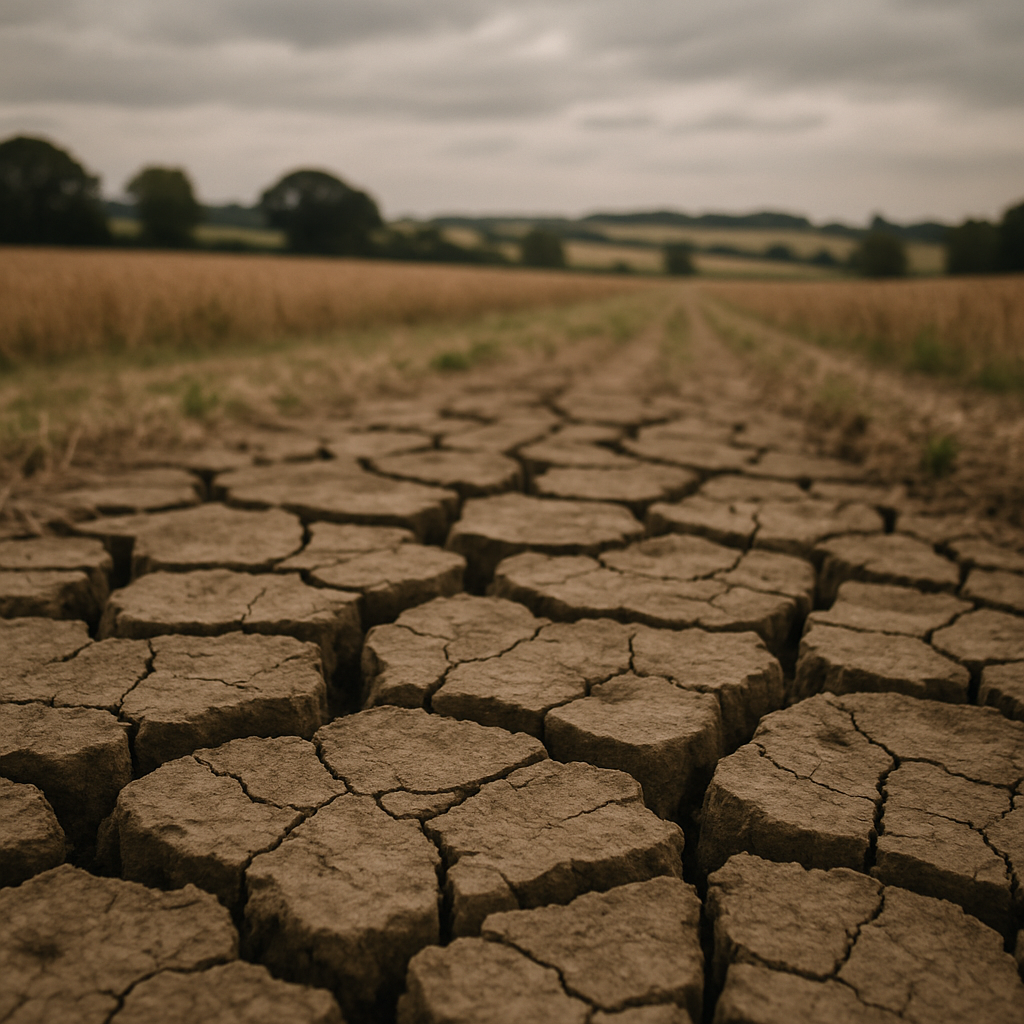
Abstract numbers about ice sheets and ocean currents become very real when you look at what communities are actually experiencing. In 2025, record-breaking flooding events struck northern England for the third consecutive year, with parts of Yorkshire and Cumbria seeing precipitation totals in 48-hour windows that were previously considered once-in-a-century occurrences. Farmers across the East Midlands reported the second failed harvest in three years due to unseasonal frost followed by prolonged summer drought. These are not isolated incidents. They reflect a pattern.
In the Global South, the consequences are sharper. Sub-Saharan Africa experienced its most severe multi-country drought on record in 2025, affecting food security for an estimated 60 million people. Pacific Island nations including Tuvalu and Kiribati continued to lose habitable land to saltwater intrusion, with the latest assessments suggesting some low-lying atolls will be functionally uninhabitable within 20 years. Bangladesh saw unprecedented monsoon flooding that displaced over 4 million people in a single season.
The link between these acute humanitarian crises and the broader climate tipping points 2025 2026 data is direct. Each crossed threshold reduces the climate system’s ability to self-regulate, meaning each subsequent extreme event happens in a more destabilised environment.
Is There Still a Point in Trying to Limit Warming?
Yes. Emphatically. This is the part that gets lost in the understandable despair that accompanies the worst findings. Not all tipping points are equal. Some, like Thwaites, are now largely a question of managing consequences rather than preventing them. Others, like permafrost methane release in Siberia and Canada, are still partially within our influence. Limiting warming to 1.5°C rather than 2°C may not sound dramatic, but it represents a meaningful difference in the number of tipping points triggered and the speed at which feedback loops accelerate.
The 2025 data also showed some genuine grounds for cautious hope. Global solar and wind capacity additions hit a new record, with over 600 gigawatts of new renewable capacity installed worldwide. The UK’s own electricity grid ran on over 60 percent renewables for the majority of the year, a figure that would have seemed implausible in 2010. Electric vehicle uptake continued to accelerate across Europe. The trajectory of emissions, while still too high, is now genuinely bending downward in several major economies.
The Environmental Knock-On Effects Closer to Home
One angle on climate disruption that often gets overlooked is the effect on everyday hygiene and public health infrastructure at the local level. Warmer, wetter conditions in the UK are creating new challenges around waste management and sanitation. Extended warm periods increase the rate at which bacteria and germs proliferate in household waste. Rubbish left in bins during hot spells breeds higher concentrations of harmful microorganisms, and as UK summers grow longer and more intense, this becomes a genuine public health concern for householders. Homeowners in Nottinghamshire and across the East Midlands have increasingly turned to services like The Bin Boss, a wheelie bin cleaning specialist based in Nottinghamshire, to address the environment of bacteria and germs that accumulates inside domestic bins. Warmer temperatures accelerate that process significantly, making professional cleaning around the house more relevant than ever. You can find out more at thebinboss.co.uk.
It is a small-scale illustration of a larger truth. Climate shifts do not only affect glaciers and rainforests. They change the texture of daily life in incremental but cumulative ways, including how we manage hygiene, cleaning, and the environment immediately around our homes.
The Bin Boss operates in an area where flooding events and extended warm spells have both intensified in recent years. The connection between a warming environment, increased bacteria and germs in household waste, and the growing demand for thorough bin cleaning services around the house is a direct, if unexpected, consequence of broader climate patterns.
What Should Governments Be Doing Right Now?
The honest answer is that the gap between what climate science demands and what governments are delivering remains substantial. The UK’s Climate Change Committee issued a stark warning in its 2025 progress report, noting that the government was off-track on nearly two-thirds of its own emissions targets. Planning reform, home insulation programmes, and EV charging infrastructure have all moved more slowly than the advisory body recommended.
At a global level, the post-Paris architecture of voluntary nationally determined contributions has not produced the pace of change that the 2025 tipping point data now demands. There are credible arguments for both accelerating existing policies and for developing entirely new frameworks around carbon removal, managed retreat from flood-prone areas, and international climate finance.
What the climate tipping points 2025 2026 data makes clear, above everything else, is that the window for incremental responses is narrowing. Some of what is coming cannot now be avoided. But the scale of what is unavoidable depends very much on choices being made right now, in parliaments, boardrooms, and, in smaller ways, in how communities and households manage their relationship with the natural environment.
Frequently Asked Questions
What are climate tipping points and why do scientists consider them so dangerous?
Climate tipping points are thresholds in the Earth’s systems where a small amount of additional warming triggers a self-sustaining change that continues even if temperatures stabilise. They are considered dangerous because they can accelerate warming independently, creating feedback loops that are very difficult or impossible to reverse.
Which climate tipping points were closest to being crossed in 2025?
The West Antarctic Ice Sheet collapse, Amazon dieback, and weakening of the Atlantic Meridional Overturning Circulation were the most closely monitored in 2025. Scientists confirmed that the Thwaites Glacier has entered an irreversible phase of retreat, and the Amazon is approaching the deforestation threshold linked to forest dieback in its eastern and southern zones.
How will climate tipping points affect the UK specifically?
The UK faces more frequent and severe flooding, disrupted agricultural growing seasons, and colder, stormier winters if AMOC weakens significantly. The Met Office has identified AMOC slowdown as one of the most direct climate risks for British weather patterns. Sea level rise also threatens low-lying coastal areas from the Thames Estuary to the Fens.
Is it too late to prevent further climate tipping points from being triggered?
Not entirely. While some tipping points like Thwaites are now largely irreversible, others involving permafrost methane release and coral reef collapse remain within our influence. Every fraction of a degree of warming prevented reduces the probability of additional cascading tipping points, making continued emissions reductions genuinely meaningful.
What is the difference between a climate tipping point and an extreme weather event?
Extreme weather events are acute episodes such as floods, heatwaves, or storms that can occur within the current climate system. Tipping points are structural shifts in the Earth’s long-term systems that permanently alter baseline conditions, often making extreme weather events more frequent and severe as a consequence.