For years, climate scientists have been telling us this was coming. The models, the projections, the increasingly urgent reports from bodies like the Met Office all pointed in the same direction: more frequent, more severe, more deadly. In 2026, the warnings stopped feeling abstract. Extreme weather events 2026 has become more than a headline phrase. It is a lived reality for tens of millions of people across every continent, and the UK is far from immune.
Oli and I have been following this closely, and what strikes us both is not just the scale of individual disasters but the relentless pace of them. There is barely a gap between one catastrophe and the next. The news cycle moves on, but the damage does not.
The Floods That Defined the First Half of the Year
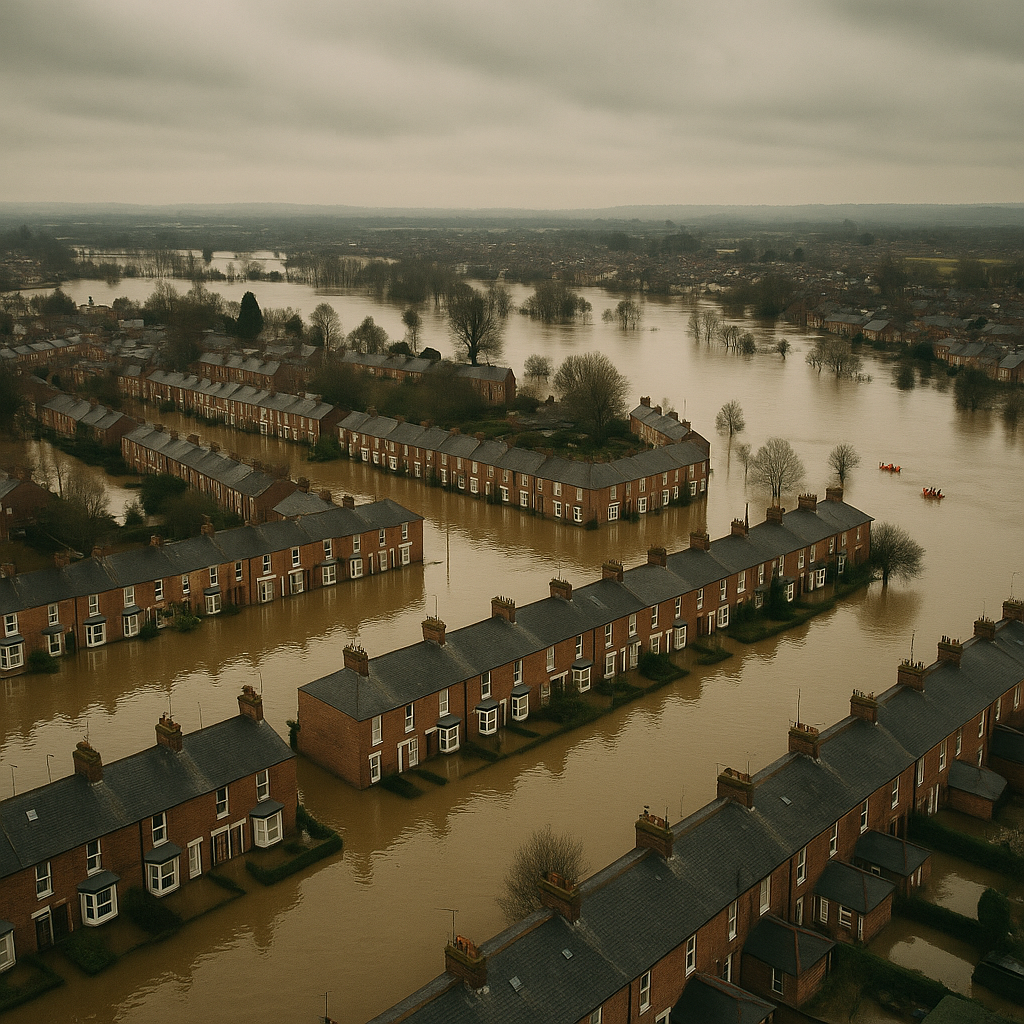
Winter and spring 2026 brought some of the most severe flooding events on record across Europe and South Asia. In Pakistan, communities that had barely recovered from the catastrophic 2022 floods were submerged again, this time with less international media attention and less aid. In Germany and Austria, rivers including the Rhine burst their banks in February, destroying infrastructure that had been rebuilt at enormous cost just three years prior.
Closer to home, parts of Somerset, Yorkshire, and the Thames Valley experienced flooding that stretched well into March. The Environment Agency issued more flood warnings in the first quarter of 2026 than in any comparable period on record. Insurance claims piled up. Homes were written off. For many families, particularly those in low-lying areas who have flooded repeatedly over the past decade, the question is no longer how to repair the damage but whether to stay at all.
What the science keeps telling us is that warmer air holds more moisture, which means when it rains, it really rains. The intensity of rainfall events has increased measurably across the UK over the past 30 years, and 2026 has done nothing to challenge that trajectory.
Heatwaves, Wildfires and the Temperature Records That Keep Falling
Summer arrived early across southern Europe. By late May, parts of Spain and Portugal were recording temperatures above 42°C, weeks before the traditional heatwave season. Wildfires tore through Catalonia and the Algarve with a ferocity that overwhelmed local firefighting capacity. Thousands of hectares burned. Tourist infrastructure was destroyed. Villages were evacuated overnight.
In North Africa and the Middle East, the heat was simply lethal. Outdoor workers in parts of Iraq and Iran faced wet-bulb temperatures that human physiology cannot long survive. Hospitals were overwhelmed. The death tolls in some regions were almost certainly undercounted, given weak reporting infrastructure.
The UK had its own uncomfortable summer. July brought a sustained period of temperatures above 35°C across London and the South East, triggering heat health alerts from the NHS. Rail lines buckled. The underground became dangerous. Older housing stock, built without any consideration for cooling, turned into slow cookers. We are, as a country, deeply unprepared for this kind of heat, and 2026 made that embarrassingly clear.
Storms and the Infrastructure They’re Exposing
Alongside floods and heatwaves, Atlantic storm systems have intensified. The 2025-26 storm season produced several named storms that caused significant disruption across the British Isles, with wind speeds in Scotland exceeding anything recorded in recent decades. Roof tiles, trees, pylons, all of it reminded us how much of our infrastructure was designed for a climate that no longer exists.
There is a broader point here about resilience. Across industries and communities, people are being forced to rethink how things are built and maintained. Workshops, farms, construction sites, even small manufacturing businesses are losing working days to weather disruption in ways that were not factored into their planning five years ago. A small joinery business in rural Cumbria might invest in precision machinery like surface planers to improve efficiency, only to find that flooding or power cuts from storm damage cost them more than any efficiency gain. The climate crisis is a supply chain problem. It is an infrastructure problem. It is an everything problem.
How Governments Are (and Aren’t) Responding
The policy response in 2026 remains frustratingly inconsistent. Some governments are moving fast. The Netherlands has accelerated its water management investment programme, arguably the most sophisticated in the world. Denmark and Scotland have made genuine strides in renewable energy capacity. But elsewhere, short-term politics keeps getting in the way of long-term action.
In the UK, the government has committed to updated flood defence spending following the winter events, but campaigners and local councils argue the money is still not reaching the right places fast enough. Planning rules that allow building on flood plains continue to be exploited by developers. The disconnect between what the science demands and what policy delivers remains vast.
At the community level, though, something interesting is happening. Resilience networks, local flood groups, community energy schemes, grassroots adaptation projects, these are growing fast. People are not waiting for central government. They are sandbagging their own streets, installing green roofs, planting urban trees, and sharing resources in ways that feel genuinely hopeful even in the middle of a bleak picture.
What the Data Is Actually Telling Us in 2026
The numbers are stark. The World Meteorological Organisation confirmed that the five-year period from 2021 to 2025 was the hottest on record globally. 2026 is, according to early analysis, on track to extend that streak. Carbon dioxide concentrations in the atmosphere have continued to rise. Arctic sea ice hit a new winter minimum in March. The Amazon, already heavily deforested, is experiencing drought conditions that are accelerating its transition from carbon sink to carbon source.
None of this is speculation. It is observed data, collected by thousands of scientists across dozens of countries. The argument is no longer about whether climate change is happening. It is about whether our response is remotely proportionate to the scale of what is unfolding.
Where Does This Leave Us?
Oskar and I keep coming back to the same uncomfortable thought: we are living through the events that future generations will read about in history books, the ones where the trajectory was clear and the window to act was closing fast. Extreme weather events 2026 are not anomalies. They are the new baseline, and next year’s baseline will be higher still unless something changes at a scale we have not yet seen.
That does not mean despair is the right response. The technology to cut emissions exists. The financing mechanisms are improving. Public appetite for action is real, even if political will is patchy. But the gap between what is needed and what is happening remains dangerously wide, and the storms, floods, and heatwaves of 2026 are the proof of that in the most brutal possible terms.
Pay attention. Talk about it. Push your council, your MP, your employer. The climate warnings became reality this year. The next chapter is still being written.
Frequently Asked Questions
What are the worst extreme weather events of 2026 so far?
2026 has seen severe flooding across Europe and South Asia, record-breaking heatwaves in southern Europe and the Middle East, devastating wildfires in Spain and Portugal, and an intensified Atlantic storm season affecting the British Isles. The UK itself experienced its worst Q1 flood warnings on record and sustained summer heat exceeding 35°C across the South East.
Is the UK being affected by extreme weather in 2026?
Yes, significantly. Parts of Somerset, Yorkshire, and the Thames Valley flooded badly in early 2026, and the summer brought dangerous heat events that prompted NHS health alerts. Storm damage has also caused widespread disruption to rail, roads, and power infrastructure across Scotland and northern England.
How is climate change connected to extreme weather events in 2026?
Climate change increases the frequency and intensity of extreme weather by raising global temperatures, which alters atmospheric moisture levels and weather patterns. The Met Office and World Meteorological Organisation have both confirmed that the kind of events seen in 2026 are consistent with decades of climate projections, and will continue to worsen without significant emissions reductions.
What is the UK government doing about extreme weather and climate adaptation?
The UK government has pledged updated flood defence spending following the winter 2026 events, and has long-term net zero commitments in law. However, critics including environmental groups and local councils argue that planning policy still allows building on flood plains, and that adaptation funding is not reaching vulnerable communities fast enough.
Will extreme weather events get worse after 2026?
According to climate science, yes, unless global emissions are cut dramatically and rapidly. The 2021-2025 period was already the hottest five years on record, and 2026 is tracking to extend that. Without action, sea level rise, more intense storms, longer heatwaves, and heavier rainfall events are all projected to intensify through the coming decades.