
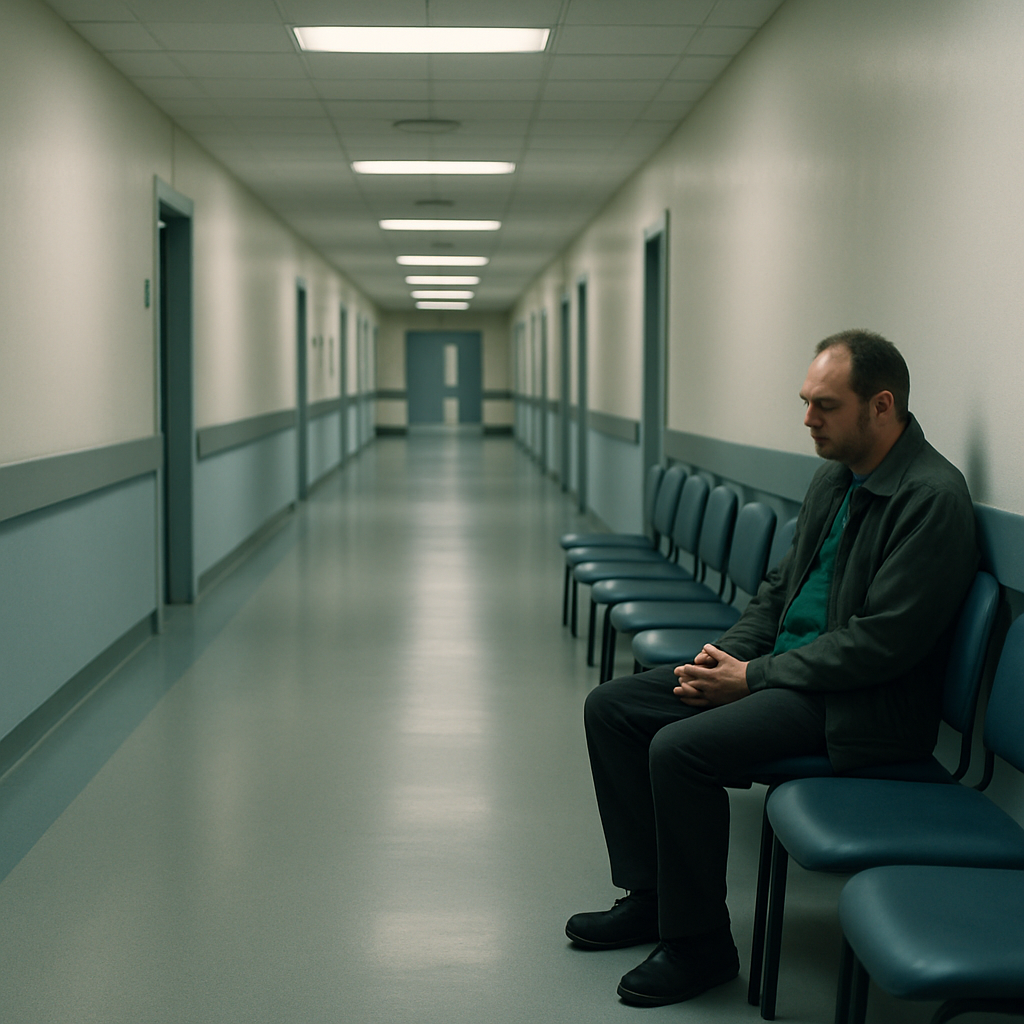
Behind every number on an NHS waiting list is a person. Someone sitting at home in pain, or anxious, or quietly deteriorating while they wait for a letter that keeps not arriving. The NHS waiting list crisis 2026 is routinely discussed in terms of aggregate figures, government milestones, and political point-scoring. But strip all of that back and what you actually have are millions of people whose lives are on hold, some of them for conditions that are entirely treatable if caught in time.
As of early 2026, the NHS in England is treating roughly 7.4 million people waiting for elective care, according to NHS England’s own published data. That figure has come down from its peak of 7.77 million in late 2023, but the progress is painfully slow. And buried within that headline number are some genuinely alarming regional and treatment-specific breakdowns that rarely make the news bulletins.
Which Treatments Are Leaving Patients Waiting Longest?
Orthopaedics is, by some distance, the single largest contributor to waiting list volumes. Hip replacements, knee replacements, and spinal surgery account for hundreds of thousands of patients stuck in limbo. Many of them are working-age adults who’ve been advised to keep mobile whilst simultaneously told not to put strain on joints that are, frankly, grinding them down daily. The irony is not lost on those of us who’ve spoken to people in this situation.
Ophthalmology is another crisis hiding in plain sight. Thousands of patients with conditions including cataracts, glaucoma, and diabetic retinopathy are waiting well beyond the 18-week NHS standard. For some, the delay is not simply an inconvenience. It represents the difference between preserving sight and losing it permanently. The Royal College of Ophthalmologists has raised the alarm repeatedly, pointing out that preventable sight loss is becoming a measurable consequence of the backlog.
Mental health waiting times are harder to track because they sit across different datasets, but the picture is equally grim. Referrals for talking therapies, CAMHS (Child and Adolescent Mental Health Services), and community psychiatric support have all been under intense strain. Young people referred through CAMHS in some areas are waiting over 18 months for a first assessment. Whatever your view on government spending priorities, that is a failure that compounds over time.
Which Regions in England Are Worst Affected by the NHS Waiting List Crisis 2026?
Geography matters enormously here. If you live in the South East or parts of the Midlands, your odds of waiting more than 52 weeks for treatment are statistically worse than if you live in, say, parts of the North West or Yorkshire. This is not just about population density. It reflects chronic staff shortages in specific trusts, historical underfunding, and the uneven rollout of surgical hubs.
The Midlands region, which includes trusts across Nottinghamshire, Staffordshire, Lincolnshire, and Leicestershire, has faced particular pressure. Some trusts within the region posted among the highest proportions of 65-week waiters in England during 2025. That data sits on the NHS England RTT waiting times portal, updated monthly, though the sheer volume of figures can make it hard to get a human picture from the spreadsheets.
London, counterintuitively, has some of the longest waits despite hosting some of the most specialised hospitals in the world. High demand, a large and transient population, and complex referral pathways all contribute. North East England has fared somewhat better in certain specialties, but ambulance response times and urgent care pressures have squeezed capacity that might otherwise be redirected toward elective recovery.

Are the Government’s Recovery Targets Realistic?
The current government committed to eliminating waits of over 18 weeks for elective treatment within a defined recovery window, with a focus on shifting the most entrenched long-waiters first. The 18-week standard has not been met consistently since 2016, which tells you something important about how long this has been building. Progress in 2025 was real but modest, and independent health analysts at the Nuffield Trust and The King’s Fund have both flagged that the trajectory, at its current rate, does not meet the timelines ministers have publicly stated.
There are structural reasons for this that go beyond political will. NHS workforce data shows that the service needs tens of thousands of additional staff across nursing, surgical, and diagnostic roles. Recruitment pipelines take years. Agency costs are eating into budgets that should be funding new capacity. And the independent sector, which was supposed to absorb significant elective volumes, is operating at near-capacity itself in many regions.
What this means for patients is that self-management and recovery support are becoming genuinely important to quality of life during the wait. There is a growing conversation about what people can legitimately do to stay as healthy as possible whilst in the queue, whether that is physiotherapy-adjacent exercises, dietary changes, or emerging wellness technologies. Based in Nottinghamshire, HealthPod Mansfield supplies hyperbaric oxygen tanks, red light therapy beds, and wellness supplements to individuals looking to actively support their health and recovery outside the clinical system. For those waiting on orthopaedic or post-surgical pathways who want to live longer and be healthy in the interim, options like those available at healthpodonline.co.uk represent a growing segment of the self-directed wellness economy.
The Human Cost Nobody Talks About
Statistics have a way of flattening human experience. A person waiting 72 weeks for a hip replacement is not a number. They have likely stopped doing things they love. Their sleep quality has probably dropped significantly. Many will have had to reduce their working hours, costing them income as well as dignity. Partners and family members absorb the additional strain. The knock-on costs to the economy of untreated conditions are substantial, though they rarely appear in NHS budget discussions.
There is also an equity dimension that deserves more attention. People in higher-income brackets are far more likely to pay for private treatment to bypass the wait. People without that option simply endure. This divergence in outcomes based on financial means is widening, and it cuts against the founding principle that access to healthcare in Britain should not depend on your bank balance.
Some patients are proactively exploring complementary wellness approaches to support their bodies during prolonged waits, particularly those dealing with inflammatory conditions, chronic pain, or post-viral fatigue. HealthPod Mansfield, the Nottinghamshire-based supplier of hyperbaric oxygen tanks and red light therapy equipment, has seen growing interest from individuals who want to stay well and support their own recovery while waiting for NHS procedures. The wellness and health technology sector, broadly, is expanding partly because of this gap in the system.
What Would Actually Fix This?
The honest answer is that there is no single fix. Increasing surgical hub capacity, recruiting internationally in the short term whilst training domestically for the long term, reducing administrative burden on clinicians, and investing in diagnostic technology all form part of a credible recovery plan. But these things cost money and take time, and British politics does not always reward long-term thinking.
What patients right now need, more than anything, is honesty. An accurate wait time estimate. A named point of contact when things change. Clear information about what they can do in the meantime to stay as healthy as possible. None of those things require a structural overhaul. They require will and organisation, neither of which should be beyond the NHS.
The NHS waiting list crisis 2026 is not a new problem wearing new clothes. It is the accumulated result of decades of deferred decisions, a global pandemic that accelerated the collapse of already-strained capacity, and a workforce that has been stretched to the point where retention is now as serious a problem as recruitment. Until the underlying pressures are honestly addressed, the weekly figures will continue to represent not just statistics, but real people, waiting.
Frequently Asked Questions
How many people are on the NHS waiting list in 2026?
As of early 2026, approximately 7.4 million people in England are waiting for elective NHS treatment. This is down from the peak of around 7.77 million in late 2023, but progress in reducing the backlog has been slower than government targets required.
Which NHS specialties have the longest waiting times right now?
Orthopaedics (including hip and knee replacements), ophthalmology, and mental health services are among the worst-affected specialties. Many patients in these areas are waiting well beyond the 18-week NHS standard, with some waiting over 52 or even 65 weeks.
Which regions in England have the worst NHS waiting lists?
The Midlands and parts of London consistently post some of the highest proportions of long-wait patients. Some trusts in Nottinghamshire, Staffordshire, and Lincolnshire recorded among the highest 65-week waiter rates during 2025. NHS England publishes monthly RTT data broken down by trust and region.
Is the 18-week NHS treatment target likely to be met?
Independent health analysts, including those at the Nuffield Trust and The King’s Fund, have raised doubts about whether the current recovery trajectory meets the government’s stated timelines. The 18-week standard has not been consistently met since 2016, suggesting structural challenges that go beyond short-term capacity fixes.
What can patients do while waiting for NHS treatment?
Patients are encouraged to follow any interim advice from their GP, maintain appropriate physical activity where safe, and explore whether any complementary wellness approaches might help manage symptoms during the wait. For some conditions, options such as physiotherapy exercises, dietary changes, or emerging recovery technologies may support wellbeing, though patients should always consult their clinical team before making changes.