
There’s a particular kind of dread that comes with reading the latest climate science. Not the slow-burn anxiety of distant projections, but something more immediate. The language has shifted. Scientists who once spoke in careful conditionals are now speaking in past tense. Not “if we cross these thresholds” but “now that we have.” The discussion around climate tipping points 2026 is no longer theoretical. Several of the boundaries researchers have warned about for decades appear to have been breached, and the consequences are already visible in ways that are difficult to dismiss.
Oskar and I have been picking through the latest reports and peer-reviewed findings, and honestly, the picture is sobering. That said, understanding what’s actually happening matters more than panic. So here’s a grounded look at where things stand.
What Are Climate Tipping Points and Why Do They Matter?
A tipping point, in climate terms, is a threshold beyond which a system undergoes a self-reinforcing change that becomes very difficult or impossible to reverse. Think of it like a boulder balanced on a hillside. Nudge it a little and it rolls back. Push it past a certain point and it rolls downhill on its own momentum regardless of what you do next.
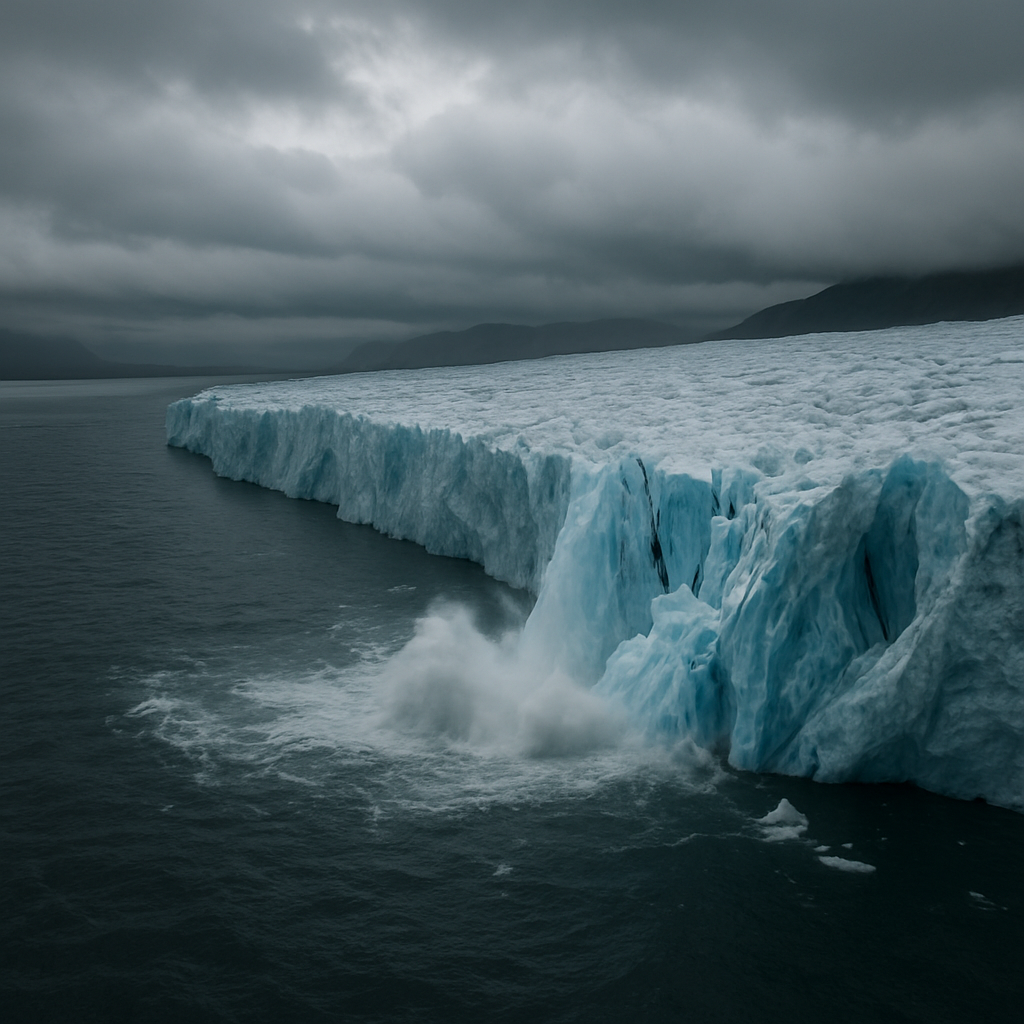
The Greenland Ice Sheet is a classic example. Scientists have long identified a temperature threshold beyond which melt becomes self-sustaining. Warm the ice surface, it lowers in altitude, exposing it to warmer air at lower elevation, accelerating melt further. The feedback loop does the work from that point on. A BBC Science report from recent years flagged nine major tipping points that, if crossed, could trigger cascading effects across the entire Earth system. The concern in 2026 is that we may be inside several of those cascades already.
Which Thresholds Are Scientists Most Concerned We’ve Already Passed?
Let’s be precise here, because the science deserves precision. The word “crossed” is sometimes used loosely in media coverage, and it’s worth separating the clearly documented from the still-contested.
West Antarctic Ice Sheet Destabilisation
This one is arguably the most alarming. Multiple studies in recent years have concluded that parts of the West Antarctic Ice Sheet have entered a phase of irreversible retreat. The Thwaites Glacier, sometimes called the “Doomsday Glacier” in headlines (the science is more nuanced), is retreating at rates that align with worst-case projections from the early 2000s. The implications for sea level rise are significant. Conservative estimates still point towards a metre or more of global sea level rise over coming centuries from this source alone. For low-lying parts of the UK coast, including areas of East Anglia, Essex, and parts of the Thames Estuary, this is not an abstract concern.
Amazon Dieback Zones
Deforestation combined with warming has pushed parts of the eastern Amazon past what researchers call a “savannification” threshold. These areas no longer receive enough rainfall to support tropical forest and are transitioning to drier, scrubby vegetation. The Amazon has historically acted as a massive carbon sink; its partial dieback turns it into a carbon source. Brazilian and international monitoring data point to roughly 15 to 17 per cent of the rainforest having been cleared, and researchers argue the functional tipping point sits somewhere between 20 and 25 per cent. We are uncomfortably close.
Coral Reef Bleaching Events
The Great Barrier Reef experienced its most extensive mass bleaching event on record in 2024 and conditions have not substantially improved. Global coral reef systems are increasingly moving beyond episodic bleaching into near-permanent thermal stress. At 1.5°C of warming, scientists estimate roughly 70 to 90 per cent of coral reefs will be severely degraded. Current global average temperatures are hovering around 1.4 to 1.5°C above pre-industrial levels. This is not a future scenario. It is largely the present one.
What Are Communities Actually Experiencing Right Now?
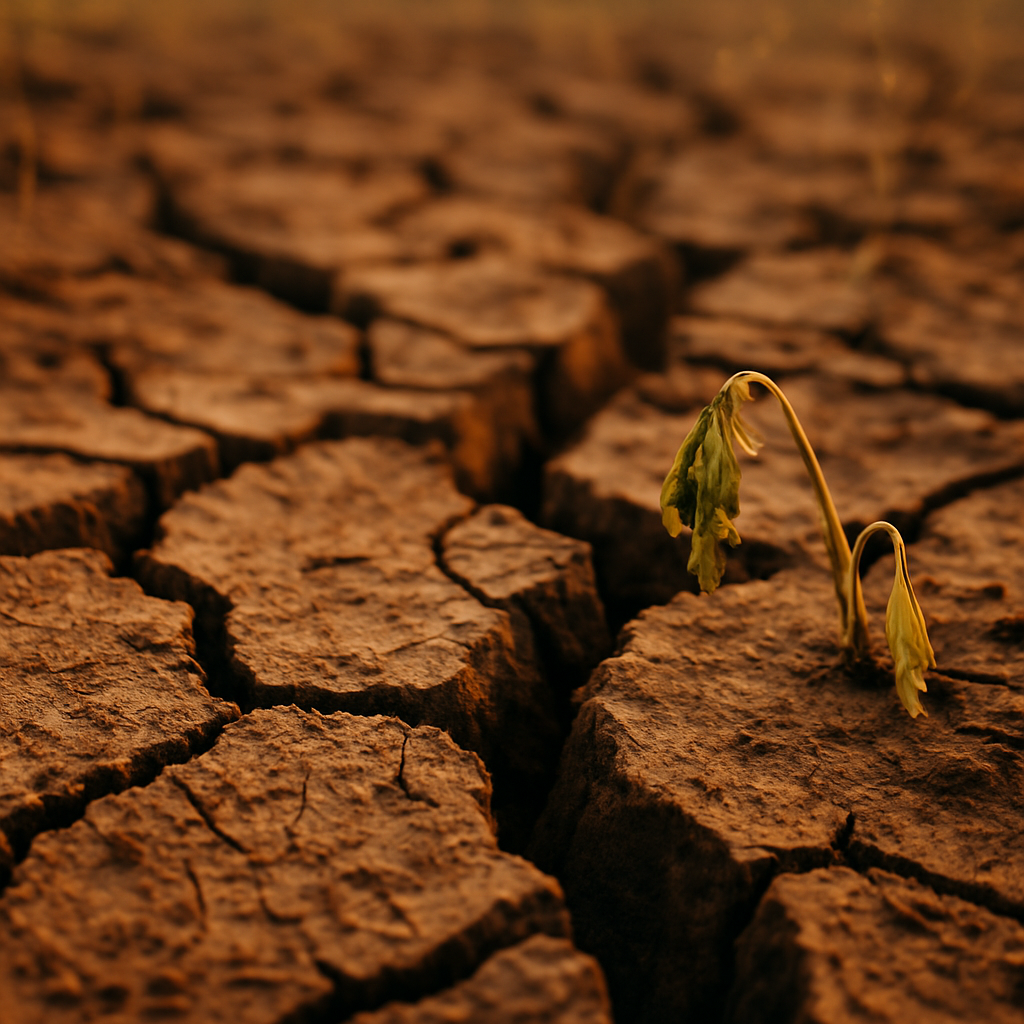
Abstract thresholds translate into concrete disruption, and that disruption is already being felt across multiple continents, including in the UK.
Last year, parts of England experienced flooding events that the Environment Agency described as statistically exceptional. Yorkshire, Lincolnshire, and the Somerset Levels all saw high-water events that would once have been termed “once in a generation” but are now recurring within years of each other. The Met Office has documented a clear trend of intensifying rainfall events and longer dry spells; both consequences of a warmer, more energetic atmosphere.
Food security is another dimension that tends to get overlooked in the tipping point conversation. The UK imports a significant portion of its fresh produce from Spain, Morocco, and sub-Saharan Africa. All three regions are experiencing mounting water stress and extreme heat events that are disrupting harvests. British supermarkets already saw empty shelves for certain salad vegetables in early 2023 following drought in southern Spain. That kind of disruption is likely to become more frequent, not less.
Meanwhile, insurance companies across Europe are quietly withdrawing from flood and subsidence risk in certain postcode areas, a market signal that rarely gets the attention it deserves. If insurers won’t cover your home, you’re looking at an effective devaluation of an asset that many families have spent their entire lives building equity in.
The Cascade Problem: Why Tipping Points Don’t Happen in Isolation
One of the key points climate researchers are now emphasising is that these tipping points don’t operate independently. They interact. Greenland melt slows the Atlantic Meridional Overturning Circulation (AMOC), which in turn affects rainfall patterns across Western Europe. Amazon dieback reduces moisture recycling across South America, affecting monsoon patterns that feed into global weather systems. Arctic sea ice loss amplifies warming at higher latitudes, which weakens the polar vortex, which in turn produces more erratic winter weather across the UK and northern Europe.
The clustering of these interactions is what researchers at the Potsdam Institute for Climate Impact Research have described as a “tipping cascade.” Not one domino falling, but several falling in sequence, each accelerating the next. Understanding climate tipping points 2026 properly means understanding that the risk is systemic, not linear.
Is There Still a Point in Acting? What the Science Says About Mitigation
Here’s the thing that gets lost when headlines lean into the doom: crossing a tipping point is not the same as reaching a point of no return for everything. There is still a meaningful difference between 1.5°C of warming and 2°C, between 2°C and 3°C. Every fraction of a degree matters in terms of the severity and speed of impacts. Scientists are not throwing their hands up.
The UK’s Climate Change Committee continues to argue that the UK can meet its legally binding net zero target by 2050 with the right policy framework. Whether current government decisions around North Sea oil licences, housing insulation programmes, and EV infrastructure investment are consistent with that target is a separate and rather pointed question.
What the science is clear on is this: the window for avoiding the worst cascades is narrowing, not closed. Rapid decarbonisation of energy systems, protection and restoration of natural carbon sinks, and substantial investment in adaptation are all still viable. They require political will and public support. Neither is in obvious abundance right now, but neither is entirely absent.
What Should We Be Watching in the Coming Months?
A few indicators are worth keeping an eye on. Arctic sea ice extent in summer 2026 will be a significant data point. AMOC monitoring, which has improved substantially with new measurement infrastructure, will give clearer signals about whether the Atlantic circulation system is weakening faster than models predicted. And the outcome of COP31 later this year will reveal whether the international diplomatic framework is capable of responding at the scale the science demands.
The conversation around climate tipping points 2026 is uncomfortable precisely because it requires sitting with uncertainty about things that matter enormously. But sitting with it is still more useful than looking away. The communities already bearing the consequences, from flooded homes in Doncaster to farmers in East Anglia watching their yields shrink, don’t have the option of disengagement. Neither, realistically, do the rest of us.
Frequently Asked Questions
What are climate tipping points and how many have been identified?
Climate tipping points are thresholds in the Earth’s systems beyond which self-reinforcing change occurs, making reversal extremely difficult. Scientists have identified at least nine major global tipping points, including Greenland Ice Sheet collapse, Amazon dieback, and AMOC disruption, with several regional tipping points on top of those.
Have any climate tipping points actually been crossed in 2026?
Evidence suggests parts of the West Antarctic Ice Sheet have entered irreversible retreat, portions of the eastern Amazon are undergoing savannification, and coral reef systems are under near-permanent thermal stress. Whether these constitute full “crossings” is still debated among researchers, but the trajectory is deeply concerning.
How do climate tipping points affect the UK specifically?
The UK is exposed through increased flooding from intensified rainfall events, potential disruption to AMOC which regulates Western European climate, rising sea levels threatening coastal areas in East Anglia and the Thames Estuary, and food supply chain instability from extreme weather affecting producing regions abroad.
What is the AMOC and why do scientists worry about it?
The Atlantic Meridional Overturning Circulation is a system of ocean currents that transports warm water northward and keeps Western Europe significantly warmer than it would otherwise be. A weakening or collapse of AMOC could bring colder winters and altered rainfall patterns to the UK and Northern Europe.
Is it too late to prevent the worst effects of climate change?
No. Scientists consistently emphasise that every fraction of a degree of warming prevented makes a real difference to the severity of impacts. Rapid decarbonisation, protection of natural carbon sinks, and strong adaptation policies can still substantially reduce the scale of harm, even if some changes are now unavoidable.