
Something significant is happening across Europe, and it is not subtle. Far right politics in Europe 2026 is no longer a fringe concern or a protest vote footnote. In country after country, parties that were once dismissed as unelectable are now sitting in coalition governments, leading polls, or fundamentally reshaping what mainstream politics even looks like. From France to Finland, from the Netherlands to Italy, the electoral map is being redrawn in ways that feel genuinely historic. The question is not whether it is happening. It clearly is. The question is why, and whether there is any reversing course.
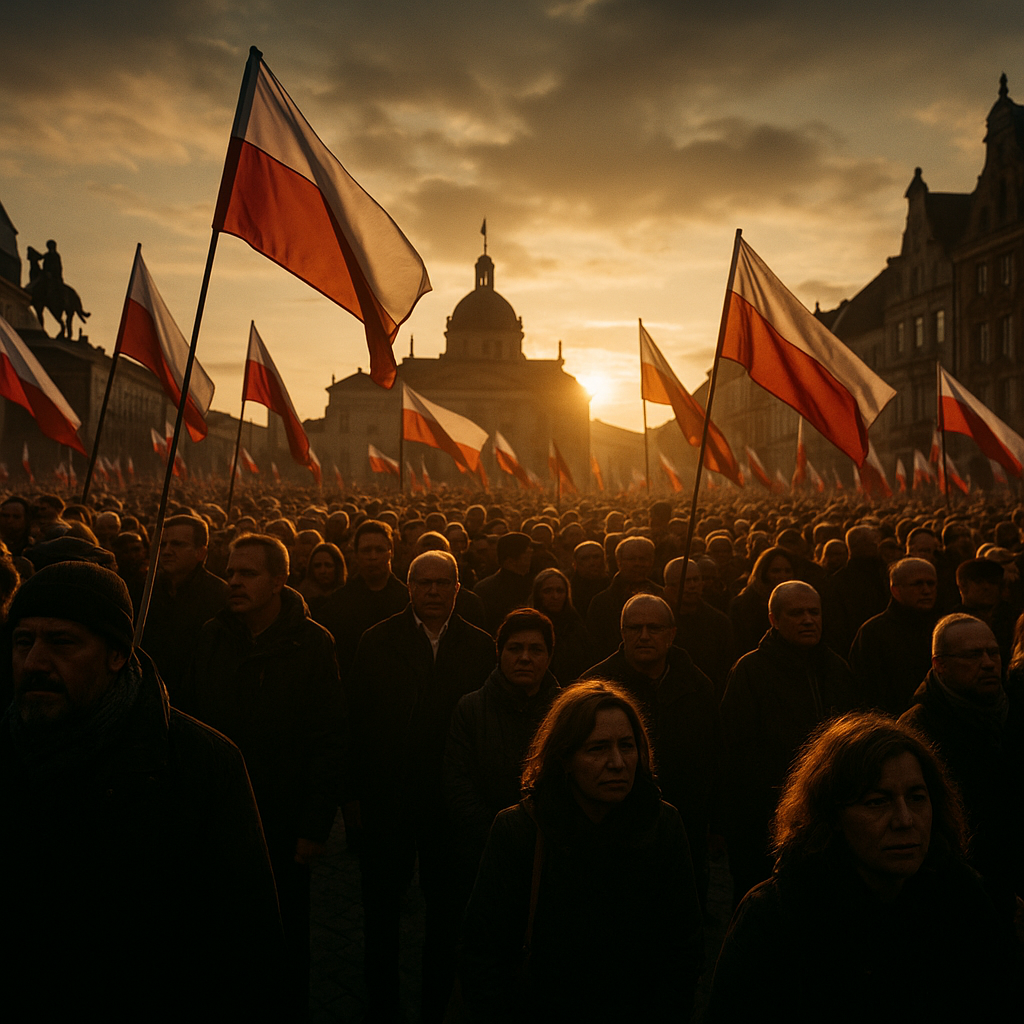
Which Countries Have Seen the Biggest Far Right Gains?
The Netherlands handed Geert Wilders’ PVV a landmark result in 2023, and by 2026 the ripple effects of that moment are still very much being felt in Dutch coalition politics. In France, Marine Le Pen’s Rassemblement National remains the most popular party by raw vote share, consistently polling ahead of centrist rivals. Austria’s FPÖ entered government earlier this year after topping the national election. Germany’s AfD continues to dominate in large parts of eastern Germany despite legal pressures on the party structure. And in Italy, Giorgia Meloni’s Fratelli d’Italia has been governing since 2022, normalising the idea of a post-fascist lineage party holding the top job in a G7 economy.
Each of these stories is distinct. The specific grievances, the party histories, the electoral systems vary enormously. But the trend line runs in one direction.
What Is Actually Driving Far Right Politics Across Europe?
There is no single cause here, and anyone who tells you otherwise is selling something. The honest answer is that it is a pile-up of several major forces arriving at roughly the same time.
Economic insecurity is central. A decade of austerity following the 2008 financial crash, then the pandemic, then a cost of living crisis that squeezed working and middle class households across the continent. People who feel they played by the rules and got left behind are not naturally inclined to reward establishment parties. They are inclined to burn things down, electorally speaking.
Immigration and cultural anxiety sit alongside this. The 2015 refugee crisis left a lasting mark on European politics that centrist governments arguably never properly addressed. Talking honestly about integration, border management, and community pressure became politically radioactive for mainstream parties, which left a vacuum that the far right was very happy to fill. When voters felt their concerns were being dismissed as racism rather than engaged with, many of them moved further right. That dynamic has not resolved itself.
There is also a generational dimension that does not get enough attention. Young men in particular have drifted noticeably rightward across several European countries. Some researchers connect this to online radicalisation pipelines; others point to declining economic prospects and a sense of cultural dislocation. Either way, the assumption that youth automatically equals progressive politics no longer holds.

The Role of Social Media and Information Ecosystems
You cannot talk about far right politics in Europe 2026 without acknowledging the media environment these movements have thrived in. Traditional broadcast media, shaped by editorial standards and regulatory oversight, has lost its grip on how large portions of the electorate consume political content. Platforms built around engagement, outrage, and shareability have been demonstrably more hospitable to populist messaging than to nuanced policy debate.
Short-form video, Telegram channels, and unregulated podcasts have given far right communicators a direct line to audiences in ways that bypass traditional gatekeepers entirely. Mainstream parties have been slower to adapt, often still relying on press conferences and broadsheet coverage that simply does not reach younger or more disengaged voters.
The BBC has reported extensively on how disinformation spreads through these ecosystems ahead of European elections, with coordinated inauthentic behaviour amplifying far right narratives at key moments. You can read more about the research on this via BBC News.
Is This Actually a Threat to Liberal Democracy?
This is the really uncomfortable question, and Oskar and I have gone back and forth on it. The optimistic reading is that this is democracy doing exactly what it is supposed to do: reflecting genuine popular discontent and forcing a political realignment. Parties that were ignoring large portions of the electorate are being punished for it. Perhaps the centre will adapt, address legitimate concerns, and the far right surge will eventually plateau.
The less comfortable reading is that some of these parties, once in power, have shown little interest in playing by liberal democratic rules. Attacks on judicial independence in Hungary and Poland under right-wing governments, press freedom being quietly chipped away, civil society organisations facing hostile legislation. These are not hypothetical risks; they are documented realities in EU member states. When Viktor Orbán’s Hungary is the decade-long test case, the results are not especially reassuring for anyone who cares about checks and balances.
The EU itself is caught in an awkward position, trying to hold member states to democratic standards whilst having limited tools to do so without looking like an unelected bureaucracy overriding national electorates. That tension is exactly the kind of thing far right parties know how to exploit.
What Does This Mean for the UK?
Britain left the EU, but it is not immune to the same pressures. Reform UK’s strong showing in the 2024 general election demonstrated that the populist right has genuine purchase in British politics, and the party’s polling has remained robust into 2026. The same economic anxieties, the same cultural flashpoints, the same social media dynamics are all present here.
The difference in the UK is the first-past-the-post electoral system, which has so far prevented Reform from converting vote share into seats at the rate proportional representation would allow. Whether that firewall holds, and for how long, is a genuinely open question as the party continues to professionalise and build local infrastructure.
For British observers, watching the European pattern is not an academic exercise. It is a preview of possible futures.
Where Does Europe Go From Here?
Honestly, nobody knows. The variables are too many and the political landscape is shifting too fast. What seems reasonably clear is that the old assumption of a steady liberal democratic default, occasionally disturbed but always reasserting itself, no longer holds as confidently as it once did. Far right politics in Europe 2026 is not a blip. It is a structural feature of the current moment, rooted in real grievances that have not been adequately addressed for twenty years.
That does not make the outcomes inevitable. Political circumstances change. Economic conditions improve, or worsen in ways that disrupt existing coalitions. Leadership matters. But hoping the problem goes away on its own is not a strategy, and centrist parties that mistake electoral defeat for a communications failure rather than a policy and representation failure are likely to keep losing ground.
We will be watching this one closely. There is a lot more road left to run.
Frequently Asked Questions
Which European countries have far right governments in 2026?
Italy, Hungary, and Austria all have far right or hard-right parties in government in 2026. In countries like France and the Netherlands, far right parties lead or strongly influence the political agenda even where they are not directly in power.
Why are far right parties gaining votes across Europe?
A combination of economic insecurity, concerns about immigration and cultural change, distrust of mainstream institutions, and the amplifying effect of social media has driven support. Many voters feel ignored by centrist parties and are choosing more radical alternatives.
Is the rise of far right politics in Europe a threat to democracy?
It depends on which parties and which countries you examine. Some have undermined judicial independence and press freedom when in power, as seen in Hungary. Others operate within democratic norms, raising concerns about policy rather than process. The picture varies significantly by country.
How does far right politics in Europe affect the UK?
The UK faces the same underlying pressures, and Reform UK’s electoral growth in 2024 and 2025 reflects that. Britain’s first-past-the-post electoral system limits seat gains for newer parties, but the trend in public opinion closely mirrors what is happening across the Channel.
What is the difference between populist, nationalist, and far right politics?
Populism is a rhetorical style pitting ‘ordinary people’ against a corrupt elite. Nationalism prioritises national identity and sovereignty. Far right politics typically combines both with harder-edged positions on immigration, multiculturalism, and social conservatism. Many current European parties blend all three.