Tag: loneliness epidemic

  • The Mental Health Epidemic Nobody Wants to Talk About: Gen Z in Crisis

    The Mental Health Epidemic Nobody Wants to Talk About: Gen Z in Crisis

    Something is deeply wrong, and we’ve been slow to admit it. Across Britain and beyond, a generation of young people is struggling in ways that feel qualitatively different from what came before. Not just teenage angst or the ordinary pressures of growing up, but a pervasive, grinding sense of anxiety, depression, and disconnection that is showing up in hospitals, classrooms, and crisis helplines at rates that would have been unthinkable fifteen years ago. The Gen Z mental health crisis in 2026 is not a trending topic. It is a genuine public health emergency.

    The numbers are stark. According to NHS Digital data, referrals to Children and Young People’s Mental Health Services (CYPMHS) have nearly doubled since 2019. Waiting times in many parts of England now stretch beyond twelve months. One in five young people in the UK is estimated to have a probable mental health condition, up from roughly one in nine in 2017. These are not small statistical shifts. They represent hundreds of thousands of real lives.

    Smartphone placed face-down symbolising disconnection and the Gen Z mental health crisis 2026
    Smartphone placed face-down symbolising disconnection and the Gen Z mental health crisis 2026

    What is actually driving the Gen Z mental health crisis?

    The easy answer is social media, and social media absolutely plays a role. But it is not the whole story, and reducing the crisis to Instagram filters and TikTok spirals lets far too many other culprits off the hook.

    Start with economic reality. Gen Z in the UK has grown up watching homeownership become a fantasy, graduate salaries stagnate whilst rents soar, and zero-hours contracts replace the kind of stable employment their parents relied on. A 23-year-old today faces a world where a degree costs £27,000 minimum, the average UK house price is approaching ten times the average salary, and the pension they’ll eventually receive looks shakier by the year. Financial anxiety is not irrational for this generation. It is the entirely rational response to a system that has made upward mobility genuinely difficult.

    Then there is the climate dimension. Multiple surveys of young Britons have found significant proportions reporting eco-anxiety, a persistent, low-level dread about the future of the planet. When you have grown up watching the news cycle move from one climate disaster to the next, that anxiety does not feel abstract. It feels personal and inescapable.

    The social media question: harmful or helpful?

    Social media is complicated, and we should resist the urge to make it a simple villain. For LGBTQ+ young people in rural areas, or teenagers dealing with chronic illness, online communities have provided support and solidarity that genuinely improved their lives. That matters.

    But the evidence is accumulating that certain features of social media platforms, particularly those built around infinite scroll, algorithmic amplification of outrage, and social comparison metrics like follower counts and likes, are doing measurable harm to adolescent mental health. The work of researchers like Professor Jean Twenge, and more recently the mounting testimony from whistleblowers at major platforms, has made it increasingly hard to argue that the business models of these companies are neutral with respect to young people’s wellbeing.

    In the UK, the Online Safety Act 2023 introduced new obligations on platforms regarding children’s safety, but enforcement has been patchy and the platforms remain largely in control of their own algorithmic choices. Oli and I have talked about this more than once: the gap between what the legislation promises and what is actually being enforced on the ground remains genuinely wide.

    Loneliness: the silent dimension of the Gen Z mental health crisis 2026

    Loneliness is the part of this conversation that gets least attention, possibly because it is the hardest to fix with a policy announcement or an app update.

    Paradoxically, the most connected generation in human history is also one of the loneliest. A 2023 report from the Campaign to End Loneliness found that young adults aged 16 to 24 consistently reported higher rates of loneliness than older age groups, including the elderly. Think about that for a moment. Young people, theoretically at the most social point of their lives, are more lonely than pensioners.

    The reasons are multiple. The shift to remote and hybrid work and study has hollowed out many of the organic social structures, universities, offices, shared commutes, that used to create incidental human connection. The cost of socialising has risen sharply; going to the pub, a gig, or even the cinema requires cash that many young people simply do not have. And algorithmically curated feeds create a simulacrum of social interaction that leaves people feeling paradoxically emptier after scrolling than before they started.

    There is also a masculinity dimension that deserves honest attention. Young men in particular are suffering. Male suicide rates in the UK remain stubbornly high, with men accounting for approximately three-quarters of all suicides according to ONS statistics. Young men are simultaneously the group least likely to seek help and the group most likely to fall through the gaps in provision designed around verbal, emotionally articulate presentations of distress.

    What systemic changes actually need to happen?

    Good question, and one that too many conversations avoid by pivoting quickly to mindfulness apps and breathing exercises. Individual coping tools have their place. They are not a substitute for structural reform.

    The NHS waiting time scandal is the most urgent priority. A young person waiting fourteen months for a first CAMHS appointment while in genuine crisis is not being helped by a gratitude journal. The government needs to fund early intervention properly, which means resourcing school counsellors, community mental health hubs, and GP liaison services at a level that reflects the actual scale of demand rather than the pre-2019 baseline.

    Schools need to move beyond the cursory mental health education that currently amounts to a single PSHE lesson about identifying feelings. What young people need is genuine taught resilience, critical media literacy, and schools that are designed around the understanding that psychological safety is a prerequisite for learning, not a nice-to-have.

    And yes, the platforms need real regulation with teeth. That means independent algorithmic auditing, meaningful age verification enforced by platforms rather than parents, and liability frameworks that create genuine financial consequences for demonstrable harm to users under eighteen. The Online Safety Act is a start. It is not enough.

    Why the Gen Z mental health crisis in 2026 demands urgency

    There is a tendency to treat youth mental health as a soft policy issue, something to be addressed once the harder economic problems are solved. That framing is exactly backwards. A generation in psychological distress is a generation less able to participate in civic life, less economically productive, and less capable of addressing the very challenges, climate, housing, geopolitical instability, that are partly causing the distress in the first place. This is a feedback loop, and ignoring it does not break it.

    Oskar and I genuinely believe this is one of the defining stories of our time, and one that consistently gets pushed down the news agenda by louder, more immediately dramatic crises. It should not be. The mental health of an entire generation is not background noise. It is the main event.

    Frequently Asked Questions

    How bad is the Gen Z mental health crisis in the UK in 2026?

    NHS data shows referrals to young people’s mental health services have nearly doubled since 2019, with one in five under-25s estimated to have a probable mental health condition. Waiting times in many areas exceed twelve months, leaving many young people without timely support.

    Is social media the main cause of mental health problems in young people?

    Social media is a significant contributing factor, particularly its comparison-driven design and algorithmic amplification of negative content. However, economic pressure, housing insecurity, climate anxiety, and reduced social infrastructure are equally important drivers that often get less attention.

    Why are young people today lonelier than older generations?

    Despite being hyper-connected online, many young people lack the organic, in-person social structures that previous generations relied on, such as stable workplaces, affordable social activities, and community spaces. Digital interaction tends to replace rather than supplement face-to-face connection, leaving many feeling more isolated.

    What is the UK government doing about the youth mental health crisis?

    The Online Safety Act 2023 introduced new platform obligations regarding children, and NHS England has expanded CYPMHS funding incrementally. Critics argue these measures remain insufficient given the scale of demand, with waiting times and service gaps still presenting serious barriers to young people accessing help.

    Where can young people in the UK get mental health support right now?

    Young people can contact their GP for an NHS referral, reach Childline on 0800 1111, or contact Mind’s helpline on 0300 123 3393. The Samaritans are available around the clock on 116 123 for anyone in emotional distress or crisis.

  • The Mental Health Crisis in 2026: Why Anxiety, Depression and Loneliness Keep Getting Worse

    The Mental Health Crisis in 2026: Why Anxiety, Depression and Loneliness Keep Getting Worse

    There is something deeply uncomfortable about the fact that we have never talked more openly about mental health, and yet the numbers keep moving in the wrong direction. Rates of anxiety, depression, and chronic loneliness are climbing across almost every age group, every income bracket, every corner of the globe. The mental health crisis 2026 is not a distant warning from a public health report. For millions of people in the UK and beyond, it is Tuesday morning.

    We wanted to dig into what the latest data is actually telling us, why things have not improved despite a genuine shift in public attitudes, and what health systems — including our own stretched NHS — are attempting to do about it.

    Young woman sitting alone in a London park reflecting the mental health crisis 2026
    Young woman sitting alone in a London park reflecting the mental health crisis 2026

    What the Latest Figures Actually Show

    The World Health Organisation estimates that more than 970 million people worldwide live with a mental health disorder of some kind. That figure has been rising consistently since 2020, and the post-pandemic stabilisation that many researchers hoped for has simply not materialised at scale. In the UK specifically, NHS data for 2025 showed a record number of adults referred to mental health services, with waiting lists in England alone exceeding 1.9 million people at various points during the year.

    Young people are bearing a disproportionate share of the load. According to NHS England, roughly one in five children aged eight to sixteen now meets the criteria for a probable mental disorder. That statistic is extraordinary when you sit with it. One in five. A generation growing up with anxiety as a baseline condition rather than an occasional visitor.

    Loneliness, too, has been formally recognised as a public health emergency in its own right. The UK government’s own data suggests that around 3.83 million adults in England feel chronically lonely. The former Minister for Loneliness post, created back in 2018, has had renewed attention as evidence mounts that social isolation carries health risks comparable to smoking fifteen cigarettes a day. That is not a metaphor. Researchers mean it literally.

    Why Are Things Getting Worse Despite Greater Awareness?

    This is the question Oskar and I keep coming back to. Awareness campaigns, mental health first-aid training in workplaces, Time to Change, World Mental Health Day, celebrities speaking openly about their own struggles. All of it has had genuine cultural value. Stigma has reduced. People are more willing to ask for help. So why is the mental health crisis 2026 more severe, not less?

    A few things seem to be driving this paradox. First, awareness raises demand without automatically increasing supply. More people recognising they need help means more people seeking services that were already creaking before Covid. The NHS mental health workforce has grown, but not at anywhere near the pace needed. Waiting times for CAMHS (Child and Adolescent Mental Health Services) in some areas still stretch to eighteen months or more. You cannot awareness-campaign your way out of a structural capacity problem.

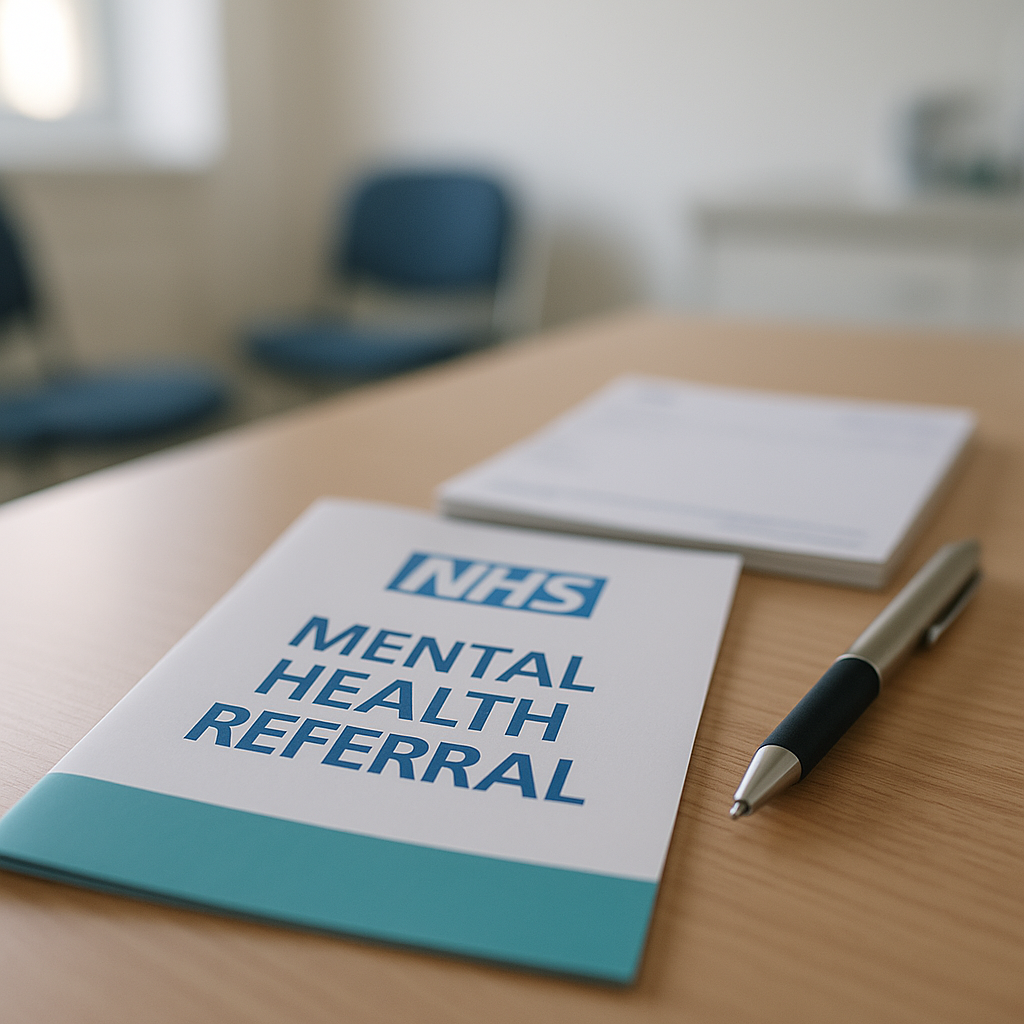
    NHS mental health referral documents on a GP desk highlighting the mental health crisis 2026
    NHS mental health referral documents on a GP desk highlighting the mental health crisis 2026

    Second, the conditions generating poor mental health have not eased. The cost of living crisis ground on through 2025. Housing insecurity is at generational highs. Job market anxiety, particularly among younger workers worried about automation, has added a novel layer of existential dread to ordinary working life. Social media usage has intensified rather than levelled off, and the relationship between heavy platform use and depression in adolescents is now supported by enough research to be treated as settled science rather than a talking point.

    Third, loneliness has quietly become structural. The shift to remote and hybrid work removed the incidental social contact that many people relied on without even realising it. Town centres have hollowed out. Community institutions, from churches to working men’s clubs to local sports leagues, have continued their long decline. The connective tissue of everyday social life has thinned, and for people who were already isolated, the fraying has been severe.

    What Are Health Systems Actually Doing?

    The NHS Long Term Plan committed to expanding mental health services, and there has been real investment. Talking therapies through the Improving Access to Psychological Therapies (IAPT) programme, now rebranded as NHS Talking Therapies, treated around 1.2 million people in England last year. The model has been expanded, waiting times for some conditions have genuinely improved, and digital therapy options have broadened access for people who previously would not have sought face-to-face support.

    Community mental health teams have been redesigned in many areas to offer more integrated care, linking up primary care, social services, and voluntary sector organisations. There is growing recognition that handing someone a prescription or a six-week CBT course does not address the social determinants that made them ill in the first place. Housing, debt, social isolation, unemployment: these need to be treated as health issues, not peripheral concerns.

    Internationally, countries like Ireland and New Zealand have made significant investments in mental health infrastructure through dedicated funding frameworks. The BBC Health section has covered several of these models in depth, particularly the shift in Australia towards community-based early intervention, which has shown meaningful reductions in hospitalisation rates in some regions.

    Prevention is where the most interesting thinking is happening right now. Prescribing social activities, green space, volunteering, and peer support groups. Some GPs in pilot schemes across the UK have been offering what are called social prescriptions alongside clinical treatments, connecting patients to community resources rather than simply writing another referral. The evidence base is still being built, but early results are genuinely promising.

    Is There Any Reason for Optimism?

    Honestly? Some. The cultural shift around talking about mental health is real and it matters. A teenager in 2026 who is struggling is more likely to tell someone than their parents’ generation was. That creates an opening. Schools, at their best, are doing more than they ever have to build emotional literacy into the curriculum.

    The mental health crisis 2026 will not be solved by a single policy announcement or a viral campaign. It will require sustained investment in services, serious effort to address the social conditions that breed poor mental health, and a long-term commitment to treating psychological wellbeing as seriously as physical health. The fact that we are having the conversation more loudly than ever is a starting point. But we should not mistake volume for progress.

    The gap between awareness and action remains enormous. Closing it is the work of this decade, and probably the next one too. What is certain is that we cannot afford to keep treating the mental health crisis as a problem to be managed quietly, one waiting list at a time.

    Frequently Asked Questions

    How bad is the mental health crisis in the UK in 2026?

    NHS England data shows record numbers of adults on mental health waiting lists, exceeding 1.9 million people at points during 2025. Around one in five children aged eight to sixteen in the UK now meets the criteria for a probable mental disorder, making this one of the most pressing public health challenges the NHS faces.

    Why are anxiety and depression rates still rising despite more awareness?

    Greater awareness has increased demand for services without a proportional increase in capacity or funding. The underlying causes of poor mental health, including the cost of living crisis, housing insecurity, social isolation, and heavy social media use, have also intensified rather than eased in recent years.

    What is the NHS doing to address the mental health crisis?

    The NHS has expanded its Talking Therapies programme, treating over 1.2 million people annually in England, and has redesigned community mental health teams to offer more integrated care. Social prescribing pilots are also connecting patients to community and voluntary sector support alongside clinical treatment.

    How serious is loneliness as a public health problem in the UK?

    The UK government’s own figures suggest roughly 3.83 million adults in England experience chronic loneliness. Researchers have found that severe social isolation carries health risks comparable to smoking fifteen cigarettes a day, prompting the government to maintain dedicated policy focus on tackling loneliness.

    Which age groups are most affected by the mental health crisis in 2026?

    Young people are experiencing some of the sharpest rises, with rates of anxiety and depression among teenagers and young adults reaching record levels. Older adults living alone are also significantly affected, particularly due to loneliness and reduced access to community support following the pandemic.