Tag: mental health 2026

  • Mental Health Emergency: Why Anxiety and Depression Rates Are Surging Worldwide

    Mental Health Emergency: Why Anxiety and Depression Rates Are Surging Worldwide

    The numbers are stark. Rising mental health diagnoses are no longer a quiet undercurrent in public health reporting; they are the headline. Across the UK, Europe, and much of the developed world, rates of anxiety, depression, and related conditions have climbed to levels that were almost unimaginable a decade ago. The World Health Organisation estimates that more than one billion people globally are now living with some form of mental health condition. That is not a rounding error. That is a structural shift in how human beings are experiencing daily life.

    The question worth asking is not simply “why are people struggling more?” It is whether the systems built to help them have any realistic chance of keeping up. Spoiler: the answer is complicated, and not particularly reassuring.

    Young woman sitting alone in a London park, reflecting the reality of rising mental health diagnoses
    Young woman sitting alone in a London park, reflecting the reality of rising mental health diagnoses

    What the Data Actually Shows

    In England alone, NHS Digital data shows that one in four adults experiences a diagnosable mental health problem in any given year. Referrals to NHS talking therapies exceeded 1.2 million in 2025, and waiting lists for specialist services continue to stretch beyond what most people would consider acceptable. Younger people are disproportionately affected: rates of anxiety and depression among 16 to 24-year-olds have more than doubled since 2000, according to figures from the ONS well-being data series.

    Globally, the picture is similarly troubling. The WHO reports a 25 per cent increase in anxiety and depression since 2020, much of it triggered initially by the pandemic but now sustained by a broader set of pressures. Low- and middle-income countries are particularly exposed, given that around 75 per cent of people with mental health conditions in those nations receive no treatment at all.

    What Is Actually Driving This Surge

    There is no single cause. That is precisely what makes this so difficult to address. Several forces have converged at the same time, and they are not all pulling in the same direction.

    Economic pressure is a significant factor. After years of inflation, squeezed wages, and housing insecurity, the psychological toll of financial stress has compounded. Research consistently links financial precarity to heightened anxiety, and 2026 is not, for most households, a year of relief. The link between money worries and mental health is not new, but its current scale is. When people cannot afford heating or decent food, their mental health suffers. It really is that direct.

    Social fragmentation is another driver. Communities have thinned out. High streets have changed. Loneliness, once treated as a niche issue affecting the elderly, now cuts across all age groups. A significant portion of young adults in the UK report feeling chronically isolated despite being more digitally connected than any generation before them. The irony is not lost on anyone paying attention.

    Social media deserves its own paragraph, though perhaps not in the way the discourse usually frames it. The research is more nuanced than “Instagram causes depression.” What the evidence does suggest is that certain patterns of use, particularly passive scrolling, social comparison, and exposure to distressing news content, correlate with worse mental health outcomes. The sheer volume of global catastrophe that arrives on a phone screen every morning is a relatively recent phenomenon, and the human brain has not adapted to it.
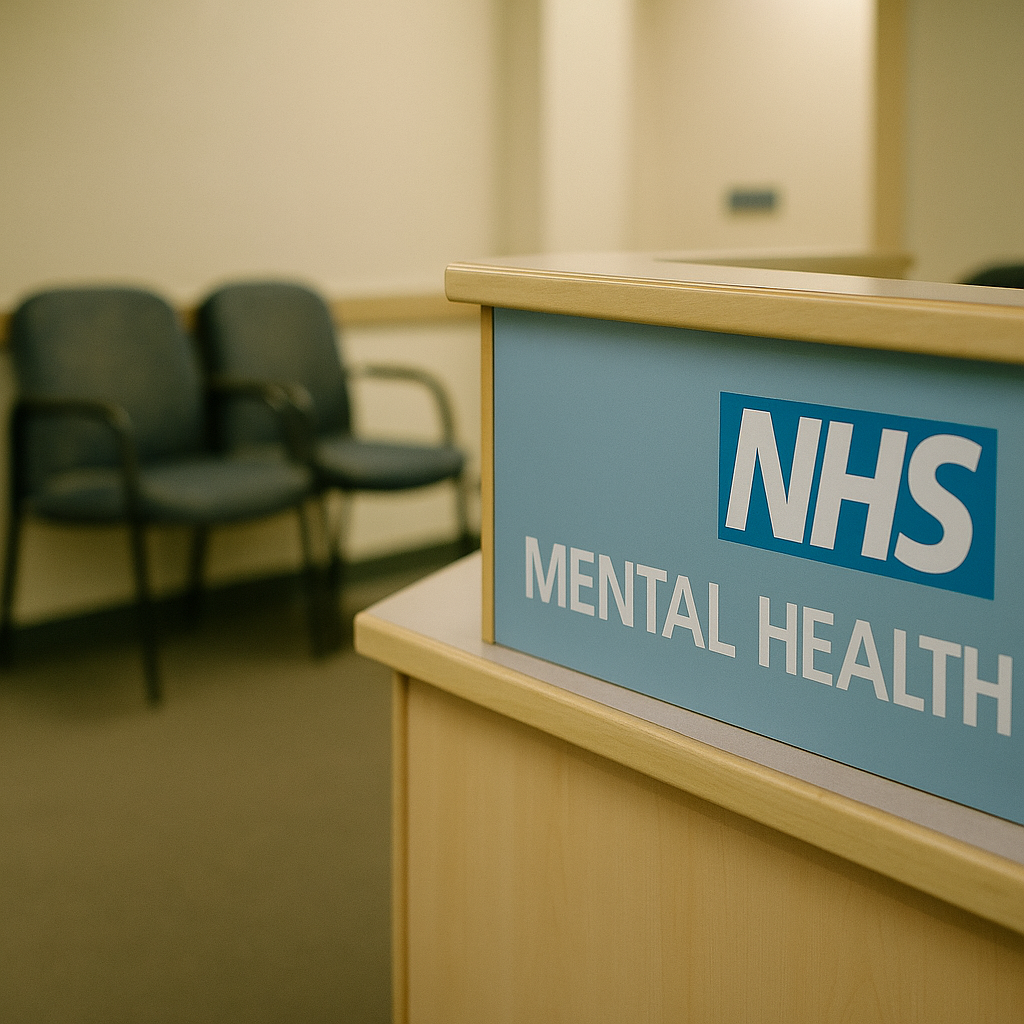
    NHS mental health clinic waiting area illustrating pressure on services from rising mental health diagnoses
    NHS mental health clinic waiting area illustrating pressure on services from rising mental health diagnoses

    Is the Healthcare System Close to Meeting Demand

    Bluntly, no. Not in the UK, and not in most comparable countries either.

    The NHS has invested in expanding talking therapies, and services like IAPT (Improving Access to Psychological Therapies) have helped many people. But the demand consistently outstrips capacity. In many areas, waiting times for cognitive behavioural therapy run to six months or longer. For more complex conditions such as personality disorders or severe PTSD, specialist services are often genuinely inaccessible to anyone without significant means or exceptional persistence.

    Private therapy has grown substantially to fill the gap, but it sits well beyond the budget of many people. Sessions typically cost between £50 and £100 per hour in most UK cities. That is not a realistic option for someone on a median wage managing a mortgage, rising energy bills, and possibly caring for children or elderly relatives.

    There is also a structural problem with how mental health sits within broader healthcare systems. Oli and I were talking about this recently, and the point that kept coming up is that mental health services have historically been underfunded relative to physical health, treated as separate rather than integrated, and chronically short of trained staff. The NHS mental health workforce is growing, but the training pipeline for psychiatrists, clinical psychologists, and specialist nurses takes years. The recruitment and retention problems are real.

    The Economic Cost Nobody Talks About Enough

    Poor mental health costs the UK economy an estimated £118 billion per year, according to a 2025 analysis by the Centre for Mental Health. That figure accounts for lost productivity, healthcare costs, and welfare spending. For context, that is more than the entire NHS budget for England. The economic argument for investing heavily in mental health services is not charitable; it is rational. And yet the investment has never matched the scale of the problem.

    Employers are slowly waking up. Workplace mental health policies are more common than they were five years ago. Apps, employee assistance programmes, and mental health days have proliferated. Some of it is genuinely useful. Some of it is performative. The distinction matters, and most workers can tell the difference.

    Technology, Self-Help, and What Fills the Gap

    In the absence of sufficient professional support, people are finding other ways to manage. Mindfulness apps, online communities, peer support groups, and lifestyle changes play a real role for many. None of them are a substitute for clinical treatment when it is genuinely needed, but they are not nothing either.

    The broader wellness economy has expanded accordingly. People are thinking more carefully about sleep, exercise, diet, and their daily environments. Even small lifestyle decisions, like stepping away from the phone for an hour, taking a proper lunch break, or downloading a free uk shopping app to take the stress out of budgeting and high street shopping, can reduce friction and anxiety at the margins. These are not cures. But they are part of how people are coping.

    Where Does This Go From Here

    Rising mental health diagnoses are not going to reverse themselves without sustained, deliberate action. The causes are systemic and the solutions need to be proportionate. That means sustained public funding, better integration of mental and physical healthcare, earlier intervention in schools, and genuine attention to the social conditions that drive poor mental health in the first place.

    There are glimmers of progress. Awareness has never been higher, and the stigma around seeking help has genuinely reduced, particularly among younger people. That matters. But awareness without accessible treatment is just a nicer way of watching people struggle.

    The scale of this moment deserves to be taken seriously. One billion people living with mental health conditions is not a statistic to scroll past. It is a global emergency that happens to be very quiet, very underfunded, and very easy to keep ignoring until it lands on your doorstep.

    Frequently Asked Questions

    Why are mental health diagnoses increasing so rapidly?

    A combination of economic pressure, social isolation, social media use, and residual effects of the pandemic have driven rising mental health diagnoses across all age groups. Greater awareness and reduced stigma have also made more people willing to seek a diagnosis, which contributes to the statistical increase.

    How long is the NHS waiting list for mental health treatment?

    Waiting times vary significantly by region and type of service. For NHS talking therapies, many areas report waits of three to six months. Specialist services for complex conditions such as PTSD or eating disorders can involve waits of a year or more in some parts of England.

    Which age group is most affected by rising anxiety and depression rates?

    Young people aged 16 to 24 have seen the sharpest increases, with rates of anxiety and depression more than doubling since 2000 according to ONS data. However, the rise spans all demographics, including working-age adults and older populations experiencing loneliness and financial stress.

    Is social media actually causing the mental health crisis?

    The evidence is more nuanced than a direct causal link. Research suggests certain patterns of use, particularly passive scrolling and social comparison, correlate with poorer mental health outcomes. Heavy exposure to distressing news content also plays a role, though individual responses vary considerably.

    What can someone do if they cannot access NHS mental health support quickly?

    Charities such as Mind, Samaritans, and Rethink Mental Illness offer free support and helplines. GP referrals remain the main NHS route, and self-referral to IAPT (Improving Access to Psychological Therapies) services is available in many areas. Community peer support groups and evidence-based self-help resources can also provide meaningful interim support.


  • The Mental Health Epidemic: Why More People Than Ever Are Struggling in 2026

    The Mental Health Epidemic: Why More People Than Ever Are Struggling in 2026

    The global mental health crisis has become one of the defining public health stories of our era. Rates of anxiety, depression, and psychological distress have been climbing steadily for years, and by 2026 the picture is stark. More people worldwide are seeking help than ever before, more are going without it, and governments are only beginning to wrestle seriously with the scale of the problem. Oskar and I have been digging into what is driving this, and the answer is, as you might expect, complicated.

    It would be tempting to point to a single culprit. But the reality is that several powerful forces have converged at the same time, each one compounding the others. Post-pandemic aftershocks, economic anxiety, social media pressure, and crumbling community structures have all played a role. Understanding how they interact matters if we are going to respond effectively.

    Person sitting alone in an urban park at dusk reflecting the emotional weight of the global mental health crisis
    Person sitting alone in an urban park at dusk reflecting the emotional weight of the global mental health crisis

    Post-Pandemic Aftershocks Are Still Being Felt

    The psychological damage inflicted by the Covid-19 pandemic did not simply evaporate when restrictions lifted. Prolonged isolation rewired social habits for many people, particularly younger adults who spent formative years cut off from peers, workplaces, and the ordinary texture of social life. Grief remained unprocessed. Burnout, especially among healthcare workers and teachers, became chronic rather than acute.

    Research published across several countries in the past two years consistently shows elevated rates of post-traumatic stress, complicated grief, and social anxiety that are directly traceable to the pandemic period. What makes this especially challenging is that many people experiencing these symptoms do not recognise them as connected to events that feel, on the surface, like ancient history. The body and mind keep their own timelines.

    Economic Anxiety and the Cost of Living

    It is impossible to talk about the global mental health crisis without addressing money. Financial insecurity is one of the most reliably powerful drivers of psychological distress in the research literature, and the cost-of-living pressures that began building in the early 2020s have not resolved. In the UK, housing costs relative to income remain at generational highs. Young people in particular feel locked out of stability, with homeownership, pension security, and even basic savings feeling increasingly out of reach.

    The relationship between financial stress and mental health is bidirectional. Anxiety and depression reduce productivity and decision-making capacity, which in turn worsens financial situations. This feedback loop is especially brutal for people without a safety net. Citizens Advice in the UK reported a continued surge in people seeking help for debt-related mental health crises well into this year, and similar patterns are visible across the US, Australia, and much of Europe.

    Hands resting on a journal beside a switched-off smartphone illustrating the personal impact of the global mental health crisis
    Hands resting on a journal beside a switched-off smartphone illustrating the personal impact of the global mental health crisis

    Social Media and the Psychological Toll of Constant Comparison

    Social media deserves scrutiny here, though the picture is more nuanced than either its fiercest critics or most ardent defenders tend to acknowledge. The evidence that heavy social media use correlates with poorer mental health outcomes, particularly in teenage girls, has strengthened considerably over recent years. Platforms built around curated self-presentation and engagement-driven algorithms create environments optimised for comparison and emotional reactivity, not for wellbeing.

    That said, social media is also a lifeline for people in rural or isolated communities, for those with minority identities, and for anyone whose support network is geographically scattered. The challenge is not simply switching off, but redesigning how these platforms operate. Several European countries have moved to impose stricter age verification and usage limits for under-16s, and the debate around algorithmic transparency is finally moving from academic papers into actual legislation.

    There is an interesting parallel in how we manage our physical environments versus our digital ones. Choices about how we design our homes, even something as mundane as selecting vertical blinds to control light and create a calm, focused space, reflect a growing awareness that our surroundings shape our mood. The same principle needs to apply to the digital spaces we inhabit daily.

    What Resources and Policy Changes Are Emerging?

    There are genuine reasons for cautious optimism in how the global mental health crisis is being addressed at a policy level. The World Health Organisation has significantly expanded its mental health investment framework, urging member states to allocate at least five per cent of health budgets to mental health services. Several countries, including New Zealand, Portugal, and Scotland, have introduced or extended mental health legislation that moves away from purely reactive crisis intervention toward community-based, preventative care.

    In the UK, the NHS Long Term Workforce Plan includes commitments to expand the psychological therapies workforce, and waiting times for talking therapies, while still far too long, have begun to shorten in some regions. Workplace mental health has moved from a HR buzzword into something approaching legal obligation, with updated duty-of-care guidance placing greater responsibility on employers to actively monitor and support staff wellbeing.

    Peer support networks, crisis text lines, and app-based therapy tools have scaled considerably. These are not replacements for clinical care, but they do serve as accessible first points of contact for people not ready or able to engage with formal services. Organisations like Mind, Samaritans, and their international equivalents have continued to adapt their outreach, meeting people where they are rather than waiting for them to knock on a clinic door.

    What Needs to Happen Next

    The honest answer is that incremental improvements will not be sufficient. The global mental health crisis requires sustained structural investment, not just in clinical services but in the social determinants of mental health: housing security, economic opportunity, community belonging, and digital environments that do not systematically erode self-worth. Governments, tech companies, employers, and communities each have a role to play. The encouraging thing is that the conversation has finally, genuinely begun. Whether the political will follows is the question Oskar and I will keep watching closely.

    Frequently Asked Questions

    What is causing the global mental health crisis in 2026?

    A combination of factors is responsible, including the lasting psychological effects of the Covid-19 pandemic, persistent economic anxiety driven by high living costs, and the mental health impact of social media algorithms. These pressures often compound each other, making the overall burden significantly heavier than any single cause would suggest.

    How does social media affect mental health?

    Heavy social media use has been linked to increased rates of anxiety, depression, and low self-esteem, particularly among teenagers. Platforms designed around comparison and algorithmic engagement can reinforce negative thinking patterns, though they also provide valuable community connection for isolated individuals. The key concern is platform design rather than connectivity itself.

    What mental health support is available in the UK in 2026?

    NHS Talking Therapies remains the primary route to free psychological support in England, with referral available through your GP or via self-referral in many areas. Organisations like Mind, Samaritans, and Shout (crisis text line) offer additional free support. Workplace mental health provision has also expanded, with employers increasingly required to offer structured wellbeing support.

    Are governments doing enough to address the mental health crisis?

    Progress has been made in terms of awareness and legislation, but most public health experts argue that funding and structural investment remain inadequate relative to the scale of need. The WHO has called on member states to dedicate at least five per cent of health budgets to mental health, a target most countries have not yet reached.

    What can individuals do to protect their mental health right now?

    Practical steps include limiting passive social media scrolling, maintaining regular sleep patterns, staying physically active, and nurturing real-world social connections. Seeking help early rather than waiting for a crisis is consistently shown to improve outcomes. Accessing free resources like talking therapies, peer support apps, or crisis lines is a legitimate and sensible starting point.