
Buying a new car in 2026 is more complicated than it used to be. Petrol prices have yo-yoed, the charging network has quietly grown up, and manufacturers have flooded the market with options that range from genuinely brilliant to slightly baffling. If you’re trying to work out whether to go fully electric or stick with a hybrid, you’re not alone. The electric vs hybrid cars 2026 debate is the most common question we hear from readers, and honestly, there’s no single right answer. But there are better answers, depending on where you live, how you drive, and what your bank account looks like.
What Actually Counts as a Hybrid in 2026?
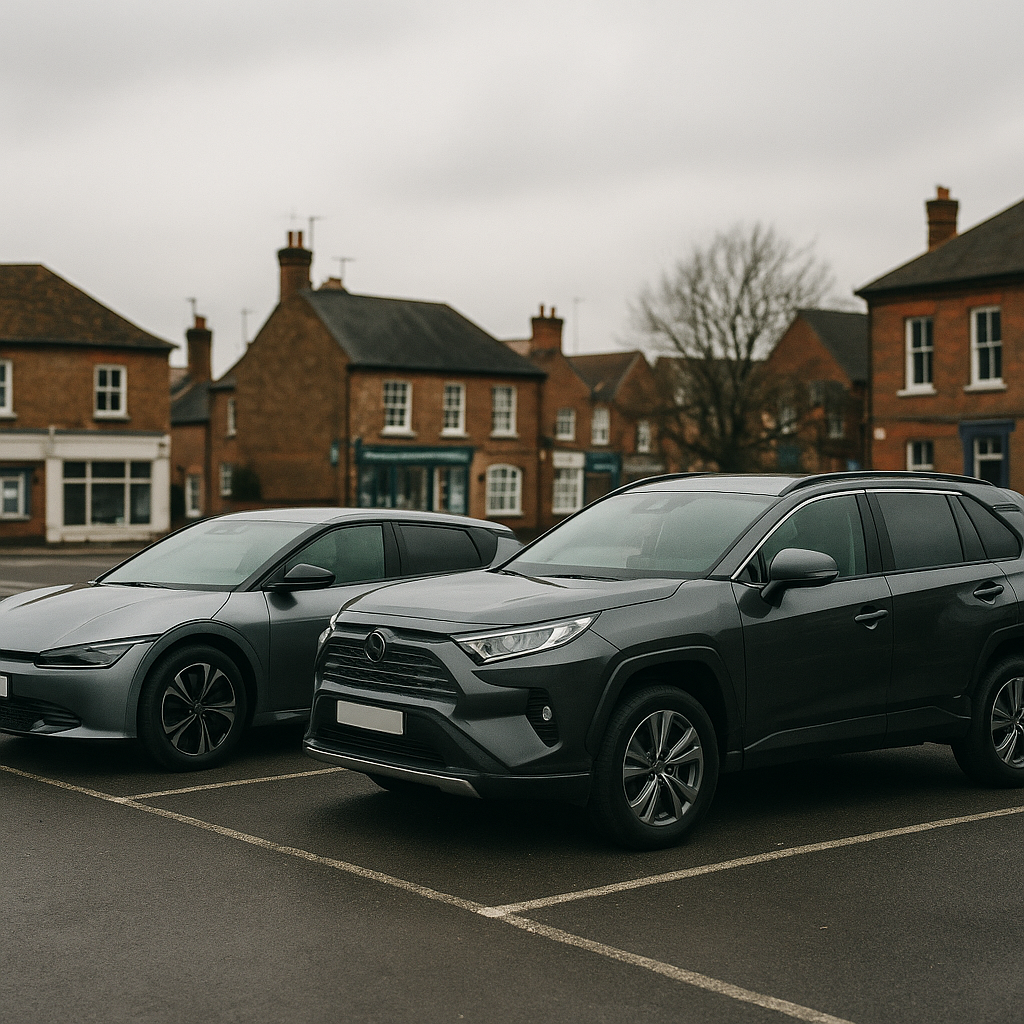
Before we get into the numbers, it’s worth being clear about what we mean. The term “hybrid” has become almost meaninglessly broad. You’ve got mild hybrids, which are essentially just petrol engines with a small battery assist; full hybrids like the Toyota Yaris Cross, which can potter around on electricity alone for short stretches; and plug-in hybrids (PHEVs), which can be charged from a wall socket and offer anywhere between 30 and 70 miles of pure electric range depending on the model. That last category is the one that genuinely competes with full EVs for a lot of drivers.
Full battery electric vehicles (BEVs), meanwhile, have no combustion engine whatsoever. Think Volkswagen ID.3, Hyundai IONIQ 6, or the increasingly popular BYD Seal. They run entirely on electricity and their ranges now typically sit between 200 and 350 miles on a full charge, with some premium models stretching further.
Running Costs: The Numbers That Actually Matter
This is where things get interesting. Home charging a BEV overnight on a standard tariff currently costs somewhere in the region of £3 to £6 for a full charge, depending on your energy supplier and whether you’re on an EV-specific off-peak deal. Compare that to filling a family hatchback with petrol, which will set you back around £60 to £80 at most forecourts right now, and the monthly saving is obvious.
PHEVs are trickier. If you genuinely plug them in every day and most of your journeys are under 40 miles, your fuel costs can be remarkably low. But plenty of PHEV owners never bother plugging in, which means they’re lugging around a heavy battery for no reason and getting worse fuel economy than a regular petrol car. The RAC has published data showing this is far more common than manufacturers would like to admit.
Insurance and servicing costs for EVs have come down since the early days, though they’re still marginally higher than their petrol equivalents. Tyres wear faster on heavier EVs, and if you ever need a new battery outside warranty, that remains an expensive conversation. On the other hand, no oil changes, no clutch wear, no exhaust to replace. Over a four-year ownership cycle, most independent analyses put BEV total cost of ownership at broadly comparable with, or slightly cheaper than, an equivalent petrol car for drivers covering more than 8,000 miles a year.
Range Anxiety: Is It Still a Real Problem in 2026?
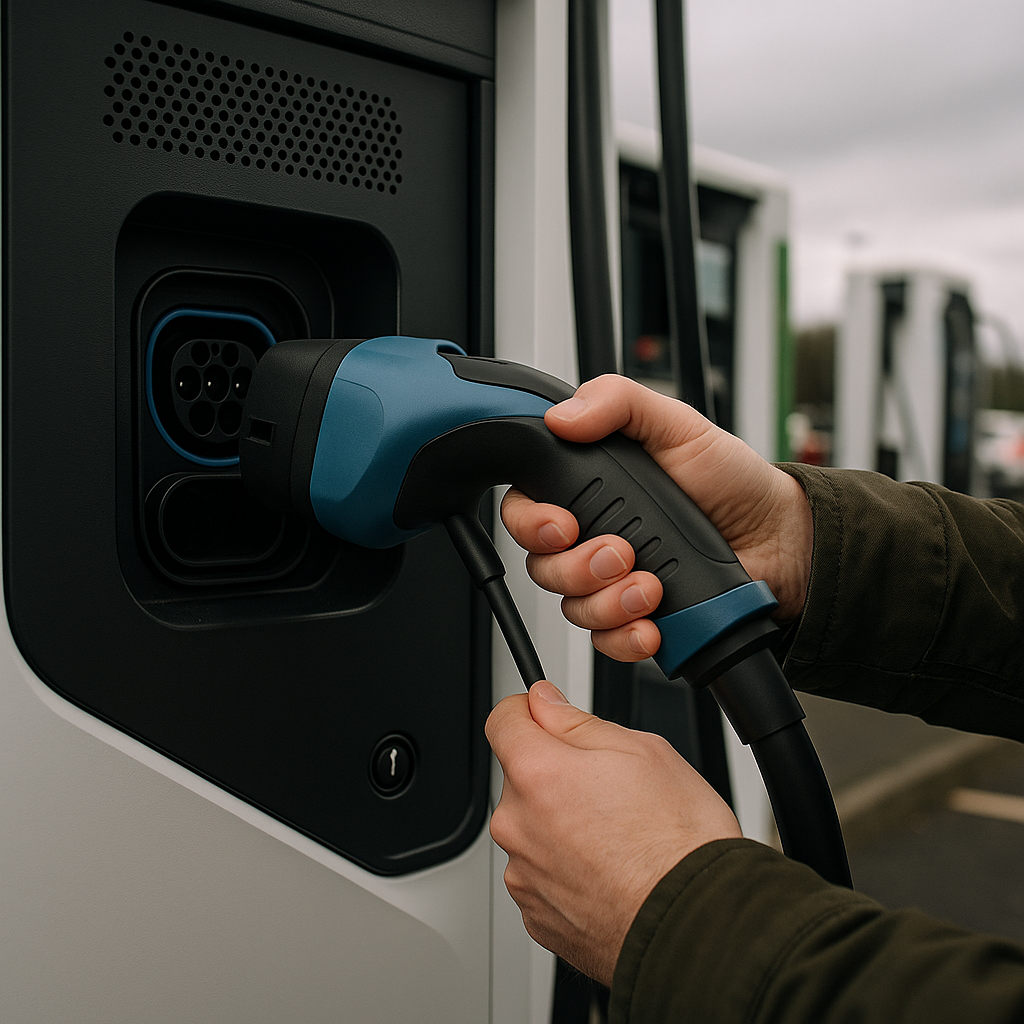
Range anxiety was the dominant objection to electric cars five years ago. In 2026, it’s a more nuanced story. The UK’s public charging network has expanded considerably. According to government statistics, there are now over 70,000 public charging points across the UK, with rapid and ultra-rapid chargers available on every major motorway corridor. A 20-minute stop at an ultra-rapid charger can add 150 miles of range to most modern EVs.
That said, the experience is not uniformly good. Rural areas still have significant gaps. Reliability of public chargers remains patchy, with some estimates suggesting one in five rapid charger interactions involves some kind of fault or failed payment. If you live in a flat without off-street parking, home charging is simply not an option, which changes the calculation completely.
Hybrids sidestep almost all of this. A PHEV driver can charge at home for short daily runs and simply fill up with petrol on longer trips. For people who drive to Scotland or Cornwall twice a year but commute 15 miles each way the rest of the time, that flexibility is genuinely valuable. For urban drivers who do most of their miles locally and can charge at home, a full BEV is probably the smarter choice.
Government Incentives and Tax in 2026
The Plug-in Car Grant, which used to offer up to £1,500 off a new EV, was quietly wound down for private buyers. But the incentive picture is not entirely bleak. Company car drivers still benefit from significantly lower Benefit in Kind (BIK) tax rates on BEVs compared to petrol or even PHEV vehicles, making a full electric the obvious choice if your employer is offering a salary sacrifice scheme or company car allowance.
Road tax is changing too. EVs became subject to Vehicle Excise Duty from April 2025, ending their free road tax advantage, though the standard rate remains lower than for higher-emission vehicles. PHEVs are taxed according to their CO2 emissions in the usual way. The incentive gap has narrowed, but the electric vs hybrid cars 2026 equation still broadly favours full EVs for lower ongoing costs, especially for higher-mileage drivers.
So Which Should You Actually Buy?
Here’s Oli and Oskar’s honest take: if you have a driveway or a garage and you cover more than 10,000 miles a year, a full BEV is almost certainly the better financial decision over a three to four year period. The charging infrastructure, while imperfect, is functional enough for most people’s lives. The running costs are lower. The driving experience, with instant torque and near-silent cruising, is genuinely better.
If you live in a flat, regularly drive over 250 miles in one go, or simply can’t stomach the uncertainty of public charging reliability, a PHEV is a sensible bridge. It’s not cowardly to pick one; it’s practical. Just commit to plugging it in daily or you’re wasting both money and the planet’s patience.
Mild hybrids and standard full hybrids sit in an odd middle ground. They’re comfortable, well-built cars, but they don’t offer the charging flexibility of a PHEV or the running cost advantages of a BEV. For buyers who are genuinely undecided and not ready to change their habits, a full hybrid like the Toyota Corolla remains a capable default, but it probably isn’t where the market is heading.
The electric vs hybrid cars 2026 conversation has shifted from “should I make the leap” to “which version of electric is right for me right now.” That’s real progress, even if there’s still plenty of room for improvement in how the UK supports the transition.
Frequently Asked Questions
Is it cheaper to run an electric car or a hybrid in 2026?
For drivers with home charging, a fully electric car is generally cheaper to run day-to-day, with home charging costing roughly £3 to £6 for a full charge versus £60 to £80 for a petrol fill-up. Plug-in hybrids can also be cheap if plugged in regularly, but full hybrids offer fewer running cost savings over petrol equivalents.
How many public EV charging points are there in the UK in 2026?
There are now over 70,000 public charging points across the UK according to government statistics, including rapid and ultra-rapid chargers at most motorway service stations. However, coverage in rural areas remains inconsistent and charger reliability is still an occasional issue.
Do you still get a government grant for buying an electric car in 2026?
The Plug-in Car Grant for private buyers was wound down before 2026, so there is no direct purchase subsidy for most private buyers. However, company car drivers still benefit from significantly lower Benefit in Kind tax rates on BEVs, making salary sacrifice schemes particularly attractive.
What is the difference between a hybrid and a plug-in hybrid?
A standard hybrid (like the Toyota Yaris) uses a small battery that charges itself through regenerative braking and cannot be plugged in. A plug-in hybrid (PHEV) has a larger battery that can be charged from a wall socket, offering typically 30 to 70 miles of pure electric range before the petrol engine takes over.
Is range anxiety still a problem with electric cars in 2026?
It depends on your situation. Most modern EVs offer 200 to 350 miles of real-world range, and the UK’s rapid charging network covers all major motorway routes. The bigger challenges are unreliable public chargers and lack of home charging options for flat dwellers, rather than raw range limitations.