
Back in the summer of 2023, the country briefly lost its collective mind when the government announced that dozens of schools across England would not reopen after the summer holidays. The culprit was reinforced autoclaved aerated concrete, better known as RAAC, a cheap, bubbly building material used extensively in public sector construction from the 1950s through to the 1990s. It had a lifespan. That lifespan was up. And apparently nobody in government had been paying close enough attention to notice.
Three years on, the question Oli and I kept coming back to when we started looking into this was a simple one: has it actually been sorted? The short answer, frustratingly, is no. Not even close.
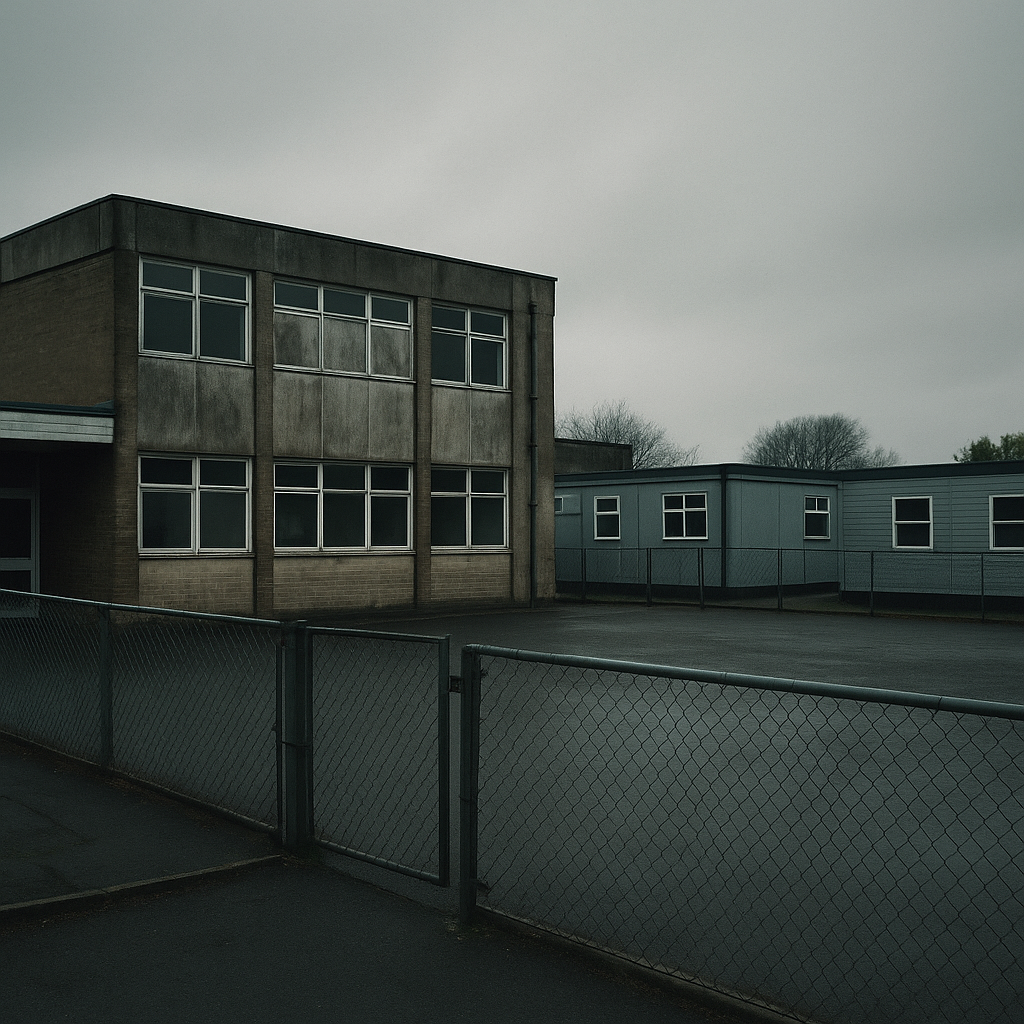
What Exactly Is RAAC and Why Is It So Dangerous?
RAAC school buildings were constructed using a lightweight, porous concrete that was considered an affordable, efficient solution for post-war Britain. Schools, hospitals, courts, and government offices all went up with the stuff. The problem is that RAAC has a design life of roughly 30 years, it absorbs water, and once it begins to degrade, the roof planks can fail with very little warning. Not a slow structural sag you can spot and act on. A sudden, catastrophic collapse.
A roof plank partially collapsed at a primary school in Saffron Walden back in 2018, injuring a child. That incident should have been a flare fired into the sky. Instead, it took another five years and a national crisis before the Department for Education began treating RAAC as the emergency it had always been. The BBC’s coverage at the time documented the chaos as families scrambled for alternative arrangements days before term began.
How Many Schools Were Affected?
When the Department for Education published its initial findings in September 2023, 147 schools and colleges in England were confirmed to have RAAC present in their structures. That number climbed as the survey work continued. By early 2024, the figure had risen to over 200 education settings. And here is the bit that genuinely surprised us when we dug into this: the government’s own estimates suggested there could be hundreds more schools that had never been properly surveyed at all.
Local authorities were asked to self-report, which is a bit like asking someone to mark their own homework during an exam they were not expecting. Some councils were thorough. Others, frankly, were not. Schools built before detailed records were kept, buildings that have been extended and modified over decades, PFI-managed estates where responsibility for surveying was murky, these all added layers of uncertainty that a rushed audit process could not easily cut through.
Where Does the Remediation Programme Actually Stand in 2026?
The government committed significant funding to address RAAC school buildings, with the School Rebuilding Programme expanded to prioritise RAAC-affected sites. In theory, schools at highest risk would be fast-tracked for either temporary structures, immediate remediation, or full rebuilds. In practice, progress has been painfully slow.
Construction supply chains stretched thin after the pandemic, planning processes that move at their own pace regardless of urgency, and a budget squeeze that has squeezed capital spending across the public sector have all conspired to drag timelines out. Several schools that were using temporary modular classrooms in late 2023 were still in those same temporary structures going into the 2025-26 academic year. Modular classrooms in January are not exactly the ideal learning environment, particularly when you are in the north of England and the temperature is in single digits.
There is also the question of buildings beyond schools. Hospitals, courts, and other public buildings constructed in the same era from the same materials face identical risks. The NHS has been running its own parallel survey process for estates with suspected RAAC, and the picture there is similarly incomplete. It is the kind of slow-moving institutional failure that does not generate the same headlines as the initial crisis but compounds the original negligence at every turn.
The Accountability Gap Nobody Wants to Close
Who is actually responsible for the fact that children were sitting under potentially fatal ceilings for years, and that many are still in compromised or temporary learning environments three years after the alarm was raised? This is where the story gets murky in a very British way.
The DfE points to local authorities. Local authorities point to the DfE’s funding decisions. Academy trust chains, which now operate a significant chunk of state schools, had their own surveying obligations but variable capacity to act on findings without central support. The contractors who built these schools are long gone in most cases. And the civil servants who signed off on RAAC as an acceptable building material in the 1970s are retired, if they are still with us at all.
It is worth noting that the structural hazards in older public buildings are not limited to RAAC. Asbestos remains present in a significant proportion of pre-2000 school buildings, and materials like Artex and Textured Coatings applied to walls and ceilings in that same post-war construction era can also contain asbestos fibres if disturbed. The RAAC crisis has, if nothing else, forced a broader conversation about what legacy building materials are still quietly present in schools and other public buildings across the country.
What Parents and Teachers Are Dealing With Right Now
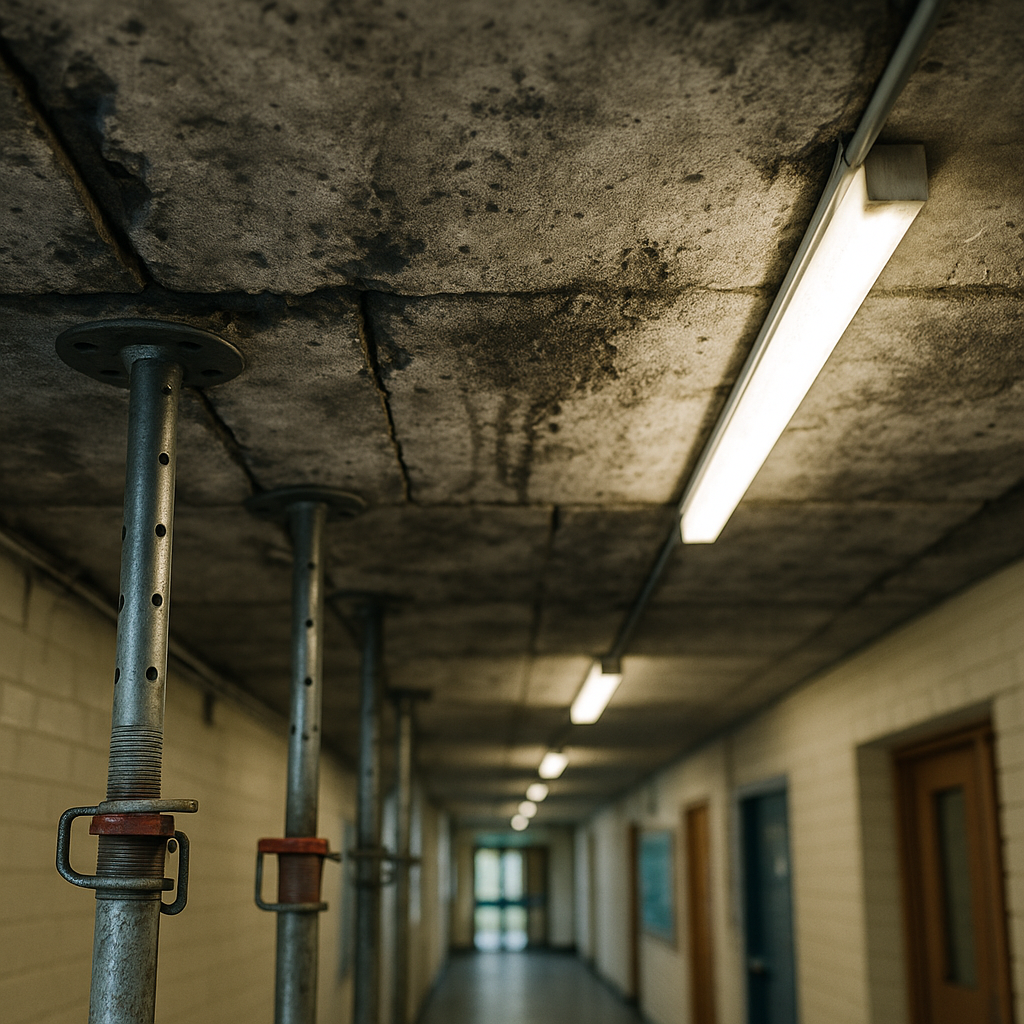
Talk to anyone working in a school that has been through the RAAC process and a consistent picture emerges. Teachers juggling split-site arrangements across a town because their school building was condemned. Pupils doing their GCSEs in a sports hall because the science block roof is propped up with steel supports. Head teachers spending hours every term liaising with surveyors, council officers, and DfE officials instead of focusing on the actual running of a school.
The children themselves, particularly those at secondary school age who have lived through a pandemic-disrupted education and are now navigating RAAC-disrupted schools, have absorbed another round of uncertainty at exactly the age when stability and routine matter most.
Is Anyone Actually Being Held to Account?
Parliament has had debates. Committees have published reports. Ministers have given assurances. And yet no individual, no department, no organisation has faced any meaningful consequence for the fact that a known structural risk was allowed to sit unaddressed for years in buildings full of children.
The National Audit Office has examined the DfE’s management of the school rebuilding programme and found it wanting on several fronts, particularly around transparency of prioritisation and the pace of delivery. But NAO reports, however damning, do not carry enforcement power. They make recommendations. The government notes them. Progress continues at its own pace.
What the RAAC school buildings scandal ultimately reveals is a systemic problem with how Britain maintains its public estate. Decades of underinvestment in school buildings, a surveying culture that relied on self-reporting and low-priority maintenance budgets, and a political incentive structure that rewards ribbon-cutting over quiet, essential upkeep. Building new schools is visible and popular. Checking whether the ceiling in an existing school is about to come down is not.
What Needs to Happen Next
There are genuine asks that campaigners and teaching unions have been making consistently. A fully independent national audit of all remaining public buildings with suspected RAAC, with results made publicly available. A binding timeline for remediation with proper funding attached, not aspirational targets that quietly slip. And a clear accountability framework so that if a school with a known RAAC problem suffers a structural failure, there is no ambiguity about who was responsible for failing to act.
None of that feels like an unreasonable ask when we are talking about children. And yet here we are in 2026, still having essentially the same conversation that started in the summer of 2023. Oskar and I will keep watching this one. It is far from over.
Frequently Asked Questions
What is RAAC and why is it dangerous in school buildings?
RAAC stands for reinforced autoclaved aerated concrete, a lightweight, porous building material widely used in UK public sector construction from the 1950s to the 1990s. It has a limited design life of around 30 years and degrades as it absorbs moisture, making it susceptible to sudden, unpredictable roof collapse rather than a gradual visible deterioration.
How many schools in England have RAAC?
As of early 2024, over 200 education settings in England had been confirmed to contain RAAC. However, concerns remain that hundreds more buildings may have never been properly surveyed, particularly older schools with incomplete construction records or those managed through PFI agreements.
Is the government fixing RAAC school buildings and how long will it take?
The government expanded the School Rebuilding Programme to prioritise RAAC-affected sites and allocated funding for urgent works and temporary structures. However, progress has been significantly slower than promised due to construction supply chain pressures, planning delays, and capital budget constraints, meaning many schools remain in temporary accommodation well into 2026.
Are other public buildings in the UK also affected by RAAC?
Yes. RAAC was used across a wide range of post-war public sector buildings including hospitals, courts, leisure centres, and government offices. NHS England has been conducting its own RAAC survey programme across its estate, and the full picture of affected non-school buildings is still being established.
What can parents do if they think their child's school has RAAC?
Parents can ask their school directly whether RAAC has been identified on the premises and request information on any mitigation or remediation measures in place. Schools are required to communicate significant structural risks to families. The Department for Education also publishes updates on its School Rebuilding Programme, which lists settings included in the programme.