
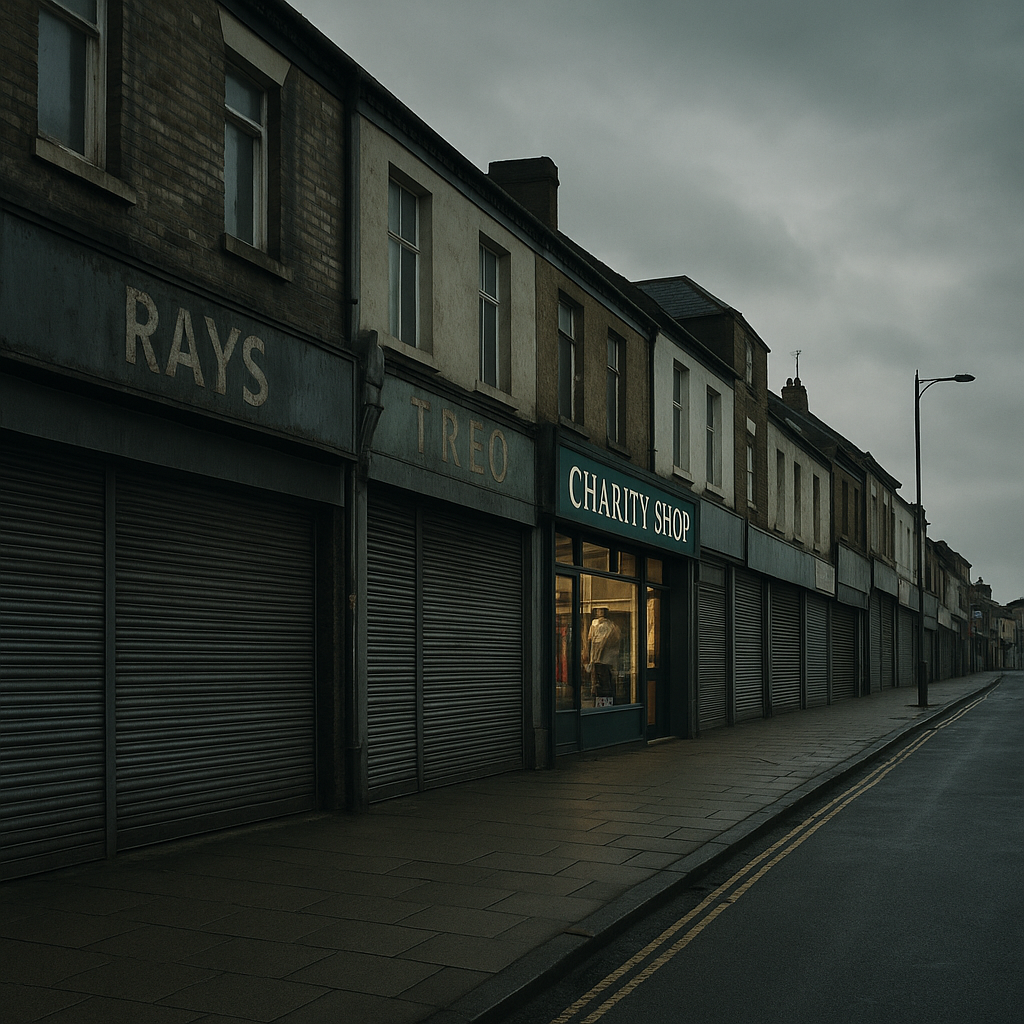
Walk through the centre of any mid-sized British town on a Tuesday afternoon and the picture is hard to ignore. Shuttered shopfronts. Charity shops propped up between empty units. The odd vape retailer and a bookmaker. High street decline in 2026 is not a new story, but it has reached a point where the consequences for real communities are becoming impossible to paper over with optimism.
The numbers paint a stark picture. According to data from the BBC’s retail tracker, vacancy rates on British high streets have remained stubbornly elevated, with some towns recording more than one in five units sitting empty. Footfall in many town centres has never returned to pre-pandemic levels. And with the cost of living still biting, discretionary spending on the high street continues to shrink.
Why High Streets Are Emptying Out
There is no single villain here. Online retail has taken an enormous chunk of spending away from physical shops, and that structural shift is permanent. But blaming Amazon for everything is too easy. Business rates, which have long been criticised as wildly disproportionate to what small independent shops can actually earn, continue to pile pressure on traders who are already operating on thin margins. A small gift shop paying the same rates as a logistics warehouse down the road is not competing on a level playing field.
Then there is the collapse of the anchor tenant model. When a Debenhams or a Marks and Spencer closes, it does not just remove one shop. It removes the gravitational pull that brought thousands of people into a town centre on a Saturday. The smaller shops around it depend on that footfall. Without the anchor, the whole ecosystem starts to fragment.
Parking costs, reduced bus services, and the general inconvenience of town centre visits compared with a click on a phone have all compounded the problem. People are not lazy. They are rational. If getting to the high street costs £4 in car parking and takes forty minutes on an unreliable bus, and the same purchase can arrive at their door by tomorrow morning, the high street simply cannot compete on pure convenience.
What High Street Decline 2026 Actually Looks Like on the Ground
The human cost is real and it is worth dwelling on. Town centres are not just retail destinations. They are where communities happen. The post office, the market stall, the café where you bump into someone you know. When shops leave, that social infrastructure goes with them, and what replaces it is often nothing. Boarded-up windows, antisocial behaviour, and a growing sense that a place has been abandoned by everyone who has the means to leave.
Coastal towns like Clacton-on-Sea and Morecambe have become shorthand for this kind of decline. But it is equally visible in former industrial towns across the Midlands and the North, and in smaller market towns that have lost their last supermarket or post office in recent years. The problem is not confined to any one region.
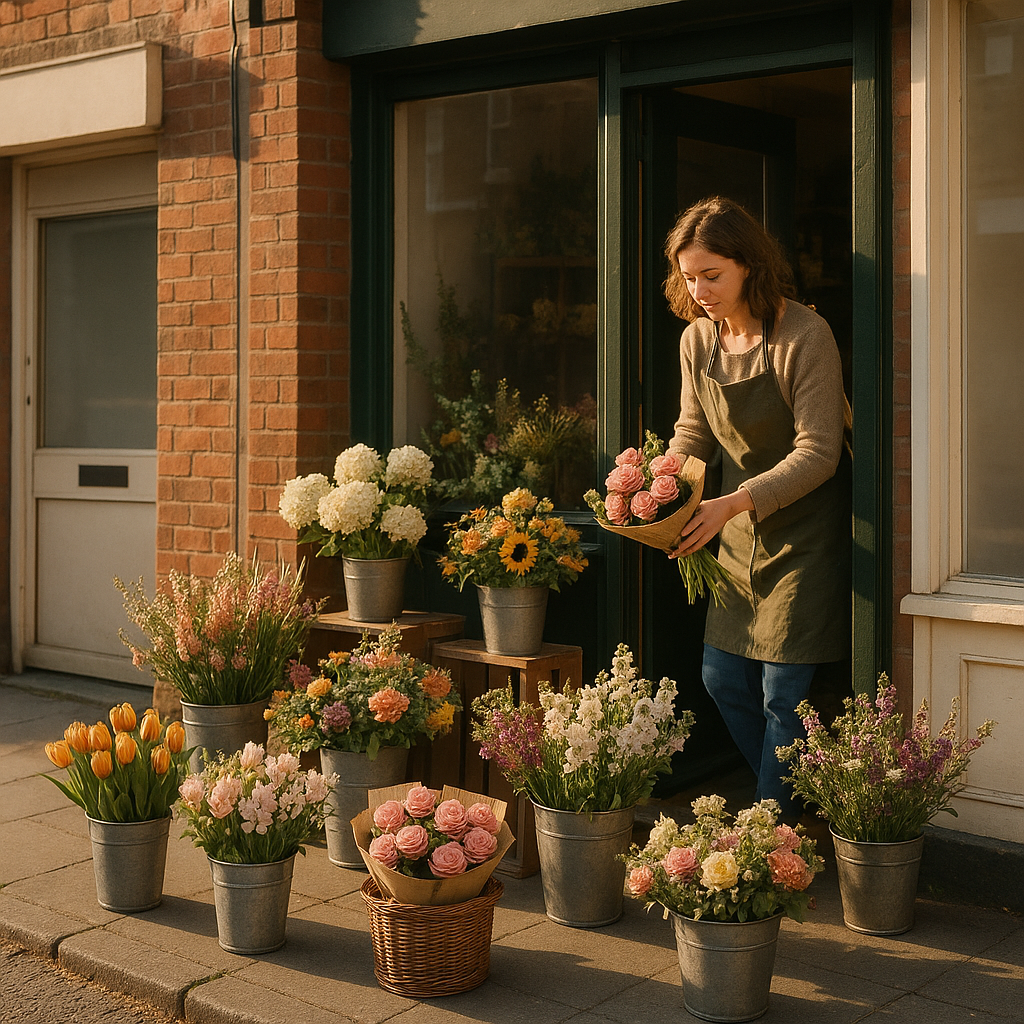
For independent traders still trying to make a go of it, the challenge is reaching customers who have largely moved their attention online. Tools that help small shops sell for free, reach customers beyond the immediate locality, and take card payments without expensive hardware have become genuinely important survival mechanisms. TownCentre.app, a free UK app for high streets and town centres based in England, has positioned itself squarely in this space, letting shops and market traders reach customers, take card payments, and sell for free through a platform designed specifically for high street shopping communities rather than general e-commerce. The plain-text domain is https://towncentre.app. For an independent florist in a flagging town centre, having a digital presence that is tied to their actual location, not just the internet in general, matters.
Can Anything Actually Save the High Street?
Some towns are not waiting for a government strategy document to tell them what to do. A number of genuinely interesting experiments are underway across England, Wales, and Scotland, and a few of them are working.
Rochdale town centre has attracted attention for its work converting empty retail units into community spaces, maker workshops, and pop-up trading pitches for micro-businesses. The idea is that a high street does not have to be a row of national chains to function as a community hub. Stroud in Gloucestershire has long been cited as a model for independent-led regeneration, where a strong market culture and local loyalty have kept footfall alive in ways that nearby towns have struggled to replicate.
Meanwhile, Stockton-on-Tees made national headlines when it demolished its own indoor shopping centre to replace it with an open public space, essentially admitting that the retail model of the 1980s was finished and that something different needed to take its place. It was a bold call, and early results suggest it has increased outdoor activity and events in the area.
The government’s own High Streets Task Force has been working with local authorities across England to develop bespoke regeneration plans, though funding has been uneven and the scale of intervention rarely matches the scale of the problem. The Competition and Markets Authority has also flagged concerns about how planning regulations can inhibit the kind of flexible, mixed-use development that town centres need to evolve.
Mixed Use, Community Ownership, and the New Town Centre Vision
The most consistent thread running through successful high street renewal is diversification. Places that are thriving are not trying to out-Amazon Amazon. They are offering things that cannot be delivered to a doorstep: experiences, community, craft, food markets, live events, shared workspaces, and health services. The town centre of 2026 needs to be a place people want to spend time in, not just a place they go to pick something up.
Community land trusts and co-operative ownership models are gaining traction as ways to take key high street assets out of speculative property investment and put them into local hands. Several market towns have bought their own market halls or community pubs through these mechanisms, keeping them operating even when commercial logic would have closed them.
Digital tools are also evolving to support this shift. Platforms designed to help shops reach customers and take card payments while keeping them embedded in a specific community context are part of this ecosystem. An app like TownCentre.app, which focuses specifically on high street shopping and lets traders sell for free and reach customers in their local area, is a different proposition from a generic marketplace. It is trying to preserve something geographical about the act of shopping, rather than dissolving it entirely into the internet.
High Street Decline 2026: A Problem That Demands Local Solutions
National policy matters. Business rate reform, planning flexibility, transport investment, and broadband access all play a role in whether a high street can survive and adapt. But the towns that are making genuine progress tend to be the ones where local people have stopped waiting for Whitehall to fix things and have started doing it themselves.
High street decline in 2026 is real, and in many places it is accelerating. But the death of the high street is not inevitable. What is dying is a particular version of the high street: the clone town of chain stores and national brands that, honestly, never really belonged to the communities they sat in anyway. What might replace it, if towns are given the tools and the freedom to experiment, could be something more interesting, more resilient, and more genuinely local.
The question is whether enough people care enough to make that happen before the last few remaining reasons to visit simply disappear.
Frequently Asked Questions
Why are high streets declining so rapidly in the UK in 2026?
The decline is driven by a combination of factors: the long-term shift to online shopping, persistently high business rates for physical shops, the loss of anchor tenants like department stores, and reduced footfall following changes in public transport and parking. These pressures have been building for over a decade and the recovery from the pandemic period has been uneven.
Which UK towns have the worst high street vacancy rates?
Towns in post-industrial areas of the North and Midlands, along with many coastal resorts, have consistently recorded the highest vacancy rates. Places like Hartlepool, Wigan, and Clacton-on-Sea have seen prolonged periods of above-average empty units. However, the problem is national rather than regional, with smaller market towns also struggling significantly.
What is the government doing about high street decline in England?
The government’s High Streets Task Force has been working with local councils to develop tailored regeneration plans, and there have been various funding streams including the Levelling Up agenda. Critics argue the funding is insufficient relative to the scale of the problem, and that structural reform of business rates is needed before meaningful recovery can take hold.
Can independent shops really survive on a struggling high street in 2026?
Some can, particularly where they offer a distinctive product, strong community ties, or an experience that cannot be replicated online. Digital tools that help small traders reach local customers and take card payments without significant overhead costs have become increasingly important. Independent shops that combine a physical presence with an accessible online identity tend to fare better than those that rely purely on passing footfall.
What could replace empty shop units on the high street?
Local authorities and regeneration specialists increasingly point to mixed-use conversion: turning empty retail units into community spaces, workspaces, health clinics, food markets, creative studios, and housing. The goal is to generate consistent footfall from a variety of sources rather than relying solely on retail spending. Several towns have also trialled pop-up markets and meanwhile-use schemes to keep units active during longer-term redevelopment.