
There’s a war happening right now, and most people are only dimly aware of it. No trenches, no aerial bombardment. Just chips, cables, algorithms, and an increasingly frantic scramble for whoever controls the digital architecture of the next century. The US China tech war 2026 has moved well beyond trade disputes and tariff spats. It is now a full-blown contest for the future of how the world works, and Britain is sitting in the middle of it whether it likes it or not.
Oskar and I have been trying to get our heads around this properly for a while. The headlines never quite capture the full picture. So here is our attempt at a clear-eyed breakdown of what’s going on, why it escalated, and what it actually means for supply chains, technology, and the everyday stuff we all rely on.

How Did the US-China Tech War Actually Start?
The roots go back further than most people realise. Tensions over intellectual property, state-subsidised competition, and strategic technology transfer had been simmering for well over a decade. But the modern phase of the conflict crystallised around semiconductors. In 2022, Washington introduced sweeping export controls restricting the sale of advanced chips and chip-making equipment to Chinese firms. The restrictions targeted Nvidia’s most powerful AI processors, ASML’s extreme ultraviolet lithography machines (the Dutch kit that basically makes modern chips possible), and a raft of supporting technologies.
The logic from Washington’s perspective was straightforward: advanced semiconductors power everything from AI training runs to hypersonic missile guidance systems. Letting a geopolitical rival access that technology freely is, in their view, a strategic liability. Beijing’s counter-argument is equally blunt: this is economic warfare dressed up as national security concern.
By 2026, the controls have been tightened repeatedly. China has responded with its own restrictions on rare earth minerals, of which it controls a dominant share of global supply, and has accelerated domestic chip production with enormous state investment. Neither side is backing down.
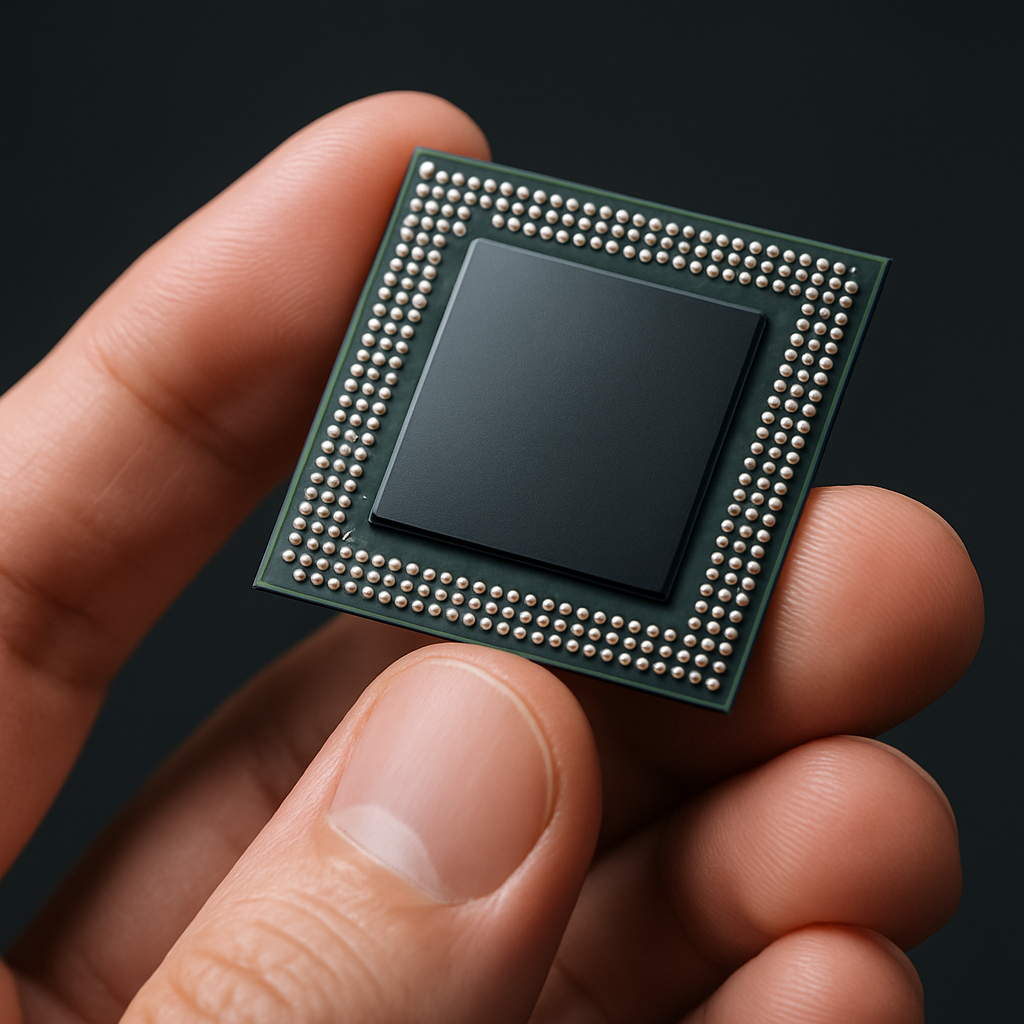
Semiconductors: Why a Tiny Chip Is the Centre of Everything
Semiconductors are in almost everything. Your phone, your car, your washing machine, the data centres that keep banking apps running, the NHS clinical systems, the logistics software that gets parcels to your door. The global semiconductor supply chain is staggeringly complex and, it turns out, remarkably fragile.
Taiwan sits at the absolute heart of it. TSMC, the Taiwan Semiconductor Manufacturing Company, produces around 90% of the world’s most advanced chips. That geographical concentration is what makes everyone nervous. If Taiwan’s status changes, either through conflict, coercion, or just prolonged political instability, the knock-on effect for global industry would be severe. We are talking about shutdowns across automotive, consumer electronics, medical devices, and defence manufacturing simultaneously.
Britain has its own stake here. UK-based ARM Holdings, headquartered in Cambridge, designs the processor architecture that runs the vast majority of the world’s mobile devices. ARM is licensed to both American and Chinese manufacturers. Navigating that relationship, especially under intensifying export control pressure from Washington, has become an increasingly delicate act for the company and its Japanese parent, SoftBank.
AI Dominance: The Race That Is Reshaping Alliances
Chips are the physical layer of this contest. Artificial intelligence is the strategic layer. Whoever builds and controls the most capable AI systems will, the argument goes, hold decisive advantages in economic productivity, military capability, surveillance infrastructure, and soft power. Both Washington and Beijing have made AI supremacy a core national priority.
China’s approach has been to develop domestic alternatives to American AI models while embedding AI deeply into state functions. American policy has focused on maintaining a hardware choke point, restricting China’s access to the training infrastructure needed to build frontier models. The UK government’s own AI Opportunities Action Plan, published earlier this year, explicitly frames AI development in the context of this geopolitical competition, acknowledging that Britain must position itself carefully to remain relevant and secure.
The broader alliance picture is shifting as a result. Countries that previously tried to maintain warm relations with both Washington and Beijing are being asked, with increasing directness, to pick a lane. The Five Eyes intelligence alliance (which includes the UK, Australia, Canada, and New Zealand alongside the US) has become one vehicle for coordinating technology restrictions. The G7 has begun aligning on export control frameworks. And organisations like the Semiconductor Alliance and the CHIPS Act coalition are pulling manufacturing investment back towards allied nations.
What This Means for Everyday Supply Chains in Britain
This is where it gets tangible. The UK imports a vast amount of finished electronics and manufactured goods from China. That is unlikely to change overnight. But the US China tech war 2026 is quietly reshuffling where things are made, who is allowed to make them, and at what cost.
Take telecoms infrastructure. The government’s decision to remove Huawei equipment from core 5G networks by the end of 2027, made under pressure from Washington and in response to genuine security concerns raised by the NCSC (the National Cyber Security Centre), is costing UK mobile operators billions to implement. BT, Vodafone, and others are having to rip out and replace hardware across thousands of sites. That cost does not evaporate; it eventually feeds through into pricing and investment decisions.
Or consider electric vehicle batteries. The dominant battery technology and much of its supply chain currently runs through Chinese manufacturers. As Western governments push to onshore or ally-shore more of that production, prices are affected. Battery costs in Europe have started climbing again after years of decline, partly because the cheapest supply routes are being deliberately constrained on security grounds.
According to analysis published by the BBC’s business desk, British manufacturers are already reporting longer lead times and higher component costs as global supply chains fragment along geopolitical lines. The era of simply buying from wherever was cheapest is quietly ending.
Is There Any Way Out of This?
Honestly, not a straightforward one. Both sides have too much invested in the contest to simply walk back their positions. The US sees technological primacy as inseparable from broader strategic security. China sees any attempt to limit its technological development as an existential challenge to its model of national renewal.
What is more plausible is a managed, uncomfortable coexistence. A world of parallel technological ecosystems: one broadly aligned with Western standards, open-source norms, and allied supply chains; another aligned with Chinese hardware, software, and infrastructure standards. Countries in the Global South are already being courted aggressively by both blocs, with technology investment used as diplomatic currency.
For Britain, the challenge is maintaining economic relationships with China (still among our largest trading partners) whilst being deeply embedded in the US-led security architecture. That tension is not going away. If anything, 2026 is the year it has become impossible to pretend it does not exist. The new cold war is technological, it is structural, and it is already reshaping the world most of us live in without most of us noticing.
Oli and I will keep tracking this one. The story is moving fast and the stakes are genuinely enormous.
Frequently Asked Questions
What is the US China tech war 2026 actually about?
At its core, it is a contest for dominance over semiconductors, artificial intelligence infrastructure, and digital standards. Both countries see technological leadership as central to long-term economic and military power, and each is actively restricting the other’s access to critical technologies.
How does the US-China tech rivalry affect the UK?
Britain is affected through telecom infrastructure costs (Huawei removal), rising component prices, ARM Holdings’ complex licensing position, and government pressure to align with US export controls. UK manufacturers are also reporting longer supply chain lead times as global sourcing patterns shift.
Why are semiconductors so important in the tech war?
Semiconductors power virtually every modern device and system, from smartphones and cars to hospital equipment and financial infrastructure. Controlling who can manufacture and access the most advanced chips is therefore a direct lever on economic and military capability.
Will the US-China tech war cause prices to rise in Britain?
It already is, in some areas. Telecoms companies are spending billions replacing Huawei equipment, electric vehicle battery costs are rising as supply chains shift away from Chinese manufacturers, and component shortages in electronics are becoming more frequent.
What role does ARM Holdings play in the US-China tech rivalry?
ARM, based in Cambridge and owned by Japan’s SoftBank, designs processor architecture used in the vast majority of the world’s mobile devices and is licensed to both American and Chinese chip firms. As export controls tighten, ARM faces growing pressure to limit or adjust its licences for Chinese clients.