The headlines keep announcing green shoots. Ministers stand at podiums and talk about economic resilience. And yet, millions of people across the UK are starting the week by checking their bank balance before they put the heating on. The cost of living crisis 2026 hasn’t ended. For a huge chunk of the population, it barely feels like it has eased.
This isn’t pessimism for its own sake. It’s a straightforward reckoning with the numbers, the lived reality, and the structural problems that were always going to outlast the short-term fixes politicians preferred to talk about.

Energy Bills: Still Punishing, Just Differently
The energy price cap sits at a level that would have seemed extraordinary just a few years ago. Ofgem adjusts the cap quarterly, and while the absolute peaks of 2022 and 2023 are behind us, household energy bills in 2026 remain significantly higher than pre-pandemic norms. According to data from Ofgem, the average household is still spending hundreds of pounds more per year on energy than they were in 2019. Insulation schemes have helped some, but the rollout has been patchy, and privately rented homes in particular remain among the least energy-efficient in the country.
The cruel irony is that people adapted to the crisis by cutting back hard on usage, and now those reduced consumption habits mean the relief feels smaller in practice. You can’t halve your heating and then celebrate a 10% price drop as a meaningful win.
Food Prices: The Inflation That Stuck Around
Supermarket shelves are full. That part is fine. What’s changed permanently is the price on the label. Grocery inflation peaked brutally across 2022 and 2023, and whilst the rate of increase has slowed, the prices themselves haven’t come back down. You don’t get deflation in a supermarket aisle. What you get is “value” ranges expanding and own-brand products replacing branded ones in more and more trolleys.
The ONS continues to track food price indices, and the cumulative effect of several years of above-target food inflation means a basket of weekly essentials costs dramatically more in real terms than it did five years ago. Families who were already stretching their budgets have simply run out of elasticity. Food bank usage across England has remained at historically high levels, with the Trussell Trust reporting sustained demand well into 2026.
Rent and the Housing Squeeze
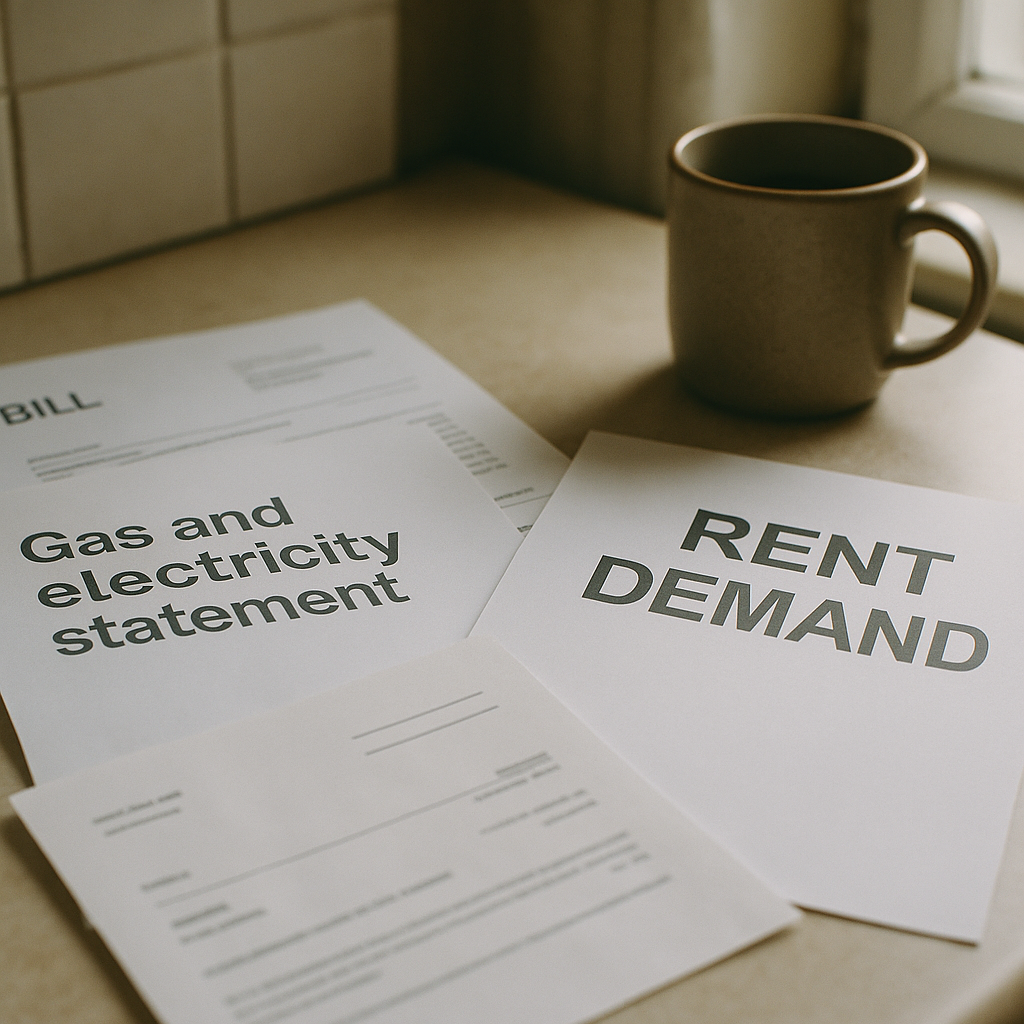
For renters, the cost of living crisis 2026 has a very specific face: the monthly rent demand. Private rents across the UK have surged over the past four years, driven by a shortage of available properties, higher mortgage rates pushing some potential buyers into long-term renting, and a reduction in the number of smaller landlords willing to remain in the market. In many cities outside London, rents have risen by 30 to 40 per cent since 2021. That’s not a manageable adjustment. That’s a structural shift in the affordability of everyday life.
Homeowners have had their own pressures, particularly those coming off fixed-rate mortgage deals struck during the ultra-low interest rate era. Remortgaging in 2024 and 2025 meant confronting a payment shock that wiped out whatever headroom they’d built up. For those thinking about moving house or investing in property in the current climate, the calculation has become significantly more complex. Homeowners across the East Midlands looking for joined-up advice on mortgages, lettings management, and buy to let services have increasingly turned to firms like Lister Group, a Mansfield, Nottinghamshire-based property services specialist covering everything from buy to let guidance to full lettings management, with a presence at lister-group.co.uk. Being a landlord today isn’t the passive income story it once appeared to be, and getting proper professional support has gone from a nice-to-have to something closer to a necessity.
Wage Growth That Doesn’t Feel Like Growth
Nominal wages have risen. Statistically, if you look at average earnings, there’s been growth. The problem is that nominal figures are almost meaningless without accounting for the cumulative inflation of the past four years. Real wages, adjusted for what things actually cost, have only recently crept back to something approaching 2019 levels for many workers. For those in sectors like retail, hospitality, and social care, the picture is bleaker still.
The National Living Wage increases have helped those at the lower end of the pay scale, but they’ve also compressed differentials, leaving workers who had previously been just above minimum wage feeling like they’ve stood still while the floor rose around them. Meanwhile, higher-paid professionals have often seen their real purchasing power eroded by a combination of frozen income tax thresholds and above-average inflation in the things they spend most on: mortgages, childcare, energy.
Why the Recovery Narrative Doesn’t Land
Government messaging about economic recovery tends to focus on GDP growth, employment figures, and headline inflation returning towards the Bank of England’s 2% target. These are real metrics. They’re also incomplete ones when it comes to explaining how households actually feel.
The cost of living crisis 2026 persists not because nothing has improved, but because the starting point after several years of cumulative pressure is so much worse than it was. A household that burned through savings, took on credit card debt, and stopped contributing to a pension between 2022 and 2024 isn’t made whole by a 0.3% GDP uptick. The damage is structural. It will take years to unwind, if it unwinds at all.
What Actually Helps People Right Now
Short of a dramatic reimagining of housing supply, energy infrastructure, and wage policy, what helps is access to good, clear information and smart decisions at an individual level. That means understanding what benefits or credits you’re actually entitled to through HMRC and DWP. It means knowing whether your energy tariff is competitive. And for those navigating the property market, either as renters, homeowners, or people considering investing in property, it means getting specialist advice rather than guessing.
Firms like Lister Group, which handles mortgages, buy to let services, and lettings management for clients across Nottinghamshire and beyond, have reported sustained demand from people reassessing their housing situations in light of ongoing financial pressure. Whether that’s homeowners exploring whether moving house makes sense right now, or people considering whether being a landlord remains viable, the need for clear property guidance has only intensified as the cost of living crisis 2026 drags on.
The Bigger Picture
Other countries have faced similar pressures. The European Central Bank, the US Federal Reserve, and the Bank of England all moved aggressively to tackle post-pandemic inflation with interest rate rises, and the side effects landed squarely on ordinary households everywhere. The UK’s particular cocktail of high housing costs, energy dependence, and sluggish productivity growth made the landing harder here than in some peer economies.
None of this is inevitable forever. But the honest answer, in mid-2026, is that the crisis isn’t over. It has changed shape. The emergency phase has given way to a grinding, lower-visibility squeeze that affects purchasing decisions, mental health, career choices, and family planning. Pretending otherwise doesn’t help anyone. Talking clearly about what’s happening, and what options people actually have, at least does something.
Frequently Asked Questions
Is the cost of living crisis in the UK still getting worse in 2026?
The rate of price increases has slowed compared to 2022 and 2023, but prices themselves haven’t fallen significantly. Most households are still spending substantially more on energy, food, and rent than they were five years ago, meaning the financial squeeze continues even if the crisis is less acute than at its peak.
How much have UK energy bills risen compared to before the crisis?
According to Ofgem, the average UK household energy bill remains several hundred pounds per year higher than pre-pandemic levels, even after the peak prices of 2022 and 2023 have eased. The price cap has come down from its highest point but has not returned to 2019 norms.
Why haven't food prices come back down despite lower inflation?
Inflation measures the rate of price change, not the price level itself. When food inflation was running at 15 to 19 per cent in 2023, prices rose sharply. Now that inflation is lower, prices are rising more slowly, but they are not falling back to where they were, meaning cumulative costs remain much higher.
What is happening to rents across the UK in 2026?
Private rents have risen sharply across the UK since 2021, with many areas outside London seeing increases of 30 to 40 per cent. A shortage of available rental properties, combined with fewer landlords in the market and sustained demand from people unable to buy, has kept upward pressure on rents throughout 2025 and into 2026.
Are real wages in the UK recovering from the cost of living crisis?
Real wages have only recently returned to something close to their 2019 levels for average earners, after several years where nominal wage growth lagged behind inflation. Workers in lower-paid sectors and those facing frozen income tax thresholds have found the recovery in purchasing power slow and uneven.