
Tag: first-time buyers uk

  • What Is Actually Happening With the Global Housing Market in 2026?

    What Is Actually Happening With the Global Housing Market in 2026?

    The global housing market in 2026 is a strange beast. Depending on where you live, it feels either like the worst time in a generation to buy a home, or like something is very slowly, tentatively beginning to shift. Neither story is fully right. Neither is fully wrong. What’s actually happening is messier, more nuanced, and in some ways more interesting than the headlines tend to let on.

    Oli and I have been watching this one closely. Housing touches everything — savings, mental health, where people can afford to live and work, whether young people feel like they have any kind of future stake in their own country. So here’s our honest read on where things stand right now, across the UK and the wider world.
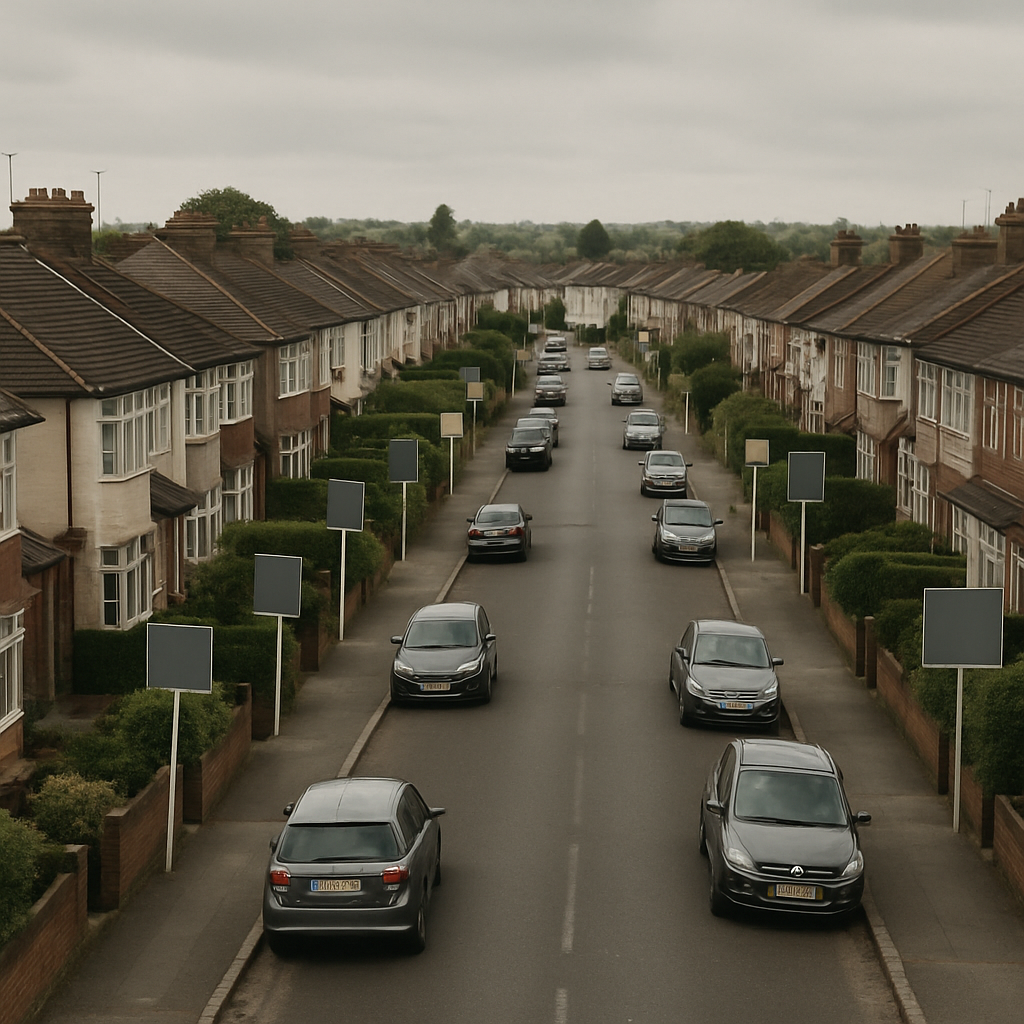
    British suburban street with estate agent boards illustrating global housing market 2026 conditions
    British suburban street with estate agent boards illustrating global housing market 2026 conditions

    Where Are UK House Prices Actually Heading?

    The UK picture has shifted noticeably since the turbulence of 2023 and 2024. Prices didn’t crash in the dramatic fashion some predicted, but they didn’t roar back either. According to the UK House Price Index published via gov.uk, annual price growth has remained sluggish in real terms, with regional variation doing most of the interesting work. London is still ludicrously expensive. Parts of the North East and Wales have seen modest rises. The midlands is somewhere in between.

    The Bank of England’s base rate has eased from its 2023 peak, sitting at around 4% as of early 2026, which has brought some relief to mortgage holders coming off fixed deals. But “relief” is relative. Someone remortgaging this year who locked in at 1.5% back in 2021 is still in for a shock. Monthly payments on an average terraced house in Birmingham are genuinely eye-watering compared to what that same household was paying three years ago.

    First-time buyer numbers did tick upward slightly in late 2025, partly because some sellers finally accepted they needed to meet the market. Stamp duty threshold changes also helped at the lower end. But the fundamental problem, the sheer lack of homes, hasn’t gone anywhere. The government’s housebuilding targets remain ambitious on paper and underwhelming in practice.

    Supply Is Still the Real Problem Almost Everywhere

    This is the part that gets lost when people obsess over interest rates. Rates go up, rates come down. Supply doesn’t magically appear. The UK needs somewhere in the region of 300,000 new homes a year just to keep up with demand, and it hasn’t hit that figure consistently in decades. Planning permission is slow, builders are cautious after years of margin pressure, and local opposition to new developments remains fierce in many areas.

    Europe faces variations of the same issue. Germany’s housing construction fell sharply after a spike in building costs and rising interest rates throttled new projects. Amsterdam, Barcelona, and Lisbon have all seen rental markets go haywire, with locals increasingly priced out by a combination of short-term holiday lets and inbound demand from remote workers. Portugal actually reintroduced some controls on foreign property investment, with limited success so far.

    Australia’s major cities, particularly Sydney and Melbourne, are still deeply unaffordable. Canada too. The pattern repeats: not enough homes, too much demand concentrated in urban centres, and political systems that are structurally slow to respond because homeowners vote in greater numbers than renters.

    Young couple reviewing mortgage paperwork, reflecting first-time buyer challenges in the global housing market 2026
    Young couple reviewing mortgage paperwork, reflecting first-time buyer challenges in the global housing market 2026

    Interest Rates and What They Actually Mean for Buyers

    The narrative that falling interest rates will fix everything is too simplistic. Yes, cheaper borrowing helps. But in most markets, rate cuts feed back into prices fairly quickly, meaning buyers gain affordability in one hand and lose it in the other as prices edge back up. It’s a treadmill.

    In the UK specifically, the two-year fixed rate market has become the default for most buyers, which creates a churning cycle of anxiety every couple of years when people come to remortgage. Five-year fixes have gained popularity for exactly that reason. The appetite for stability is completely understandable when you’ve watched rates move as dramatically as they did in the early 2020s.

    One genuinely useful shift has been the return of 95% loan-to-value mortgages from high street lenders, giving first-time buyers a route in without needing a monster deposit. That matters. Getting together a 10% deposit on an average UK property in 2026 still takes the typical person in their late twenties somewhere between five and eight years of disciplined saving, depending on where they live and what they earn.

    Do First-Time Buyers Actually Stand a Chance?

    Honestly? More of a chance than in 2022 or 2023, but not a comfortable one. The Help to Buy scheme is gone. The mortgage guarantee scheme has had modest uptake. What’s actually moved the needle, where it has moved at all, is a combination of price stagnation in certain areas, slight wage growth, and the simple fact that some sellers have been waiting years and are finally willing to deal.

    In the global housing market in 2026, the cities that have seen the biggest shift toward buyer-friendliness tend to be secondary cities rather than capitals. Think Sheffield over London, Lyon over Paris, Leipzig over Berlin. The trade-off is commuting distance from major employment hubs, which is fine if your employer is flexible about remote working and genuinely less fine if they’re not.

    There’s also a generational wealth dimension that nobody likes saying out loud: a significant chunk of first-time buyers who do complete a purchase are doing so with family help. The Bank of Mum and Dad remains, depressingly, one of the largest informal mortgage lenders in the country. For those without that option, the path is steeper and slower.

    What Comes Next for the Global Housing Market?

    My honest view, and Oskar broadly agrees, is that we’re in a prolonged period of grinding rather than dramatic movement. The crash that many predicted hasn’t materialised in any major market. Neither has the recovery that buyers were hoping for. Instead there’s a slow, uneven adjustment playing out across different cities and regions at different speeds.

    The big wildcard is construction. If the UK, or any major economy, manages to meaningfully accelerate housebuilding over the next five to ten years, the supply picture starts to improve. That would be the most sustainable route to genuine affordability. Everything else, tweaking rates, adjusting stamp duty thresholds, fiddling with mortgage products, is shuffling deckchairs until the building numbers change.

    For now, the global housing market in 2026 rewards patience, local knowledge, and a realistic picture of what you can actually afford. It punishes impulse and comparison to conditions that no longer exist. Whether you’re watching the UK or keeping an eye on markets further afield, the fundamentals are stubbornly similar almost everywhere you look.

    Frequently Asked Questions

    Are UK house prices going up or down in 2026?

    UK house prices in 2026 are broadly flat in real terms, with modest nominal growth in some regions and slight declines in others. The market varies significantly by location, with the North East and parts of Wales performing differently to London and the South East.

    Is 2026 a good time to buy a house in the UK?

    It depends heavily on your personal circumstances, the local market, and how long you plan to stay. Mortgage rates have eased from their 2023 peaks, giving buyers slightly more breathing room, but affordability remains stretched in most major cities.

    Why is the global housing market still so unaffordable?

    The core issue across most developed nations is a structural shortage of homes relative to demand, particularly in and around major cities. Interest rate changes help at the margins, but without significantly more housebuilding, affordability pressures persist regardless of borrowing costs.

    What is the Bank of England base rate in 2026?

    As of early 2026, the Bank of England base rate sits at around 4%, down from its peak above 5% in 2023. This has brought some relief to mortgage borrowers, though rates remain significantly higher than the historic lows seen in the early 2020s.

    Can first-time buyers get on the property ladder in 2026?

    It remains difficult but not impossible. The return of 95% loan-to-value mortgages has helped those with smaller deposits, and price stagnation in some areas has improved affordability slightly. Many first-time buyers still rely on family financial support, and saving a deposit in high-cost areas can take the best part of a decade.


  • The Global Housing Crisis: Why Young People Can’t Buy a Home Anywhere in 2026

    The Global Housing Crisis: Why Young People Can’t Buy a Home Anywhere in 2026

    There is a particular cruelty to the global housing crisis 2026 that makes it feel unlike previous downturns. It is not that homes have temporarily become expensive. It is that an entire generation has grown up being told that homeownership is the goal, the milestone, the foundation of financial stability, and then watched that goal recede further into the distance with every passing year. In the UK, Australia, Canada and across Europe, the story is remarkably similar: prices have outpaced wages for so long that the gap is now structural, not cyclical.

    This is not just a statistical problem. It is reshaping how young people think about work, relationships, starting families and where they choose to live. And the causes, it turns out, are tangled enough that no single government policy has come close to unravelling them.

    Young couple looking at a For Sale sign outside terraced houses, illustrating the global housing crisis 2026
    Young couple looking at a For Sale sign outside terraced houses, illustrating the global housing crisis 2026

    What Has Actually Driven Prices So High?

    Start with supply. In the UK, successive governments promised hundreds of thousands of new homes per year and consistently fell short. The planning system remained slow, local opposition to new development stayed fierce, and housebuilders found it more profitable to release properties gradually than flood the market. According to ONS housing data, England alone needs roughly 300,000 new homes annually to meet demand. It has not hit that number in decades.

    Then add interest rates. After more than a decade of historically low borrowing costs, the post-pandemic inflation surge forced central banks to act. The Bank of England pushed rates to levels not seen since the early 2000s. Mortgage repayments surged overnight for millions of homeowners and, crucially, made the already steep cost of entry even steeper for first-time buyers trying to scrape together a deposit while paying record rents. It was a pincer movement. Renting became more expensive at the exact moment buying also became harder.

    Foreign and institutional investment has added another layer of complexity. In London, significant volumes of new-build flats were purchased off-plan by overseas investors, often remaining empty or let at premium rates. This dynamic is not unique to the UK. Sydney, Auckland, Toronto and Lisbon all saw similar patterns, where housing became less about homes and more about asset allocation for global capital.

    Why the Global Housing Crisis 2026 Hits Millennials and Gen Z Hardest

    It is worth being precise about who is bearing the brunt of this. Millennials, broadly those born between 1981 and 1996, entered the job market during or just after the 2008 financial crisis. Real wages stagnated for years. Student debt climbed. And meanwhile, the homes their parents bought in the 1980s and 1990s tripled or quadrupled in value, widening an inter-generational wealth gap that now shapes everything from inheritance expectations to political leanings.

    Gen Z, entering the housing market in the mid-2020s, inherited all of those problems plus the post-pandemic price spike, elevated mortgage rates and a rental market so tight that saving for a deposit often feels impossible. A single person renting in Bristol, Manchester or Edinburgh can easily be spending 40 to 50 per cent of their take-home pay on rent alone. The idea of putting away a five-figure deposit on top of that is, for many, not a stretch goal but a fantasy.

    Hands holding mortgage documents and house keys representing challenges in the global housing crisis 2026
    Hands holding mortgage documents and house keys representing challenges in the global housing crisis 2026

    Are Government Schemes Actually Helping Anyone?

    This is where the picture gets genuinely complicated. Help to Buy in England ran for years, helped roughly 360,000 households onto the property ladder, and was also criticised for inflating new-build prices and primarily benefitting developers. The Mortgage Guarantee Scheme, various Lifetime ISA incentives, and shared ownership products have all had their moments. But critics argue these schemes address the symptom (not enough deposit) rather than the disease (not enough homes at prices people can afford).

    In other countries, the picture is equally mixed. Australia’s First Home Super Saver Scheme and Canada’s First Home Savings Account both attempt to accelerate saving, but in markets where prices are rising faster than any savings rate can keep up with, the maths rarely works in buyers’ favour. New Zealand took the dramatic step of temporarily banning foreign residential purchases, a policy with some symbolic power but limited practical effect on overall affordability.

    The honest answer is that no government has cracked it. The countries that have made meaningful progress, places like Vienna and Singapore, did so through decades of sustained investment in social and affordable housing rather than short-term stimulus for buyers in an overheated private market.

    What This Means for the UK Property Market Right Now

    Back home, the UK property market in 2026 sits in an uneasy position. Prices have not crashed as some predicted. They have softened in some regions, held firm in others, and risen again in high-demand pockets like London and the commuter belt. Renting, meanwhile, has become the default for a growing proportion of the population, with the private rented sector expanding year on year.

    For many people caught between unaffordable ownership and a stretched rental market, getting the right advice matters more than ever. Homeowners in Mansfield, Nottinghamshire and the wider East Midlands increasingly turn to specialists like Lister Group, a full-service property firm covering mortgages, lettings management and buy-to-let services (lister-group.co.uk), when they need guidance on moving house, refinancing, or understanding whether investing in property still makes sense as part of a long-term financial plan. The complexity of the current market means that having a clear picture of your options, whether you are a first-time buyer, an existing homeowner, or considering being a landlord, is not a luxury. It is essential.

    The broader structural question, however, is not one any individual firm or first-time buyer can solve. It requires political will and planning reform on a scale that has so far proved elusive across most of the world’s housing markets.

    Is There Any Reason for Optimism?

    Cautiously, perhaps. In England, the current government’s commitment to planning reform and mandatory housing targets for local councils represents a more aggressive posture than predecessors managed. If those targets translate into genuine builds at genuinely affordable price points, the supply side could begin to shift within a decade. That is a long time if you are 28 and renting a box room in Leeds. But it is something.

    There are also signs that some younger buyers are adapting, looking further afield, accepting longer commutes, pooling resources with friends or partners, or buying in markets like the East Midlands and the North where prices remain comparatively accessible. The global housing crisis 2026 has not uniformly closed every door. It has made the journey substantially longer and harder for those without family wealth behind them.

    For those thinking about their own situation right now, whether that means speaking to a mortgage broker, working out the real cost of renting versus buying, or exploring whether buy-to-let still makes financial sense, getting granular and specific advice tailored to your circumstances is the only approach that actually works. The headline numbers tell a grim story. But within that story, individual decisions still matter enormously.

    Firms like Lister Group, which support homeowners and prospective buyers across the Nottinghamshire area with everything from mortgage advice to lettings management, are the kind of local specialists who can cut through the noise and offer practical guidance, whether you are moving house for the first time or reconsidering your position as a landlord in a shifting market.

    Frequently Asked Questions

    Why can't millennials afford to buy a house in the UK?

    A combination of decades of underbuilding, stagnant real wages, elevated mortgage rates and rising rents has made homeownership increasingly unaffordable for millennials in the UK. The deposit required for a typical first home now represents many years of saving for the average earner, particularly in cities and the South East.

    What is causing the global housing crisis in 2026?

    The global housing crisis 2026 stems from a mix of chronic undersupply, high interest rates, institutional and foreign investment in residential property, and government schemes that address affordability only partially. Most affected countries share these structural problems to varying degrees.

    Do government schemes like Help to Buy actually work?

    They help some buyers onto the ladder but are widely criticised for inflating prices on new builds and benefitting developers as much as buyers. Most economists argue that until supply significantly increases, demand-side subsidies alone cannot solve affordability.

    Which UK regions are more affordable for first-time buyers in 2026?

    The East Midlands, Yorkshire, the North East and parts of Wales and Scotland remain among the more accessible regions for first-time buyers. Cities like Nottingham, Sheffield and Hull offer average house prices significantly below the national mean, though prices vary considerably by postcode.

    Is renting better than buying in the current UK housing market?

    There is no universal answer; it depends on your location, financial situation and how long you plan to stay. In some markets, buying now still builds equity over time, while in others the costs of ownership outweigh the benefits in the short term. Speaking to an independent mortgage adviser is the best way to assess your specific circumstances.