Category: Interesting

  • Council Tax Reform UK 2026: Why the 1991 Bands Must Go

    Council Tax Reform UK 2026: Why the 1991 Bands Must Go

    Council tax reform UK 2026 is overdue because England’s bands still rest on what homes were worth on 1 April 1991, and no government has dared to revalue them since. The result is a bill that bears little relation to what your house is worth today, and you can only do a few things about it as an individual. Here is why it has stuck, and what you can do meanwhile.

    Who is being ripped off by the 1991 bands?

    The bands run from A to H in England, with Band A covering homes valued up to £40,000 in 1991 and Band H anything over £320,000. Those values were set before most current homeowners had a mortgage. Since then, house prices have risen very unevenly: far faster in London and the South East than in much of the North and the Midlands.

    That unevenness is the problem. A modest terrace in a fast-rising area can sit in the same band as a far more valuable house elsewhere, and the owners of expensive homes in Band H pay a rate only a few times higher than Band A, though their property may be worth many times more. The system is regressive: it takes a bigger share of income from people in cheaper homes than from people in grand ones. The Institute for Fiscal Studies has made this argument repeatedly for years.

    Wales did revalue, in 2005, using 2003 values, and added an extra band. Scotland kept 1991 values but raised the multipliers on its top bands in 2017. Northern Ireland uses domestic rates, a separate system. So England is the clearest case of a tax frozen in time.

    Row of terraced houses illustrating council tax reform UK 2026
    Photo by Jan van der Wolf on Pexels

    Who benefits from the freeze, and why does reform keep stalling?

    Reform stalls because a revaluation creates losers who vote, and winners who barely notice. If bands were redrawn on current values, millions of households would pay more, particularly owners of homes that have soared in price. Others would pay less. Governments know that the first group shouts and the second stays quiet.

    The freeze also quietly favours owners of very valuable homes in the South, who are paying a rate set on 1991 values. The November 2025 Budget did move in this direction by announcing a surcharge on homes worth over £2 million, due from 2028, rather than a full revaluation. That is a patch on a system nobody wants to open up.

    There is a second reason: councils depend on council tax income, and any transition would need careful rules so no authority loses out. Both Labour and Conservative governments have looked at revaluation and walked away. For the wider picture on prices, see our look at the 2026 housing market.

    What can you do about your council tax bill now?

    You cannot force a national revaluation, but you can check you are in the right band and claiming everything you are owed. Follow these steps in order.

    1. Check your band against your neighbours. The gov.uk council tax band checker shows the band of similar homes nearby. If identical houses on your street sit in a lower band, you may have a case.
    2. Weigh the risk before challenging. The Valuation Office Agency can raise a band as well as lower it. Challenge if the evidence is strong, and read the official guidance at gov.uk on challenging your council tax band. If you moved in within the last six months, you have a stronger right to challenge.
    3. Claim every discount. A single adult gets 25% off. Full-time students are exempt from the bill, and some households with a severely mentally impaired resident also qualify for a discount. Your council can tell you which apply.
    4. Ask about council tax reduction. Each council runs its own scheme for low-income households, and rules vary widely. Many people who qualify never apply.
    5. Cut what the house costs to run. You cannot shave much off the band, but you can cut energy bills. Insulation is the usual first move: Westville, a Nottinghamshire firm that fits cavity wall, loft, external wall and solid wall insulation for homeowners, landlords and councils, is one example of the kind of specialist who can tell you which type suits your house.
    Worker laying insulation between loft joists
    Photo by Sergei Starostin on Pexels

    The reasoning behind step five is simple. Council tax is fixed by the band, but heating a draughty house is not. Lower energy use also helps the climate, and our piece on why energy bills are still high shows how much of the bill households can influence.

    Will council tax ever be revalued?

    A full revaluation in England looks unlikely in the near term. No government has committed to one, and the 2025 surcharge shows ministers prefer targeted additions to a root-and-branch rewrite. Reform of the sort campaigners want, such as a proportional property tax replacing the bands, would need a political appetite that has not shown up in any manifesto.

    That leaves households in an awkward spot. Many pay more than the 1991 logic suggests they should, and others pay far less. Anyone with solar panels on the roof or an air source heat pump on the wall has at least found a way to trim running costs. Westville installs both, alongside rendering and cladding, across Nottinghamshire (westvillegroup.co.uk). Better insulation and cheaper power will not fix the tax, but they are the parts of your housing bill you control.

    If you are watching your budget closely, our guide to the cost of living in 2026 covers where else prices are biting. For council tax, start with step one: look up your band today.

    Frequently Asked Questions

    When were council tax bands last revalued in England?

    English council tax bands are based on property values at 1 April 1991 and have never been revalued. Wales revalued in 2005 using 2003 values. Scotland also still uses 1991 values for its bands.

    Can I challenge my council tax band for free?

    Yes. Challenging your band through the Valuation Office Agency costs nothing. You will need evidence such as similar homes nearby in a lower band, and you should know that a band can be raised as well as lowered.

    What are the council tax bands in England?

    There are eight bands, A to H, based on 1991 values. Band A is up to £40,000, Band D is £68,001 to £88,000 and Band H is over £320,000. Your council sets the actual bill for each band.

    Do I get a council tax discount if I live alone?

    Yes. A single adult living alone in England normally gets a 25% discount on their council tax bill. You apply through your local council, and you must tell them if your circumstances change.


  • The Pothole Republic: How Britain’s Roads Became the Worst in Western Europe and Why the Repair Bill Keeps Growing

    The Pothole Republic: How Britain’s Roads Became the Worst in Western Europe and Why the Repair Bill Keeps Growing

    There is a particular British ritual that happens every autumn, without fail. The temperature drops, the rain comes sideways, and somewhere between October and March the road outside your house quietly falls apart. A crack becomes a dip, a dip becomes a crater, and by February you are swerving around something that could genuinely swallow a car tyre. I have driven this country extensively and I have never once thought: these roads feel well-maintained. The road repair backlog in this country is not a new problem. But the scale of it, in 2026, has become genuinely extraordinary.

    The Asphalt Industry Alliance, which publishes its Annual Local Authority Road Maintenance survey every year, estimated in its most recent report that it would cost over £16 billion to clear the backlog of road repairs across England and Wales. That figure is not a misprint. Sixteen billion pounds. And it has been rising steadily for years, because councils are spending less on roads each year than the roads lose in condition. You cannot patch your way out of that arithmetic.

    Heavily potholed British road illustrating the UK road repair backlog
    Photo by Zülfü Demir📸 on Pexels

    Why council highways budgets have been gutted

    Local authorities are legally responsible for most of the roads we actually drive on day to day. Motorways and major A-roads sit with National Highways, but the vast majority of the network, the B-roads, the residential streets, the country lanes, falls to county and unitary councils. And those councils have been squeezed relentlessly since 2010. The Local Government Association has repeatedly made the point that highways maintenance is one of the first budgets to get trimmed when councils face financial pressure, partly because the consequences are slow-moving and diffuse. Nobody notices the pothole that hasn’t formed yet.

    What they do notice is the one that damages their car. The RAC reported that pothole-related breakdowns hit record levels in 2023, with the problem persisting into 2024 and 2025. Vehicle suspension damage, buckled alloys, blown tyres: the AA estimates that potholes cost British drivers around £3 billion a year in repairs and insurance claims. That is an enormous transfer of cost from public infrastructure budgets onto private citizens. And unlike the captive pricing you encounter at a motorway service station, this one you cannot choose to avoid. You just have to drive on the roads.

    How does Britain compare to the rest of Europe?

    Germany, France and the Netherlands all score considerably higher than the UK in the World Economic Forum’s infrastructure quality indices. France in particular maintains a road network that feels like a different planet compared to, say, the A47 through Fenland in February. Some of that is down to climate: freeze-thaw cycles in the UK are brutal on asphalt, and British winters are wet enough to accelerate surface degradation significantly faster than drier continental climates. But climate is not the whole story.

    Germany invests roughly twice as much per kilometre of road as England does, when you account for the full network. The Dutch have adopted a long-term infrastructure investment model that treats roads as assets requiring sustained capital expenditure, rather than recurring costs to be managed down. Britain, by contrast, has cycled through short-term patching regimes for decades. Reactive maintenance, the kind where you fill the hole after it forms rather than resurfacing before it does, is significantly more expensive per square metre in the long run. Every highways engineer knows this. Every council knows this. And yet here we are.

    Highways crew carrying out road repair work, part of tackling Britain's road repair backlog
    Photo by Sergei Starostin on Pexels

    The postcode lottery of road quality

    Not all councils are equally badly off. Surrey, which has a relatively well-funded highways department and a large council tax base, maintains roads to a noticeably higher standard than, say, parts of County Durham or rural Lincolnshire. The disparity between well-resourced southern English counties and underfunded northern and rural councils is striking. A stretch of road in the Cotswolds is likely to be in considerably better condition than the equivalent route through County Durham, not because Durham’s engineers are worse, but because they have less money to spend per kilometre.

    This postcode lottery mirrors problems we have documented elsewhere on this blog, from NHS dentistry deserts to serious violence concentrating in towns that get the least resource. The pattern is consistent: the places that most need investment are the ones least likely to get it, because funding models tend to follow existing economic activity rather than need.

    The government’s Pothole Fund, which has been topped up and re-announced several times under successive administrations, sounds more substantial than it is when you spread it across the entire English road network. The 2026 allocation, whilst welcome, amounts to roughly £1.60 per square metre of local road surface when distributed across the network. That does not go far when a full resurfacing job costs between £50 and £80 per square metre.

    What it actually costs to fix a road properly

    There is a meaningful difference between filling a pothole and fixing the road. A temporary cold-mix patch, the kind most councils use for reactive maintenance, costs perhaps £50 to £100 per hole but typically lasts less than a year in British weather. A proper structural repair involves cutting back the damaged area, clearing out the base, and laying hot-mix asphalt in layers, which is four or five times more expensive but lasts a decade or more. Full carriageway resurfacing costs in the region of £500,000 per kilometre for a standard two-lane rural road.

    The maths of under-investment is brutal. Every year a council defers resurfacing, the road degrades further, the base gets waterlogged, and the eventual repair bill grows. What might have been a £200,000 preventative resurfacing job in 2020 can easily become a £600,000 structural reconstruction job by 2026. It is the same logic that applies to any neglected infrastructure, whether that is a leaking roof, a corroded boiler, or a TV aerial left unserviced for twenty years until the signal fails entirely. The team at tv-aerials.co.uk would probably put it plainly: catching the problem early is always cheaper than dealing with the failure.

    Can road pricing actually fix this?

    There is a revenue problem lurking underneath the maintenance crisis that does not get enough attention. Fuel duty, which has historically contributed to road maintenance budgets, is in long-term decline as the UK vehicle fleet electrifies. By 2035, petrol and diesel car sales will have been banned for two years, and the transition to electric vehicles, while welcome for emissions, strips out a substantial tax stream. The government’s own review of motoring taxation has acknowledged that a replacement mechanism will be needed, with road pricing the most discussed option.

    Road pricing, done properly, could both fund infrastructure and distribute usage more efficiently, reducing congestion on the most deteriorated routes. But the politics of it are toxic. Telling British drivers, who already feel they pay enormous sums in fuel duty and VED, that they will now pay per mile is not a vote-winner. The government has moved cautiously, and the reform debate continues to circle without landing.

    My honest read of the situation is that Britain will not fix its road repair backlog without either a significant increase in dedicated local highways funding or a wholesale reform of motoring taxation that actually hypothecates revenue to road maintenance. Neither seems imminent. In the meantime, councils will keep patching, potholes will keep forming, and drivers will keep sending insurance claims to their local highways authority at a rate that itself costs the public purse millions in administration every year. It is not a system anyone would design. It is a system nobody has had the will to replace.

    Frequently Asked Questions

    How big is the road repair backlog in England and Wales?

    The Asphalt Industry Alliance estimates the backlog of road repairs across England and Wales exceeds £16 billion as of the most recent ALARM survey. That figure has been growing year on year because councils consistently spend less on maintenance than roads lose in condition.

    Who is responsible for fixing potholes in the UK?

    Local councils, specifically their highways departments, are responsible for the vast majority of roads including B-roads, residential streets and rural lanes. Motorways and major A-roads are managed by National Highways. If a pothole damages your vehicle, you can submit a claim to the relevant local authority.

    Can you claim compensation for pothole damage to your car?

    Yes. If a council knew about a pothole and failed to repair it in a reasonable time, you can submit a compensation claim to the local highways authority. You will need evidence: photos of the pothole with measurements, a dated report showing the council was aware, and repair quotes or receipts for vehicle damage.

    Why are UK roads worse than roads in France or Germany?

    Several factors combine: UK councils have faced significant budget cuts to highways maintenance since 2010; Britain’s wet winters accelerate freeze-thaw surface damage; and the UK has historically favoured cheap reactive patching over costlier but more durable preventative resurfacing. Germany and France both invest considerably more per kilometre of road.

    What is the government's Pothole Fund and does it make a difference?

    The Pothole Fund is a central government allocation to local authorities specifically for road repairs. While successive governments have topped it up and re-announced it, the per-kilometre spend it enables is small relative to the actual backlog. Critics argue it funds reactive maintenance rather than the structural resurfacing programmes needed to address the root problem.

  • Steel, Sovereignty and Scunthorpe: What the Collapse of Britain’s Last Blast Furnaces Actually Means for National Security

    Steel, Sovereignty and Scunthorpe: What the Collapse of Britain’s Last Blast Furnaces Actually Means for National Security

    Britain can no longer make steel from raw materials. That sentence deserves to sit on its own for a moment, because it has not been true at any point in the last century and a half. With the closure of the blast furnaces at Port Talbot in 2024 and the collapse of operations at Scunthorpe in 2025, the UK blast furnace closure story is not a chapter of industrial decline, it is the end of an era that stretches back to the mid-Victorian age. I have been following this closely, and the more you dig into what it actually means, the more uncomfortable the picture becomes.

    UK blast furnace closure — industrial steel plant at dusk with furnace glow
    Photo by Michael on Pexels

    The government’s framing has been relentlessly optimistic. Electric arc furnaces (EAFs) are the future, ministers say. Cleaner, cheaper, more flexible. And there is truth in that, up to a point. But EAFs work by melting scrap steel, which means they are entirely dependent on a supply of recycled material. They cannot produce virgin steel from iron ore and coking coal. For certain grades of steel, the kind used in armour plating, submarine hulls, aerospace components and large infrastructure projects, that distinction is not academic. It is the difference between being able to make something domestically and having to buy it from somewhere else.

    What we have actually lost

    The blast furnace process, for all its environmental cost, produces what metallurgists call primary steel. It has specific mechanical properties, particularly in terms of purity and grain structure, that recycled steel from an EAF cannot always replicate. The Ministry of Defence has acknowledged, in fairly guarded language, that certain specifications for naval and armoured vehicle steel require primary production. The question nobody in government has answered convincingly is where that steel now comes from.

    The honest answer, right now, is mostly Europe and Asia. France, Germany, and increasingly South Korea and India produce primary steel at scale. In peacetime, buying it on global markets is not a crisis. But defence procurement planners are not supposed to plan for peacetime alone. The lessons of 2022, when Russia’s invasion of Ukraine exposed how quickly European countries had allowed their defence supply chains to hollowed out, appear not to have landed as hard as they should have in Whitehall.

    Britain spent much of 2025 debating the future of the Scunthorpe site with a level of urgency that felt, frankly, theatrical. Jingye Group, the Chinese owner of British Steel, repeatedly threatened closure. The government eventually stepped in with legislation to take control of the site, but the blast furnaces had already been allowed to cool. Once a blast furnace is shut down, restarting it is an enormously expensive undertaking. These are not switches you flick back on.

    Electric arc furnace pouring molten steel, the alternative to UK blast furnace closure
    Photo by Willians Huerta on Pexels

    The electric arc furnace bet, is it realistic?

    The government has committed around £2.5 billion to support the transition to EAF-based steelmaking in the UK, with Tata Steel’s Port Talbot site getting the lion’s share to build a new EAF by 2027. Jingye has indicated similar intentions for Scunthorpe, though the timelines are vague and the funding picture is murkier. I would not bet heavily on 2027 being the year a shiny new EAF opens in South Wales and everything is fine.

    The EAF model does work. The UK already has several operating at sites like Rotherham (Liberty Steel, ownership situation notwithstanding) and Stocksbridge. They produce good quality steel for construction, automotive parts, and engineering uses. But the transition assumes three things go smoothly: that scrap supply remains abundant and affordable, that electricity prices come down from their current punishing levels, and that the grades of steel an EAF can produce are sufficient for all the uses we need.

    On electricity costs alone, there is a serious problem. EAFs are power-hungry. UK industrial electricity prices are among the highest in Europe, a fact that the Climate Change Committee has flagged as a barrier to green industrial transition. The government’s British Industry Supercharger scheme is meant to help, but steelmakers have said publicly it does not go far enough. Running an EAF at current UK electricity prices is significantly more expensive than doing so in France or Germany, where energy costs are lower and state support is more generous.

    Defence procurement and the supply chain problem

    Here is where it gets genuinely concerning. The UK’s defence procurement pipeline is not small. Type 26 frigates are being built for the Royal Navy. The Ajax armoured vehicle programme, despite its tortured history, is finally delivering. Challenger 3 upgrades are ongoing. All of these require steel, and some of it needs to be primary steel of specific grades.

    At the moment, UK defence contractors are sourcing what they need from approved overseas suppliers, mainly within NATO countries. That is legal, it is relatively seamless, and nobody is sounding alarm bells yet. But the assumption that NATO supply chains will always remain open and uncongested is precisely the kind of assumption that looked solid in 2021 and fell apart in 2022. The conversation about national resilience tends to focus on digital infrastructure and surveillance technology, but physical manufacturing capacity is just as fragile when stress-tested.

    There is also a broader infrastructure point. Major civil engineering projects, HS2 remnants, the Thames Tideway, offshore wind foundations, consume enormous quantities of structural steel. Much of that is already imported. The UK blast furnace closure simply makes the import dependency more complete and more permanent. When global steel prices spike, as they did in 2021, the UK has no domestic lever to pull.

    Who is responsible for this?

    Blame spreads easily across decades and parties. Conservative governments through the 2010s were not especially interested in industrial strategy for its own sake. The 2019 commitment to reach net zero by 2050 was correct as a climate policy but came without serious planning for how carbon-intensive industries like steelmaking would survive the transition. Labour’s current approach is more interventionist, but it inherited a situation where the blast furnaces were already on life support.

    The Chinese ownership of British Steel by Jingye is worth examining separately. The government is already grappling with questions about foreign control over critical mineral supply chains, but the steel situation is arguably more immediate. Jingye bought British Steel out of administration in 2020 for a relatively modest sum and then spent five years in a deteriorating stand-off with the government over investment commitments. That the UK allowed a strategically vital manufacturer to end up in this position is a governance failure of some magnitude.

    My read of the situation is that the government’s EAF pivot is the right long-term direction, but the transition has been managed badly, the defence implications have been underplayed, and the electricity cost problem has not been solved. The UK is now dependent on global markets for a material that underpins everything from warships to water mains, and the plan for fixing that is, at best, a work in progress. Some of the people whose job it is to track these things digitally, infrastructure monitoring, procurement platforms, supply chain tools often built on systems that sites like dijitul help keep secure, will tell you the digital layer of UK industrial resilience is better maintained than the physical one. That is not a comforting thought.

    Britain built its industrial revolution on steel. The blast furnace closure at Scunthorpe and Port Talbot does not end that story, but it closes a chapter that cannot be reopened cheaply or quickly. The question now is whether the chapters that follow are written with enough seriousness and funding to actually matter. Right now, I am not convinced they are.

  • The Vanishing High Street Bank: How Rural and Coastal Communities Are Being Cut Off from In-Person Banking Entirely

    The Vanishing High Street Bank: How Rural and Coastal Communities Are Being Cut Off from In-Person Banking Entirely

    There is a particular kind of quiet fury that builds up when you are 74 years old, live in a market town in North Yorkshire, and the last bank branch on your high street closes on a wet Tuesday in February. No fanfare. A laminated notice in the window for a few weeks beforehand, a number to ring, and then nothing. Just an empty shopfront and a suggestion that you try online banking. I have spoken to people in exactly this situation and I can tell you: the anger is very real, and it has been building for years.

    Bank branch closures across the UK have accelerated at a rate that frankly should have caused more uproar. According to data compiled by Which?, more than 6,000 branches have shut since 2015. That is not a gradual decline. That is a systematic withdrawal from communities that never asked to be abandoned. The speed has only increased: Lloyds, Barclays, NatWest and HSBC between them closed hundreds more between 2024 and early 2026 alone, citing falling footfall and the shift to mobile apps as justification. The numbers are real. But the conclusion being drawn from them is wrong.

    Closed bank branch on a British high street illustrating bank branch closures UK rural communities
    Photo by Tommes Frites on Pexels

    Which communities are worst affected by bank branch closures?

    Bank branch closures in UK rural communities and coastal towns have hit hardest in places that were already economically fragile. Think Skegness, Whitby, Bude, Alnwick, Diss, Llandrindod Wells. Many of these towns had perhaps two or three branches five years ago. Now they have none. The Office for National Statistics consistently finds that rural residents are older, more likely to lack reliable broadband, and more dependent on cash for daily transactions. These are not edge cases. They are the defining characteristics of perhaps a third of Britain’s geography.

    It is not purely a rural issue either. Parts of inner-city Birmingham, Liverpool and Leeds have seen branch deserts open up in precisely the neighbourhoods where residents are least likely to have smartphones or the confidence to use banking apps. The assumption that everyone can simply migrate online is a comfortable one to make from a head office in Canary Wharf. It is considerably harder to defend when you are talking to a market trader in Ludlow who takes cash, pays in cash, and needs a counter to do it.

    The situation also feeds into a broader pattern of high street decline that we have written about before on this site. The same dynamics stripping betting shops of their original footprint and replacing them with rebranded concepts are at work in banking: firms chasing efficiency, with communities left holding the consequences. If you have read our piece on how gambling firms are quietly returning to Britain’s high streets under new branding, you will recognise the formula.

    Do the FCA’s access to cash rules actually do anything?

    The Financial Conduct Authority’s new access to cash rules came into force under the Financial Services and Markets Act 2023. On paper they look serious. Banks are now required to assess the impact of any proposed closure on the local community, and must fund a replacement service, typically a Banking Hub, if the assessment identifies a gap. The FCA can theoretically compel action. LINK, the cash machine network, conducts the community assessments.

    In practice, the system has real teeth, but they are slow teeth. As of spring 2026, fewer than 150 Banking Hubs have opened across the UK. The government’s own target, set by Cash Access UK, the industry body coordinating the rollout, is around 350 hubs by the end of 2026. At the current rate, that target looks optimistic. Some communities have been waiting more than two years between their last branch closing and a hub opening. During that gap, residents are effectively unserved.

    The hubs themselves, when they do open, are genuinely useful. They are shared premises, usually staffed by Post Office counter staff with rotating visits from the major banks so customers can speak to their own bank once a week. I think they are a reasonable solution. The problem is not the model; it is the pace. A pensioner in a coastal town in Cornwall or a carer in rural Shropshire cannot wait two years for infrastructure that should have been in place before the branch closed, not after.

    There is also a question about what the FCA assessment process actually catches. Banks can and do contest assessments. The process is designed to be evidence-based, but evidence can be interpreted. A bank might argue that a neighbouring town five miles away has adequate provision, without accounting for the fact that five miles is prohibitive for someone without a car, which describes a significant proportion of exactly the people most reliant on in-person banking.

    Cash still matters more than banks want to admit

    One of the more frustrating aspects of this debate is the implicit assumption from the financial sector that cash is a legacy technology on the way out. The data says otherwise. The BBC has reported that cash use in the UK is rising again post-pandemic, with millions of households deliberately using cash to manage household budgets as the cost of living has squeezed them. Food bank reliance, which we have covered extensively in our piece on how working households are now depending on charity to eat, is partly a cash economy. Charity donations, local markets, small tradespeople: cash runs a substantial underbelly of everyday British life that card payments simply do not reach.

    Closing branches in rural and coastal communities does not make cash disappear. It just makes accessing it harder. Free-to-use ATMs have also been disappearing at a worrying rate, with operators citing the interchange fee paid by banks as insufficient to cover running costs. LINK publishes the data: in 2025 alone, the total number of free-to-use cash machines in the UK fell by over four thousand. Some areas now have no free ATM within reasonable walking distance, and the nearest paid machine charges £1.99 per withdrawal.

    What pressure is actually being applied?

    Parliament has not been entirely silent on this. The Treasury Select Committee has taken evidence from bank executives who have, to put it politely, struggled to explain why their community impact assessments consistently conclude that everything will be fine. The Lib Dems and several Labour backbenchers have pushed for stronger mandatory requirements, though legislation has moved slowly.

    Consumer group Which? has maintained a running tracker of branch closures since 2015 and regularly submits evidence to regulators. Citizens Advice has flagged that the people most harmed by bank branch closures in UK rural communities are the same people least equipped to complain through digital channels. There is a circularity to this that should embarrass the regulator: the people excluded from digital banking are also excluded from the processes designed to help them.

    My honest read of where this sits: the FCA framework is better than nothing and the Banking Hub model is the right direction. But the speed of rollout relative to the speed of closures means communities are routinely left in a gap that lasts years. Until the sequencing changes, until hubs must exist before branches close rather than being promised afterwards, rural and coastal communities will keep bearing the cost of an industry optimising for shareholders rather than the people it is supposed to serve. That is not a radical observation. It is just what the numbers show.

    It also connects to a wider pattern worth watching. Planning and infrastructure decisions across Britain consistently treat rural and coastal communities as afterthoughts. We have written about this in the context of Britain’s planning permission paralysis, and the logic is the same here: institutions making decisions that benefit urban centres and urban balance sheets, with everyone else told to adapt. At some point, adaptation has limits.

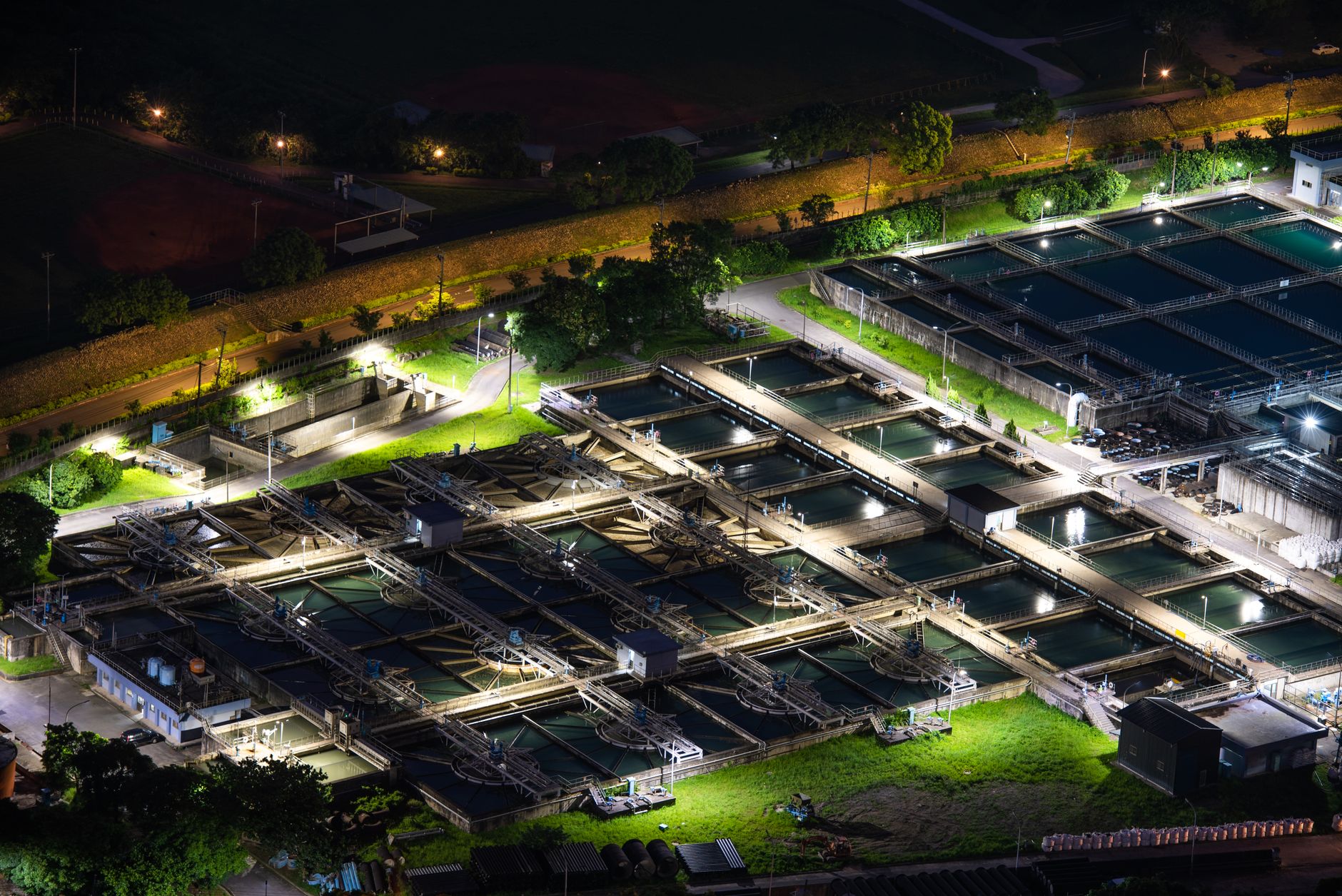
  • Sewage Farms on the Green Belt: Why England’s Water Infrastructure Is Quietly Being Built in the Wrong Places

    Sewage Farms on the Green Belt: Why England’s Water Infrastructure Is Quietly Being Built in the Wrong Places

    Ofwat’s latest price review handed water companies something close to a blank cheque. Thames Water, Severn Trent, Anglian and the rest were collectively granted over £100 billion in capital investment to fix crumbling pipes, overflowing sewers and inadequate treatment capacity over the next five years. The money is real, the need is genuine, and nobody seriously disputes that England’s water infrastructure is in a poor state. What’s becoming increasingly clear, though, is that the question of where all this infrastructure actually gets built is turning into one of the messiest planning fights the country has seen in years.

    I’ve been following this closely, and the pattern is striking. Across the south-east, the Midlands and East Anglia in particular, water companies are proposing new and expanded sewage treatment works on green belt land and agricultural fields. Local councils are pushing back. Planning inspectors are overruling them. And communities that thought the green belt was a firm line on a map are discovering it’s considerably more flexible than they were led to believe.

    Sewage treatment works on green belt countryside land illustrating water infrastructure green belt planning in England
    Photo by Max Chen on Pexels

    What Ofwat’s investment approval actually means on the ground

    Ofwat sets the amount water companies can charge customers and, by extension, how much capital they can raise for infrastructure. The PR24 price review, which covers 2025 to 2030, approved the largest investment package in the sector’s history. Thames Water alone has permission to spend around £19 billion. Anglian Water, which serves a region with significant housing growth pressure and an already stretched water table, got approval for billions more.

    The logic is straightforward enough. England’s sewage network was largely built in the Victorian era. Combined sewer overflows, the outlets that dump untreated sewage into rivers when capacity is exceeded, have become a national scandal. The BBC’s ongoing reporting on river pollution has made this a genuinely mainstream political issue. So water companies need to build things. Big things. Tanks, treatment works, pumping stations, storage facilities.

    The problem is that the most logical sites from an engineering perspective, flat land near watercourses, often away from existing industrial zones, frequently turns out to be green belt or agricultural land. And that’s where the rows start.

    Green belt vs essential infrastructure: who wins?

    Planning policy in England does allow for development on the green belt in what are called “very special circumstances.” The National Planning Policy Framework lists water infrastructure as potentially falling into this category, but it’s not automatic. Local planning authorities still scrutinise applications, and in many cases they’ve refused them, only to be overturned on appeal.

    I find this genuinely troubling. There’s something uncomfortable about the fact that a water company can get a decision reversed through the Planning Inspectorate when a local council says no, but a housing developer faces the same route and tends to get far more public sympathy for the community objectors. The infrastructure gets built either way, but the communities don’t have meaningful recourse.

    In Hertfordshire, residents near one proposed sewage treatment expansion spent the better part of two years fighting an application, citing visual impact, odour, and loss of productive farmland. The inspector’s decision largely sided with the water company on grounds of infrastructure need. Similar battles have played out in Oxfordshire, Suffolk, and parts of Leicestershire.

    What’s making these disputes sharper right now is timing. The Ofwat approvals have created a surge in planning applications from water companies who, understandably, want to get spades in the ground. They’re under regulatory pressure to deliver. That means the volume of these applications is higher than it’s been in a generation, and planning departments, already under-resourced, are having to process them quickly.

    The agricultural land question nobody wants to answer

    Alongside the green belt argument sits a quieter but equally important concern: the loss of grade one and grade two agricultural land. England has a limited supply of its best farmland, and the government’s own stated position is that it should be protected. DEFRA has long-standing guidance on this. But sewage treatment works are large, permanent, and effectively sterilise land for any other use indefinitely.

    Farmers are caught in an odd position. Some are willing sellers, particularly given the financial pressure many have faced since post-Brexit subsidy changes came into effect. Others feel the compulsory purchase threat, even if not formally invoked, creates a one-sided negotiation. Either way, once a treatment works is built, that field isn’t coming back into food production.

    It’s worth noting the broader context here. The planning permission paralysis gripping residential development doesn’t seem to apply with the same force to utility infrastructure. Water companies have statutory undertaker status, which grants them certain powers and a degree of planning priority that private housebuilders don’t have. That disparity is not lost on communities who’ve watched housing applications fail on green belt grounds while a treatment works gets waved through.

    Who actually controls England’s planning system?

    The honest answer is: it’s complicated, and that complexity is part of the problem. Local planning authorities make initial decisions. The Planning Inspectorate handles appeals. Nationally Significant Infrastructure Projects above certain thresholds go through the Development Consent Order process, which bypasses local planning entirely and sits with the Secretary of State for Energy Security and Net Zero. Water companies know the system well and are adept at choosing the route most likely to get them a yes.

    This isn’t necessarily corrupt or even particularly cynical. The companies are under regulatory and legal obligations to deliver infrastructure. If they don’t, they face fines, special administration and the possibility of that £100 billion investment being clawed back. But it does mean that local democratic objection has limited teeth when set against a statutory duty.

    Oli and I were talking about this last week and I made the point that the conversation feels similar to debates about other essential infrastructure, power lines, mobile masts, reservoirs, where nobody disputes the need in the abstract but everyone disputes the specific location. The difference with water infrastructure right now is the sheer scale of investment pressing down on a planning system that simply wasn’t built to process it at this speed.

    The issue also connects to broader failures in how England manages its water supply. Water stress is quietly affecting all sorts of industries, and the lack of new reservoir capacity over the past three decades has made the pressure on existing treatment works worse than it needed to be. Building more treatment capacity is partly a consequence of building almost nothing for twenty years.

    What communities can actually do

    Objections do occasionally succeed. Where communities have been most effective is in forcing design modifications rather than outright refusals, pushing for better screening, reduced visual footprint, odour controls, and biodiversity net gain requirements. Some water companies have engaged reasonably well with this process; others have treated it as an obstacle.

    The other lever is political. MPs in affected areas have raised this in the Commons, and the connection between water infrastructure on green belt land and the government’s housebuilding agenda creates an awkward tension for ministers who’ve made planning reform a centrepiece of their programme. The question of which infrastructure gets special treatment and why is one that is going to come up repeatedly as the energy transition and water resilience programmes both accelerate.

    My read on this is that England is heading for a reckoning. The planning system was designed for a slower pace of infrastructure decision-making. Ofwat’s approvals have changed that. Unless there’s a clearer national framework for where essential water infrastructure can and cannot go, with genuine community input built in rather than bolted on as an afterthought, these battles are going to multiply. And the communities on the losing end will have every right to feel that the system wasn’t designed with them in mind.

  • The Planning Permission Paralysis: Why Britain Cannot Build Enough Homes Even When Developers Want To

    The Planning Permission Paralysis: Why Britain Cannot Build Enough Homes Even When Developers Want To

    Britain has a housing crisis. That’s not a hot take at this point, it’s almost boring to say. But what I find genuinely maddening, the thing that doesn’t get enough airtime, is that the problem isn’t just that people don’t want new homes built near them. It’s that even when developers get permission, even when the planning committee votes yes and the paperwork is signed, homes still don’t get built for years. The UK planning permission delays aren’t a side effect of the crisis. In many cases, they are the crisis.

    Oskar and I have been picking at this one for a while. The numbers are stark. The government’s own target is 1.5 million new homes by 2029. The planning system, as currently constituted, makes that look like fantasy fiction.

    Stack of planning permission documents on a council desk illustrating UK planning permission delays
    Photo by Mikael Blomkvist on Pexels

    How the planning system actually works, and where it breaks down

    Most people assume planning permission is the finish line. Get your application approved, crack on with building. That’s not remotely how it works in practice. Approval triggers what planners call “conditions”, sometimes dozens of them, that must be discharged before a single digger can move. An archaeological survey here, a bat habitat assessment there, a drainage strategy signed off by the local water authority, a noise impact study reviewed by the council’s environmental team. Each condition sits in a queue. Each queue has its own timeline. Councils, stripped of funding over the better part of fifteen years, often have one or two people handling these discharges across an entire local authority area.

    The Local Government Association has been warning about this for years. In 2025, around a third of English councils reported having fewer planning officers than they did in 2015, even as application volumes had risen. You can’t process what you can’t staff. And you can’t staff what you can’t fund.

    Why approved schemes still sit empty for years

    There’s a widespread assumption that developers sit on land with planning permission, the so-called “land banking” accusation, and that this explains why homes don’t get built. The truth is messier. Some developers do hold land speculatively. But a large chunk of the delay happens because the post-permission process is genuinely brutal.

    Take a typical medium-sized housing scheme in the East Midlands. Permission granted. Then the developer must discharge pre-commencement conditions (drainage, ecology, archaeology), agree a Section 106 legal agreement on affordable housing contributions, negotiate with the highway authority over road layouts, and, if anyone decides to mount a judicial review, wait out the courts. A judicial review can pause a scheme for twelve to eighteen months on its own. Some projects face two or three of them, often from the same objectors recycling slightly different legal arguments.

    I’d argue the judicial review route has become one of the most effective tools for blocking development that has already been democratically approved. That’s a strange thing to type, but it’s true. A small group of well-funded objectors can delay thousands of homes for years through legal challenges that courts often dismiss on substantive grounds, but only after the damage to timelines has already been done.

    Stalled UK housing construction site showing the impact of planning permission delays
    Photo by Jan van der Wolf on Pexels

    Labour’s planning reforms: are they actually cutting through?

    The government came into office with planning reform as a genuine priority. The Planning and Infrastructure Bill, introduced in 2025, makes some significant moves. It seeks to speed up the discharge of planning conditions, strengthen the National Planning Policy Framework to make housing targets harder for councils to dodge, and, controversially, give ministers more power to override local decisions on strategic sites.

    The bill also proposes a new system of “development management policies” at the national level, reducing the patchwork of local plans that currently means the rules are slightly different in every one of England’s 317 local planning authorities. In theory, that reduces friction. In practice, the transition period between old and new frameworks tends to create a temporary paralysis of its own as councils wait to understand their obligations.

    There’s also the question of resourcing. The government has promised to hire 300 more planning officers, funded through increased planning fees. That’s better than nothing. But the planning consultancy Lichfields estimated in early 2026 that England needs something closer to 3,000 additional officers to clear the backlog and handle increased application volumes. Three hundred is a start, not a solution. You can read the full details of the Planning and Infrastructure Bill on gov.uk if you want to work through the actual legislative text.

    NIMBYism is real, but it’s not the whole story

    It’s tempting to reduce all of this to neighbours in wellies objecting to anything taller than a garden fence. And yes, that happens. Planning committees are political bodies, and local councillors respond to their electorates. A ward where a majority of voters own property and oppose new development will often produce planning decisions that reflect exactly that.

    But the more I’ve looked at this, the more I think NIMBYism is being used as a convenient scapegoat that lets the system itself off the hook. The planning system is so underfunded, so fragmented across local authorities, so vulnerable to legal challenge, and so burdened by process that even genuinely pro-housing councils in areas with genuine need struggle to get schemes delivered. This connects to a broader pattern we’ve covered on this site, from how social housing conditions remain dire despite legislative promises to who actually controls land in the places we’d most like to protect. The common thread is a system that talks about housing but makes delivery structurally difficult.

    There’s also an awkward truth about viability. When a council imposes significant Section 106 obligations, affordable housing quotas, infrastructure contributions, community facilities, developers sometimes find a scheme no longer stacks up financially. They go back to renegotiate. More delay. More legal costs. The homes still don’t get built.

    What would actually make a difference

    Fixing this properly requires things that are politically unpopular. Restricting judicial review rights for planning cases, or at least shortening the timelines for courts to hear them, would face loud opposition from civil liberties groups. Overriding local plan policies from Westminster would provoke fury from councils across the political spectrum. Reducing the number of pre-commencement conditions on standard residential schemes would require trusting developers more than many local authorities feel comfortable doing.

    Some of the more practical ideas floating around planning circles involve zoning reform, replacing the current system of site-by-site decision-making with designated zones where certain types of development are automatically permitted, subject to design codes. That would dramatically reduce UK planning permission delays for schemes that fit the zone. It’s closer to how much of Europe manages land use. Whether the current government has the appetite for a change that radical, given the political cost, is a genuinely open question.

    In the meantime, Britain is building roughly 200,000 homes a year against a stated need of 300,000 or more. The gap compounds every year. Families who can’t afford to buy and can’t find social housing end up in expensive private rentals, a situation we’ve examined in depth when looking at how high streets are changing and how the pressures on working households keep stacking up. Homebuilding affects everything: transport, local economies, the price of a pint, whether young people stay in a town or leave. And all of it is stuck behind a planning system that is, in blunt terms, not fit for purpose.

    Speaking of new builds and the homes that do eventually get completed, there’s always a rush of fit-out work when keys are finally handed over. Bathrooms, kitchens, window dressings. I noticed Vesta Blinds and Shutters Mansfield have been busy supplying new-build completions in the East Midlands, which tells you something about where the activity that does exist is happening.

    The planning system isn’t going to be fixed by one bill, one hire round, or one government. But the current state, where a yes can mean five more years of process, isn’t sustainable. At some point, the gap between what Britain says it wants to build and what it actually builds has to close. The question is whether any government is willing to take the political pain to close it properly.

    Frequently Asked Questions

    Why does planning permission take so long in the UK?

    Even after a planning application is approved, developers must discharge dozens of pre-commencement conditions, negotiate Section 106 agreements, and potentially defend schemes against judicial reviews. Each stage involves under-resourced council teams and can add months or years to delivery timelines. The Local Government Association has linked the slowdowns directly to cuts in planning department funding over the past decade.

    What are the UK government's housing targets and are they realistic?

    The Labour government’s target is 1.5 million new homes delivered by 2029. England currently builds around 200,000 homes per year, well short of the 300,000-plus annually required to meet that target. Most independent planning analysts consider the target extremely challenging given current system capacity, even with the proposed reforms in the Planning and Infrastructure Bill.

    What is the Planning and Infrastructure Bill and what does it change?

    Introduced in 2025, the Planning and Infrastructure Bill aims to streamline condition discharges, strengthen national housing policy to make local targets harder to bypass, and give ministers greater powers over strategic development sites. It also proposes national development management policies to reduce the inconsistency between England’s 317 local planning authorities. Full details are published on gov.uk.

    What is a Section 106 agreement and how does it delay housing?

    A Section 106 agreement is a legal contract between a developer and a local council that sets out contributions to affordable housing, infrastructure, and community facilities as a condition of planning permission. Negotiating these agreements can take many months, and if the obligations make a scheme financially unviable, developers may seek to renegotiate, causing further delays before any building can start.

    Can a judicial review stop a housing development that has planning permission?

    Yes. A judicial review can pause an approved scheme while the courts assess whether the planning decision was lawful. Even when challenges are ultimately dismissed, the process can take twelve to eighteen months, and some projects face multiple sequential reviews. Critics argue this mechanism is routinely used to delay schemes that have already gone through the democratic planning process.

  • The British Craft Beer Crash: Why So Many Independent Breweries Are Quietly Closing Their Doors in 2026

    The British Craft Beer Crash: Why So Many Independent Breweries Are Quietly Closing Their Doors in 2026

    A decade ago, the craft beer boom felt unstoppable. Every market town seemed to sprout a taproom, every city had its own small-batch IPA scene, and the big lager brands looked genuinely rattled. I remember walking through Bermondsey on a Saturday afternoon in 2016 and thinking the whole street had been colonised by bearded brewers with hand-stamped labels and very strong opinions about dry-hopping. It felt like a cultural shift. It felt permanent. It wasn’t.

    UK craft brewery closures 2026 are now a weekly news item in the trade press. Brewdog’s difficulties have grabbed headlines, but the quieter story is the one happening to the small outfits nobody outside their postcode ever heard of. These are the breweries that opened on passion, survived on community, and are now shutting up shop because the numbers simply don’t work anymore.

    Empty craft brewery taproom with brewing tanks visible, reflecting UK craft brewery closures 2026
    Photo by ELEVATE on Pexels

    How big did the boom actually get?

    The Society of Independent Brewers (SIBA) tracked the UK’s craft brewing sector growing from around 700 breweries in 2010 to well over 2,000 by the early 2020s. That kind of growth attracted serious investment, serious ambition, and, in retrospect, serious overcapacity. The market could absorb enthusiasm up to a point. Then the costs arrived.

    Energy prices were the first proper shock. Brewing is an energy-intensive process. Heating water, running chillers, powering packaging lines, a small brewery running a 10-barrel kit can easily spend thousands of pounds a month on gas and electricity even before the post-2021 price spikes. When energy costs doubled and then doubled again, margins that were already thin became margins that were effectively negative.

    SIBA’s own data published in early 2025 showed that nearly one in five independent breweries was operating at a loss. That’s before you factor in the Autumn Budget changes to business rates relief. Small businesses in retail and hospitality had been receiving 75% relief on their rates bills; the taprooms and brewery bars that many small brewers depend on for direct-to-consumer revenue were suddenly facing a much steeper bill from April 2026. For some, that single change tipped a difficult situation into an impossible one.

    Why the craft beer market is not what it was

    Costs alone don’t explain the full picture. Drinking habits have shifted, and it’s a shift that’s been building for several years. The sober-curious movement is real. Younger consumers, particularly those under 30, are drinking less alcohol overall. The NHS-backed Drinkaware figures consistently show that the 18 to 24 age group drinks less per week than any equivalent cohort measured in the 1990s or 2000s. That’s not a temporary blip. That’s a generational change in attitude.

    The craft beer sector’s response has been to pile into low-alcohol and alcohol-free alternatives, which is sensible in principle. The problem is that supermarkets have beaten most small brewers to it. Tesco, Sainsbury’s and M&S all carry strong own-label and branded alcohol-free ranges now, priced aggressively. A small brewery trying to compete with a £1.20 supermarket alcohol-free lager while pricing their own can at £2.50 is fighting a losing battle on the shop floor.

    Then there’s the pub question. Independent brewers relied heavily on free-trade pub sales, the pubs not tied to a pubco or brewery. But Britain’s pub estate has contracted sharply, and the pubs that remain are under their own severe financial pressure. Landlords are cutting their guest ale range, defaulting to the lower-risk option of big-brand lager keg lines, and paying later, or sometimes not at all. Several small breweries I’ve read about in the trade press this year have cited bad debt from pub customers as a direct contributor to their closure. A publican goes under owing you £8,000 in unpaid invoices, and you can absorb it once. Not twice.

    The regions feeling it hardest

    The closures aren’t evenly spread. Yorkshire, the North West, and the Midlands, regions that saw some of the most enthusiastic growth in small brewing during the boom years, are now seeing the heaviest losses. London’s craft brewing scene has contracted too, particularly south of the river where rents on railway arch units have risen sharply. Several well-regarded Bermondsey breweries that were genuine pioneers of the taproom model have either closed or sold up to larger groups in the past 18 months.

    Scotland has its own version of the story. Edinburgh and Glasgow both built strong independent brewing communities. Some of those brewers are weathering it through export, Scandinavian markets in particular still have genuine appetite for British craft beer. But export adds cost and complexity, and not every small operation has the capacity or the cashflow to sustain it.

    The irony is that this is happening at the same time that other leisure businesses are quietly returning to Britain’s high streets under new formats and new branding. Craft breweries, which genuinely revitalised certain town centres and created real hospitality jobs, are going the other way.

    Is there any route out?

    Some breweries are consolidating. Mergers between two or three small operations sharing a single site and a single sales function can reduce fixed costs meaningfully. It’s not glamorous, but it keeps the beer flowing. Others are pivoting to contract brewing, making beer for other brands using their kit, which generates revenue without the sales pressure of pushing your own label into a saturated market.

    A few are finding salvation in local authority partnerships, supplying local events, council-owned venues, or universities. It’s not the romantic craft beer dream, but it’s income. And income is what keeps the lights on.

    There’s also a political dimension that the industry has been pushing hard on. SIBA and the Campaign for Real Ale (CAMRA) have both lobbied for a permanent, targeted business rates relief for taprooms and small-scale brewing operations, separate from the general hospitality relief. The argument is that these businesses generate disproportionate local economic value through tourism, footfall, and supply chain activity. The Treasury has not yet been persuaded, but the campaign continues.

    The parallel with other industries under pressure is hard to ignore. Just as the squeeze on household finances has changed where and how people spend money on food, the same squeeze has changed leisure spending. A £6 craft can in a taproom is a luxury that feels cuttable when the energy bill has gone up and the mortgage has gone up. People are still drinking, just differently, and often cheaper.

    What’s being lost, and I think this is worth saying plainly, is not just a business category. It’s a particular kind of community infrastructure that places like Bermondsey, the Northern Quarter in Manchester, and Kelham Island in Sheffield genuinely built around beer. The UK craft brewery closures in 2026 are not a dry economic statistic. They’re a signal that the economics of small, independent, passion-driven businesses in Britain are becoming increasingly brutal, regardless of how good the product is.

    The boom was real. The beer was often genuinely excellent. And right now, that’s not enough.

    Frequently Asked Questions

    How many UK craft breweries have closed in 2026?

    Precise figures update regularly, but SIBA and trade press data through early 2026 suggest hundreds of independent breweries have ceased trading or are in the process of closing since 2023. The rate of closures has accelerated noticeably compared to the peak growth years of 2015 to 2019.

    Why are independent breweries closing in the UK right now?

    The main causes are high energy costs, increased business rates following the reduction in retail and hospitality relief, slower on-trade pub sales, and shifting consumer habits towards alcohol-free options. Most small breweries operate on very tight margins, so several pressures arriving simultaneously is often fatal.

    Is the craft beer market actually shrinking in the UK?

    The volume of beer sold under craft or independent labels has plateaued and in some segments declined. Supermarket own-label and big-brand craft lines have taken significant market share, while overall alcohol consumption among younger age groups is falling. The number of breweries is contracting, though specialist and export-focused operations are holding up better than purely domestic ones.

    Can small UK breweries survive by selling alcohol-free beer?

    Some are trying, but the alcohol-free market is dominated by large brands with the pricing power to undercut small producers significantly. Alcohol-free brewing also requires additional investment in equipment and processes. It’s a viable niche for some, but not a straightforward lifeline for the majority.

    What is SIBA doing to help independent breweries stay open?

    The Society of Independent Brewers has been lobbying the Treasury for permanent business rates relief specifically for taprooms and small brewing operations, arguing they generate outsized local economic and cultural value. SIBA also provides commercial support, shared purchasing schemes, and market data to help member breweries make better business decisions.

  • Motorway Service Station Britain: How a Handful of Companies Have Created an Unavoidable £5-a-Coffee Monopoly on Our Roads

    Motorway Service Station Britain: How a Handful of Companies Have Created an Unavoidable £5-a-Coffee Monopoly on Our Roads

    Pull off the M6 at Keele, the M1 at Toddington, or the M5 at Strensham, and you are walking into one of the most perfectly constructed captive markets in British commerce. You need fuel. You need the loo. You might need a coffee or a sandwich. And you have absolutely nowhere else to go. That, in essence, is the motorway services UK prices monopoly in action, and it has been quietly operating for decades with the full blessing of government.

    Motorway service station entrance illustrating the motorway services UK prices monopoly problem
    Photo by Alex Fu on Pexels

    Three operators, Moto, Extra, and Welcome Break, control the overwhelming majority of England’s motorway service areas. A handful of smaller players, including Roadchef and EG Group, pick up the scraps. Between them, these companies hold concession agreements with National Highways (the government-owned body responsible for the strategic road network) that grant them the exclusive right to operate at specific locations. Once your concession is in place, competition is legally locked out. No rival can open a service area within a set distance, typically a quarter of a mile, on the same road. The result is a network of enforced monopolies dressed up as a public service.

    How the concession system works, and why it suits everyone except drivers

    The concession model dates back to the 1960s, when the government decided motorway services should be privately run but tightly regulated for safety reasons. The thinking made sense at the time. You want consistent, reliable facilities on high-speed roads, not a free-for-all. But the practical consequence is that once a company wins a long-term concession, often for 35 to 50 years, it faces no meaningful competitive pressure for the duration. National Highways sets minimum standards for facilities, opening hours, and fuel provision, but it does not regulate prices. That gap between what the regulator controls and what it ignores is where the money is.

    I have watched this issue surface periodically for years and it always seems to disappear again, usually after a burst of outrage about £3.50 for a small coffee or £1.99 for a single croissant. In 2023, the Competition and Markets Authority looked briefly at road fuel pricing and noted that motorway forecourts consistently charged more than supermarket petrol stations, sometimes by 20p per litre or more. The CMA recommended greater price transparency, which led to the implementation of a fuel price display requirement. Prices remain eye-watering regardless.

    What you are actually paying compared to the high street

    The brands inside motorway services are often the same ones you use at home. Costa, McDonald’s, WHSmith, M&S Food, Burger King. But the prices are not the same. WHSmith on a motorway has become almost a cultural shorthand for the mark-up problem. A 2024 survey by consumer group Which? found that WHSmith motorway branches charged, on average, 47% more for the same products than their high-street equivalents. A bottle of water that costs 80p in a town centre can run to £1.80 at Frankley on the M5.

    The operators’ defence is consistent: they carry enormous fixed costs. Land leases, staffing a 24-hour operation, maintaining toilet facilities to the standard required under their concession, and building the infrastructure to accommodate coaches, lorry drivers, and families all at once. That is true, and nobody is suggesting motorway services should match the local Aldi. But the size of the premium, and the structural impossibility of avoiding it if you need a stop, tips the balance from “understandable” to something that looks a lot like exploitation of a trapped audience.

    Fuel is the most dramatic example. The RAC consistently tracks a significant gap between motorway forecourt prices and supermarket pump prices. In January 2026, the RAC Foundation’s pump price data showed average unleaded at motorway services running approximately 15 to 18 pence per litre above the UK supermarket average. On a 50-litre fill, that is £7.50 to £9 extra. For someone driving between Edinburgh and London, who might stop twice, the cost compounds quickly.

    The government’s hands-off approach

    National Highways requires that a motorway service area provides free toilets, free parking for two hours (three for heavy goods vehicles), a baby-changing facility, a picnic area, and fuel available 24 hours a day. What it does not require is that any of those things be competitively priced. The assumption baked into the regulatory framework is that drivers choose to stop, and therefore the market governs what they pay. The flaw in that logic is that the market has been deliberately structured to remove choice.

    Parliament has nudged at this occasionally. The 2021 Transport Select Committee inquiry into road pricing touched on motorway services in passing. There have been early-day motions about fuel price transparency. But I would struggle to name a single piece of primary legislation in the last twenty years that has materially altered the pricing power of the big motorway operators. Meanwhile, the concession holders have invested heavily in their sites, adding EV charging bays, hotel accommodation, and expanded food courts, upgrades that look progressive but also conveniently add revenue streams to an already captive customer base.

    The EV charging question is worth pausing on. As Britain pushes further toward electric vehicles, the charging infrastructure at motorway services is becoming as critical as petrol pumps once were. Rapid chargers at motorway services currently run at prices that can reach 85 pence per kilowatt-hour, roughly double what a driver might pay charging at home overnight. This is a new front in an old argument about whether operators serving a public-road function should be allowed to extract maximum commercial value from drivers who have no alternative. You can read more about the pressures driving EV adoption in our piece on Britain’s push for EV minerals and what the supply chain actually looks like.

    Is there any real pressure for change?

    The honest answer is: not much. The operators are profitable, the concession system suits National Highways administratively, and successive governments have had bigger political fires to put out. The CMA’s fuel price transparency push was the most concrete intervention in years, and even that stopped well short of price caps or structural reform of the concession model.

    Consumer frustration is real and vocal, particularly online, but frustration does not automatically translate into political pressure when the issue affects people only intermittently and the affected group is, by definition, dispersed across the road network. Lorry drivers who stop multiple times daily have the strongest economic grievance, but they are also largely invisible to policymakers in the way that, say, struggling renters or NHS patients are not. If you want a sense of how policy tends to leave specific groups behind without much fanfare, the parallels with how Britain’s childcare expansion has bypassed the people it was meant to help are uncomfortably close.

    Some people argue that technology will eventually solve the problem. Better route planning, more off-motorway charging infrastructure, apps that direct drivers to cheaper fuel just a mile from the junction. That may help at the margins. But for the tired family at 11pm on the M1 who just need somewhere safe to stop, eat, and stretch their legs, the structural fact remains: three companies control the space, the government handed it to them, and nobody is in a rush to change that.

    My view is that the concession model itself needs revisiting, not abolished, but reformed so that price benchmarking against equivalent high-street brands is built into the licence terms. The operators can keep their exclusivity. What they should not keep is complete immunity from any obligation to justify what they charge the millions of people who have, quite literally, no other option. Until that changes, the £5 coffee and the 20p fuel premium are not anomalies. They are the point.

  • Britain’s Lithium Gold Rush: Why Mining Companies Are Eyeing Cornwall and Scotland for the Minerals Powering the EV Revolution

    Britain’s Lithium Gold Rush: Why Mining Companies Are Eyeing Cornwall and Scotland for the Minerals Powering the EV Revolution

    Something is stirring beneath Cornwall’s moors and the granite hills of the Scottish Highlands, and it has nothing to do with folklore. A quiet but accelerating race is underway to pull lithium, cobalt and rare earth elements out of British soil, driven by the explosive global demand for electric vehicle batteries. The companies involved talk about energy security, green jobs and breaking free from Chinese supply chains. The communities sitting above these deposits tend to have a more complicated set of feelings about the whole thing. UK lithium mining Cornwall EV minerals is a phrase that would have sounded faintly absurd a decade ago. Today it sits at the intersection of geopolitics, climate policy and raw commercial ambition.

    Cornish moorland with historic mine engine houses, relevant to UK lithium mining Cornwall EV minerals debate
    Photo by Karl Gerber on Pexels

    What is actually in the ground?

    Cornwall’s geology is, it turns out, quietly extraordinary. The county sits on granite formations that were superheated by volcanic activity hundreds of millions of years ago, and those ancient processes left behind lithium-rich brines in the porous rock. Cornish Lithium, one of the most prominent exploration firms working in the region, has been drilling test bores across mid-Cornwall since 2017. Their estimates suggest the area could hold commercially viable concentrations of lithium sufficient to supply hundreds of thousands of EV batteries annually. In the Highlands, a different picture emerges: hard-rock deposits of spodumene, a lithium-bearing mineral, plus scattered rare earth occurrences that have attracted attention from companies eyeing the critical minerals supply chain question from a defence and technology angle as much as an automotive one.

    The stakes are not trivial. The UK is committed to phasing out new petrol and diesel car sales by 2035, and every EV battery requires significant quantities of lithium, cobalt, nickel and manganese. Right now, the vast majority of battery-grade lithium processed globally passes through China at some stage. The UK’s Critical Minerals Strategy, updated in 2023, explicitly identifies domestic sourcing as a priority. Whether good intentions translate into operational mines is a very different matter.

    The case for digging

    I find the economic argument here genuinely compelling, at least on paper. If you can extract lithium from brine aquifers in Cornwall using geothermal energy that is already being tapped for heat, you are potentially producing a low-carbon critical mineral without the environmental catastrophe associated with hard-rock lithium mining in the Atacama Desert or the Democratic Republic of Congo. That is a real differentiator. Manufacturers building gigafactories across Europe and the UK, including Envision AESC at Sunderland and the planned facility near Bridgwater in Somerset, need assured, traceable mineral supply. Sourcing from Cornwall rather than Sichuan Province is a story they can sell to car buyers and regulators alike.

    The geopolitical dimension sharpens the argument further. China controls roughly 60 per cent of global lithium refining capacity and an even larger share of rare earth processing. If you have spent any time reading about how British businesses are already navigating fragile global supply chains post-Brexit, you will understand why policymakers are nervous about single-country dependencies on materials this fundamental. A domestic supply, even a partial one, provides genuine leverage.

    The communities caught in the middle

    Here is where things get messier, as they always do. Cornwall is not just a geological formation; it is a place where people live, farm, surf and run tourism businesses. The areas being eyed for brine extraction and drilling sit close to the Bodmin Moor Area of Outstanding Natural Beauty. Planning applications have already drawn objections from residents worried about HGV traffic, noise, hydrological disruption and the general industrialisation of landscapes that are central to the county’s identity and economy.

    There is a certain irony that is hard to ignore. The green transition requires minerals. Extracting minerals disturbs landscapes. The communities most likely to have their views or coastlines damaged by climate change are sometimes the same ones being asked to accept a mine on their doorstep so that city dwellers can drive an EV with a clean conscience. Cornish Lithium has made efforts at community engagement, offering local employment pledges and revenue-sharing proposals, but scepticism runs deep in communities that remember what was left behind after Cornish tin and copper mining collapsed.

    In Scotland the dynamics are slightly different. Some Highland communities are more receptive, particularly in areas where traditional industries have long since evaporated and unemployment is chronic. But the Scottish Government has its own planning framework, its own environmental sensitivities around peatland and water catchment, and its own political calculations around land use. A mine that gets a warm reception from an economic development agency can still spend five years in planning. The gap between a promising geological survey and an operating extraction facility is, in almost every case, enormous.

    Can Britain actually reduce its dependency on China?

    My honest read is: partially, eventually, and only with sustained political will that the UK has not historically managed in the industrial sphere. Cornish lithium brines, if developed at scale, could supply a meaningful fraction of domestic demand. Rare earth processing is a harder problem because the refining capacity simply does not exist in Britain and building it takes years and billions of pounds. The government’s commitment to critical mineral supply chains is real but the funding is modest relative to what countries like the United States and Australia are putting in.

    There is also the speed problem. EV uptake is accelerating now. Gigafactories need supply contracts now. A Cornish mine that is still navigating planning appeals in 2028 is not helping a battery manufacturer in Sunderland whose purchasing decisions are being made this year. In the interim, Britain will remain dependent on imports, which means the geopolitical exposure persists. This is not entirely different from how the slow machinery of institutional decision-making consistently lags behind urgent real-world pressures across many parts of British public life.

    What needs to happen next

    A fast-track planning category for strategically significant mineral extraction, comparable to the nationally significant infrastructure project regime, would help. So would a properly funded geological survey programme, something the British Geological Survey has been quietly lobbying for. Community benefit schemes need to be legally mandated rather than left to voluntary negotiation, otherwise trust will never build and every application will face maximum resistance.

    Oskar and I were talking about this recently and his point stuck with me: the UK has a habit of identifying a strategic industrial opportunity, producing a white paper about it, and then watching another country actually do it. Lithium does not have to be that story. The minerals are there. The demand is real. The question is whether the planning system, the funding landscape and the political attention span can all align before the window closes. Given the pace at which EV supply chains are locking in long-term sourcing agreements, that window is not especially wide.

    For a country that built an entire industrial revolution on what was beneath its feet, the idea of once again mining Britain’s geological inheritance is not absurd. Getting it right, for communities, for the environment and for long-term supply security, is the hard part. And on that score, the jury is very much still out.

    Frequently Asked Questions

    Where in the UK is lithium mining most likely to happen?

    Cornwall is currently the most advanced area for lithium exploration, with Cornish Lithium actively drilling in mid-Cornwall to assess brine aquifer deposits. Scotland’s Highlands also have hard-rock lithium and rare earth mineral potential that several exploration companies are investigating.

    How does UK lithium mining relate to EV battery production?

    Lithium is a core component in the lithium-ion batteries that power electric vehicles. If UK lithium mining in Cornwall and Scotland reaches commercial scale, it could supply domestic gigafactories, such as the Envision AESC plant in Sunderland, reducing reliance on imports processed through China.

    Is lithium mining in Cornwall environmentally damaging?

    Brine-based lithium extraction, the method most relevant to Cornwall, is generally less destructive than hard-rock mining and can potentially use geothermal energy already being harnessed in the region. However, concerns remain about hydrological impacts, HGV traffic and proximity to protected landscapes like Bodmin Moor.

    Why does the UK want to reduce dependency on Chinese lithium supply?

    China controls a dominant share of global lithium refining and rare earth processing. The UK’s Critical Minerals Strategy identifies this concentration as a strategic risk, particularly for defence, technology and automotive sectors. Domestic sourcing would provide supply security and reduce geopolitical vulnerability.

    How long before UK lithium mining could actually supply EV manufacturers?

    Realistically, commercial-scale lithium production from UK sources is likely a decade away for most projects, given the time required for planning approvals, environmental assessments and facility construction. Some smaller-scale production could come sooner, but it will not displace imports in the short term.

  • The Betting Shop Revival Nobody Expected: How Gambling Firms Are Quietly Returning to Britain’s High Streets Under New Branding

    The Betting Shop Revival Nobody Expected: How Gambling Firms Are Quietly Returning to Britain’s High Streets Under New Branding

    There was a moment, not long ago, when it felt like the betting shop was dying. Paddy Power, Ladbrokes, William Hill, they were closing branches across Britain at a pace that made you think the high street bookmaker might actually become a relic. Fixed-odds betting terminals were capped at £2 a spin following years of campaigning. Footfall was down. The industry, it seemed, was retreating online. And then, quietly, it came back. Only this time it looked a little different.

    UK gambling reform high street betting 2026 is the story nobody in government seems particularly keen to tell loudly: the major operators didn’t disappear from Britain’s town centres. They regrouped, rebranded, and in some cases expanded, using the architecture of the new regulations as cover rather than as a genuine constraint. I’ve been following this story for a while now, and the more you look at it, the more it resembles a conjuring trick performed in broad daylight.

    Renovated betting shop on a British high street reflecting UK gambling reform high street betting 2026 changes
    Photo by HONG SON on Pexels

    What the Gambling Act reforms actually said

    The Gambling Act 2005 was always considered badly out of date for the digital age, and the government’s 2023 white paper finally set out a framework for modernising it. The headline promises were significant: affordability checks for online players spending above certain thresholds, a statutory levy on operators to fund addiction treatment, tighter rules around advertising (particularly the kind aimed at children and vulnerable people), and a new gambling ombudsman to handle complaints. On paper, it read like a serious intervention.

    The Gambling Commission, which oversees the industry, has been given more teeth and a larger budget to use them. According to the Gambling Commission’s own published data, there are approximately 2.5 million people in Britain classified as problem gamblers or at risk of becoming one. That figure has barely shifted in years despite repeated waves of reform. Which raises the obvious question: if the rules keep changing, why doesn’t the harm?

    The rebranding playbook

    Walk down the high street in any mid-sized British town right now and you’ll notice something. The old-school betting shop aesthetic, the strip-lit interiors plastered with odds for greyhound racing, the slightly desperate vibe of somewhere that time forgot, is being replaced. Operators are fitting out their branches with softer lighting, coffee machines, digital touchscreens that look more like a tech startup’s reception desk than a bookmaker. Several Ladbrokes and Coral branches have been refitted under a combined GVC (now Entain) brand that deliberately downplays the gambling element in its visual identity.

    Entain, which operates Ladbrokes, Coral, and a clutch of other brands, has framed its physical presence as part of an “entertainment ecosystem” strategy. That’s their language, not mine. The idea is that the shop isn’t just somewhere you go to lose money on the 3:20 at Cheltenham; it’s a social space with sports on the screens and a place to watch the match. Whether that’s a genuine evolution or simply a way to make the environment more sticky and comfortable for people who probably shouldn’t be there at all is a question worth sitting with.

    Affordability checks and the backlash that watered them down

    One of the most contested elements of the reform package was the affordability check system. The original proposal would have required operators to carry out checks on customers who lost relatively modest sums within short time frames. The gambling industry lobbied hard against it, and so did some punters who felt their privacy was being invaded. By the time the policy was finalised, the thresholds had been pushed significantly higher, meaning the checks would apply to far fewer people than the initial draft suggested.

    The Campaign for Fairer Gambling and organisations like GambleAware had argued for tighter limits. The final compromise satisfied almost nobody. Problem gamblers rarely self-identify as such, and the behavioural data the Gambling Commission already holds shows that the people racking up the most serious losses are often doing so in concentrated bursts that would fall below even the revised thresholds. I’d argue this was the moment the reform package lost its nerve.

    The statutory levy, at least, has held firm. Operators are now required to contribute to a central fund that finances NHS gambling clinics and research. The NHS currently runs 15 specialist clinics across England, which sounds reasonable until you consider how many of those 2.5 million at-risk gamblers there are relative to available treatment slots. In some parts of the country, waiting times for specialist support stretch to months. The funding is better than nothing, but it’s not transformative.

    Online is where the real money goes, and the real harm happens

    The focus on high street betting shops is, to some extent, a distraction from where the bulk of gambling activity now takes place. The Gambling Commission’s statistics show that online gambling accounts for the majority of gross gambling yield in Britain. The slot machines and live casino products available through apps on your mobile can be accessed at 2am in bed, with no staff member able to spot the signs of someone in distress. That’s a fundamentally different environment to a physical shop, and it’s one where the harm multiplies much faster.

    Operators know this. The high street revival is, in part, a response to the reputational risk of being seen as purely digital. A physical presence gives a company a more legible, regulated face. It makes it easier to argue “we follow the rules” when there are actual premises with actual staff. But the profit centre, for most of the major operators, is online. The shops are almost a PR exercise at this point.

    This connects to a broader pattern Oli and I have noticed across several sectors: regulations that look robust on the surface but contain enough flexibility that well-resourced companies can absorb them without meaningfully changing their behaviour. We’ve written about this in the context of BNPL debt and the financial industry’s talent for repackaging risk, and the gambling sector operates from a very similar playbook.

    Who is actually protected?

    There are genuine improvements in the reform package. The ombudsman is now operational and provides a formal route for complaints. The advertising restrictions have reduced some of the most egregious targeting, particularly the kind that followed you around the internet after you’d visited a betting site once. Several operators have improved their self-exclusion tools, and the national GAMSTOP scheme, which allows people to exclude themselves from all licensed online operators simultaneously, has grown significantly.

    But the people most at risk of gambling harm are not, by definition, the people most likely to use self-exclusion tools or read the small print on an affordability check. They’re often people dealing with debt, unemployment, or mental health difficulties, individuals who are already under pressure and for whom a brief moment of excitement or escape is the draw. Many of them are in the same postcodes dealing with the same pressures we’ve covered in our piece on working households using food banks, and in communities where public services are already stretched thin. Vulnerability clusters. It’s rarely random.

    The gambling industry spent approximately £1.5 billion on advertising in 2024 according to estimates cited by GambleAware. The statutory levy, by contrast, raises a fraction of that for treatment. Even with the new framework in place, the marketing budget dwarfs the harm reduction budget by an enormous margin. That imbalance tells you something about where the power actually sits in this conversation.

    What would genuine reform look like?

    It would require the kind of political will that tends to evaporate when a well-funded lobby starts making noise. A strict cap on advertising spend, particularly during live sport. Affordability checks set at thresholds that actually capture the cohort causing concern. Real-time data sharing between operators so that someone excluded from one platform cannot immediately open an account with a competitor. And a serious investment in NHS gambling treatment services rather than the current patchwork of underfunded clinics.

    The betting shop revival is real. The new branding is slick. And the reforms, whilst not nothing, have not yet demonstrated they can bend the harm curve. I’ll be watching the Gambling Commission’s next annual report with genuine interest, because if those problem gambler numbers haven’t shifted by then, we’ll know exactly how much of this was cosmetic.