Something quietly enormous is happening, and it started with a diabetes drug. GLP-1 receptor agonists, the class of medication that includes semaglutide (sold as Ozempic and Wegovy), have exploded out of clinical trials and into the mainstream with a speed that has left entire industries scrambling. The Ozempic economy impact is not a future projection. It is already reshaping what people eat, how supermarkets stock their shelves, how insurers price their policies, and what the NHS believes it can realistically achieve in the war on obesity. This is one of those rare moments when a single product genuinely rewires the way whole sectors operate.
To understand the scale, consider the numbers. By early 2026, an estimated 1.5 million people in the UK had been prescribed a GLP-1 medication of some kind, either through the NHS or private clinics. Globally, Novo Nordisk, the Danish manufacturer behind Wegovy, briefly became Europe’s most valuable company on the back of surging demand. Eli Lilly’s tirzepatide (Mounjaro) is eating into that market too. The two firms together are now building manufacturing plants at a pace more commonly associated with semiconductor fabs. Demand is simply extraordinary.

What GLP-1 drugs actually do to appetite and behaviour
It is worth pausing on the mechanism, because it explains why the knock-on effects are so far-reaching. GLP-1 drugs mimic a gut hormone that signals fullness to the brain. Patients report not just eating less but actively losing interest in food. Cravings for ultra-processed snacks, alcohol, and cigarettes also diminish for many users, a side effect that researchers are now studying seriously. If you are selling crisps, beer, or lottery scratch cards, that is not an incidental detail. That is a threat to your entire customer psychology.
Clinical trials have shown average weight loss of between 12 and 22 per cent of body weight over roughly a year, depending on the drug and dosage. That is genuinely transformative territory. Previous weight loss medications barely moved the needle. These do. Which is exactly why food manufacturers, supermarkets, gym chains, and bariatric surgeons are all recalibrating at the same time.
How supermarkets and food companies are already adjusting
The Ozempic economy impact on the food sector is already measurable. Research published in 2025 by analysts at Morgan Stanley estimated that widespread GLP-1 adoption could reduce caloric consumption per person by several hundred calories per day across the population. That might sound modest, but for companies whose margins depend on people buying large packs of biscuits and fizzy drinks, it is alarming. Shares in major snack brands dipped noticeably when analysts began modelling a world where their core customer base literally eats less.
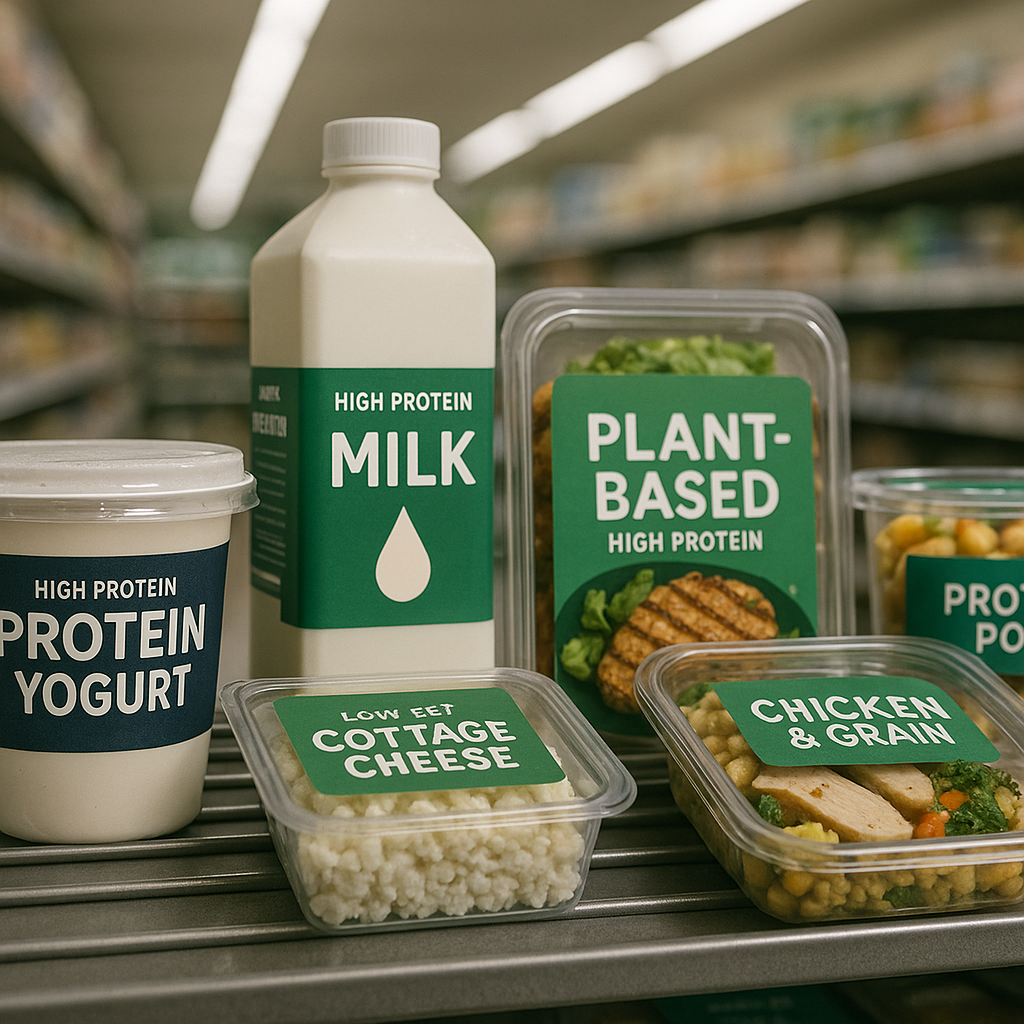
UK supermarkets are watching carefully. Tesco, Sainsbury’s, and Marks and Spencer have all, to varying degrees, expanded their protein-forward and nutrient-dense product ranges, responding partly to a customer base that is eating smaller portions but wants those portions to count. Whether that shift is primarily GLP-1 driven or just a broader wellness trend is genuinely hard to untangle, but the direction of travel is consistent. Some analysts are predicting a slow structural decline in the crisps and confectionery aisles over the next decade, not a cliff edge, but a steady erosion.
What it means for the NHS and healthcare costs
Here is where it gets complicated. On one hand, the NHS has been given approval to prescribe Wegovy through specialist weight management services, with NICE confirming in 2023 that semaglutide met the threshold for cost-effectiveness. A patient who loses significant weight reduces their risk of type 2 diabetes, cardiovascular disease, sleep apnoea, and several cancers. Over a ten to twenty year horizon, that represents an enormous potential saving for a health service already buckling under chronic disease demand.
On the other hand, the drugs are expensive. Wegovy costs around £175 to £265 per month at private clinics, and even the NHS pathway, whilst cheaper at scale, represents a significant budget commitment. The NHS has had to phase the rollout carefully, prioritising patients with the highest BMI and existing comorbidities. Waiting lists for the specialist services required to access the drug on prescription remain lengthy. There is also the question of what happens when people stop taking the medication. Evidence suggests that a significant portion of the weight returns within a year of stopping. That means ongoing, long-term prescribing at scale, not a one-time intervention. You can read more about the NHS’s current position on weight management treatment at NHS.uk.
Life insurance and financial services are recalculating risk
Perhaps the most unexpected dimension of the Ozempic economy impact is what it is doing to actuarial tables. Life insurance premiums are calculated on mortality risk, which is heavily influenced by weight-related health conditions. If a meaningful slice of the population is successfully reducing BMI and the associated disease burden, insurers must decide whether to factor GLP-1 treatment into their models.
Some UK insurers are already asking applicants whether they are taking weight loss medication as part of the underwriting process. The conversations inside the industry are fast-moving. There is genuine optimism that premiums could eventually come down for long-term users who maintain weight loss. There is also caution, because the long-term cardiovascular data, whilst increasingly positive, spans only a few years at scale. Prudential and Aviva have both made public statements acknowledging that GLP-1 adoption is a material consideration for their actuarial teams. The sector is watching, not quite ready to move but clearly paying close attention.
What critics and researchers are worried about
The enthusiasm is not universal. Critics raise several serious concerns. First, access and equity. Private prescriptions remain out of reach for most working families. A drug that costs upwards of £200 per month is, in practice, a tool for the wealthy, at least until NHS rollout accelerates substantially. If obesity is genuinely a health crisis disproportionately affecting deprived communities, as UK data consistently shows, then a solution gated behind private wealth is not a systemic fix.
Second, the question of muscle loss. Patients on GLP-1 drugs lose fat, but they also lose muscle mass, sometimes significantly. Researchers are actively investigating whether combining the medication with resistance training and adequate protein intake can mitigate this. The answer matters enormously if millions of people are on these drugs long term.
Third, and perhaps most structurally interesting, is what happens to the food industry’s incentive to produce healthier products. If a drug solves the downstream consequences of ultra-processed food, does it reduce the pressure on manufacturers to reformulate? Some public health researchers argue the pharmaceutical solution risks becoming a pressure valve that allows a dysfunctional food environment to persist unchanged.
Where this goes next
Oral versions of GLP-1 drugs are already in trials. Cheaper biosimilar versions are likely within this decade. The trajectory points towards a world where these medications become accessible to a far larger proportion of the population, which compounds every effect described above. Gym chains, bariatric surgeons, dietitians, crisp manufacturers, and life underwriters are all, in their own way, modelling a version of that future right now. The Ozempic economy impact is not a niche financial story. It is one of the defining industrial shifts of the mid-2020s, and it is accelerating.
Oli and I have been watching this one closely for a while now. It sits at this genuinely unusual intersection of medicine, commerce, public health, and social inequality, and it refuses to be simple. That is precisely what makes it worth paying attention to.
Frequently Asked Questions
What is the Ozempic economy and why does it matter?
The Ozempic economy refers to the wide-ranging economic and social disruption caused by the mass adoption of GLP-1 weight loss drugs like semaglutide. It matters because the effects extend well beyond healthcare, touching food retail, life insurance, gyms, and pharmaceutical manufacturing at scale.
Can you get Ozempic or Wegovy on the NHS in the UK?
Yes, but access is currently limited through specialist weight management services and is prioritised for patients with a high BMI and significant comorbidities. NICE has approved Wegovy for NHS use, but waiting lists can be long and rollout is being phased due to cost and supply constraints.
How much do GLP-1 weight loss drugs cost privately in the UK?
Through private clinics, Wegovy typically costs between £175 and £265 per month including the injection, with initial consultations adding to the total. Mounjaro pricing is similar. These costs make private access prohibitive for many households.
Do you regain weight when you stop taking Ozempic?
Clinical evidence suggests that a significant proportion of patients regain much of the lost weight within a year of stopping GLP-1 medication. This implies these drugs require long-term or indefinite use to sustain their effect, which has significant implications for NHS budgeting and individual costs.
Are GLP-1 drugs affecting food sales and supermarket behaviour in the UK?
Analysts believe GLP-1 adoption is contributing to reduced caloric consumption per user and is influencing purchasing patterns. UK supermarkets have expanded protein-forward and portion-controlled ranges, though it remains difficult to separate GLP-1 effects from broader wellness trends in the data.