
The global housing market in 2026 is a strange beast. Depending on where you live, it feels either like the worst time in a generation to buy a home, or like something is very slowly, tentatively beginning to shift. Neither story is fully right. Neither is fully wrong. What’s actually happening is messier, more nuanced, and in some ways more interesting than the headlines tend to let on.
Oli and I have been watching this one closely. Housing touches everything, savings, mental health, where people can afford to live and work, whether young people feel like they have any kind of future stake in their own country. So here’s our honest read on where things stand right now, across the UK and the wider world.
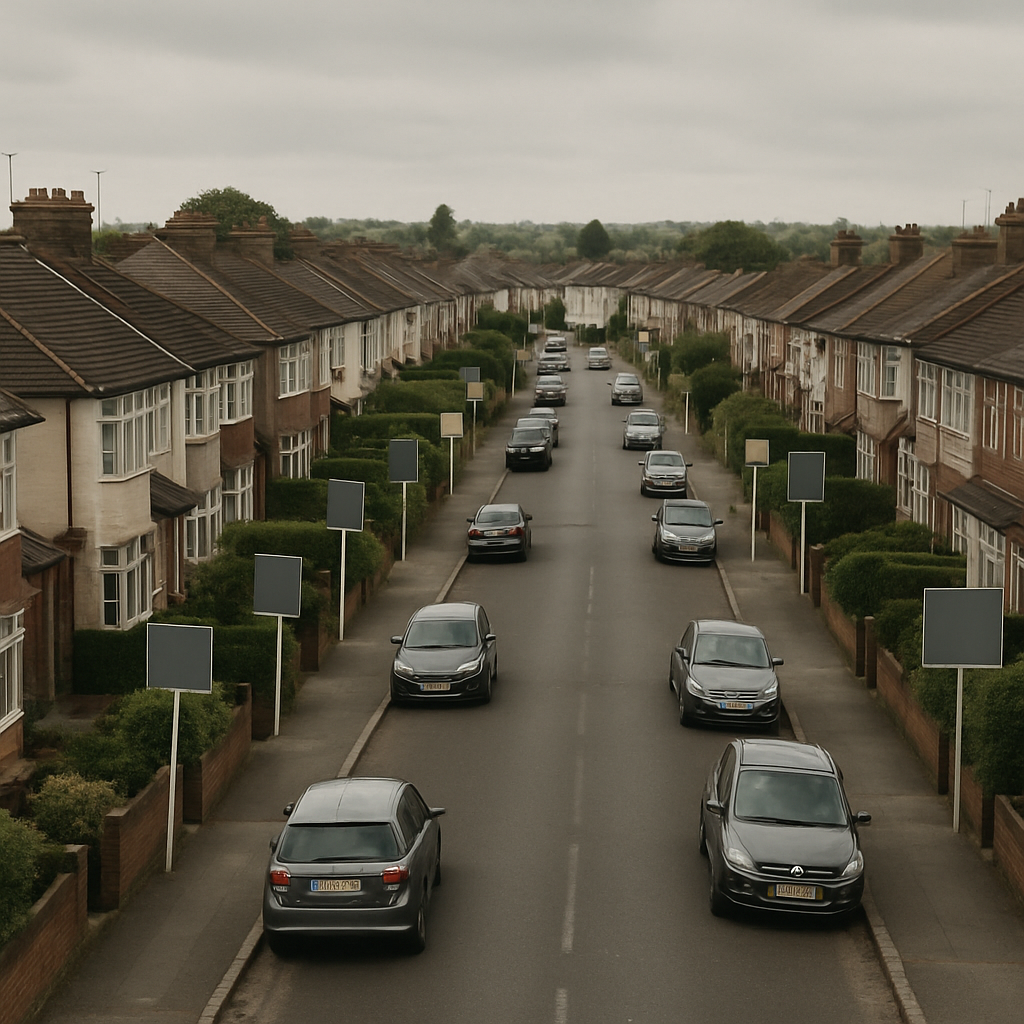
Where Are UK House Prices Actually Heading?
The UK picture has shifted noticeably since the turbulence of 2023 and 2024. Prices didn’t crash in the dramatic fashion some predicted, but they didn’t roar back either. According to the UK House Price Index published via gov.uk, annual price growth has remained sluggish in real terms, with regional variation doing most of the interesting work. London is still ludicrously expensive. Parts of the North East and Wales have seen modest rises. The midlands is somewhere in between.
The Bank of England’s base rate has eased from its 2023 peak, sitting at around 4% as of early 2026, which has brought some relief to mortgage holders coming off fixed deals. But “relief” is relative. Someone remortgaging this year who locked in at 1.5% back in 2021 is still in for a shock. Monthly payments on an average terraced house in Birmingham are genuinely eye-watering compared to what that same household was paying three years ago.
First-time buyer numbers did tick upward slightly in late 2025, partly because some sellers finally accepted they needed to meet the market. Stamp duty threshold changes also helped at the lower end. But the fundamental problem, the sheer lack of homes, hasn’t gone anywhere. The government’s housebuilding targets remain ambitious on paper and underwhelming in practice.
Supply Is Still the Real Problem Almost Everywhere
This is the part that gets lost when people obsess over interest rates. Rates go up, rates come down. Supply doesn’t magically appear. The UK needs somewhere in the region of 300,000 new homes a year just to keep up with demand, and it hasn’t hit that figure consistently in decades. Planning permission is slow, builders are cautious after years of margin pressure, and local opposition to new developments remains fierce in many areas.
Europe faces variations of the same issue. Germany’s housing construction fell sharply after a spike in building costs and rising interest rates throttled new projects. Amsterdam, Barcelona, and Lisbon have all seen rental markets go haywire, with locals increasingly priced out by a combination of short-term holiday lets and inbound demand from remote workers. Portugal actually reintroduced some controls on foreign property investment, with limited success so far.
Australia’s major cities, particularly Sydney and Melbourne, are still deeply unaffordable. Canada too. The pattern repeats: not enough homes, too much demand concentrated in urban centres, and political systems that are structurally slow to respond because homeowners vote in greater numbers than renters.

Interest Rates and What They Actually Mean for Buyers
The narrative that falling interest rates will fix everything is too simplistic. Yes, cheaper borrowing helps. But in most markets, rate cuts feed back into prices fairly quickly, meaning buyers gain affordability in one hand and lose it in the other as prices edge back up. It’s a treadmill.
In the UK specifically, the two-year fixed rate market has become the default for most buyers, which creates a churning cycle of anxiety every couple of years when people come to remortgage. Five-year fixes have gained popularity for exactly that reason. The appetite for stability is completely understandable when you’ve watched rates move as dramatically as they did in the early 2020s.
One genuinely useful shift has been the return of 95% loan-to-value mortgages from high street lenders, giving first-time buyers a route in without needing a monster deposit. That matters. Getting together a 10% deposit on an average UK property in 2026 still takes the typical person in their late twenties somewhere between five and eight years of disciplined saving, depending on where they live and what they earn.
Do First-Time Buyers Actually Stand a Chance?
Honestly? More of a chance than in 2022 or 2023, but not a comfortable one. The Help to Buy scheme is gone. The mortgage guarantee scheme has had modest uptake. What’s actually moved the needle, where it has moved at all, is a combination of price stagnation in certain areas, slight wage growth, and the simple fact that some sellers have been waiting years and are finally willing to deal.
In the global housing market in 2026, the cities that have seen the biggest shift toward buyer-friendliness tend to be secondary cities rather than capitals. Think Sheffield over London, Lyon over Paris, Leipzig over Berlin. The trade-off is commuting distance from major employment hubs, which is fine if your employer is flexible about remote working and genuinely less fine if they’re not.
There’s also a generational wealth dimension that nobody likes saying out loud: a significant chunk of first-time buyers who do complete a purchase are doing so with family help. The Bank of Mum and Dad remains, depressingly, one of the largest informal mortgage lenders in the country. For those without that option, the path is steeper and slower.
What Comes Next for the Global Housing Market?
My honest view, and Oskar broadly agrees, is that we’re in a prolonged period of grinding rather than dramatic movement. The crash that many predicted hasn’t materialised in any major market. Neither has the recovery that buyers were hoping for. Instead there’s a slow, uneven adjustment playing out across different cities and regions at different speeds.
The big wildcard is construction. If the UK, or any major economy, manages to meaningfully accelerate housebuilding over the next five to ten years, the supply picture starts to improve. That would be the most sustainable route to genuine affordability. Everything else, tweaking rates, adjusting stamp duty thresholds, fiddling with mortgage products, is shuffling deckchairs until the building numbers change.
For now, the global housing market in 2026 rewards patience, local knowledge, and a realistic picture of what you can actually afford. It punishes impulse and comparison to conditions that no longer exist. Whether you’re watching the UK or keeping an eye on markets further afield, the fundamentals are stubbornly similar almost everywhere you look.
Frequently Asked Questions
Are UK house prices going up or down in 2026?
UK house prices in 2026 are broadly flat in real terms, with modest nominal growth in some regions and slight declines in others. The market varies significantly by location, with the North East and parts of Wales performing differently to London and the South East.
Is 2026 a good time to buy a house in the UK?
It depends heavily on your personal circumstances, the local market, and how long you plan to stay. Mortgage rates have eased from their 2023 peaks, giving buyers slightly more breathing room, but affordability remains stretched in most major cities.
Why is the global housing market still so unaffordable?
The core issue across most developed nations is a structural shortage of homes relative to demand, particularly in and around major cities. Interest rate changes help at the margins, but without significantly more housebuilding, affordability pressures persist regardless of borrowing costs.
What is the Bank of England base rate in 2026?
As of early 2026, the Bank of England base rate sits at around 4%, down from its peak above 5% in 2023. This has brought some relief to mortgage borrowers, though rates remain significantly higher than the historic lows seen in the early 2020s.
Can first-time buyers get on the property ladder in 2026?
It remains difficult but not impossible. The return of 95% loan-to-value mortgages has helped those with smaller deposits, and price stagnation in some areas has improved affordability slightly. Many first-time buyers still rely on family financial support, and saving a deposit in high-cost areas can take the best part of a decade.