
Some years feel like holding patterns. 2026 is not one of them. The calendar is packed with major elections 2026 that will determine the direction of economies, alliances, and entire regions for years to come. From Latin America to South-East Asia, voters are heading to the polls on questions that cut deep: inequality, immigration, democratic backsliding, and who actually gets to hold power. Oskar and I have been tracking the ones that matter most, and the picture is, to put it gently, pretty chaotic.
This is not a quiet mid-cycle year. Several of the contests lined up carry enormous implications for the UK too, whether that means trade relationships post-Brexit, NATO commitments, or the broader question of whether liberal democracies are holding together or slowly fracturing at the seams.
Germany’s Federal Election: Europe Holds Its Breath
Germany’s snap federal election earlier this year was one of the first major elections 2026 had to offer, and it delivered fireworks. The collapse of Olaf Scholz’s three-party coalition at the end of 2025 forced voters back to the polls far sooner than anyone anticipated. Friedrich Merz of the CDU/CSU came out ahead, but forming a stable government in a Bundestag increasingly fragmented by the rise of the AfD proved enormously complicated.
The AfD, despite being under formal observation by Germany’s domestic intelligence service, pulled in a record share of the vote. For the UK, the implications are real. Germany remains Britain’s third-largest trading partner according to ONS trade figures, and a Germany turned inward, or sceptical of EU integration, reshapes the entire post-Brexit negotiating landscape. Merz has signalled he wants a stronger European defence posture, which aligns reasonably well with Britain’s own ambitions under the current government. But the coalition arithmetic is delicate, and that makes everything conditional.
Brazil’s Midterms: Lula Under Pressure
Brazil held midterm legislative elections this autumn, and President Lula da Silva found his Workers’ Party squeezed hard. His coalition has been fighting on multiple fronts: persistent inflation, a resurgent Bolsonarista opposition, and deep discontent in rural states over agricultural policy. The results have left him with a legislature that is, to put it diplomatically, not exactly cooperative.
Why does this matter beyond South America? Brazil is a G20 member, a critical player in global climate negotiations, and home to the Amazon, which affects carbon absorption for the entire planet. Any shift rightward in Brasília typically signals a loosening of environmental enforcement. For a world already behind on its emissions targets, that is a genuinely alarming possibility.

South Korea: Democracy on the Mend
South Korea’s presidential election in April was one of the most dramatic on the list. Following the extraordinary events of late 2025, when President Yoon Suk-yeol briefly declared martial law before the National Assembly voted to lift it, the country found itself heading into a vote with its democratic institutions visibly shaken but intact. The opposition Democratic Party’s candidate entered as favourite, and the result confirmed that South Korean voters had little appetite for a repeat of that particular experiment in executive overreach.
For Britain specifically, South Korea is a growing trade partner and a key ally in the Indo-Pacific, a region the UK government has been keen to deepen engagement with since the CPTPP accession. Stability in Seoul matters in ways that would have seemed abstract five years ago.
The Philippines and Indonesia: South-East Asia’s Swing States
Both the Philippines and Indonesia held significant votes this cycle, and both illustrate a pattern playing out across the developing world: voters are angry, economies are under strain, and political dynasties keep finding ways to survive. In the Philippines, midterm elections tested Ferdinand Marcos Jr’s grip on Congress, with results pointing to continued fragmentation rather than any clean mandate. Indonesia, still digesting the consequences of Prabowo Subianto’s presidential win in 2024, is watching its new leader navigate between Beijing and Washington with the practised caution of a tightrope walker.
South-East Asia as a bloc matters enormously for global supply chains, and Britain’s post-Brexit trade pivot toward the Indo-Pacific makes these outcomes anything but remote. The ASEAN economies are where a large chunk of manufacturing capacity has shifted since the US-China rivalry deepened, and who runs those governments shapes the rules of that game.
Mexico’s Post-Election Realignment
Mexico’s major constitutional changes, flowing from President Claudia Sheinbaum’s landslide victory in 2024, continued to reshape the country’s institutions throughout 2026. Judicial reform, energy policy reversals, and strained relations with Washington have created a Mexico that is simultaneously more assertive and more unpredictable. Regional elections this year have further consolidated Morena’s dominance at the state level.
The knock-on effects are considerable. Mexican migration policy, trade flows through North America, and the country’s stance on organised crime all carry implications well beyond its borders. British businesses with Latin American exposure are watching closely.
What Connects All of These?
Looking across the major elections 2026 has already delivered and those still to come, a few themes keep surfacing. Incumbent governments are struggling almost everywhere. The post-pandemic economic hangover has not fully cleared, and voters are directing that frustration at whoever happens to be holding office. Populist movements, whether left or right, are benefiting from that discontent with a consistency that goes well beyond any single country.
There is also a growing pattern of democratic institutions being tested rather than simply observed. Courts challenged. Media under pressure. Electoral authorities questioned. It is not uniform, and it is certainly not inevitable, but it is a pattern worth naming.
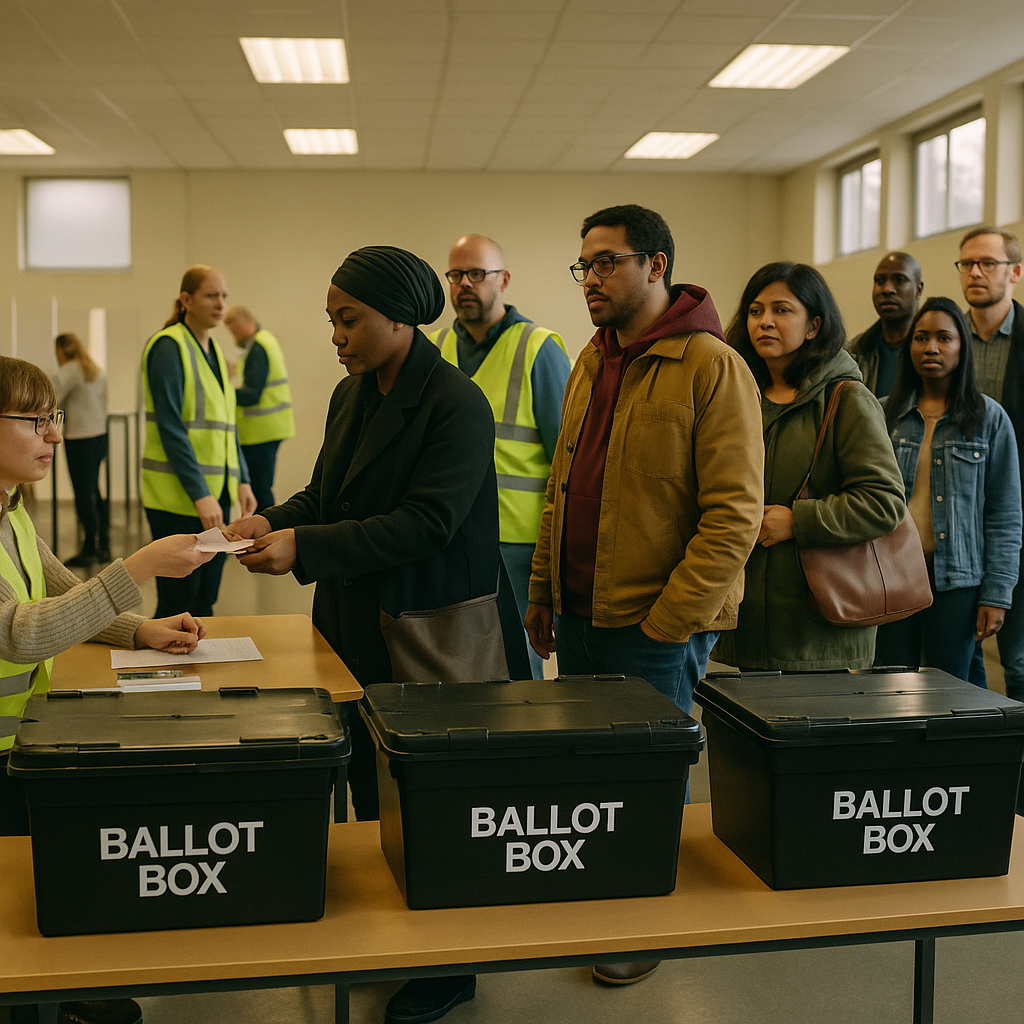
For Britain, tucked away on a rainy island and busy with its own political soap opera, the temptation is to treat all of this as background noise. That would be a mistake. Trade relationships, security alliances, climate commitments, and the basic functioning of a rules-based international order all depend on what happens when people queue up to vote in Seoul, São Paulo, Manila, and Berlin. The world is being re-arranged in real time, and 2026 is one of the years it is happening fastest.
Frequently Asked Questions
Which are the most important major elections in 2026?
Germany’s federal election, South Korea’s presidential election, Brazil’s midterms, and votes across South-East Asia rank among the most consequential major elections 2026 has seen. Each carries significant implications for trade, security alliances, and the direction of global democratic norms.
How do the 2026 elections affect the UK?
The UK’s trade relationships, NATO commitments, and Indo-Pacific strategy are all shaped by the outcomes of major elections 2026. A more nationalist Germany, an unstable South Korea, or a rightward shift in Brazil can each affect British interests in concrete ways, from trade flows to climate negotiations.
Is democracy under threat globally in 2026?
Several elections this year have seen democratic institutions come under pressure, from South Korea’s brief martial law episode to the rising influence of far-right parties in Europe. While institutions have largely held, the trend of executive overreach and populist challenges to independent courts is a consistent pattern across multiple countries.
Why did Germany hold a snap election in 2026?
Germany’s snap federal election was triggered by the collapse of Olaf Scholz’s three-party coalition government at the end of 2025. Disagreements over economic policy and the federal budget made the coalition untenable, forcing voters back to the polls ahead of schedule.
What is the overall political trend in the 2026 global elections?
The dominant trend across major elections 2026 is anti-incumbent sentiment, with voters punishing sitting governments over cost of living pressures and economic dissatisfaction. Populist parties on both the left and right are the primary beneficiaries, making stable governing coalitions harder to form almost everywhere.