
Britain has a sewage problem. Not a minor, technical, quietly-being-sorted-out problem. A persistent, embarrassing, quite literally filthy problem that has been making headlines for years and still isn’t fixed. Sewage discharge into UK rivers in 2026 remains one of the most visible failures of privatised infrastructure in this country, and the fines being handed out by regulators are, by almost every measure, not doing the job they’re supposed to do.
Last year, Ofwat confirmed a series of record penalties against major water companies. Thames Water, Southern Water, and Yorkshire Water have collectively racked up hundreds of millions of pounds in enforcement action. The Environment Agency has brought successful prosecutions. Ministers have stood at despatch boxes and insisted that the era of impunity is over. And yet, the data tells a different story.
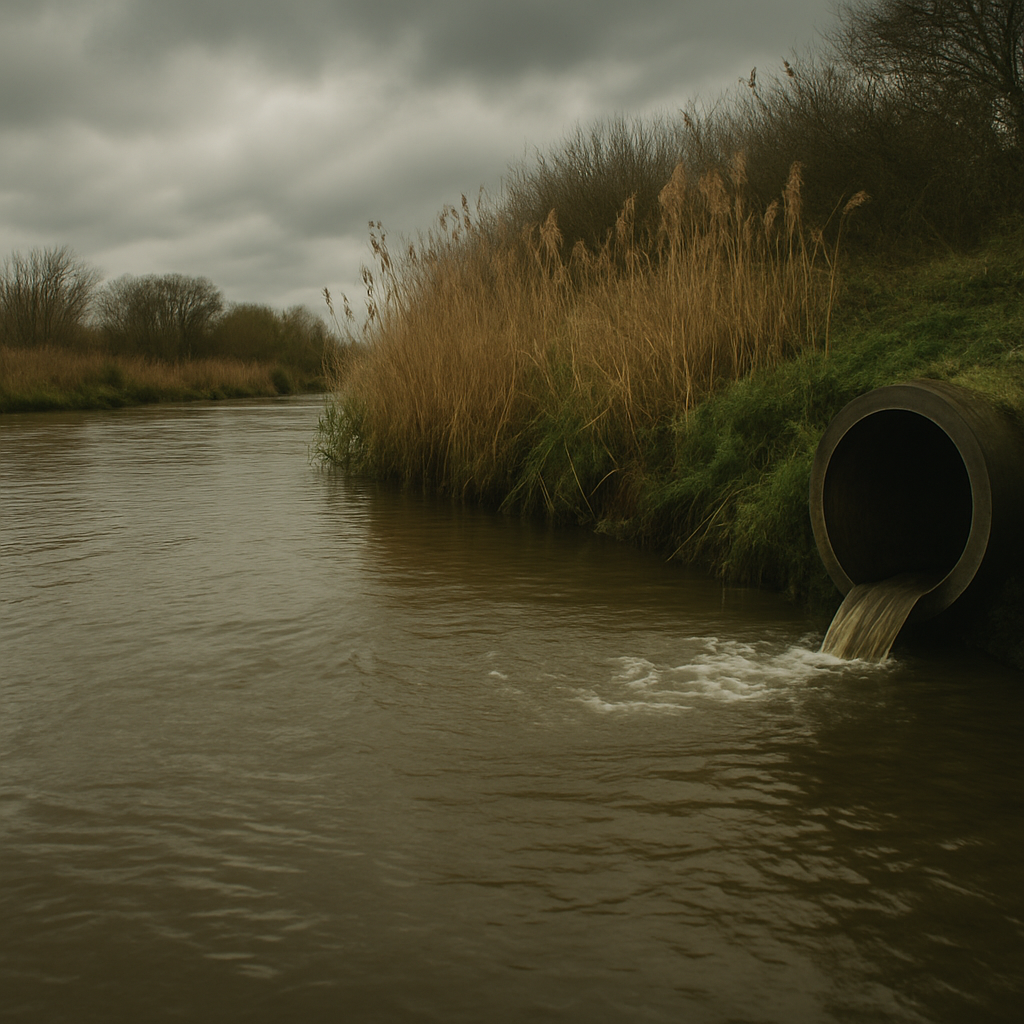
How bad is the sewage discharge problem in UK rivers right now?
According to the Environment Agency’s own figures, storm overflow discharges across England totalled more than 3.6 million hours in 2023 alone. Early data for 2025 suggested no significant reduction despite the regulatory pressure. To put that in plain terms: sewage was actively being pumped into rivers, streams, and coastal waters for millions of hours across the country, often in conditions that did not technically qualify as storm events under any reasonable definition of that phrase.
The Rivers Trust, a charity that monitors waterway health, has consistently found that the majority of rivers in England fail to meet good ecological status. Surfers Against Sewage, who publish their own real-time beach water quality alerts, recorded thousands of pollution incidents at popular swimming spots throughout 2025. Swimmers at rivers like the Wye, the Exe, and stretches of the Thames encounter warning notices that have become, depressingly, part of the scenery.
Why are the fines not working?
Here’s where it gets genuinely frustrating. The penalties look dramatic on paper. Ofwat’s record £104 million package against Southern Water a few years back felt like a turning point. But fines levied against companies that carry billions in debt and have shareholders to serve operate differently to fines levied against individuals or small businesses. The calculus is simple: if the cost of compliance is greater than the cost of the fine, some companies will keep absorbing fines as a business expense rather than invest in infrastructure.
Thames Water is the starkest example. It entered 2026 in financial administration, carrying debts of roughly £15 billion and relying on emergency regulatory arrangements just to keep operating. Fining a company that cannot afford to pay its debts is largely symbolic. The regulator can issue the penalty; actually extracting meaningful change from a collapsing corporate structure is another matter entirely.
There is also a structural problem that predates any particular company’s mismanagement. Britain’s sewage network is old. Much of the combined sewer system, where rainwater and sewage share the same pipes, dates back to the Victorian era. When heavy rain hits, those systems overflow by design, discharging into rivers through what are called combined sewer overflows. The idea was always that this would happen rarely, in genuine storm conditions. What has happened instead is that decades of underinvestment, population growth, and increasingly intense rainfall events have turned occasional overflow into routine occurrence.
What do the regulators actually have the power to do?
Ofwat can fine, yes. It can also require companies to submit turnaround plans, impose special administration, and theoretically recommend that operating licences be revoked, though that last option has never been used. The Environment Agency can prosecute for specific pollution incidents, and a handful of high-profile cases have resulted in substantial fines in the courts. But prosecution requires gathering evidence of individual incidents, which is resource-intensive and slow.
The government’s Storm Overflows Discharge Reduction Plan, published back in 2022, set out targets requiring water companies to achieve significant reductions in overflow frequency by 2035 and virtual elimination of ecologically harmful discharges by 2050. Critics, including the BBC’s environment team, have pointed out that 2050 is a long way off, and interim targets remain vague enough to allow companies to miss the spirit of improvement whilst technically satisfying the letter of the plan.
Oli and I were talking about this the other week, actually. The thing that gets you is the gap between the language used by regulators and the physical reality of someone trying to swim in the Wye or fish in the Avon. The regulatory framework sounds robust. The rivers look like sewers.
Is nationalisation the answer people think it is?
There is a growing public appetite for bringing water back into public ownership, and it is not hard to see why. Polling consistently shows that a majority of British adults support nationalisation of water companies. The argument runs that a publicly owned utility would not be extracting dividends from a broken system, and investment decisions would be made in the public interest rather than in response to shareholder pressure.
The counter-argument, and it deserves a fair hearing, is that public ownership does not automatically mean more investment. Network Rail, which is publicly owned, has its own substantial infrastructure backlog. The real issue is not ownership structure per se; it is the level of long-term capital investment being directed at underground pipes that most people never see and that generate no political credit when they work properly.
What seems clear is that the current model, privatised ownership with light-touch regulation and fine-based enforcement, has demonstrably failed to maintain the sewage network at the standard required. Sewage discharge into UK rivers in 2026 is not an edge case or an outlier. It is the predictable output of a system that has prioritised financial returns over infrastructure spending for the better part of three decades.
What could actually change things?
A few mechanisms have genuine potential. Real-time, mandatory public monitoring of every overflow point, which Ofwat has been pushing for, creates accountability in a way that annual reports do not. If every discharge event is logged and publicly visible the moment it happens, the political pressure becomes immediate rather than deferred to the next set of annual statistics.
Tying executive pay and bonuses directly to environmental performance rather than financial metrics is another lever that is slowly being applied but not yet hard-wired into regulatory requirements. And there is a strong case for criminal liability for senior executives in cases of deliberate or reckless discharges, going beyond corporate fines to personal consequences.
None of this is quick. The pipes under Britain’s cities are not going to be replaced in a single parliamentary term. But the conversation has shifted, noticeably, from whether there is a problem to what kind of structural change is actually necessary. That is, at minimum, progress of a sort.