

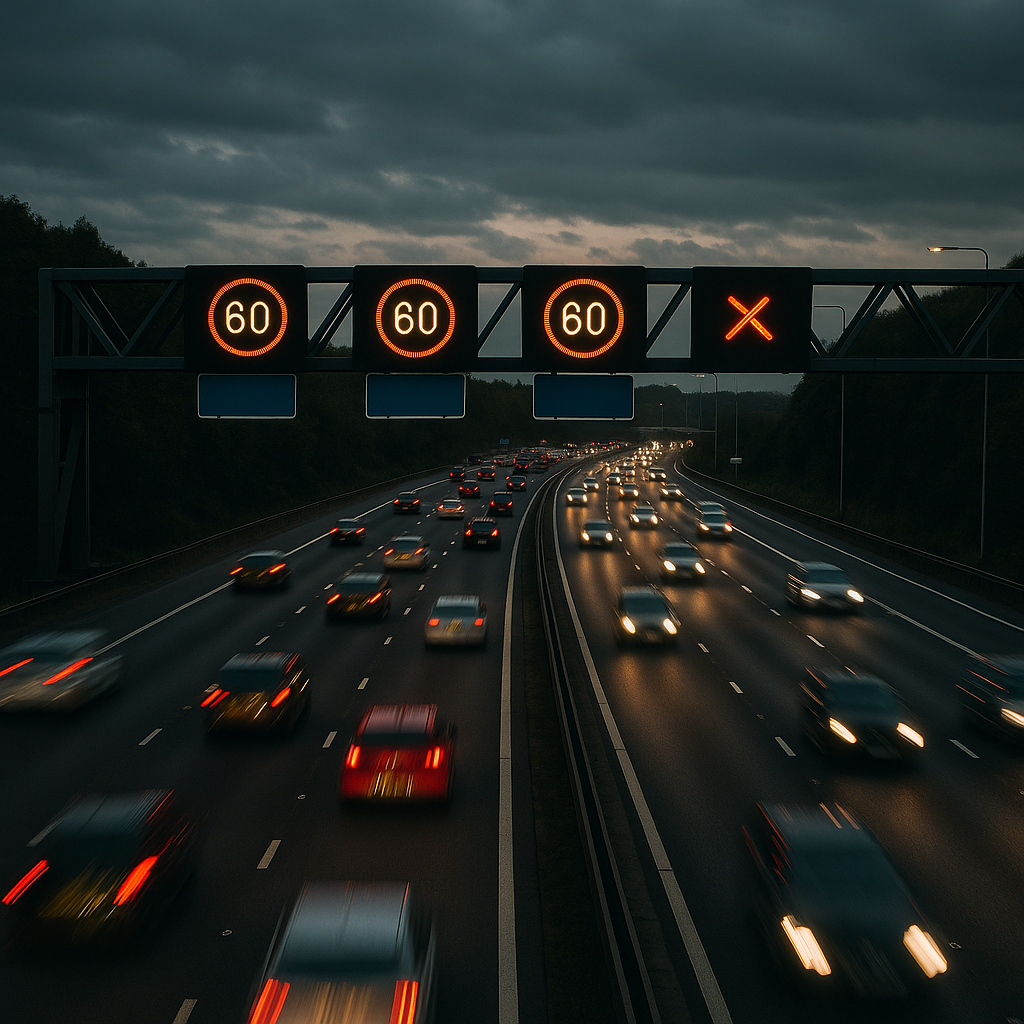
England’s smart motorway programme has become one of the most bitterly contested road safety failures in modern British history. The scheme was meant to ease congestion by converting the hard shoulder into a live running lane, using overhead signs and sensors to manage traffic. Instead, it produced a string of tragedies, a string of inquiries, and a government decision to pause new builds that came far too late for dozens of families. Smart motorway deaths are no longer a fringe concern raised by campaigners; they are a mainstream political embarrassment that neither National Highways nor the Department for Transport has managed to move past.
What are smart motorways and why did they become so dangerous?
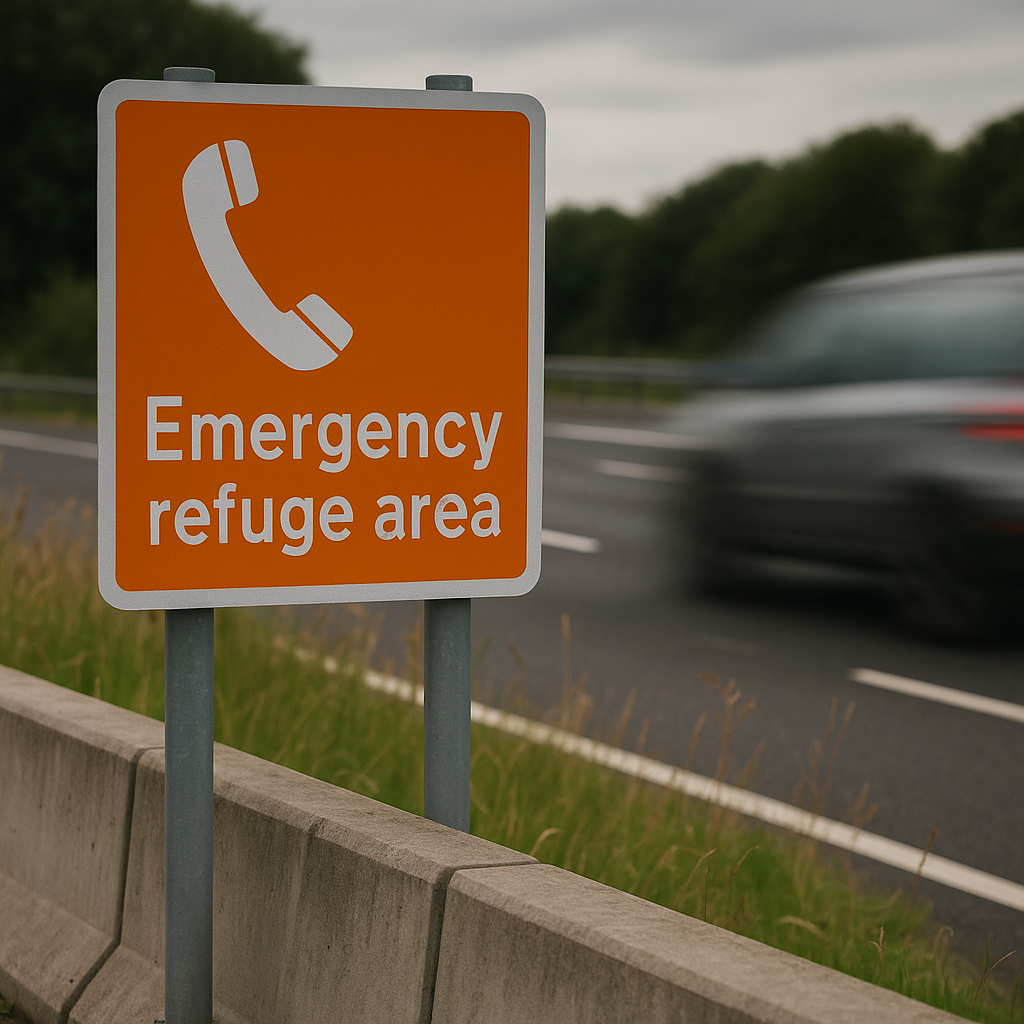
There are three types of smart motorway in England. Controlled motorways keep the hard shoulder but use variable speed limits. Dynamic hard shoulder running opens the hard shoulder to traffic at peak times. All-lane running (ALR) permanently removes the hard shoulder, replacing it with a live traffic lane. It is ALR that caused the most deaths. Without a hard shoulder, a broken-down vehicle has nowhere safe to go. Drivers are supposed to reach an emergency refuge area (ERA), but these are spaced too far apart on many stretches. On some sections of the M1 in South Yorkshire, ERAs were originally placed over a mile apart.
The statistics are damning. A 2021 Transport Select Committee report found that the rate of people being killed or seriously injured in live lane breakdowns on ALR motorways was significantly higher than on conventional motorways. Highways England’s own data, published before the organisation became National Highways, showed that stopped vehicle detection technology, which is supposed to close lanes automatically when a car breaks down, was missing entirely from older ALR sections. Drivers were breaking down in live lanes with no warning to following traffic, often at speeds well above 60mph.
Who are the families behind the campaign?
Claire Mercer’s husband Jason was killed on the M1 near Sheffield in June 2019, struck by a lorry after stopping in a live lane following a minor collision. His death, and the subsequent inquest findings, placed Claire at the centre of a relentless campaign to get ALR scrapped entirely. She is one of several bereaved relatives who formed the group Stop Smart Motorways, which has lobbied MPs, attended parliamentary hearings, and pushed for criminal prosecutions against National Highways itself.
In 2022, an inquest jury found Jason Mercer’s death was contributed to by neglect, specifically citing the absence of adequate refuge areas. It was a moment of enormous significance. Yet years on, no criminal charges have been brought. The Crown Prosecution Service reviewed the case and concluded there was insufficient evidence to prosecute. For Claire Mercer and other families, that conclusion represents the full arc of official Britain’s response to this crisis: inquiries held, recommendations made, action deferred.
The government pause and what it actually means
In April 2023, the then-Conservative government announced it was pausing the rollout of new ALR motorways, citing safety concerns. It was a significant admission. National Highways was told to focus resources on retrofitting existing ALR sections with stopped vehicle detection and adding more ERAs. The government committed £900 million to the safety improvement programme. It sounded like action. But there was a critical caveat: the 14 existing ALR sections, stretching hundreds of miles of motorway, stayed open. Drivers were still using roads with inadequate emergency provision while the retrofit work proceeded at a pace campaigners described as glacial.
The current Labour government has largely continued the same position. No new ALR stretches are being built. The retrofit programme is ongoing. But calls from bereaved families and from the Transport Select Committee to either close the existing ALR sections until they are properly equipped, or scrap the concept altogether, have not been met. The government’s formal position is that smart motorways with the full safety package installed are not inherently less safe than conventional motorways. Many road safety experts dispute that claim.
How far behind is the retrofit programme?
National Highways has been installing additional ERAs and stopped vehicle detection technology across existing ALR sections. Progress reports published through 2024 and into 2026 show improvement, but the programme has taken longer than originally planned. Some stretches that were promised upgrades by a specific date slipped. Funding pressures across the National Roads Programme have not helped. The National Highways website publishes live data on ERA spacing and SVD coverage, but interpreting those figures requires a level of technical literacy that most drivers simply do not have.
The practical result is that millions of people are driving on motorways every day without fully understanding what a flashing red X means, whether the lane they are in has stopped vehicle detection, or how far they would need to travel to reach a place of safety if their car broke down. Road safety charity IAM RoadSmart has repeatedly called for a national public information campaign. That campaign, as of 2026, still does not exist in any meaningful form.
The human cost on Britain’s roads more broadly
Smart motorway deaths sit within a wider picture of road danger in Britain that rarely gets the attention it deserves. The Department for Transport publishes annual figures on road casualties, and while the UK is statistically one of the safer countries in Europe for road travel, the long-term trend of improvement stalled after 2010. Roughly 1,700 people still die on UK roads each year. Pedestrians, cyclists, and motorway users each face distinct risks that require distinct responses, yet public policy has been sluggish on all fronts.
The smart motorway scandal has, if nothing else, made visible how infrastructure decisions get made in Britain: largely without public consultation, driven by cost savings (removing the hard shoulder is cheaper than building a new lane), and with inadequate post-deployment monitoring. It is a pattern you see in other infrastructure failures too. The RAAC school building scandal followed a similar trajectory: a known structural risk, warnings from engineers, delayed action, and eventual crisis. The people who bear the cost are rarely the people who made the decision.
There are parallels too with how workers at the sharp end of road-based jobs experience these risks daily. Lorry drivers, recovery vehicle operators, and people doing shift work who rely on motorway commutes all face the consequences of inadequate hard shoulders. Many working in transport roles, from HGV drivers to those searching for taxi driver jobs Mansfield and similar positions across the Midlands, spend long hours on England’s road network and have a very direct stake in whether that network is actually safe.
What would actually fix this?
Most road safety campaigners want one of two things: either reinstate the hard shoulder on all ALR sections, accepting the loss of the extra lane capacity, or accelerate the retrofit programme dramatically and close sections to the extra lane until the technology is fully operational. The government has so far chosen a middle path that satisfies neither demand. The Transport Select Committee’s 2021 report made 18 recommendations; a significant number remain only partially implemented.
There is also a question of accountability that has never been resolved. If an inquest finds that a death was contributed to by systemic failure in public infrastructure, and no prosecution follows, and no individual is held responsible, the message to public bodies is clear enough. Families like Claire Mercer’s have made that point with quiet fury for years. They are not anti-car. They are not opposed to motorway infrastructure. They simply want the roads to be safe before people are asked to drive on them.
Britain has form for letting these things drag. The prison crisis festered for years before becoming undeniable. The sewage scandal was documented by regulators long before it became national news. Smart motorway deaths have been documented, investigated, wept over, and debated in parliament. What they have not been is stopped. That is not a technical failure. It is a political one.
Frequently Asked Questions
Are smart motorways still dangerous to drive on in 2026?
The retrofitting of stopped vehicle detection technology and additional emergency refuge areas is ongoing, meaning some stretches of all-lane running motorway are still not fully equipped with the safety systems originally promised. National Highways says upgraded sections are comparable in safety to conventional motorways, but campaigners and some road safety experts dispute this assessment.
Why did the government pause smart motorway rollout?
In April 2023, the government halted new all-lane running smart motorway construction and committed £900 million to safety upgrades on existing sections, citing ongoing public concern about safety. The decision came after sustained pressure from bereaved families, a critical Transport Select Committee report, and significant media coverage of deaths caused by breakdowns in live lanes.
What is an emergency refuge area on a smart motorway?
An emergency refuge area (ERA) is a lay-by built into the motorway verge where drivers can stop safely if their vehicle breaks down, since there is no conventional hard shoulder on all-lane running sections. Critics have pointed out that on many stretches ERAs were originally placed too far apart, leaving drivers unable to reach one before their vehicle stopped in a live lane.
Has anyone been prosecuted over smart motorway deaths?
No criminal prosecutions have been brought against National Highways or any individual over smart motorway deaths. The Crown Prosecution Service reviewed cases including that of Jason Mercer, killed on the M1 in 2019, and found insufficient evidence to prosecute despite inquest findings that his death was contributed to by neglect.
What should I do if my car breaks down on a smart motorway?
If you can move, get to the nearest emergency refuge area and call 999 or National Highways on 0300 123 5000. If your vehicle is immobile, put your hazard lights on, get out via the nearside door if safe, stand behind the barrier away from traffic, and call 999 immediately. Never wait in or directly beside your vehicle in a live lane.
Leave a Reply