
Something strange is happening to the truth. It is being edited, synthesised, cloned, and redistributed at a speed no fact-checker can match. AI disinformation campaigns are no longer theoretical warnings from academic papers; they are active, documented operations reshaping how people vote, what they believe, and who they trust. From fabricated audio clips of party leaders to coordinated networks of fake accounts pushing viral narratives, the machinery of deception has never been more sophisticated, or more accessible.
Oli and I have been watching this space closely for a while now, and honestly, the pace of change in 2026 has been unsettling even for those of us who follow it obsessively. What used to require a state-level budget and a film studio can now be produced on a laptop in an afternoon. That changes everything.
What AI Disinformation Campaigns Actually Look Like in Practice
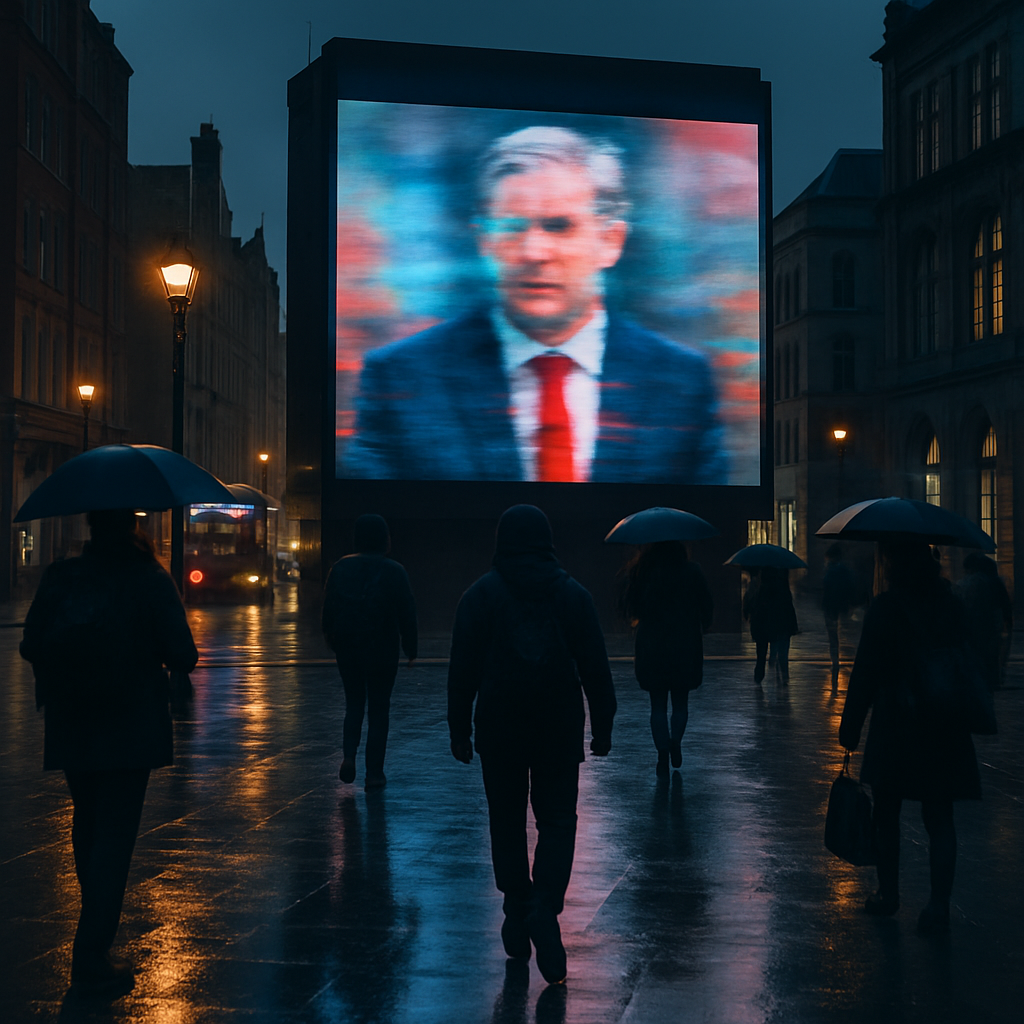
The term “deepfake” still conjures images of celebrity face-swaps, but the real threat is far more mundane and therefore far more dangerous. In the run-up to the 2024 UK general election, researchers at the Alan Turing Institute identified dozens of AI-generated audio clips circulating on WhatsApp groups, purporting to be private conversations between senior politicians. Most were crude by Hollywood standards. Most were believed anyway.
The pattern repeats across borders. In Slovakia’s 2023 election, a fabricated audio recording of a liberal candidate allegedly discussing vote-rigging spread widely in the final 48 hours before polls opened, precisely the window in which platforms struggle most to respond. In Romania, a coordinated TikTok campaign amplified a fringe candidate to unexpected prominence before the Constitutional Court annulled the result. These are not isolated incidents; they are a playbook being refined and exported.
The ingredients are consistent: a realistic-sounding or realistic-looking piece of synthetic media, a network of coordinated accounts to give it initial momentum, and a platform algorithm that rewards engagement over accuracy. Outrage travels faster than corrections. That arithmetic has not changed; AI has simply made it cheaper to manufacture the outrage.
How Bad Is the UK’s Exposure to This?
Quite bad, if the evidence is anything to go by. Ofcom’s 2025 Online Safety report flagged a significant rise in synthetic media being used in politically charged content shared on UK platforms, with social media companies failing to label or remove the majority of it within any meaningful timeframe. The Online Safety Act 2023 created new obligations for platforms around illegal content, but AI-generated political disinformation sits in a grey zone that the legislation was not fully designed to address.
The Electoral Commission has acknowledged the problem but has limited enforcement powers over digital content. GCHQ’s National Cyber Security Centre published guidance for political parties on spotting synthetic media attacks, which is useful, but guidance is not the same as protection. Meanwhile, the Cabinet Office’s Rapid Response Unit monitors and reacts to disinformation in real time, which sounds reassuring until you consider the sheer volume of content being produced daily.
What Are Platforms Actually Doing About It?
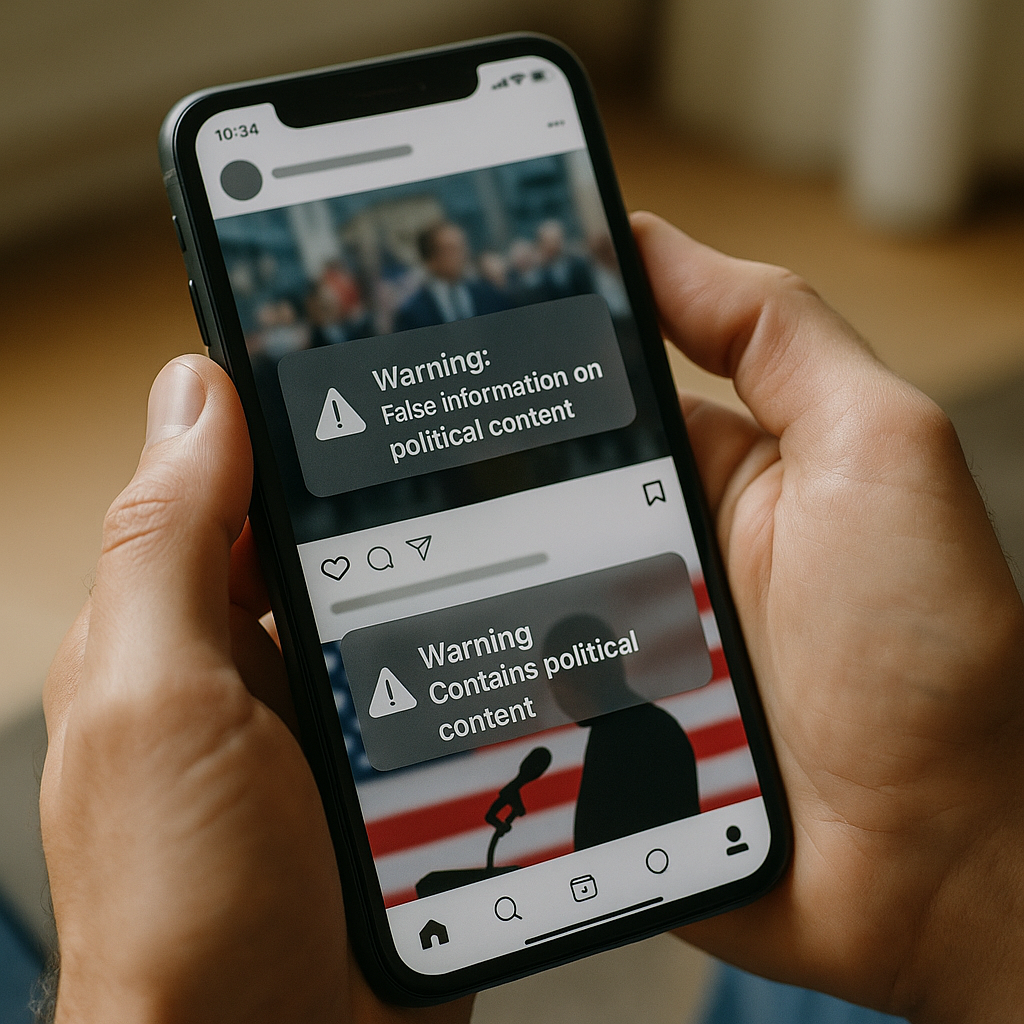
The honest answer is: not enough, though not nothing. Meta introduced mandatory labelling for AI-generated content in political adverts across Facebook and Instagram from early 2024. YouTube has a similar policy. X, formerly Twitter, gutted much of its trust and safety infrastructure and the results have been predictable. Studies by the Centre for Countering Digital Hate have consistently shown that labelled disinformation still spreads; the label barely slows it down.
The more promising technical avenue is watermarking. The Coalition for Content Provenance and Authenticity, backed by the BBC, Microsoft, Adobe, and others, is developing open standards for content credentials that embed verifiable metadata into images and video at the point of creation. The idea is that a genuine photo from a news organisation carries a kind of digital signature; a synthetic image does not. It is elegant in theory. In practice, stripping metadata takes seconds, and most consumers have no idea such standards exist.
Artificial intelligence is also being deployed to detect artificial intelligence. Companies like Sensity AI and Truepic offer detection tools used by journalists and intelligence services. They are useful but imperfect. Detection models lag behind generation models almost by definition; the attack always has a head start.
The Coordinated Network Problem Is Separate From Deepfakes
It is worth separating two distinct threats that often get bundled together. Deepfakes are about synthetic media: fake faces, fake voices, fake footage. AI disinformation campaigns are also about amplification: networks of automated or semi-automated accounts that create the illusion of grassroots support for a narrative.
The Stanford Internet Observatory has documented dozens of influence operations in recent years using AI-generated profile pictures, AI-written posts, and coordinated posting schedules to manufacture trending topics. Meta removed over two million such accounts in 2025 alone. The scale is staggering, and for every network dismantled, others are spun up. In some cases, these are state-sponsored operations; in others, they are commercial services selling narrative manipulation to the highest bidder, sometimes political campaigns, sometimes foreign governments, sometimes fringe movements with no institutional backing at all.
You might think this sort of thing has nothing to do with daily life in Britain. But consider: the narratives pushed by these networks about the NHS, immigration policy, energy prices, and political leaders do reach British social media feeds. They shape what people share, what they argue about, and what questions they bring into the polling booth.
What Can Individuals Actually Do?
Quite a lot, as it happens. Full Fact, the UK’s independent fact-checking charity, publishes rapid debunks of viral claims and is worth bookmarking. The BBC Reality Check team does similar work with considerable rigour. Slowing down before sharing, checking whether a clip or image has been verified by a news organisation, and being sceptical of anything that arrives via a WhatsApp forward rather than a named publication are all habits worth building.
Media literacy education in schools is patchy in the UK, which is a real gap. Finland has arguably the best national programme for teaching critical thinking about online information, and its citizens consistently rank among the most resilient to disinformation in European surveys. There is a lesson there. The government’s proposed reforms to the personal, social, health and economic curriculum are an opportunity that should not be wasted.
There is something almost comforting about the fact that human scepticism remains the most robust defence. No algorithm can replicate the moment you think, hold on, does this actually make sense? Some of the most viral disinformation is detected and called out by ordinary people with no specialist training, just a healthy instinct that something feels off. That instinct is worth nurturing.
None of this is to say the problem is manageable through good habits alone. Legislative frameworks need to catch up, platforms need genuine accountability, and international coordination on AI disinformation campaigns needs to move faster than it has. The EU’s AI Act and Digital Services Act represent serious attempts; the UK’s post-Brexit regulatory path is less clear and arguably behind. The window to establish meaningful norms is not infinite. And on a lighter note, if you find yourself deep in a rabbit hole of automotive forums while stress-scrolling past fake news, you might stumble across useful things like Toyota Hilux parts suppliers that are exactly what they claim to be, which is a rare and pleasant thing in the current information environment.
Where Does This Leave Democracy?
Stressed, but not finished. Elections are still being held, voters are still turning out, and the existence of disinformation does not automatically mean elections are being stolen by it. The effect is more corrosive than that: erosion of trust, amplification of division, exhaustion with the information environment altogether. Apathy is as useful to bad actors as manipulation.
The researchers, journalists, civil society organisations, and platform engineers working on this problem are doing genuinely important work. So are the politicians willing to legislate seriously rather than gesture at the problem. AI disinformation campaigns will not be solved by any single intervention. They will be reduced, contained, and made less effective by dozens of overlapping ones. That is slow, unglamorous, and absolutely necessary.
Frequently Asked Questions
What is an AI disinformation campaign?
An AI disinformation campaign uses artificial intelligence tools to create and spread false or misleading content at scale. This includes deepfake videos and audio, AI-generated social media posts, and coordinated networks of automated accounts designed to amplify specific narratives and manipulate public opinion.
How can you tell if a video or audio clip is a deepfake?
Common signs include unnatural blinking, skin texture inconsistencies, audio that doesn’t quite match lip movements, and oddly smooth or waxy-looking facial features. Tools like the BBC’s own verification unit and organisations such as Full Fact can help assess whether viral clips are genuine, and AI detection services are increasingly available to journalists and researchers.
Is the UK government doing anything to tackle AI-generated disinformation?
The UK has several measures in place, including the Online Safety Act 2023, the Cabinet Office Rapid Response Unit, and NCSC guidance for political parties. However, critics argue that legislation has not kept pace with the technology, and the Electoral Commission has limited powers to act directly on synthetic political content.
Which social media platforms are worst for political disinformation?
Studies by organisations including the Centre for Countering Digital Hate suggest that X (formerly Twitter) has seen a significant rise in unchecked disinformation since major trust and safety team cuts. WhatsApp’s closed group structure also makes disinformation particularly hard to monitor or counter, as content spreads privately without public visibility.
How does disinformation affect elections in practice?
The impact is rarely a single dramatic event but rather a gradual erosion of trust and an amplification of division. Documented cases, such as the fake audio in Slovakia’s 2023 election and coordinated TikTok campaigns in Romania, show how synthetic content can shift narratives in the critical final days before a vote, when platforms have the least time to respond.
Leave a Reply