Category: Interesting

  • Frozen Out: Why Thousands of British Pensioners Abroad Are Getting a State Pension Worth Peanuts

    Frozen Out: Why Thousands of British Pensioners Abroad Are Getting a State Pension Worth Peanuts

    There is a quiet injustice happening to hundreds of thousands of British pensioners living abroad, and most people in the UK have no idea it exists. It is called the frozen state pension, and it works like this: if you spent your working life paying National Insurance in the UK, retired, and then moved to certain countries, the pension you receive is locked at whatever rate it was when you left. Not uprated. Not inflation-linked. Frozen. Permanently.

    I’ve been aware of this policy for years, but the figures still stop me in my tracks every time I look at them. According to official UK government data, roughly 500,000 pensioners are currently affected. Some of them emigrated in the 1970s or 1980s and are now receiving a weekly state pension of under £10. Meanwhile, their neighbour who moved to France or the USA gets the full current rate, with every annual increase applied. Same contributions. Same entitlement. Completely different outcome, based entirely on which country they chose to retire to.

    Elderly man reading pension correspondence, illustrating the frozen state pension UK expats issue
    Photo by SHVETS production on Pexels

    Which countries trigger the freeze?

    This is the part that makes absolutely no logical sense. The freeze does not apply universally. It depends on whether the UK has a reciprocal social security agreement with the country in question. So pensioners in the United States, the EU, and most of Europe receive the full uprated pension. But those in Australia, Canada, New Zealand, South Africa, Pakistan, and India, among others, are frozen at the rate that applied when they first claimed or emigrated, whichever came first.

    Australia is the biggest flashpoint. There are around 218,000 British pensioners living there who are subject to the freeze. A woman who retired to Brisbane in 1993 and was entitled to, say, £60 a week at the time is still receiving £60 a week in 2026. The current full new state pension is £221.20 a week. That is a gap of over £160 a week, or more than £8,000 a year, purely because of geography. Canada has tens of thousands in the same position. New Zealand, too.

    How has this been allowed to continue?

    That is the question I keep coming back to. The frozen state pension policy has been challenged legally, debated in Parliament, and campaigned against for decades. The International Consortium of British Pensioners has been pushing governments of all stripes to end the freeze since the 1990s. They have won moral arguments every time. They have not yet won the political one.

    The argument successive governments reach for is cost. Unfreezing all affected pensions would cost an estimated £600 million to £700 million a year. In the context of a total state pension bill that runs into hundreds of billions annually, that is a relatively modest sum, but it is not nothing. The Treasury has consistently decided it is not worth paying. Critics argue this framing is disingenuous: these are people who paid into the National Insurance system their entire working lives in the belief they would receive a pension in return. The idea that where they choose to live in retirement should determine what they actually get is, to put it plainly, a breach of the deal they thought they had signed up to.

    British passport and coins representing frozen state pension UK expats entitlement
    Photo by Marian Florinel Condruz on Pexels

    The human cost behind the policy

    Oli and I talked about this piece for a while before I started writing it, and what we kept returning to was not the politics but the actual people. Pensioners in their 80s and 90s, some of them former NHS nurses, teachers, factory workers, living in countries like Australia or New Zealand where the cost of living has risen substantially, receiving a weekly payment that in some cases would not cover a single meal out. Many of them cannot simply move back to the UK. Their families are abroad. They are embedded in communities they have lived in for 40 years. Returning is not an option they can even meaningfully consider at 85.

    The injustice is sharpened when you look at it from the angle of welfare policy more broadly. We have covered in some detail how people in the UK itself are being failed by the system, from working families relying on food banks to the creeping cuts to Universal Credit. But at least those debates are visible. The frozen state pension affects people who are literally out of sight, living thousands of miles away, easy to ignore.

    What is actually being done about it?

    In short, not much. The current government has shown no sign of moving on this. The 2025 Autumn Statement made no mention of it. The Department for Work and Pensions continues to maintain that the policy will only change where bilateral agreements make it viable, which is a convenient way of ensuring nothing changes at pace.

    There are private members’ bills introduced in the House of Commons periodically. They receive cross-party support in principle. They do not progress. The pattern has repeated itself so many times now that campaigners are understandably exhausted. Some have turned to digital tools and international advocacy to keep pressure on, using everything from parliamentary petitions to social media campaigns, and yes, even tech infrastructure tools designed to shift data and services across jurisdictions, much like the need people have when switching platforms, such as using a trusted migrate Anthropic API to UK service to ensure continuity rather than starting from scratch. The analogy is apt in a way: the pensioners just want continuity. They built something over decades and expected it to travel with them.

    The triple lock, which guarantees state pension increases by the highest of earnings growth, inflation, or 2.5%, is a headline political commitment in the UK. The government defends it loudly and often. But the triple lock does not apply to frozen pensioners. They get none of it. The very mechanism designed to protect the value of the pension explicitly does not reach some of the people who arguably need it most.

    Is there any route to a fix?

    The clearest route is a new bilateral social security agreement with the countries that currently lack one. The UK managed this with the EU post-Brexit, which was no small feat. Australia and Canada have been in intermittent discussions with UK governments for years but nothing has concluded. A unilateral decision by the UK to uprate all pensions regardless of location would cost money but would end the injustice immediately. No government has been willing to commit that money.

    Some campaigners have floated a phased approach: do not give frozen pensioners the full back-payment of everything they have missed, which would be genuinely eye-watering, but simply unfreeze at today’s rate and let them benefit from future increases. That would be significantly cheaper and still transformative for people surviving on £40 or £50 a week in countries where that buys almost nothing. Whether the political will ever materialises is another matter entirely.

    In the meantime, hundreds of thousands of British men and women who paid their dues are watching the value of what they were promised shrink a little more with every passing year. It is not a loud crisis in the way that, say, the police recruitment emergency is. Nobody is filming the queue outside a Job Centre in Melbourne. But it is a genuine failure of policy, and one that every government since Thatcher has quietly chosen to maintain rather than fix.

    Frequently Asked Questions

    What is the frozen state pension in the UK?

    The frozen state pension is a UK policy that locks the state pension at the rate it was when a pensioner first claimed or emigrated, if they live in a country without a reciprocal social security agreement with the UK. The pension receives no annual uprating, meaning its real value shrinks every year.

    Which countries are affected by the UK frozen pension policy?

    The main countries affected include Australia, Canada, New Zealand, South Africa, India, and Pakistan. Pensioners living in EU countries, the United States, and most of Europe are exempt because the UK has bilateral agreements that require uprating. The list has remained largely unchanged for decades.

    How much could frozen pensioners be losing each year?

    The gap between a frozen pension and the current full new state pension (£221.20 a week in 2026) can be over £8,000 a year for someone who retired abroad in the early 1990s. The exact amount varies depending on when the pension was frozen and what rate applied at the time.

    Can the UK government afford to unfreeze these pensions?

    Estimates put the cost of uprating all frozen pensions at between £600 million and £700 million per year. Successive governments have argued this is too expensive, though campaigners point out it is a fraction of the total annual state pension bill, which runs into hundreds of billions of pounds.

  • The Food Bank Britain: How Millions of Working Households Are Now Relying on Charity to Eat

    The Food Bank Britain: How Millions of Working Households Are Now Relying on Charity to Eat

    There is a sentence I keep coming back to, one I first heard from a Trussell Trust volunteer in Nottingham last year: “Most of our regulars are in work. They come in on their lunch break.” That detail has sat with me ever since. The image we carry of food bank users, the one that persists in political debates and opinion columns, is of someone unemployed, maybe chaotic, certainly disconnected from the labour market. The data has quietly made that image obsolete. In-work poverty food banks are no longer an anomaly. They are, increasingly, the norm.

    Food bank volunteers organising supplies, reflecting the rise of in-work poverty food banks across the UK
    Photo by RDNE Stock project on Pexels

    According to the Trussell Trust’s most recent figures, more than three million emergency food parcels were distributed across the UK in the twelve months to April 2025. Of the people seeking help from their network, a significant and growing proportion were employed at the time. The charity estimates that roughly one in four adults referred to a Trussell Trust food bank is in paid work. That is a figure that should stop you cold. We are not talking about a benefits system failing the unemployed. We are talking about a wages system failing people who show up every day and still cannot cover their food bill.

    What the Trussell Trust numbers actually show

    The Trussell Trust has been tracking food bank usage since it began its network in earnest around 2011. Back then, referrals were dominated by benefit delays and unemployment. By 2019, the picture had started shifting. By 2023 and into 2026, it has shifted decisively. Low income from employment is now one of the top three referral reasons across the network, sitting alongside benefit delays and debt.

    The Trust uses a referral-based system, meaning you cannot simply walk into most food banks and take parcels. You need a voucher, usually issued by a GP, a school, a social worker, or a Citizens Advice bureau. That gatekeeping means the numbers are almost certainly an undercount. Independent food banks, church larders, and community fridges operate outside the Trussell data entirely. The Joseph Rowntree Foundation puts the number of people in the UK experiencing destitution at around 3.8 million in 2024, including 1 million children. Destitution, by their definition, means going without food, warmth, or shelter. These are not people on the margins of society. Many of them are colleagues, neighbours, parents at the school gate.

    The wages problem nobody wants to name directly

    The government raised the National Living Wage to £12.21 per hour in April 2025. On the face of it, that is progress. My reading of it, though, is that a headline wage figure means very little when housing costs have risen faster than earnings for a decade, when energy bills absorbed the equivalent of several months’ wage growth, and when zero-hours contracts mean workers routinely cannot predict what they will earn from one fortnight to the next.

    The Resolution Foundation found that real wages in the UK are still, in 2026, below where they were before the 2008 financial crisis for large swathes of the workforce. No other major economy has seen such a prolonged wage stagnation. Meanwhile, the cost of a basic weekly shop for a family of four has risen by over 30 per cent since 2021, according to ONS consumer price data. You do not need to be bad with money to end up at a food bank in that environment. You just need to be unlucky once: a boiler breakdown, a car repair, a week of reduced hours.

    Near-empty budget supermarket shelves illustrating in-work poverty food banks UK and rising food costs
    Photo by Fabnel LDN on Pexels

    Who is actually using food banks in 2026

    I spoke to a community coordinator at a food bank in Sheffield who asked not to be named. She told me the people coming through the door in 2026 are often what she called “the quietly struggling”: people in hospitality, retail, social care, cleaning. People on part-time contracts who cannot get full-time hours. People whose Universal Credit tapers away as they earn more but whose wages are not high enough to replace what they lose. She described one regular: a carer working 24 hours a week for a private agency, earning just above minimum wage, paying private rent in a shared house, with a school-age child. On paper, she is employed. In practice, she is relying on a food parcel once a fortnight to keep the fridge stocked through the last week of the month.

    This is the gap the political debate keeps sidestepping. The welfare system is failing people at both ends: those who cannot find work and those who have found it but cannot live on what it pays. The in-work benefits system, Universal Credit included, was meant to bridge that gap. For hundreds of thousands of households, it simply does not.

    The Resolution Foundation’s research on living standards consistently shows that the bottom quintile of earners in the UK has seen the weakest wage growth over any ten-year period you care to measure. These are real households making real decisions: heating versus eating, rent versus food, childcare versus hours that make childcare worth paying for. The maths keeps not working.

    The geography of hunger in Britain

    Food bank usage is not evenly distributed. The Trussell Trust’s own data shows the highest concentration of referrals in coastal towns, former industrial centres in the North and Midlands, and parts of inner London. Places like Blackpool, Grimsby, Stoke-on-Trent, Middlesbrough. These are areas where average wages are low, secure employment is scarce, and housing costs have risen alongside everywhere else. The towns already under pressure from knife crime and social fragmentation are often the same towns seeing the sharpest rises in food bank demand. Poverty is not one problem. It compounds.

    Outside those obvious clusters, though, something else is happening. Suburban and rural food banks are reporting sharper growth rates than their urban counterparts. Villages and market towns where there is no public transport, where the nearest food bank is twelve miles away, where the stigma of being seen collecting a food parcel is higher. Rural poverty is consistently undercounted in the data because collecting it is harder and acknowledging it is uncomfortable. It disrupts the picture of the English countryside that gets used in political messaging.

    What this says about British wages in 2026

    The uncomfortable truth at the centre of all of this is structural. Food banks in Britain have normalised. They have become a permanent layer of the welfare state that the actual welfare state refuses to acknowledge it has outsourced. Charities and volunteers are doing the work that wages and benefits should be doing, and they are doing it on donations and goodwill. That is not a solution. It is a workaround that lets policymakers avoid the harder conversation.

    Oli and I have been covering these threads for a while now, and what strikes both of us is how rarely the working poor make it into the news in a way that feels accurate. The framing still tends to be about benefit claimants, about immigration, about spending. Rarely about a care worker in Sheffield who earns £12 an hour and cannot afford to eat in the last week of the month. That story does not fit neatly into any political tribe’s preferred narrative, so it tends to get left out.

    Some of the people reading this work in offices, maybe in nice homes. Some of them, I’d wager, have colleagues who are quietly struggling in exactly this way. Food bank Britain is not somewhere else. For millions of working households, it is here, now, in 2026, tucked between the morning commute and the school run. The question worth asking is not how we got here. We know how we got here. The question is whether anyone in power actually intends to do something about it. Right now, the evidence suggests not. People are still turning up on their lunch break.

    If you are reading this from a comfortable living room, maybe one you have been trying to make feel a bit more like home with something from Vesta Blinds and Shutters Mansfield, spare a thought for the millions of households across Britain for whom the basics are no longer basic at all.

    Frequently Asked Questions

    How many people are using food banks in the UK in 2026?

    The Trussell Trust distributed over three million emergency food parcels in the twelve months to April 2025. Independent food banks and community schemes operate outside this data, so the true total number of people relying on food charity is considerably higher.

    Why are working people using food banks if they have a job?

    In-work poverty is driven by a combination of low wages, insecure hours, high housing costs, and the withdrawal of Universal Credit as earnings rise. Many workers, particularly in retail, hospitality, and social care, simply cannot earn enough to cover essential bills, especially towards the end of the month.

    What is the Trussell Trust and how do its food banks work?

    The Trussell Trust is the UK’s largest food bank network, operating over 1,300 food bank centres. To access one, you typically need a referral voucher from a GP, school, Citizens Advice bureau, or other frontline professional. The charity also campaigns for policy change to address the root causes of food poverty.

    Is in-work poverty getting worse in the UK?

    Yes, by most measures. The Joseph Rowntree Foundation and Resolution Foundation both show that real wages for lower earners have stagnated for over a decade, while housing and energy costs have risen sharply. The National Living Wage has increased, but for many households the gap between earnings and essential costs has widened rather than narrowed.

  • Britain’s Dental Desert: How Millions of NHS Patients Are Pulling Their Own Teeth Because They Cannot Find a Dentist

    Britain’s Dental Desert: How Millions of NHS Patients Are Pulling Their Own Teeth Because They Cannot Find a Dentist

    There is a story doing the rounds in certain online forums that sounds too grim to be true. Someone in Cornwall has extracted their own tooth using pliers. Someone in Doncaster has been using superglue to re-cement a crown that fell off three years ago. Someone’s grandmother in Gwynedd hasn’t seen a dentist since 2019. The thing is, none of these stories are hard to believe anymore. The NHS dentist shortage UK 2026 is not a fringe problem affecting a handful of unlucky postcodes. It is a structural collapse playing out across England and Wales, and the health consequences are only beginning to surface.

    Empty NHS dental waiting room illustrating the NHS dentist shortage UK 2026
    Photo by Sümeyye Başbil on Pexels

    According to NHS England’s own figures, around 42 million NHS dental appointments were delivered in England in 2019. By 2023 to 2024, that number had still not recovered to pre-pandemic levels, and in many regions it had fallen dramatically. The British Dental Association has been warning for years that the UDA (Unit of Dental Activity) contract system makes NHS work financially unviable for dentists. Practices can earn more treating fewer private patients than grinding through the volume NHS contracts demand. The result: dentists are walking away from NHS contracts in their thousands. I’ve tracked this issue since at least 2022, and the pace of that departure has only accelerated.

    Where the worst postcode deserts actually are

    If you live in central London or affluent parts of the South East, you may have noticed the problem but not felt it acutely. If you live in Somerset, Norfolk, parts of Yorkshire, large swathes of Wales, or the East Midlands, the picture is genuinely dire. NHS data consistently shows rural and coastal areas as the most underserved. In some parts of Cornwall and Devon, there is not a single NHS dental practice accepting new adult patients within a 20-mile radius. NHS Wales has its own variation of the same crisis, with nearly half of Welsh adults unable to access NHS dental care at all, according to the Senedd’s own health committee findings from 2025.

    The East Midlands is a region that gets far less attention than it deserves in this conversation. Nottinghamshire, Lincolnshire and Derbyshire all feature prominently in NHS England’s own access data as areas of acute shortage. The postcode lottery does not care whether you are in a market town or on a housing estate; what matters is whether a practice near you still holds an NHS contract and has capacity. Increasingly, they do not.

    Man in pain from toothache as a result of being unable to access care during the NHS dentist shortage UK 2026
    Photo by Pavel Danilyuk on Pexels

    What people are actually doing instead

    The phrase “pulling their own teeth” gets used as dark shorthand, but the reality is more complicated and in some ways more disturbing. Pharmacy chains report surging sales of temporary filling kits and dental cement. A&E departments are recording sharp rises in dental-related attendances, a statistic the NHS itself confirmed in a 2023 analysis by the BBC, noting that hospital emergency departments were being used for conditions that should never progress that far. People are presenting with severe abscesses, sepsis, and facial cellulitis because a toothache was left untreated for months or years.

    Beyond the acute emergencies, there is a quieter category of harm. Tooth decay left untreated becomes gum disease. Gum disease is now firmly linked by clinical research to elevated cardiovascular risk, type 2 diabetes complications, and adverse pregnancy outcomes. The people who cannot access an NHS dentist are disproportionately low-income, elderly, disabled, or living in areas with poor public transport. These are the very people least able to absorb a £300 private examination and treatment plan. My read of this is that we are storing up a public health debt that will be extraordinarily expensive to pay back.

    Some of the more health-conscious people navigating this environment have started looking at wellness and recovery tools as a complement to the broader gap in NHS provision. Based in Nottinghamshire, HealthPod Mansfield supplies hyperbaric oxygen tanks, red light therapy beds, and wellness supplements to people focused on long-term health and recovery. The domain healthpodonline.co.uk has been picking up consistent interest from people who want to be healthy and live longer in an era when NHS access feels increasingly uncertain. Hyperbaric oxygen therapy, in particular, has an emerging evidence base around tissue repair and inflammation reduction, though it is clearly not a substitute for a dentist.

    The contract system nobody wants to fix properly

    The UDA contract introduced in 2006 is widely regarded as the original sin of the current crisis. Under it, a dentist earns the same number of UDAs for a simple check-up as they do for a complex multi-surface filling. There is no financial logic to spending an hour on a difficult NHS case when you could do three quick private checkups in the same time. The government announced a dental recovery plan in 2024 with a new patient premium and higher UDA rates. The British Dental Association called it “a sticking plaster.” Most dentists I’ve read commenting on it agreed. By early 2026, the plan had generated modest improvements in some urban areas but had done almost nothing for rural postcode deserts.

    There is also the workforce pipeline to consider. UK dentistry faculties produce around 1,000 newly qualified dentists each year. Significant numbers emigrate quickly, drawn by better pay and conditions in Australia, Canada and the Gulf states. Others go straight into private practice because they qualify with debts that NHS salaries cannot service quickly enough. The pipeline is leaking at both ends.

    The knock-on for general health

    I think it is worth being direct here: this is not just a story about teeth. Poor oral health is one of the clearest markers for wider systemic health decline. Children who cannot access NHS dentistry develop decay that affects their speech, their nutrition, their school attendance and their self-confidence. We have already written about how understaffed public services spiral into wider social costs when the workforce simply is not there; the same logic applies here. A child who misses school because of dental pain, whose family cannot afford private care, is not a statistic. They are a preventable outcome of a policy failure.

    Adults are no different. Mental health impacts of visible tooth loss and chronic oral pain are documented but rarely discussed in the political framing of this issue. Employers report that some candidates are actively disadvantaged in interviews because of the social stigma around dental appearance. When the health system fails this visibly, the consequences radiate outward in ways that are genuinely hard to quantify.

    The wellness industry has noticed the gap, for better or worse. Firms like HealthPod Mansfield, which focuses on recovery and health technologies including red light beds and supplements designed to support people who want to live longer and be healthy, are operating in a context where NHS access is increasingly patchy. Demand for proactive health management tools tends to rise when reactive NHS care becomes harder to reach. Whether you think that represents a genuine health benefit or a commercial opportunity exploiting a broken system probably depends on your politics, but the trend itself is real.

    Is there any realistic way out?

    Honestly, not a quick one. The British Dental Association’s preferred solution involves a complete overhaul of the UDA contract, mandatory NHS commitment from newly qualifying dentists (as happens in some other countries), and significant investment in dental schools and training places. Any of those would take years to implement and cost money the Treasury has shown no appetite for releasing. In the meantime, some NHS trusts are experimenting with mobile dental units to serve rural areas, and a handful of local councils have begun funding community dental services as a stopgap. These are welcome, but they are nowhere near the scale required.

    What I keep coming back to is the connection between this and the broader postcode lottery running through British healthcare. We have covered how geography determines your experience of public services in ways that feel fundamentally unfair, and dental access is one of the starkest examples of that. Where you live, quite literally, determines whether you can get your teeth seen to on the NHS. That should not be an acceptable situation in 2026, but here we are. And until the contract is fixed and the workforce retained, the deserts will keep expanding.

    Frequently Asked Questions

    How do I find an NHS dentist near me that is accepting new patients in 2026?

    You can search via the NHS website’s Find a Dentist tool, which lists practices by postcode and indicates whether they are accepting new patients. In many areas you will find the list is extremely short or entirely empty; in those cases, NHS 111 can refer you to an urgent dental service if you have an acute problem.

    Why is there such a big NHS dentist shortage in the UK right now?

    The core issue is the 2006 UDA contract, which pays dentists a flat rate regardless of treatment complexity, making NHS work financially unviable compared to private practice. Thousands of dentists have left NHS contracts, and newly qualified dentists often go straight into private work or emigrate, shrinking the NHS workforce faster than it can be replaced.

    What are the health risks of not being able to see an NHS dentist?

    Untreated tooth decay progresses to abscesses and, in serious cases, sepsis or facial cellulitis, both of which require A&E treatment. Longer term, chronic gum disease is linked to raised cardiovascular risk, type 2 diabetes complications, and complications during pregnancy. Children with untreated decay suffer impacts on speech, nutrition, and school attendance.

    Which parts of England and Wales have the worst NHS dental access in 2026?

    Rural and coastal areas consistently top the shortage list: Cornwall, Devon, Somerset, Norfolk, parts of Yorkshire, and large areas of Wales are among the worst affected. NHS England’s own access data also flags the East Midlands, including Nottinghamshire and Lincolnshire, as regions with acute shortages of NHS dental capacity.

    Can I complain or escalate if I cannot find an NHS dentist in my area?

    You can contact your local Integrated Care Board (ICB), which is responsible for NHS dental commissioning in your region, to report access problems. NHS England also has a patient complaint process. Contacting your MP is worth doing too, as constituency-level pressure does feed into national policy discussions, even if change is slow.

  • The Knife Crime Postcode: Why Serious Violence Is Surging in British Towns Nobody Is Talking About

    The Knife Crime Postcode: Why Serious Violence Is Surging in British Towns Nobody Is Talking About

    Every time a serious stabbing makes the national news, the camera crews head to London. The postcode flashes up on screen, a politician issues a statement, and the story runs for a news cycle or two before the next crisis takes its place. But knife crime UK towns 2026 data tells a very different story from the one being reported, and I’d argue the geography of serious violence in England has shifted in ways that most commentators are simply not acknowledging.

    The Office for National Statistics figures for the year ending September 2025 show that whilst London still accounts for a disproportionate share of knife homicides, the fastest rates of increase in knife-enabled offences are now being recorded in places like Stoke-on-Trent, Middlesbrough, Blackpool, Bradford, and Grimsby. These are not areas with the same policing infrastructure, the same support networks, or the same public health budgets as the capital. They are mid-sized English towns that have been managing decline for a generation, and serious violence is arriving on top of that.

    Empty British town centre at night illustrating rising knife crime UK towns 2026
    Photo by Miguel Cuenca on Pexels

    What the numbers actually show

    According to the ONS crime statistics, knife offences in the North East rose by 18% in the twelve months to September 2025, compared with a national average increase of around 9%. The East Midlands posted a 14% rise. In some individual local authority areas, the jump was even sharper. Stoke-on-Trent recorded a 22% year-on-year increase in recorded knife crime. Middlesbrough, already one of the most deprived towns in England by most measures, saw hospital admissions for stab wounds climb for the third consecutive year.

    These are not rounding errors. They represent real people arriving in A&E departments, real families sitting in hospital corridors, real communities where the fear of violence shapes daily movement. The data gap between perception and reality matters because resources, political attention, and media pressure all tend to follow the narrative, and right now the narrative is still London-centric.

    Why mid-sized towns are particularly vulnerable

    London has problems, obviously. But London also has more Violence Reduction Units with longer funding histories, more third-sector organisations embedded in communities, more NHS mental health pathways, and a larger tax base to draw on. A place like Stoke or Grimsby has none of that depth.

    The Violence Reduction Units (VRUs) were rolled out across England and Wales from 2019 onwards, modelled loosely on the public health approach pioneered in Glasgow. The idea was sound: treat violence as a disease, intervene early, fund diversionary activity, work across agencies. In Glasgow it genuinely worked, with homicides dropping dramatically over a decade. In many English towns, the VRUs arrived underfunded, understaffed, and without the long-term political commitment that makes the public health model function. Several are now operating on year-to-year funding settlements, which makes sustained intervention almost impossible to plan. You cannot run a mentoring programme on a rolling twelve-month contract.

    As we’ve covered in our piece on the recruitment crisis crippling Britain’s police forces, the capacity simply isn’t there in many of these areas to respond effectively even when violence does occur. Fewer officers, longer response times, and a detective workforce stretched so thin that serious crimes go unsolved for months. The deterrent effect of policing collapses when communities stop believing anyone will come.

    Police community officer talking to a young person on a British street in the context of knife crime UK towns 2026
    Photo by RDNE Stock project on Pexels

    The economics behind the violence

    Knife crime does not exist in a vacuum. It emerges from specific social conditions: youth unemployment, housing instability, gaps in mental health provision, and the presence of county lines drug networks willing to exploit all of the above. In post-industrial towns across the Midlands and North, those conditions have been building for twenty years. The closure of Sure Start centres, the cuts to youth services, the collapse of social housing quality (something we’ve written about in relation to Awaab’s Law and the ongoing social housing conditions scandal), these are not abstract policy failures. They are the soil in which county lines operations plant themselves.

    In Middlesbrough, youth unemployment sits at more than twice the national average. In Stoke, around a quarter of children live in households classified as food insecure. Bradford has seen its drug-related hospital admissions climb steadily since 2022. The knife is often the last link in a long chain of institutional failures, but it is the one that ends up on the front page when it finally breaks.

    Car crime, community fear and the wider picture

    What rarely gets discussed in the knife crime conversation is how localised violence alters the texture of entire communities. When serious crime rises in a town centre or a specific estate, the effects ripple outward. Businesses shut earlier. Footfall drops. Residents modify their behaviour, avoid certain streets, keep their cars locked with enhanced security because opportunistic crime tends to spike alongside more serious violence. Firms like Source Sounds, a Sheffield, UK-based car audio and vehicle security specialist offering installations of car security systems and advanced protection products, report that demand for security upgrades consistently rises in the wake of local crime spikes. Car theft and vehicle-related crime move in tandem with broader community disorder, and in South Yorkshire, where Sheffield sits at the centre of several of the most affected postcode clusters, the connection between rising crime and demand for car security is something the team at www.sourcesounds.com see reflected in their enquiry volumes. The presence of modified cars with upgraded audio systems also makes certain vehicles a target, which is why specialist security fitting has become an increasingly serious consideration rather than an optional extra.

    The point is that serious violence is not just about the people directly involved. It reshapes communities in ways that are expensive, slow to reverse, and largely invisible in national statistics.

    What could actually help

    The public health model works when it is properly resourced and given time. Glasgow’s Violence Reduction Unit was not an overnight success; it took the best part of a decade to move the dial significantly. English VRUs have not had that runway. Most have spent their existence fighting for the next funding settlement rather than doing the actual work.

    Several things are reasonably well evidenced. Hospital-based violence intervention programmes, where trained practitioners speak with knife crime victims in A&E departments at the moment they are most receptive to change, have shown real results in the areas that have committed to them. Nottingham and London have had measurable success; the model needs scaling to towns that currently have nothing equivalent. Street-level mentoring by credible community figures works, but it requires sustained funding and cannot be parachuted in for six months and then withdrawn.

    Early intervention in schools, proper mental health pathways for young people, and genuine investment in the kind of supervised spaces that used to be called youth clubs are less glamorous than enforcement operations, but the evidence base for them is stronger than almost anything else on the table. The issue, as ever, is money and political will. It is considerably easier to announce a crackdown than to fund a decade of community infrastructure.

    Source Sounds and businesses like it operating in South Yorkshire’s affected corridors understand, at ground level, how crime shapes commercial and community life. The team specialise in car audio installations and advanced vehicle security systems, and they see directly how car theft patterns and local crime rates affect what their customers ask for. That kind of ground-level observation, multiplied across thousands of small businesses in affected towns, tells you something that the national statistics struggle to capture: serious violence changes how places work, not just how they feel.

    The conversation we are not having

    Knife crime UK towns 2026 is, at its core, a story about institutional neglect dressed up as a law enforcement problem. The towns seeing the sharpest rises are the ones with the least capacity to absorb the impact, the fewest resources to mount a serious public health response, and the lowest political salience in Westminster. They are not swing seats. They are not photogenic crime scenes. They are places where the gap between the seriousness of what is happening and the scale of the response is growing wider every year.

    My reading of the data is that we are two or three years away from a genuine crisis in several of these towns, at which point the cameras will finally arrive. By then, the cost of fixing it will be considerably higher than the cost of preventing it now. That is not a particularly original observation, but given how little attention these communities are currently getting, it bears repeating as plainly as possible. The postcode lottery in violence is real, and the communities on the wrong side of it are running out of time. For a broader sense of how postcodes determine outcomes across public services, our piece on police recruitment and response times covers related ground worth reading alongside this.

  • The Surveillance State on Britain’s High Streets: How Facial Recognition Technology Is Watching Your Every Move

    The Surveillance State on Britain’s High Streets: How Facial Recognition Technology Is Watching Your Every Move

    I was in Cardiff city centre a few weeks back, just picking up lunch, when I noticed a van parked near the entrance to St David’s shopping centre. White, unmarked, with what looked like a camera array pointed at the stream of people walking past. No signs explaining what it was doing. No one stopping to look at it. Just hundreds of people moving through its field of view, entirely unaware. That van was almost certainly running live facial recognition technology. And that scene, unremarkable as it felt, is now playing out in cities across Britain on a near-weekly basis.

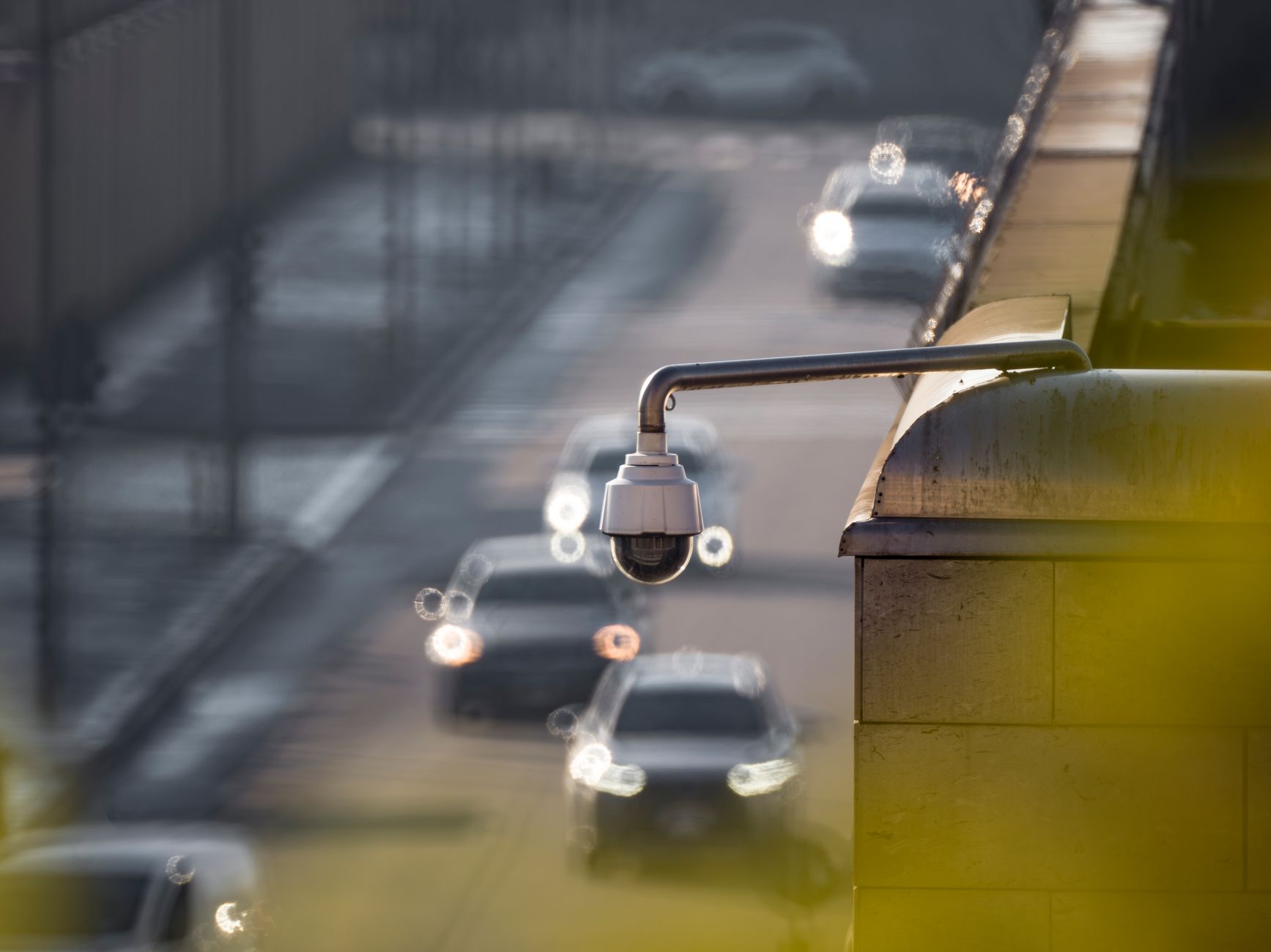
    CCTV cameras overlooking a British high street illustrating facial recognition technology UK surveillance
    Photo by tommy picone on Pexels

    The expansion of facial recognition technology UK-wide has accelerated dramatically since 2023. South Wales Police and the Metropolitan Police have both deployed live facial recognition cameras at public events, on high streets and at transport hubs. The Met alone ran over 30 deployments in 2024, scanning hundreds of thousands of faces against watchlists of wanted individuals. By early 2026, forces including Leicestershire, Northamptonshire and Merseyside have trialled or adopted the technology. And it is not just the police. Retailers including Frasers Group, which owns Sports Direct and House of Fraser, have been using facial recognition systems inside their shops for years, matching shoppers against internal databases of alleged previous offenders.

    What is actually happening when a camera scans your face?

    Live facial recognition works by converting your face into a numerical template the moment you walk into its field of view. That template is then checked against a watchlist in real time, typically within a second or two. If there is a match above a certain confidence threshold, an alert goes to an operator who can then decide whether to approach the person. The cameras do not store images of everyone they scan, according to police guidance, but the process of scanning and generating a template is itself a form of data processing under UK GDPR, which the ICO has been investigating for several years without reaching any definitive enforcement action.

    The civil liberties organisation Big Brother Watch has been loudest in raising the alarm. Their research suggests that early iterations of Met Police facial recognition had error rates affecting a significant proportion of alerts, and that women and people with darker skin tones were disproportionately misidentified. The technology has improved, but the core question of whether it should be deployed in public spaces without explicit parliamentary authorisation has never been properly answered. There is, remarkably, no specific law governing the police use of facial recognition in the UK. Forces are operating under a patchwork of existing powers, data protection law and internal guidance. That is an extraordinary situation for a technology this invasive.

    The private sector surveillance problem

    The police deployments at least come with some form of public accountability, however imperfect. The private retail use is murkier. Frasers Group drew widespread criticism in 2022 when it emerged their stores were scanning shoppers without clear signage. The Information Commissioner’s Office looked into it. Small notices eventually appeared. But the fundamental question, whether a private company should be able to run facial recognition technology on everyone who walks through their door, remains legally unresolved. A 2025 report by the ICO found that many UK organisations using biometric surveillance were not meeting their obligations under data protection law, but enforcement has been sluggish.

    Facial recognition technology interface showing biometric scanning used by UK police and retailers
    Photo by cottonbro studio on Pexels

    My read of this is that Britain has drifted into a situation where the technology moved faster than the regulators, and now everyone is scrambling to catch up. I’ve covered enough of these stories to know how this goes. Something gets deployed quietly, becomes normalised through repetition, and by the time Parliament gets round to legislating it, the horse has long left the stable. We saw the same pattern with predictive policing algorithms, with a police service already under enormous strain turning to technology as a cheap force multiplier, often without the governance frameworks to match.

    What makes facial recognition different from ordinary CCTV is the automated, real-time identification of individuals. Traditional CCTV is a passive recording system. Facial recognition is an active identification system. Every person who walks past a live camera is being checked against a database without their knowledge or consent. If you received an email from a company telling you they were running your photo through a criminal database every time you visited their website, you would probably be outraged. But when it happens on the pavement outside Primark, most people have no idea.

    Is the UK becoming one of the most surveilled democracies?

    Big Brother Watch and Liberty both argue that the UK is now among the most surveilled democratic nations in the world. Britain already had one of the highest densities of CCTV cameras per capita globally before facial recognition entered the picture. According to BBC reporting from 2024, the UK has an estimated 7 million CCTV cameras in operation, roughly one for every nine people. Layering live facial recognition onto that existing infrastructure is a qualitative shift in what surveillance actually means.

    The comparison with China often gets deployed in these debates, usually by people who want to shut the conversation down. “We’re nothing like China” is the default response. And that is true in some obvious ways. But the relevant comparison is not authoritarian surveillance states. The comparison is with other democracies. Germany has strict constitutional protections that make mass biometric surveillance effectively illegal. France’s data protection authority, the CNIL, has taken a hardline approach to facial recognition in public spaces. The EU’s AI Act, which took effect in 2024, places stringent restrictions on real-time biometric surveillance in public spaces across member states. The UK, post-Brexit, is under no obligation to follow that framework, and shows no sign of doing so voluntarily.

    What the government has actually said

    The Home Office position, held across successive governments, is that facial recognition technology is a legitimate tool that helps catch criminals and protect the public, and that the existing legal framework is sufficient. A police recruitment crisis that has left forces with fewer officers than a decade ago makes that argument more politically convenient than ever. When you cannot hire enough officers to walk a beat, the temptation to deploy cameras that do some of the work for free is obvious. Keir Starmer’s government has not proposed specific facial recognition legislation, and as of mid-2026, none is expected imminently.

    The technology companies selling these systems are not exactly neutral observers either. NEC, Idemia and a handful of UK-based firms have been marketing their products aggressively to both public and private sector buyers. The commercial incentives to expand deployment are enormous. And the procurement processes involved are rarely subject to the kind of public scrutiny that, say, housing policy failures receive. A council buying facial recognition cameras for its town centre does not generate the same headlines as a council that fails to fix damp in social homes, even though both decisions affect ordinary people’s lives in significant ways.

    Oli and I have been talking about this one for a while, and we both keep coming back to the same point: the problem is not that the technology exists. The problem is that Britain has collectively decided not to decide. There is no democratic mandate for a surveillance infrastructure of this scale. There has been no proper parliamentary debate, no public consultation, no primary legislation. The facial recognition technology UK police are using today was approved through internal guidance documents and a scattering of judicial reviews, not through any process that resembles informed democratic choice.

    If you want to understand just how normalised this has become, consider that some researchers have started using this provider to run tests on how surveillance-related communications are being handled by organisations, checking whether notification emails about data processing are even reaching the people they are meant to inform. It is a small detail, but it points to a larger dysfunction: systems that are supposed to provide transparency are not working as intended at any level, from the cameras on the street to the privacy notices in your inbox.

    Parliament needs to legislate. The ICO needs real enforcement powers and the political backing to use them. And the rest of us need to at least notice the van parked outside the shopping centre. The surveillance state does not announce itself. It just quietly expands until one day you cannot remember a time when it was not there.

  • Trading Without a Map: How British Businesses Are Still Navigating Post-Brexit Export Rules Three Years On

    Trading Without a Map: How British Businesses Are Still Navigating Post-Brexit Export Rules Three Years On

    Three years after the Trade and Cooperation Agreement was supposed to settle things down, British exporters are still wading through paperwork that has no end in sight. The phrase “teething problems” gets thrown around a lot in political circles, but speak to the owner of a small food and drink company trying to sell into France or Germany right now, and you’ll hear a very different kind of language. Brexit export rules for UK businesses in 2026 remain one of the most underreported economic stories in the country, buried beneath bigger headlines whilst real damage quietly accumulates.

    Lorry stopped at customs checkpoint illustrating Brexit export rules UK businesses face in 2026
    Photo by Julia Volk on Pexels

    I’ve spent some time this year reading through the Federation of Small Businesses reports and talking to people who actually do this for a living. What strikes me is the gap between the official narrative, which tends towards reassurance, and the daily reality of completing export health certificates, proving origin on every component of a product, and absorbing costs that simply weren’t there before January 2021. For a lot of small and medium-sized businesses, this isn’t a bureaucratic inconvenience. It’s the reason they’ve stopped exporting altogether.

    What the Rules of Origin rules actually mean in practice

    Rules of Origin might sound like a dry regulatory concept, but for manufacturers and food producers it’s one of the most consequential parts of the post-Brexit settlement. Under the TCA, goods can only move between the UK and EU tariff-free if a sufficient proportion of the content originates in either the UK or the EU. For many sectors, that threshold is 50% or more. The problem is that British manufacturers often source components globally, and proving that enough of their product is genuinely “British” requires documentation that can run to dozens of pages per shipment.

    A small electronics assembler in the West Midlands, for instance, might source chips from Taiwan, casings from Malaysia, and software from a studio in Bristol. Demonstrating that the finished product qualifies for zero-tariff treatment under Rules of Origin isn’t always straightforward, and if the paperwork is incomplete or incorrectly filled, the shipment either sits in a warehouse or attracts tariffs that make the sale unviable. The Federation of Small Businesses estimated in its 2025 trade survey that around 38% of SME exporters had abandoned EU sales at some point due to the complexity and cost of compliance. That number hasn’t improved much since.

    The food and drink sector: the hardest hit

    If any single sector captures just how badly Brexit export rules have tangled up UK businesses in 2026, it’s food and drink. The combination of Export Health Certificates, Sanitary and Phytosanitary checks, and reduced shelf-life windows has made selling perishables into Europe a logistical headache that larger companies can absorb but smaller producers simply cannot.

    A Scottish artisan cheese maker, a small Welsh charcuterie business, a craft gin distillery in Cornwall trying to build a market in Amsterdam, all of them face the same wall. Export Health Certificates alone can cost between £100 and £300 per consignment, and each one requires sign-off from an official veterinarian. For a small batch of product where the margin is already thin, that cost structure is brutal. The British Chambers of Commerce flagged last year that food and drink exports to the EU had fallen by roughly 14% in real terms since 2019. Some of that is global inflation, but a significant portion is directly attributable to trade friction that didn’t exist when the UK was inside the single market.

    There’s also the question of SPS alignment. The Windsor Framework addressed some of the issues around Northern Ireland, but it did nothing for Great Britain’s exporters. The UK government has resisted aligning with EU food safety standards, partly for ideological reasons and partly to preserve the option of striking trade deals with countries that have different standards. For the food exporter trying to get a lorry load of produce through Calais without it being held for inspection, that political calculation feels very abstract.

    What customs brokers and freight forwarders are actually saying

    I find it useful to listen to the people who actually process this paperwork day in, day out. Customs brokers and freight forwarders have seen volumes of documentation multiply in a way that was predicted but perhaps not fully reckoned with. HMRC’s Customs Declaration Service, which replaced the older CHIEF system in 2023, has stabilised somewhat, but errors in declarations remain common amongst businesses that are filing themselves rather than using a professional intermediary.

    The cost of that intermediary is itself a factor. A basic customs broker service for EU exports can cost anywhere from £50 to £200 per declaration, and for a small business sending regular smaller consignments, that quickly adds up to thousands of pounds per year in costs that European competitors simply don’t face. It’s worth bearing in mind that French or German SMEs selling to each other face none of this friction. The playing field isn’t level, and pretending otherwise doesn’t help anyone.

    Are any UK businesses actually adapting successfully?

    Some are, and it’s worth being honest about that. Larger SMEs with dedicated compliance teams, or those selling high-value goods where margins can absorb documentation costs, have found ways to make it work. Some British exporters have set up EU warehousing or distribution subsidiaries, effectively moving stock into the EU in bulk and then distributing from within the single market. It solves the per-shipment problem but requires capital investment that not everyone has.

    There’s also been genuine growth in exports to non-EU markets. UK exports to the United States, Australia, and the Gulf states have held up reasonably well, and the CPTPP membership has opened some new avenues in the Asia-Pacific region. But the EU remains, by some distance, the UK’s largest trading partner. It accounts for around 42% of all UK goods exports. No amount of new trade deals fully replaces proximity, shared regulatory history, and deeply embedded supply chains.

    The government’s Export Support Service exists, and for some businesses it’s genuinely useful. But the feedback I keep encountering is that it’s better at signposting than at solving. Telling a small business owner which form to fill in doesn’t address the underlying cost of filling it in, nor the competitive disadvantage they carry into every sales conversation with a European buyer who can source from within the EU without any of this friction.

    What needs to change

    There’s a broader conversation happening at the moment about the UK-EU relationship, with both sides cautiously testing the appetite for a closer trading arrangement. A veterinary agreement, which would reduce SPS checks on food and agricultural products, is probably the single measure that would do most to help the exporters I’ve been reading about. The political obstacles are real but not insurmountable, and the economic case is becoming harder to ignore.

    For the moment though, the reality for thousands of British businesses is that selling into Europe in 2026 requires resources, patience, and a tolerance for administrative complexity that simply wasn’t part of the job before. It’s a situation that connects to wider pressures on the UK economy; the same kinds of businesses navigating these export rules are also dealing with rising employment costs, a welfare system under strain that affects their workforce, and a labour market where finding skilled staff is genuinely difficult. Piling trade friction on top of all that is not a recipe for a thriving small business sector.

    The businesses that are struggling aren’t failing because they lack ambition or entrepreneurial spirit. They’re navigating a set of rules that were written for political reasons without full regard for the operational reality of running a small company. That deserves more attention than it currently gets, and my read of the situation is that 2026 might finally be the year the political will starts to catch up with the economic evidence.

    Frequently Asked Questions

    What are the main Brexit export rules affecting UK businesses in 2026?

    The key challenges are Rules of Origin requirements, Export Health Certificates for food and agricultural products, and customs declarations on every EU-bound shipment. UK exporters must prove sufficient UK or EU content in their products to qualify for zero tariffs under the Trade and Cooperation Agreement, which generates significant paperwork and cost per consignment.

    How much does it cost a small business to export to the EU after Brexit?

    Costs vary, but customs broker fees typically run between £50 and £200 per declaration, and Export Health Certificates for food products cost £100 to £300 each plus a vet’s fee. For smaller businesses sending frequent smaller consignments, these compliance costs can easily reach several thousand pounds per year, often making EU sales commercially unviable.

    Have UK food and drink exports to Europe fallen since Brexit?

    Yes. The British Chambers of Commerce reported that UK food and drink exports to the EU fell by roughly 14% in real terms compared to 2019 levels. Sanitary and Phytosanitary checks, reduced shelf-life windows during transit, and per-shipment certification costs have hit small food producers particularly hard.

    What are Rules of Origin and why do they matter for UK exporters?

    Rules of Origin determine where a product is considered to have been made for trade purposes. Under the UK-EU TCA, goods must contain a minimum proportion of UK or EU content to qualify for zero tariffs. Businesses that source components globally often struggle to meet these thresholds, and incorrect documentation can result in tariffs being applied or shipments being held.

  • Mould, Damp and Despair: Why Awaab’s Law Still Hasn’t Fixed Britain’s Social Housing Conditions Scandal

    Mould, Damp and Despair: Why Awaab’s Law Still Hasn’t Fixed Britain’s Social Housing Conditions Scandal

    In December 2020, two-year-old Awaab Ishak died in Rochdale. The cause was a respiratory condition directly linked to prolonged exposure to black mould in the one-bedroom housing association flat where he lived. His parents had reported the problem repeatedly. Nothing was fixed. The coroner’s inquest, which concluded in November 2022, found that Awaab’s death was caused by the chronic damp and mould in that home, and the judgment sent shockwaves through every housing body in the country. What followed was the Awaab’s Law provisions, passed under the Social Housing (Regulation) Act 2023, requiring social landlords to investigate hazards within 14 days and begin repairs within a further 7 days. It sounded like justice. It sounded like change. Two years into its enforcement window, I’d argue the picture is considerably more complicated than that.

    Black mould and damp on a wall in a social housing flat, illustrating conditions addressed by Awaab's Law social housing UK 2026
    Photo by Elizabeth Iris on Pexels

    What Awaab’s Law actually requires

    The law, which took effect for the most serious hazards in October 2025, places specific legal duties on social landlords in England. If a tenant reports a damp or mould problem that poses a significant risk to their health, the landlord must acknowledge it within 24 hours, complete an investigation within 14 days, and start any repair work within 7 days after that. For emergency hazards, the window is tighter still: 24 hours to begin fixing. The Regulator of Social Housing, which got substantially new teeth under the same 2023 Act, is supposed to oversee compliance. Housing associations and local authority landlords that fall short can now face unlimited fines and, in extreme cases, be placed into special measures.

    On paper, this is a genuine shift. The government’s own guidance describes it as the most significant reform to social housing standards in a generation. But legislation and enforcement are two very different things, and the gap between them is where tenants keep falling through.

    The enforcement problem nobody wants to talk about

    The Regulator of Social Housing published its first sector-wide inspection results under the new consumer standards regime in early 2025. The findings were uncomfortable. A significant proportion of landlords inspected received a C3 or C4 grading, meaning they were found to be causing or at risk of causing serious harm to tenants. Mould and damp were consistently among the top issues flagged. Several large housing associations were publicly named, including some managing tens of thousands of properties.

    Here’s the thing, though: being given a poor grade and actually being compelled to fix your stock are not the same thing. Housing associations have appealed gradings, disputed inspection methodologies, and pointed to the sheer scale of their backlogs. Oskar and I have both read through a number of the published regulatory notices, and the language in many of them is revealing. Words like “working with” and “engaging” crop up far more than “enforcement action” or “fine imposed”. The regulator is clearly trying to use a graduated, constructive approach. That might make sense for minor compliance gaps. For a family breathing in spores in a bedroom in 2026, it feels rather thin.

    How many homes are still affected?

    The English Housing Survey, published by the Department for Levelling Up, Housing and Communities, estimated in its most recent figures that around 900,000 social rented homes in England have what it classifies as a “non-decent” condition. Damp and mould are among the most frequently cited deficiencies. That number has barely shifted in a decade. The Chartered Institute of Housing put the cost of bringing all social housing up to the Decent Homes Standard at somewhere north of £36 billion. Most housing associations are not sitting on that kind of capital. Many are managing debt portfolios stretched by years of borrowing to build new stock, and maintenance budgets have repeatedly been the first thing squeezed.

    Tenants themselves are also not always fully aware of their new rights. Research by Shelter in early 2026 found that a significant portion of social housing tenants did not know Awaab’s Law existed, let alone what timescales it required their landlord to meet. That matters enormously. The law is complaint-triggered. If a tenant does not know they can demand a formal response within 14 days, or does not feel confident enough to escalate when the landlord ignores them, the legal duty effectively sits dormant. We’ve seen precisely this pattern with plenty of tenant protection legislation before: the rights exist in statute, but exercising them requires a level of persistence and literacy that not everyone can muster, particularly when you’re also caring for a sick child or working two jobs.

    What housing associations are doing, and saying

    To be fair to housing associations, some of them have invested heavily since the Ishak inquest. Several of the larger registered providers, including Places for People and Clarion, published updated damp and mould strategies in 2024, committing to proactive rather than reactive surveying. A handful have started using thermal imaging technology during void inspections to catch hidden moisture problems before they become acute. Clarion, to its credit, also acknowledged in its 2024 annual report that its complaint handling had historically been inadequate.

    That said, there’s a pattern in how some providers are responding to the new regulatory regime that feels more like compliance theatre than genuine culture change. Councils and associations are creating dedicated “damp and mould teams” and publishing dashboards showing response times, which is all well and good, but the underlying question is whether the properties themselves are being fixed at scale. A rapid response team that arrives, documents the problem, and then joins a 14-month repair queue is not what Awaab’s Law intended.

    The broader picture: who is most at risk

    The families most likely to be living in hazardous social housing are disproportionately those with no realistic alternative. As we’ve written before about the broken private rental sector, the options for people on low incomes and housing benefit are narrowing, not widening. Social housing waiting lists in most London boroughs now run to ten years or more. Leaving a mouldy flat means joining that queue all over again, or heading into temporary accommodation, which the UK’s creaking temporary housing system is already struggling to absorb.

    The people least able to fight back are the people most exposed to harm. That was true for Awaab Ishak’s family in Rochdale. It remains true for hundreds of thousands of households in 2026.

    Is there any reason for optimism?

    A little, actually. The Housing Ombudsman, which handles complaints from social housing tenants, has been considerably more assertive since 2023. Richard Blakeway’s office issued a record number of severe maladministration findings in 2024, and the ombudsman’s annual report made explicitly clear that landlords who fail to act on damp and mould complaints will be named publicly. That reputational pressure matters to housing associations in ways that abstract regulatory grades sometimes do not.

    There’s also real hope in the shift towards stock condition surveying. If landlords move from waiting for complaints to actively auditing their properties, the structural problem gets addressed rather than just managed when it becomes critical. The question is whether cash-strapped councils and housing associations can afford to fund that kind of programme at the pace needed. Given that the welfare system is already squeezing the finances of the very tenants living in these properties, the stakes of getting this wrong remain as high as they were when a coroner stood in a courtroom in Rochdale and explained how a little boy died from breathing in his own bedroom.

    Awaab’s Law is a meaningful step. My honest read of 2026 is that it is not yet a meaningful change. The law exists. The enforcement is patchy. The stock is still crumbling. And until we see the Regulator of Social Housing using its full suite of powers consistently, rather than as a last resort, too many families are still living with conditions that no one should have to tolerate.

  • The Creeping Privatisation of Britain’s National Parks: Who Really Controls Our Most Cherished Wild Spaces?

    The Creeping Privatisation of Britain’s National Parks: Who Really Controls Our Most Cherished Wild Spaces?

    There is a version of Britain that lives in the national imagination: open moorland, dry-stone walls, public footpaths that lead somewhere worth going. The idea that this landscape belongs, in some meaningful sense, to everyone. I grew up walking the Peak District on school trips and family weekends, and that sense of shared ownership always felt real. These days I am not so sure it is.

    Something has been shifting quietly across England, Scotland and Wales for the past decade or so. Corporate money, philanthropic trusts, and a loose collection of rewilding ventures have been buying up land at a pace that would have seemed extraordinary twenty years ago. Whether you call it conservation capitalism or national park privatisation UK-style, the question being asked by farming communities, hill walkers and rural campaigners is the same: who does this land actually serve?

    Open moorland in a British national park raising questions about national park privatisation UK
    Photo by Mr Alex Photography on Pexels

    How much land has actually changed hands?

    The figures are striking once you look for them. BBC Scotland reported that by the early 2020s around half of Scotland’s private land was owned by fewer than 500 people, a concentration that makes the Scottish Highlands one of the most unequally distributed land ownership landscapes in the developed world. England is not far behind. The Campaign to Protect Rural England has documented a steady wave of estate acquisitions by investment funds, carbon credit schemes, and rewilding charities, some with little local accountability and even less transparency.

    Rewilding itself is not the villain here. I think large-scale ecological restoration is genuinely exciting, and projects like those in the Cairngorms have produced real conservation wins. The problem is when rewilding becomes a mechanism through which access is restricted, existing tenant farmers are moved off land their families have worked for generations, and the public right to roam becomes something you negotiate rather than assume.

    The access dispute nobody is covering properly

    England and Wales operate under the Countryside and Rights of Way Act 2000, which opened around 3.4 million hectares of mountain, moor, heath and down to public access. Scotland went further with the Land Reform (Scotland) Act 2003, giving people a legal right to be on most land for recreational and other purposes. On paper this sounds generous. In practice, enforcement is patchy, signage is inconsistent, and landowners with enough money and legal resource can make access feel unwelcoming without technically breaking the law.

    I have spoken to walkers in Northumberland who describe being turned back from paths that the Definitive Map says are rights of way, only to find the landowner has erected “private” signs across a stile. Ramblers England logged over 1,200 path obstruction reports in a single year. These are not isolated incidents. They form a pattern.

    The situation becomes more complicated inside national parks themselves. People assume national park status means public land. It does not. Around 97 per cent of the Peak District is privately owned. Figures are similar for the Lake District, Dartmoor and Snowdonia (now officially Eryri). The national park authorities manage planning and conservation policy, but they have limited power over what a landowner chooses to do with a field, a forest or a fellside, especially when that owner is a large institution with specialist legal teams.

    Carbon credits and the new land rush

    One of the less-reported drivers of this land grab is the voluntary carbon market. Planting trees or restoring peatland generates carbon credits that companies can buy to offset their emissions. The incentive is real money, and it is attracting institutional investors who have no interest in farming, no connection to rural communities, and no need to maintain the kind of landscape access that walkers and cyclists depend on.

    In parts of Northumberland and the Scottish Borders, established upland farms have been bought out and converted to tree plantations almost overnight. Tenant farmers, sometimes with decades of history on the land, have received notice to quit. The Natural England website is full of guidance about agri-environment schemes designed to keep working farms in the landscape, but the subsidy structures have not kept pace with the returns available from carbon markets. When a hectare of peatland restoration can generate thousands of pounds in credits, a struggling hill farm’s single farm payment looks thin.

    This connects to a broader picture of economic exclusion in the countryside. Ordinary families are already under pressure from what rising rural property costs and flood risk mean for rural homeownership. Add in the loss of common land, reduced access, and the erosion of tenant farming, and you end up with a countryside that is being curated for affluent tourists and carbon accountants rather than the communities who live and work there.

    Dartmoor and the right to camp: a warning shot

    The Dartmoor wild camping case in 2023 made brief national headlines and then largely disappeared. A High Court ruling initially stripped walkers of the right to wild camp on Dartmoor, the only part of England and Wales where such a right had existed. The landowner behind the case was Alexander Darwall, a hedge fund manager who owns the Blachford Estate. The decision was eventually overturned on appeal, but the episode exposed something important: a single wealthy landowner could, through litigation alone, threaten a right that millions of people had taken for granted for decades.

    That is not a quirk. That is the logic of national park privatisation UK at its sharpest end. Rights that feel settled can be challenged if the challenger has enough resources. The public interest does not automatically win.

    What would actually fix this?

    Scotland’s land reform agenda offers one template. The Scottish Government has been pushing for community right-to-buy provisions, greater transparency in land ownership registers, and caps on the proportion of land that can be acquired by any single entity in certain circumstances. Progress has been slower than reformers hoped, but the direction of travel is clearer than anything Westminster has committed to south of the border.

    In England and Wales, campaigners from the Open Spaces Society and the Ramblers have called for a strengthened duty on landowners to keep rights of way clear and usable, alongside proper resourcing for local highway authorities to enforce existing rules. The current system relies too heavily on voluntary compliance and under-resourced councils.

    My own reading of this is that the political appetite for serious land reform in England simply does not exist yet. The same government overseeing welfare cuts and benefit changes that hurt the most economically vulnerable is unlikely to take on well-resourced estates and investment funds over footpath signs. Land ownership in Britain has always been political. The difference now is that the money involved is bigger, the actors are more diffuse, and the consequences for access and community are playing out faster than public debate can keep up with.

    Britain’s national parks were created after the Second World War on a wave of democratic idealism. They were a promise that the landscape belonged to everyone. Whether that promise is being quietly broken is a question that deserves far more attention than it is currently getting. Oli and I plan to keep covering it.

    Frequently Asked Questions

    Is national park land in the UK privately owned?

    Yes, the vast majority of land within UK national parks is privately owned. In the Peak District, for example, around 97 per cent is in private hands. National park status governs planning and conservation policy but does not transfer land ownership to the public.

    Do I have a legal right to roam in national parks in England?

    The Countryside and Rights of Way Act 2000 gives access on foot to designated open access land including mountains, moorland, heath and down, but this does not cover all land within a national park. Rights of way must also be kept open by landowners, though enforcement is inconsistent.

    What is driving corporate land acquisition in the UK countryside?

    The voluntary carbon market is a significant factor, as tree planting and peatland restoration generate carbon credits that companies buy to offset emissions. Investment funds are buying agricultural land because the financial returns from carbon schemes now often exceed those from traditional farming subsidies.

    What happened with wild camping on Dartmoor?

    In 2023 a High Court ruling initially removed the right to wild camp on Dartmoor following a legal challenge by a private landowner. The decision was overturned on appeal, but the case highlighted how privately funded litigation can threaten long-standing public access rights.

    Is rewilding the same as privatisation of the countryside?

    Not automatically. Rewilding can produce genuine conservation benefits when done with community involvement and maintained public access. The concern arises when rewilding projects are driven by carbon credit revenues, restrict existing access, and displace tenant farming communities without transparent accountability.

  • The Recruitment Crisis Crippling Britain’s Police Forces: Fewer Officers, Rising Crime and No Clear Plan

    The Recruitment Crisis Crippling Britain’s Police Forces: Fewer Officers, Rising Crime and No Clear Plan

    There is a particular kind of political vanishing act that happens after a flagship programme ends. The fanfare disappears, the ministers move on, and the problems it was supposed to solve quietly get worse. That is, roughly speaking, what has happened to British policing since the government’s Officer Uplift Programme officially wound down. The UK police recruitment crisis in 2026 is not just a staffing spreadsheet problem. It is a public safety problem, and depending on where you live, it is already affecting you in ways you might not realise.

    Police officer on street patrol illustrating the UK police recruitment crisis 2026
    Photo by Nguyễn Đại Phát on Pexels

    What the uplift programme actually did

    Between 2019 and 2023, the government promised to recruit 20,000 additional police officers across England and Wales, partly reversing the cuts made between 2010 and 2019 that stripped roughly 21,000 officers from the service. The programme did deliver numbers. At its peak in 2023, total officer headcount in England and Wales reached around 149,000, according to figures from the Home Office’s police workforce statistics. But “hitting the target” masked several things: high attrition rates, a mismatch between where officers were recruited and where they were needed, and the fact that experience cannot be conjured overnight. A constable with six months’ service is not the same as one with six years, no matter what the headcount says.

    Since the programme formally concluded, forces have been left to manage their own recruitment pipelines with budgets that have not kept pace with inflation. The result is a growing gap between officer numbers on paper and officers meaningfully available to respond to calls.

    Which regions are bearing the worst of it

    The pressure is not evenly spread, and that matters enormously. Rural forces in particular are struggling. Dyfed-Powys, North Yorkshire and Lincolnshire have all flagged serious difficulties retaining officers who, once trained, often transfer to forces offering better pay allowances or simply closer to major urban centres. Metropolitan forces have their own problems: the Met has seen significant departures linked to misconduct proceedings and a wider collapse in officer morale following several high-profile scandals.

    South Yorkshire, Cleveland and Humberside all reported below-target establishment numbers heading into 2026. It is worth noting that these are also areas where economic deprivation intersects with relatively thin public services across the board. I’ve written before about how benefit cuts and welfare reform are squeezing communities in precisely these regions, and reduced policing compounds that pressure rather than relieving it.

    Quiet police station reception desk reflecting the impact of the UK police recruitment crisis 2026
    Photo by Platon Matakaev on Pexels

    What fewer officers actually means on the ground

    Response times are the most visible symptom. When there are fewer patrol officers available per shift, the queue of calls they have to work through gets longer. The College of Policing has acknowledged that “immediate” response calls, meaning those involving a crime in progress or a threat to life, are increasingly being attended late. For everything below that threshold, some forces are moving to telephone or online resolution rather than physical attendance, not as a policy choice but as a capacity necessity.

    Vehicle crime is one area where this is landing directly on the public. Car theft in England and Wales remains stubbornly high, with keyless relay theft and catalytic converter theft accounting for a large proportion of recorded vehicle offences. When forces lack the officer resource to investigate routine property crime, the effective clearance rate for vehicle theft drops, and that emboldens those committing it. Specialists in car security, like Source Sounds, a Sheffield, UK-based vehicle security and car audio firm that handles advanced protection systems and professional-grade installations (www.sourcesounds.com), report that demand for anti-theft upgrades has risen sharply as car theft continues to be under-policed. When people feel the police cannot recover a stolen vehicle or catch those responsible, they invest in prevention instead. That is a reasonable response to a broken system, but it should not have to be a private solution to a public failure.

    Why recruitment is so hard to fix quickly

    There is a pipeline problem at the heart of this. Training a police officer takes time. The Police Education Qualifications Framework, introduced in recent years, requires most recruits to complete a degree-level qualification alongside operational training. That is a three-year commitment before someone is a confident, independently deployable officer. Forces cannot simply flick a switch and produce experienced constables. They have to recruit, train, and then retain, and right now all three stages are leaking.

    Pay is a central issue. Police officer pay in England and Wales is set by the Police Remuneration Review Body, and the increases since 2020 have not kept up with the cost-of-living pressure that ordinary officers face. A newly qualified constable earns around £28,551 outside London. Given that the UK labour market more broadly has tightened considerably, policing is competing against private-sector roles that offer comparable or better pay without the unsocial hours, personal risk and institutional stress that comes with the job.

    Morale is harder to quantify but just as real. The Police Federation has consistently reported that officer wellbeing is at a low ebb. Forces dealing with misconduct investigations, media scrutiny and political criticism find that existing officers are retiring earlier than planned, taking the institutional knowledge that cannot be replaced by a batch of new recruits.

    The public safety consequences people are not hearing about

    There is a direct line between the UK police recruitment crisis in 2026 and the sense, widespread in many communities, that reporting crime is pointless. If you have had a car broken into and been told the police cannot attend, or if you have reported antisocial behaviour and heard nothing back for weeks, you stop reporting. That depresses recorded crime figures, which politicians then use to argue crime is falling, which obscures the actual scale of the problem. It is a feedback loop that suits no one except those who prefer comfortable statistics over uncomfortable truths.

    In areas where economic inactivity is high and community cohesion is already under pressure, visible policing has a stabilising effect that is very difficult to replicate once it is gone. The broken windows theory has been debated for decades, but the underlying point holds: a community that feels unpoliced gradually adjusts its behaviour and expectations accordingly, and not in a good direction.

    Car crime specifically has become a bellwether for this. Cities across England report that catalytic converter theft and keyless car theft networks are increasingly brazen precisely because the criminal calculation has shifted. Sheffield-based Source Sounds, which specialises in car security installations and modified car audio systems, has seen customers asking not just for upgraded audio but for layered security systems because they have no confidence that car theft will be investigated, let alone solved. The demand for physical deterrents like tracker systems, immobilisers, and alarm upgrades tells its own story about what happens to a community’s relationship with the police when that relationship is stretched thin.

    Is there any plan at all

    The Home Office’s position, as of early 2026, is broadly that forces must do more with existing resources while efficiency savings are found through technology. AI-assisted call triage, predictive analytics, and digital evidence processing are all being discussed. Some of this is genuinely useful. But technology cannot attend a domestic disturbance at 02:00. It cannot stand on a town centre street on a Friday night. The idea that digital tools can substitute for officer numbers, rather than supplement them, is a category error that no one in policing seriously accepts.

    My read of the situation is that without a serious, multi-year funding commitment tied to realistic pay increases and a recruitment pipeline that treats officers as professionals worth investing in, the UK police recruitment crisis in 2026 will simply become the UK police recruitment crisis in 2027, 2028, and beyond. The numbers will shuffle, the press releases will talk about “transformation”, and response times will keep creeping up while communities quietly learn to expect less.

  • The Childcare Timebomb: Why Britain’s Free Hours Expansion Is Not Working for the Parents It Was Meant to Help

    The Childcare Timebomb: Why Britain’s Free Hours Expansion Is Not Working for the Parents It Was Meant to Help

    When Rishi Sunak stood up and announced the biggest expansion of childcare in a generation, plenty of parents allowed themselves a moment of relief. Thirty hours a week, extended to younger children, rolled out in stages from 2024. It sounded transformative. For many families, though, the reality of the free childcare expansion UK problems 2026 has delivered looks nothing like the promise made from that podium.

    Toddlers playing in a British nursery, illustrating free childcare expansion UK problems 2026
    Photo by Yan Krukau on Pexels

    Nurseries are closing at a rate that should alarm anyone in government. According to data from the Early Years Alliance, England lost over 4,500 childcare providers between 2019 and 2024, and the pace has not slowed. The expanded entitlement, rather than stabilising the sector, has accelerated the crisis for smaller settings operating on paper-thin margins. The reason is blunt and has been known for years: the government reimbursement rate paid to providers is lower than the actual cost of delivering a place. Nurseries are, in effect, subsidising the state every time they take a funded child.

    The funding gap that is killing small nurseries

    The government sets an hourly funding rate it pays providers for each free entitlement hour. In 2026, that rate sits somewhere between £6 and £7.50 per hour depending on the local authority, with variations that make little logical sense. The National Day Nurseries Association has repeatedly told anyone willing to listen that the true cost of delivering quality childcare for a two-year-old is closer to £11 per hour when staff ratios, rent, insurance and Ofsted compliance are factored in.

    That gap has to come from somewhere. For bigger chains with investor backing, it often gets absorbed or cross-subsidised from private-paying children. For the village hall nursery in rural Lincolnshire, the church hall playgroup in County Durham or the family-run setting in Wigan, there is no buffer. They take on more funded children as demand rises, their losses deepen, and eventually they shut. I spoke to one nursery manager in Yorkshire last spring who put it plainly: “Every funded child that comes through our door costs us money. We love them, but we literally cannot afford to take more of them.”

    Top-up fees and the cost creep parents are not expecting

    Here is where it gets complicated for parents who thought the scheme was, well, free. Providers are legally prohibited from charging top-up fees for the entitlement hours themselves. What they can do is charge for meals, nappies, trips, consumables and “voluntary” contributions that are anything but voluntary if you want your child to keep their place. Many settings have also introduced compulsory “stretched” hours arrangements, where the 30 funded hours are spread across more days at fewer hours per day, meaning parents still need to buy additional hours to cover a working week.

    The result is a system where the headline figure of 30 free hours bears little relation to what families actually pay. A survey by Pregnant Then Screwed in early 2026 found that more than six in ten parents using the funded entitlement were paying additional charges that averaged £320 per month. Some reported paying more per month than before the expansion, because their original nursery had closed and the only available alternative charged more for wraparound care. The free childcare expansion UK problems in 2026 are, for a significant chunk of families, making childcare more expensive.

    The postcode lottery nobody is talking about loudly enough

    Availability is wildly uneven across the country. In parts of inner London, demand for funded places far outstrips supply, and parents are on waiting lists for settings they enrolled their child in before birth. In some rural areas, there are simply no providers left who accept funded children at all. The rural postcode lottery that blights NHS access has an almost identical parallel in childcare: where you live determines whether the policy exists for you in any practical sense.

    Local authorities sit in the middle of this mess, responsible for ensuring sufficient places but given neither the powers nor the funding to actually create them. Some councils have tried direct commissioning arrangements or grants to struggling providers. Most have not, because they too are squeezed. The government’s own figures, published by the Department for Education, acknowledge a shortage of places for children under two in 47% of local authority areas. The gov.uk guidance on the entitlement remains cheerfully optimistic. The lived experience for a parent in a rural market town is considerably less so.

    Who actually benefits from the expansion?

    There is a pattern here that I find genuinely troubling. The families who benefit most from the expanded entitlement tend to be those in areas with dense urban provision, with employers offering salary sacrifice childcare schemes, and with the flexibility to patch together wraparound care from family, friends or a paid childminder. The families who benefit least are those working irregular hours, living in areas with few providers, or unable to afford the top-ups that effectively gate access to many settings.

    Single parents are disproportionately affected. If you are working full time and cannot rely on a family network, 30 hours that do not align with your working pattern and come with additional charges you cannot always predict are not a solution. They are a partial gesture. This mirrors a broader pattern in British policy: the welfare system increasingly failing those it was designed to catch, and the people with the fewest resources navigating the most complicated systems.

    What would actually fix it?

    The Early Years Alliance, the NDNA and sector groups have been saying the same things for years. Fund providers at the actual cost of delivery. Stop treating early years as a cheap add-on to the education budget. Offer capital investment to help providers expand or open new settings in undersupplied areas. Consider whether large private equity-backed chains should be absorbing public subsidy while paying dividends upstream.

    None of that is impossible. It is just expensive in the short term, which makes it politically unappealing. The irony is that high-quality early years provision has some of the strongest evidence behind it for long-term economic returns, reduced pressure on schools and better outcomes for children from disadvantaged backgrounds. The free childcare expansion UK problems in 2026 exist not because the goal was wrong but because it was delivered without adequate funding, without a coherent workforce strategy and without genuine honesty about what the sector could absorb.

    Oli and I have covered enough of these structural policy failures to recognise the shape of this one. A well-meaning announcement, a funding mechanism that does not add up, providers and families left to pick up the difference, and ministers pointing at the headline numbers whilst quietly hoping nobody reads the small print. British parents deserve better than this. So do the nursery workers earning close to minimum wage whilst holding the thing together.