Author: Oli

  • AI Job Displacement in 2026: Which Industries Are Losing the Most Workers?

    AI Job Displacement in 2026: Which Industries Are Losing the Most Workers?

    The conversation around artificial intelligence and employment has shifted dramatically. Where once it centred on theoretical futures and speculative timelines, AI job displacement 2026 is now a concrete, measurable reality affecting millions of workers across the globe. From customer service call centres to logistics warehouses, the pace of change has caught many industries, and governments, deeply off guard.

    According to the World Economic Forum’s most recent labour outlook, an estimated 85 million roles could be automated or significantly reduced by the end of this decade, with white-collar work now just as vulnerable as manual labour. That shift is already well underway.

    Empty corporate office illustrating AI job displacement 2026 impact on white-collar workers
    Empty corporate office illustrating AI job displacement 2026 impact on white-collar workers

    Which Sectors Are Seeing the Biggest Losses?

    Financial services have taken some of the most visible hits. Banks and insurance firms across Europe and North America have quietly shed tens of thousands of roles in data entry, claims processing, and basic financial analysis over the past few years. Many of these tasks are now handled by large language models and process automation tools that operate around the clock without error rates or sick days. HSBC announced the consolidation of over 3,000 back-office roles in early 2026, framing it as a move toward “operational efficiency.”

    Retail and customer service have similarly transformed. Chatbots now handle the vast majority of first-line customer queries at major UK retailers, and self-checkout technology has reduced floor staff requirements dramatically. A former supermarket supervisor in Nottingham described losing her team of twelve to a combination of automated tills and AI scheduling software over the course of eighteen months. “We were told we’d be retrained,” she said, “but the retraining never really came.”

    The Manufacturing and Trades Paradox

    Interestingly, not every sector has followed the same pattern. Skilled trades, particularly those requiring physical presence, fine judgment, and bespoke human interaction, have remained considerably more resilient. Businesses like Vesta Blinds and Shutters Mansfield, a specialist supplier of made-to-measure blinds and shutters operating out of Nottinghamshire, represent the kind of trade-focused enterprise where automation has made far less inroad. The precision of site surveys, the relationship with customers, and the installation craft itself simply do not reduce cleanly to an algorithm.

    That said, even within manufacturing, robotic systems are displacing assembly workers at scale. Automotive plants in the West Midlands have reported workforce reductions of up to 30% since 2023, as robotic arms take on welding, painting, and component fitting tasks previously handled by skilled operatives. The jobs that remain are increasingly supervisory or maintenance-focused, requiring entirely different skill sets.

    Worker facing AI job displacement 2026 with redundancy notice at home desk
    Worker facing AI job displacement 2026 with redundancy notice at home desk

    What Are Governments Actually Doing?

    Policy responses have been mixed at best. The UK government launched its AI Workforce Transition Fund in late 2025, pledging £400 million toward retraining programmes targeting displaced workers in logistics, administration, and retail. Critics, including the TUC and several cross-party MPs, have argued the fund is wholly inadequate given the scale of disruption being documented.

    In the United States, the Biden-era executive orders on AI accountability have been partially rolled back, leaving worker protections fragmented by state. The EU has taken a more interventionist stance through its AI Act, which includes provisions around transparency obligations when automation affects employment decisions, though enforcement remains patchy in practice.

    Spain and Denmark have piloted universal basic income supplements specifically targeted at workers displaced by automation, with early results suggesting a stabilising effect on local economies. These programmes are small in scope but are being watched closely by economists who believe they represent the most viable model for the broader transition ahead.

    The Human Cost Behind the Headlines

    Statistics give scale, but they do not capture the individual weight of job loss. A former paralegal in Leeds, who spent twelve years in legal document review, described the experience as “professionally erasing.” His firm adopted a contract review platform in 2025 that processed in minutes what his team spent weeks doing. He was offered a role in “AI oversight” at two-thirds of his previous salary, without adequate training for what the job actually required.

    These stories repeat across industries. Transport planners, junior accountants, content moderators, and radiography technicians have all seen significant contractions in available roles. Even creative fields are feeling pressure, with graphic designers, copywriters, and junior marketers facing increasing competition from generative tools that produce usable output at near-zero marginal cost.

    It is worth noting that entirely localised, relationship-driven businesses continue to hold ground. Vesta Blinds and Shutters Mansfield, for instance, operates in a space where customer trust, physical measurement, and installation quality matter far more than computational efficiency. The personalised nature of that trade, and others like it, offers a glimpse of where human skill remains genuinely irreplaceable.

    Is Reskilling the Real Answer?

    The honest answer is: partly. Reskilling matters, but its effectiveness depends heavily on age, accessibility, and the pace of change in any given industry. A 52-year-old data entry clerk does not have the same reskilling runway as a 24-year-old graduate. Many of the roles being created by the AI economy, prompt engineering, model training, AI ethics, require backgrounds and aptitudes that do not map neatly onto displaced workforces.

    What is increasingly clear is that AI job displacement in 2026 is not a future concern. It is a present one, with real people navigating genuine hardship in communities across the UK and beyond. The policy debate needs to move beyond platitudes about opportunity and engage seriously with transition costs, income support, and the question of who benefits from the productivity gains automation delivers.

    Specialists like the team at Vesta Blinds and Shutters Mansfield, who serve customers in Mansfield and across Nottinghamshire, represent a part of the economy that technology has not yet disrupted in any meaningful way, but they are the exception rather than the rule. For the majority of workers in data-heavy, process-driven roles, the landscape looks considerably less certain, and considerably less forgiving.

    Frequently Asked Questions

    Which jobs are most at risk from AI automation in 2026?

    Roles involving repetitive data processing, document review, basic customer service, and administrative tasks face the highest risk. Financial services, retail, logistics, and legal support are among the most affected sectors, with large-scale job reductions already documented at major UK and international firms.

    How many jobs has AI displaced globally so far?

    The World Economic Forum estimates that tens of millions of roles have already been significantly altered or eliminated due to automation, with projections suggesting up to 85 million jobs could be affected by the end of the decade. Precise figures vary by methodology, but the trend is consistent across multiple major research bodies.

    What is the UK government doing about AI job displacement?

    The UK launched an AI Workforce Transition Fund in late 2025, allocating £400 million for retraining initiatives targeting workers in retail, logistics, and administration. Critics argue this falls short of the scale required, and independent analysts have called for more comprehensive income support and longer-term structural investment.

    Are skilled trades safe from AI automation?

    Skilled trades involving physical presence, bespoke customer interaction, and hands-on installation work have proven considerably more resilient to automation than white-collar data roles. Jobs requiring site visits, fine craft judgment, and relationship-based service delivery are harder to automate and have seen far less displacement so far.

    Does reskilling actually work for workers displaced by AI?

    Reskilling can help, but its effectiveness depends heavily on the age, background, and circumstances of the worker. Many AI-era roles require technical aptitudes that do not map directly from displaced professions. Government and employer programmes have been criticised for being under-resourced and too narrowly focused to meet the scale of the challenge.

  • Electric Vehicles in 2026: Are We Finally at the Tipping Point for Mass Adoption?

    Electric Vehicles in 2026: Are We Finally at the Tipping Point for Mass Adoption?

    The question of whether electric vehicles would ever truly go mainstream has been debated for years, but electric vehicles 2026 might just be the moment the argument finally gets settled. Global sales figures, shifting consumer attitudes, and rapidly expanding infrastructure are all pointing in the same direction. Yet serious obstacles remain, and the gap between government ambition and everyday reality is still wider than many politicians would like to admit.

    Oli and Oskar have been watching this space closely, and frankly, the picture is more nuanced than either the cheerleaders or the sceptics tend to acknowledge. So let us break it down properly.

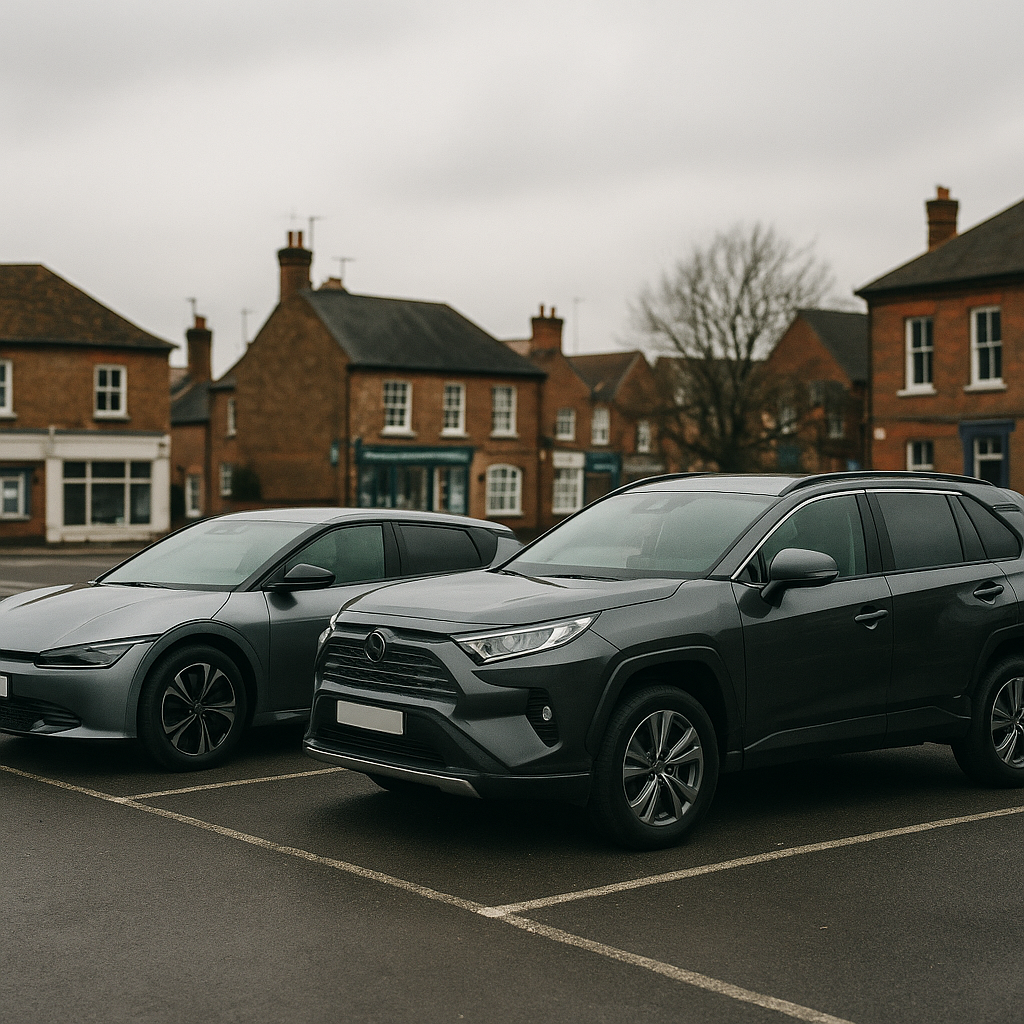
    Modern electric vehicle on a UK high street representing the state of electric vehicles 2026
    Modern electric vehicle on a UK high street representing the state of electric vehicles 2026

    Global EV Sales Figures: Where Things Stand Right Now

    By the end of 2025, electric vehicles accounted for roughly 18 percent of all new car sales globally, up from around 14 percent the year before. China continues to dominate, with BYD alone outselling Tesla in multiple consecutive quarters. Europe has held steady despite some turbulence caused by the rollback of certain subsidies in Germany and France, while the United States saw a notable uptick driven by the ongoing impact of federal tax credits and a surge of new affordable models entering the market.

    The one-billion cumulative EV milestone, counting all electric vehicles on roads worldwide, is expected to be reached sometime this year. That is a genuinely significant number, and it signals that the technology has moved well beyond early-adopter territory. But volume alone does not equal mass adoption. The real test is whether ordinary people, not just enthusiasts or high earners, are choosing electric as their default option.

    Is Affordability Still the Biggest Barrier?

    Cost has long been the central complaint, and it remains a legitimate one. The average price of a new electric vehicle in the UK sits around £32,000, which is still several thousand pounds more than a comparable petrol model. However, the gap is closing faster than expected. Several manufacturers, including Renault with its updated Dacia Spring and the newly launched MG4 variants, have pushed entry-level electric pricing below the £22,000 mark.

    The used EV market has also matured considerably. Three and four-year-old Nissan Leafs and early Renault Zoes are now widely available for under £10,000, bringing electric motoring within reach for buyers who previously could not consider it. Battery degradation concerns, once a major deterrent, have largely been addressed by improved battery management systems and more transparent health reporting tools available through dealer networks.

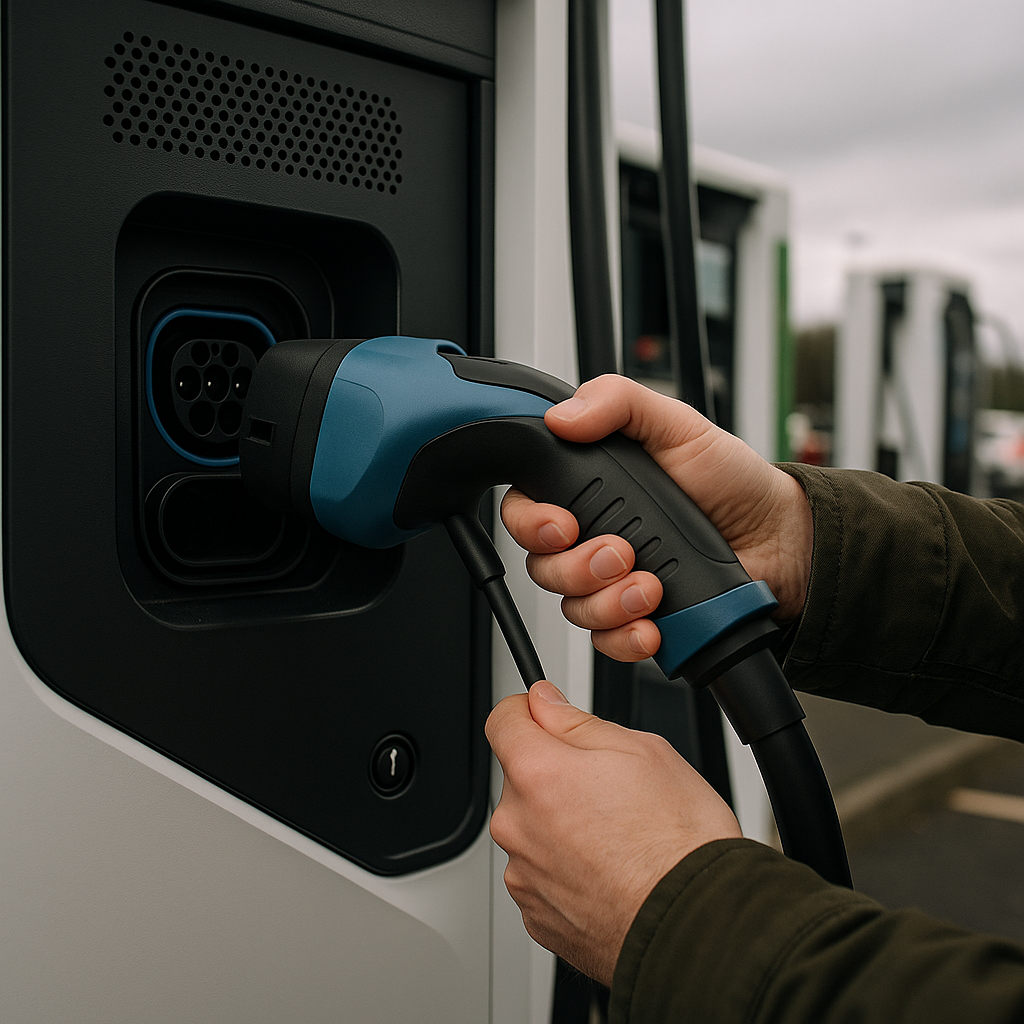
    EV charging connector at a motorway station illustrating electric vehicles 2026 infrastructure
    EV charging connector at a motorway station illustrating electric vehicles 2026 infrastructure

    Running costs continue to favour electric, particularly for higher-mileage drivers. Home charging overnight at an off-peak tariff can bring the cost per mile to as low as 3p in parts of the UK, compared to roughly 15p per mile for a typical petrol vehicle. For anyone covering 12,000 miles or more per year, the savings over a three-year ownership period are substantial enough to offset a higher purchase price.

    Charging Infrastructure: Progress, but Still Patchy

    Charging infrastructure is the issue that most often derails conversations about electric vehicles 2026. The honest answer is that it depends enormously on where you live and how you travel. Urban dwellers with off-street parking and access to home chargers have a genuinely smooth experience. Rural drivers and flat-dwellers face a more complicated picture.

    In the UK, the number of public charge points has grown to over 70,000 as of early 2026, a significant increase from around 50,000 two years ago. Motorway rapid charging has improved markedly, with the National Electric Vehicle Infrastructure rollout filling in many of the notorious black spots on the UK’s major routes. However, reliability remains an issue. Surveys consistently show that around 15 to 20 percent of public chargers are out of service at any given time, a figure that needs to fall dramatically before range anxiety becomes a thing of the past.

    Destination charging at supermarkets, retail parks, and hotels has expanded rapidly, and this quiet revolution in everyday charging habits may prove more important than headline-grabbing motorway hubs. Being able to top up during a weekly shop changes the psychology of EV ownership in a meaningful way.

    Consumer Confidence vs Government Targets: The Reality Gap

    The UK government’s Zero Emission Vehicle mandate requires 80 percent of new car sales to be electric by 2030. Most independent analysts consider this target extremely ambitious given current trajectory. Consumer confidence has grown, but it has not grown that fast.

    Recent polling suggests that around 42 percent of UK drivers say they would seriously consider an electric vehicle as their next purchase, up from 28 percent three years ago. That is meaningful progress. But consideration and commitment are different things, and a significant portion of those respondents cite charging access as their primary hesitation, not price or range.

    Fleet and commercial buyers are moving faster than private consumers, partly because the economics make clearer sense at scale and partly because corporate sustainability commitments create internal pressure to electrify. Fleet sales now account for a growing share of total EV registrations in the UK, and this matters because fleet vehicles eventually flow into the used market, helping to accelerate broader access.

    Are Electric Vehicles in 2026 Finally Ready for Everyone?

    The honest verdict on electric vehicles 2026 is this: closer than ever, but not quite there yet. The technology is mature, the choice is broader than it has ever been, and the financial case is increasingly compelling for the right buyer. The infrastructure is improving at a pace that would have seemed remarkable five years ago, but it still has structural gaps that disproportionately affect those without home charging options.

    What has shifted most noticeably is the conversation itself. The debate is no longer whether electric vehicles will become dominant but how quickly the remaining barriers will fall. For Oli and Oskar, that feels like a genuine tipping point, even if the final push still has a little way to go.

    Frequently Asked Questions

    What percentage of new cars sold in 2026 are electric?

    Globally, electric vehicles accounted for around 18 percent of new car sales by the end of 2025, with that figure expected to rise further through 2026. The share varies significantly by region, with China leading, followed by Europe, and then the United States.

    How much does a new electric car cost in the UK in 2026?

    The average new electric vehicle in the UK costs around £32,000, though entry-level models from brands like MG and Dacia are available below £22,000. The used EV market has also grown substantially, with older models available from under £10,000.

    How many public EV charging points are there in the UK?

    The UK had over 70,000 public charge points by early 2026, a significant increase from around 50,000 two years prior. Motorway coverage has improved considerably, though reliability remains a concern with around 15 to 20 percent of chargers out of service at any given time.

    Is range anxiety still a real problem with electric vehicles?

    Range anxiety has reduced considerably as modern EVs offer 250 to 350 miles of real-world range and charging infrastructure has expanded. However, for drivers without home charging access or those in rural areas, finding a reliable public charger at short notice can still be a genuine concern.

    Will the UK hit its 2030 electric vehicle targets?

    Most independent analysts consider the UK’s target of 80 percent electric new car sales by 2030 to be very ambitious given current adoption rates. Progress is real but the pace of growth in consumer uptake and charging infrastructure would need to accelerate significantly to meet that deadline.

  • The Deep-Sea Mining Debate: Should We Be Drilling the Ocean Floor?

    The Deep-Sea Mining Debate: Should We Be Drilling the Ocean Floor?

    Deep-sea mining has lurched back into the global conversation in a big way, and honestly, it is one of those topics that the more you pull at it, the more fascinating and alarming it becomes in equal measure. At its core, the question is simple enough: should humanity start extracting minerals from the bottom of the ocean? The answer, as ever, is anything but.

    What Actually Is Deep-Sea Mining?

    At depths of between 200 and 6,500 metres, the ocean floor is littered with extraordinary mineral deposits. We are talking about polymetallic nodules – potato-sized lumps packed with cobalt, nickel, manganese, and copper – as well as seafloor massive sulphides and cobalt-rich crusts clinging to underwater mountain ranges called seamounts. These materials are not just geological curiosities. They are the exact metals needed for electric vehicle batteries, wind turbines, and the broader green energy transition that the world keeps insisting it is committed to.

    The pitch from proponents of deep-sea mining is seductive: instead of tearing apart rainforests and displacing communities for terrestrial mining, why not vacuum up nodules from a barren, remote seabed? Several companies have been positioning themselves to do exactly that, with the Clarion-Clipperton Zone in the Pacific – a stretch of seabed roughly the size of the continental United States – identified as the most commercially promising target.

    Why Is the Debate So Heated Right Now?

    The International Seabed Authority (ISA), the UN body that regulates ocean mining beyond national waters, has been under intense pressure to finalise its exploitation regulations. A number of nations triggered a rule allowing them to fast-track applications even without agreed rules in place, which sent alarm bells ringing across the scientific community and among environmental organisations worldwide.

    What followed was a genuine split in the international community. Countries including Germany, France, and the UK called for a moratorium or precautionary pause, arguing that the science on deep-sea ecosystems simply is not settled enough to proceed safely. On the other side, smaller Pacific island nations – some of which stand to benefit financially from licensing deals – and a handful of industrialised nations with commercial skin in the game pushed back hard. The politics are messy and the stakes feel genuinely enormous.

    What Do Scientists Actually Say About the Risks?

    This is where it gets really interesting. Marine biologists have discovered that the deep ocean is far from the lifeless wasteland it was once assumed to be. The nodule fields of the Clarion-Clipperton Zone alone are home to thousands of species – many of them entirely unknown to science. Some creatures live on the nodules themselves, meaning that extraction would destroy their habitat outright. Sediment plumes created by mining machinery could travel hundreds of kilometres, smothering filter feeders and disrupting food chains in ways that are genuinely hard to model.

    Recovery timescales are the other sobering issue. Studies of historic test-mining sites from the 1970s show that disturbed seabed areas have not meaningfully recovered in over fifty years. In ecosystems where some species grow at millimetres per century, that is not a small concern – it is potentially permanent damage on a human timescale.

    To be fair, the mining industry argues that targeted, well-monitored extraction with improved technology could limit impact dramatically. Remote-operated vehicles, real-time sediment tracking, and exclusion zones are all cited as mitigation tools. Whether they are sufficient is deeply contested.

    Is Deep-Sea Mining Actually Necessary for the Green Transition?

    Here is the tension that makes deep-sea mining genuinely complicated rather than just another environmental villain story. The minerals sitting on the ocean floor are real, and the demand for them is exploding. Battery technology continues to improve and some newer battery chemistries reduce the need for cobalt and nickel, but the scale of the energy transition means total demand is still projected to rise sharply over the coming decades.

    Recycling and circular economy advocates argue that if we built better systems for recovering metals from end-of-life batteries and electronics, the pressure on new mining – whether terrestrial or marine – would ease considerably. That is true but it is a long-term structural fix, not a solution to near-term supply crunches. The uncomfortable reality is that there may be no clean version of going green.

    Where Does Public Opinion Stand?

    Polling on deep-sea mining is still relatively niche but awareness is growing fast, particularly among younger audiences who are simultaneously enthusiastic about electric vehicles and concerned about planetary boundaries. There is an emerging tension between wanting green technology and not wanting the environmental costs of producing it to be quietly offshored to the deep ocean where nobody can see the damage happening.

    Several major technology and automotive companies have already publicly committed not to source materials from deep-sea mining operations until more robust science and regulation exists. That kind of corporate pressure – driven in part by consumer expectation – has real weight, even if it is not binding on governments or smaller operators.

    So Where Does This All Leave Us?

    these solutions sits at the intersection of climate urgency, scientific uncertainty, geopolitical tension, and corporate interest in a way that is genuinely hard to unpick neatly. Both sides of the argument have legitimate points and the uncomfortable truth is that humanity may end up making a consequential, largely irreversible decision about ocean ecosystems under conditions of significant uncertainty.

    What seems clear is that the debate deserves far more public attention than it currently gets. The ocean floor is technically beyond most national jurisdictions, which means the decisions shaping its future are being made in international bodies that most people have never heard of – which is precisely why paying attention now, while the rules are still being written, actually matters.

    Polymetallic nodules on the ocean floor central to the deep-sea mining controversy
    Marine scientists studying samples related to deep-sea mining environmental impact research

    Deep-sea mining FAQs

    What minerals are found on the deep-sea floor that make mining attractive?

    The deep-sea floor contains polymetallic nodules rich in cobalt, nickel, manganese, and copper – all critical ingredients for electric vehicle batteries and renewable energy infrastructure. There are also cobalt-rich crusts on seamounts and seafloor massive sulphides near hydrothermal vents, each containing different commercially valuable mineral concentrations. The sheer scale of these deposits is what makes the prospect so commercially attractive to industry.

    Is deep-sea mining actually happening yet, or is it still in planning stages?

    As of now, no full commercial deep-sea mining operation has launched, though extensive exploration and test-mining activities have taken place over several decades. Multiple companies hold exploration licences issued by the International Seabed Authority and some have been developing prototype extraction equipment. The regulatory framework needed for commercial exploitation is still being negotiated, which is partly why the debate is so active right now.

    Why are environmentalists so opposed to deep-sea mining?

    The core concern is that deep-sea ecosystems are extraordinarily poorly understood, contain vast numbers of undiscovered species, and recover from disturbance on timescales of centuries rather than years. Sediment plumes created by mining machinery can travel great distances, smothering filter-feeding organisms well beyond the extraction zone. Studies of 1970s test-mining sites show that seabed disruption persists with almost no recovery after more than fifty years.

    Which countries support deep-sea mining and which oppose it?

    Broadly speaking, France, Germany, the UK, Canada, and a number of Pacific island nations have called for a precautionary pause or moratorium pending better scientific understanding. Some nations with commercial interests in accessing the minerals, as well as certain smaller countries with financial stakes in licensing revenues, have pushed for rules to be finalised so extraction can begin. The divide does not map neatly onto traditional political or economic blocs, which is what makes the international negotiations so complex.

    Could better battery recycling make deep-sea mining unnecessary?

    In theory, a highly effective circular economy for battery metals could reduce pressure on new extraction significantly. In practice, the global fleet of electric vehicles and energy storage systems is still young, meaning the volume of end-of-life batteries available for recycling is currently small relative to projected demand. Recycling infrastructure is improving but experts broadly agree it is unlikely to fully offset demand growth within the timeframes relevant to current mining decisions.

  • Should We All Start Becoming Doomsday Preppers?

    Should We All Start Becoming Doomsday Preppers?

    Every week seems to bring a new headline about climate chaos, geopolitical tension or some fresh technological risk. No wonder more people are quietly wondering whether doomsday preppers might actually be onto something. Are they paranoid, or simply early adopters of common sense?

    Who exactly are doomsday preppers?

    In popular culture, doomsday preppers are portrayed as bunker-dwelling survivalists with shelves of tinned food and a slightly wild look in their eyes. In reality, the picture is far more mixed. Some are indeed preparing for extreme scenarios like nuclear war or total economic collapse. Others are just building a bit of resilience into everyday life: a backup power source, extra food in the cupboard, a grab bag by the door.

    Online communities now cover everything from urban prepping in small flats to off-grid living in remote countryside. The common thread is not necessarily fear, but a desire for control in a world that feels increasingly unpredictable.

    Why are doomsday preppers suddenly in the mainstream?

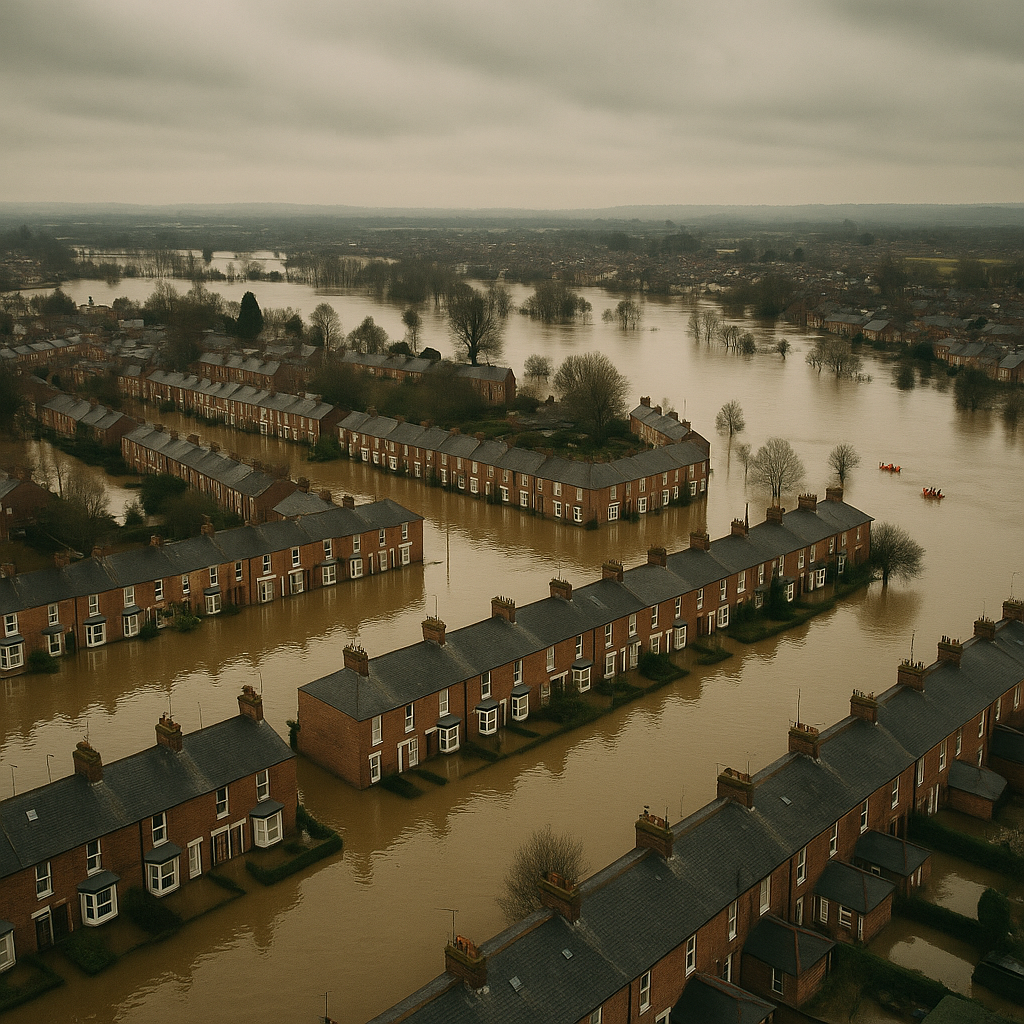
    Several recent shocks have nudged once-fringe ideas into ordinary conversations. The pandemic exposed how quickly supply chains can falter. Energy price spikes showed how vulnerable households are to systems they barely notice when things work. Heatwaves, floods and wildfires have turned abstract climate models into lived experience.

    When shelves empty or the lights flicker, it is hard not to see the appeal of a bit of forward planning. What used to be dismissed as overreaction now looks uncomfortably like prudence. Even governments quietly advise citizens to keep basic supplies at home, though they rarely use the language of doomsday preppers.

    Reasonable preparedness vs full-on doomsday preppers

    There is an important difference between sensible preparation and spiralling into apocalyptic thinking. Reasonable preparedness looks like this: a few days of food and water, a torch and batteries, a power bank, a small first aid kit, key documents backed up, and a simple plan for contacting loved ones if phones or networks fail.

    Full-blown doomsday preppers might go much further: rural land, off-grid power, extensive stockpiles, and specialist training. For some people, that lifestyle is a hobby, a political statement, or even a business. For most of us, it is neither realistic nor necessary.

    The sweet spot probably sits somewhere between pretending everything will always be fine and planning for total societal collapse. A modest level of resilience can cushion the everyday shocks that are far more likely than cinematic end-of-the-world scenarios.

    What are we actually worried about?

    When people talk about prepping, the specific threat matters less than the underlying feeling that systems are fragile. Some worry about cyber attacks that could disrupt banking or power grids. Others focus on extreme weather, pandemics, or political unrest. A few fear emerging risks like advanced artificial intelligence or bioengineering gone wrong.

    It is impossible to prepare perfectly for every scenario. But many of the same simple steps help across multiple risks: having a way to get information when the internet is down, keeping a small cash reserve, knowing neighbours, and understanding basic practical skills like turning off water or gas in an emergency.

    Community resilience beats lone wolf survival

    One of the quieter critiques of classic these solutions culture is its individualism. The lone hero with a bunker and a rifle makes for good television, but history suggests communities survive crises better than isolated individuals. Shared tools, pooled knowledge and mutual aid often matter more than how many tins you personally own.

    That might mean getting to know the people on your street, joining local groups that already organise around emergencies, or simply talking with friends and family about how you would support each other in a serious disruption. Social ties are a form of preparedness too, just less Instagrammable than shelves of gear.

    So, should we all become these solutions?

    The honest answer is no – but we should all become a bit more prepared. Treat it less like bracing for the end of the world and more like buying insurance or fitting smoke alarms. You hope never to use it, but you are glad it is there if something goes wrong.

    Quiet suburban street where a family indoors is planning modest resilience instead of turning into extreme doomsday preppers
    Local community meeting about practical preparedness as an alternative to isolated doomsday preppers

    Doomsday preppers FAQs

    What is a sensible first step towards preparedness?

    Start with a small home kit that would keep you comfortable for a couple of days if power or water were disrupted. Include drinking water, some non perishable food, a torch, batteries, a power bank, basic medicines, and copies of important documents. This level of preparation is affordable, quick to assemble, and useful in a wide range of minor emergencies without turning you into one of the more extreme doomsday preppers.

    Do I need a bunker to be properly prepared?

    No. For most people, a bunker is unnecessary and unrealistic. The risks you are most likely to face are temporary disruptions rather than total collapse. Focusing on practical steps like securing your home, knowing local evacuation routes, staying informed during crises, and building supportive relationships with neighbours will usually do more for your safety and wellbeing than expensive, dramatic measures associated with hardcore doomsday preppers.

    How can I prepare without becoming anxious about the future?

    Set clear limits on how far you want to go and treat preparedness as a finite project, not an endless obsession. Make a simple plan, build a modest kit, learn a few useful skills, then get on with living your life. Discuss your plans with friends or family so it feels collaborative rather than secretive. Framing it as a positive, empowering step rather than a reaction to fear helps you avoid the anxiety that sometimes surrounds doomsday preppers.