

Water. It covers most of the planet, and yet billions of people cannot reliably access enough of it to live well. The global water crisis 2026 is not a future warning anymore. It is happening right now, in real time, across continents. Rivers are shrinking. Aquifers that took millennia to fill are being drained in decades. And the political consequences are starting to catch up with the physical ones.
Oli and I have been watching this story build for a while. It tends to get bumped from the headlines by elections and economic panic, but honestly, it might be the most consequential slow-moving emergency of our lifetimes. So here is what you need to know.
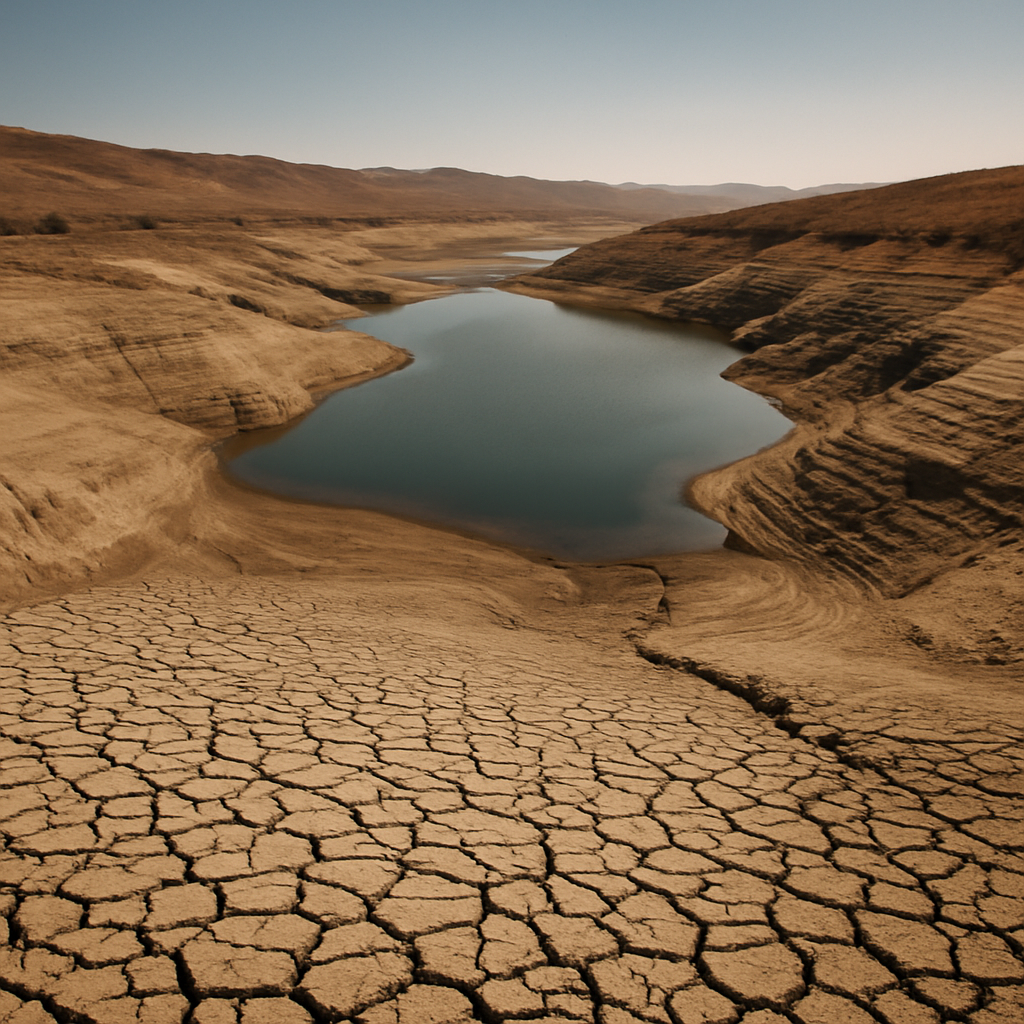
Which Countries Are Facing the Worst Freshwater Shortages?
The World Resources Institute’s Aqueduct tool consistently flags the same cluster of countries as being under extreme water stress. Iran, Iraq, and the broader Middle East top the list, as do large parts of North Africa. India is perhaps the most alarming case at scale. Groundwater depletion across the Indo-Gangetic Plain, which feeds hundreds of millions of people, is accelerating faster than rainfall can replenish it. Chennai, Bengaluru, and parts of Rajasthan have already experienced near-total supply failures in recent years.
In sub-Saharan Africa, Somalia, Ethiopia, and Sudan are contending with multi-year droughts that have turned agricultural land into dust. The Horn of Africa has seen back-to-back failed rainy seasons, and the United Nations has described parts of the region as facing the worst water insecurity in 40 years. In Latin America, the situation is more uneven but no less serious; northern Mexico’s reservoirs are at critically low levels, and Bolivia’s Lake Poopó, once the country’s second-largest lake, effectively ceased to exist as a functioning water body.
Even Europe is not immune. Southern Spain, particularly Andalusia, is experiencing drought conditions that have prompted water rationing in some municipalities. The River Po in northern Italy recorded historically low flows. These are not one-off anomalies. They are patterns.
The Political Fallout: When Water Becomes a Weapon
Scarcity breeds conflict. That is not dramatic speculation; it is documented history. The global water crisis 2026 is already reshaping geopolitics in ways that are easy to miss unless you are paying close attention.
Take the Grand Ethiopian Renaissance Dam on the Blue Nile. Egypt, which depends on the Nile for roughly 97% of its freshwater, has repeatedly described the dam as an existential threat. Talks between Egypt, Ethiopia, and Sudan have repeatedly broken down. Military posturing has followed. Water is now explicitly a national security issue in Cairo in a way it has never been before.
In Central Asia, the collapse of the Soviet Union left five countries sharing river systems with no functioning treaty framework. Kyrgyzstan and Tajikistan, which sit at the headwaters of major rivers, have used water infrastructure as leverage over downstream neighbours Uzbekistan and Kazakhstan. Small-scale border clashes have occurred. Diplomats are trying to hold things together with very little to work with.
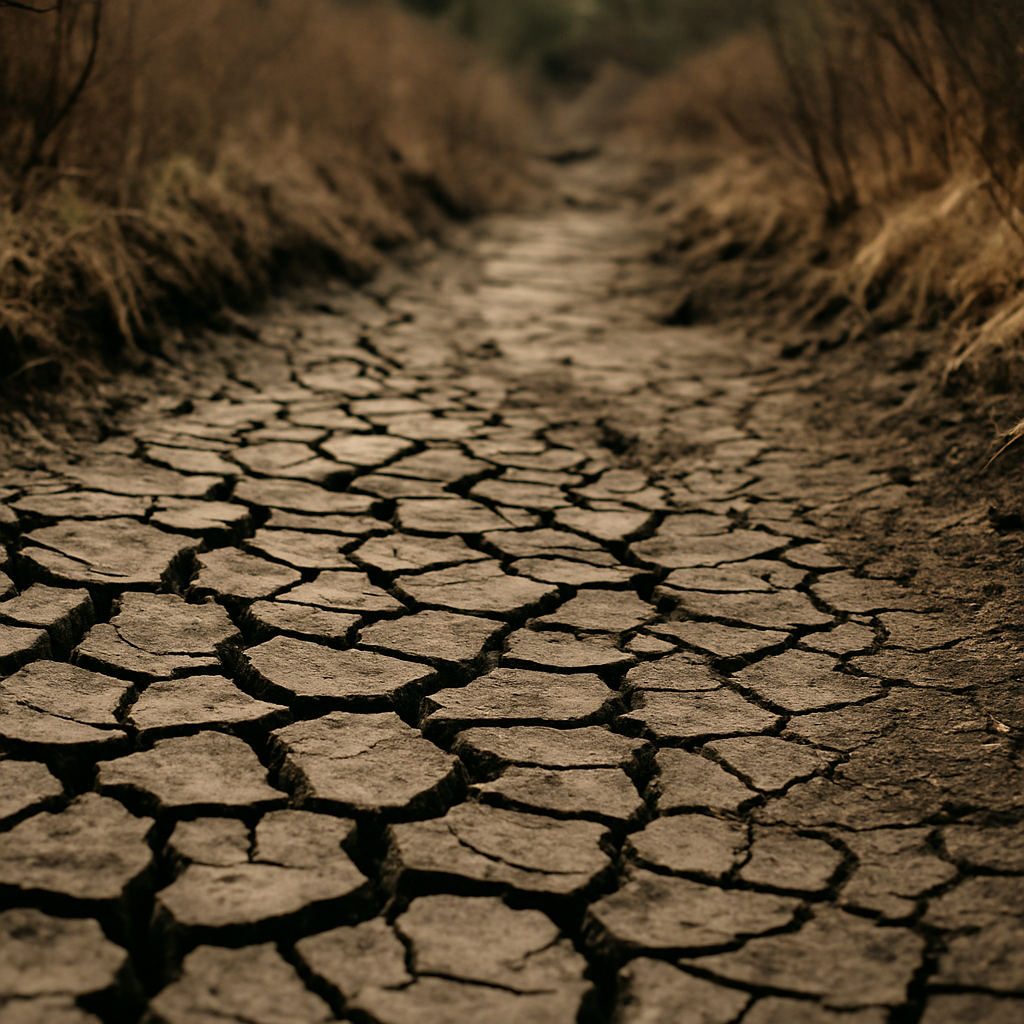
There is also the quieter political damage that happens within countries. When governments cannot provide water, trust collapses. Protests over water access have erupted in Iraq, Pakistan, and Iran in the past two years. In places where governments were already fragile, water scarcity has become a direct accelerant for instability.
The Humanitarian Reality on the Ground
Statistics can feel abstract, so here is something concrete. According to the World Health Organisation, around 2 billion people globally currently lack access to safely managed drinking water. Children bear a disproportionate burden. Waterborne diseases including cholera, typhoid, and dysentery remain leading causes of child mortality in the worst-affected regions.
For women and girls in rural areas of Africa and South Asia, the daily reality of water scarcity often means walking several miles to collect water, frequently from sources that are unsafe. That time cost is enormous. It directly reduces hours available for education and economic activity. Water scarcity and gender inequality are deeply intertwined, and that linkage does not get nearly enough coverage.
Migration is another pressure point the global water crisis 2026 is making worse. Climate modelling suggests that water stress will displace tens of millions of people over the coming decade. Many of them will attempt to reach Europe. The UK, along with other European nations, is going to need to engage with this as a migration driver, not just a distant humanitarian concern.
What Are Governments and International Bodies Actually Doing?
Progress is happening, but not quickly enough. The UN’s 2023 Water Conference produced a set of commitments, and some countries have followed through. Saudi Arabia has invested heavily in desalination, now producing around 8 million cubic metres of fresh water per day from seawater. Israel’s water recycling programme is widely cited as a world leader; it reuses roughly 90% of treated wastewater for agriculture. Singapore’s NEWater scheme converts reclaimed water into ultra-pure drinking water using advanced membrane technology.
These are impressive examples. The problem is they require significant capital and infrastructure, which the nations hardest hit by water scarcity usually lack. Desalination is also energy-intensive; running it on fossil fuels creates its own long-term contradiction.
On the international finance side, the World Bank and various development funds have ramped up water-related lending. The UK’s Foreign, Commonwealth and Development Office has programmes supporting water access in East Africa, though critics argue the funding scale remains far below what is needed.
What Do Experts Predict for the Next Decade?
The consensus among hydrologists and climate scientists is sobering. The global water crisis 2026 is, by most projections, a preview of something considerably worse unless structural changes happen fast. The IPCC has warned that demand for freshwater will outstrip supply in many regions by the mid-2030s under current trajectories. Glaciers that feed major river systems across the Himalayas, Andes, and Alps are retreating. Once they are gone, the seasonal meltwater that millions depend on does not return on any human timescale.
The more optimistic analysts point to rapid advances in water efficiency technology, renewed political will following recent crises, and the potential for pricing reforms that reduce agricultural waste. Farming accounts for roughly 70% of global freshwater withdrawals, and a significant portion of that is lost to inefficient irrigation. Fix that, the argument goes, and you buy meaningful time.
My honest read? Technology can help, and policy reforms can help. But neither will matter much if climate change is not addressed in parallel. Water scarcity and climate change are not separate problems. They are the same problem wearing different clothes.
Why This Matters for the UK
Britain is not running dry in the same way as Pakistan or Iraq. But we are not untouched either. Southern England experienced hosepipe bans in 2022 and further restrictions since. Thames Water’s ongoing infrastructure crisis has highlighted how fragile urban water supply can be. And as a major aid donor, a country with significant global trade ties, and a nation that will see increased migration pressure from water-stressed regions, what happens globally very much lands here eventually.
Dismissing this as someone else’s problem would be a serious mistake.
Frequently Asked Questions
What is causing the global water crisis in 2026?
A combination of climate change, population growth, agricultural overuse, and poor water management infrastructure is driving the crisis. Rising temperatures are accelerating glacial melt and reducing rainfall in already dry regions, while demand continues to grow faster than supply.
Which country has the worst water shortage right now?
India, Iran, and several sub-Saharan African nations are consistently ranked among the most severely affected. India’s groundwater depletion across its agricultural heartland is particularly alarming given the scale of the population that depends on it.
Can desalination solve the water crisis?
Desalination is a proven technology and Saudi Arabia and Israel use it at large scale, but it is expensive and energy-intensive. It can help wealthier coastal nations, but it is not a viable solution for landlocked or low-income countries without significant external investment.
How does the water crisis affect the UK?
The UK faces its own pressures including drought conditions in southern England and infrastructure failures, as seen with Thames Water. Globally, the crisis is likely to drive increased migration towards Europe and disrupt supply chains for food and goods that Britain imports.
Will water shortages lead to wars between countries?
Tensions over shared water resources are already escalating, particularly between Egypt and Ethiopia over the Nile, and between Central Asian states. Experts describe water as an increasing national security concern, though full interstate wars specifically over water have not yet occurred.
Leave a Reply