
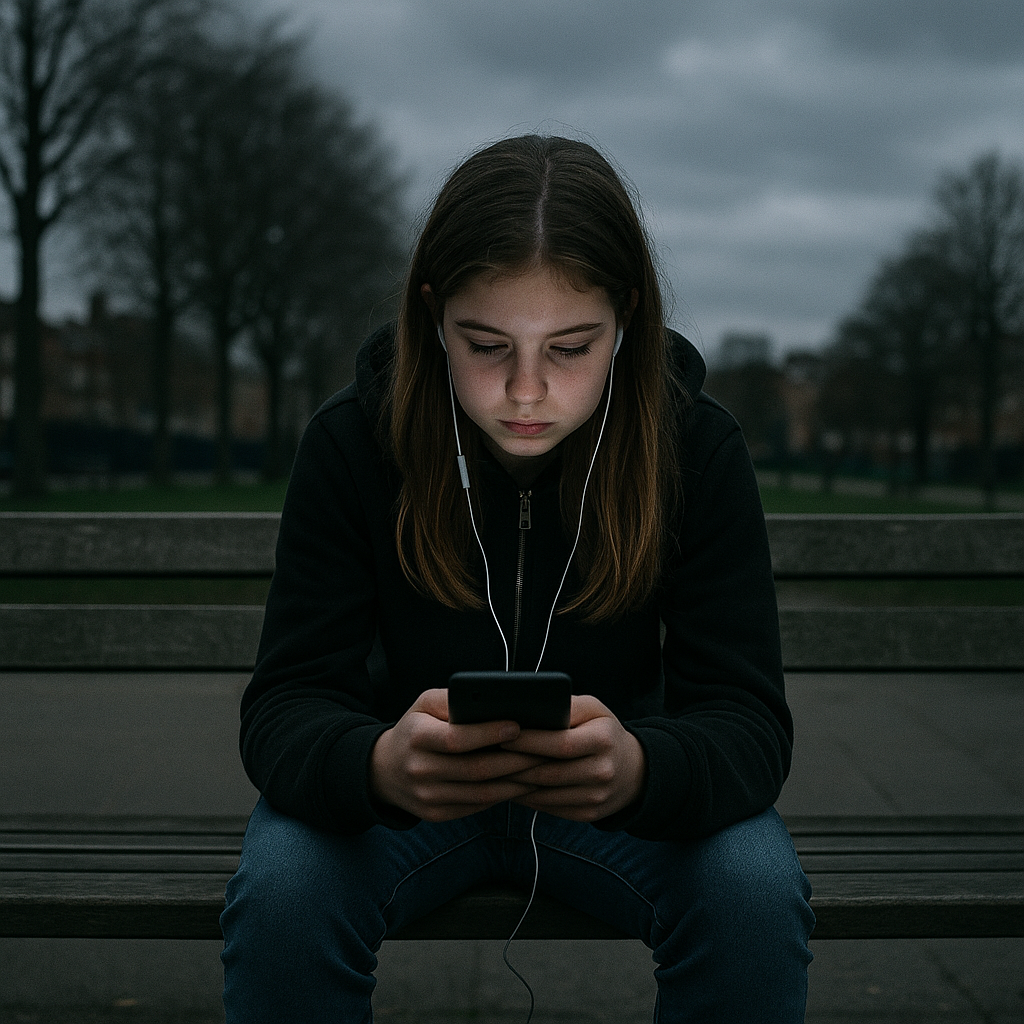
There is a generation of British teenagers who have never known a world without a glowing screen in their pocket. Born into the age of Instagram, TikTok and YouTube Shorts, they have grown up being served algorithmically curated content designed, with extraordinary precision, to keep them scrolling. And the evidence that this is doing something serious to their developing brains is becoming very hard to dismiss.
Smartphone effects on teenage brain development have moved from a niche concern whispered at parent evenings into a genuine public health conversation. Ofcom’s own research, published in its Online Nation reports, consistently shows that children aged 12 to 15 are spending upwards of four hours per day on screens outside of school. That figure climbs higher for older teenagers. Four hours. Every day. Compounding, year after year, across the most neurologically sensitive period of a human life.
What Is the Science Actually Saying?
The neuroscience here is worth taking seriously rather than dismissing as moral panic. Adolescence is the one window in life when the prefrontal cortex, the part of the brain responsible for impulse control, decision-making and emotional regulation, is still being actively wired up. It does not fully mature until the mid-twenties. Flooding that developing system with dopamine hits from likes, comments and algorithmically timed notifications is not a neutral act.
Research from University College London, published in 2024, tracked over 17,000 young people and found significant associations between high social media use and poorer mental health outcomes, particularly among girls aged 11 to 13. The mechanism appears to involve sleep disruption, social comparison and what researchers describe as “attentional fragmentation”, essentially, the brain losing its capacity to sustain focused thought because it has been trained to expect a new stimulus every few seconds.
Jonathan Haidt’s work, widely discussed in British academic and policy circles, argues that the smartphone has fundamentally restructured the social lives of adolescents in a way that disadvantages their psychological growth. Critics of Haidt point out that correlation is not causation, and that teenagers with pre-existing anxiety may simply gravitate towards phones rather than phones creating the anxiety. Both things, honestly, are probably true. And neither conclusion is particularly reassuring.
The Algorithm Problem Nobody Wants to Name
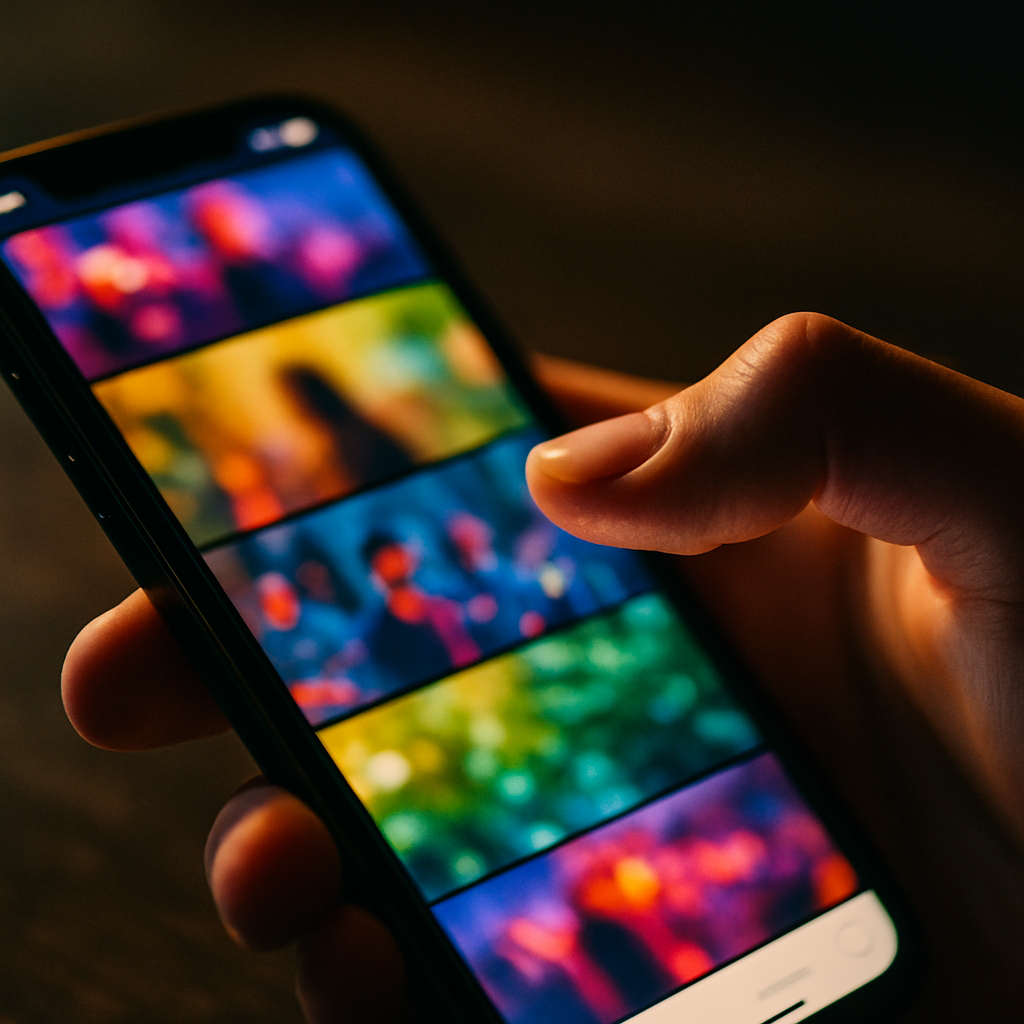
The device itself is almost the lesser problem. A smartphone sitting on a desk is a camera, a map, a calculator and a way to call your mum. The real engine of the crisis is what runs on it. TikTok’s recommendation algorithm is engineered to identify your psychological pressure points within minutes and serve you content calibrated to exploit them. Meta has faced serious regulatory scrutiny in the UK over similar mechanics embedded in Instagram’s design, particularly features that surfaced weight-loss and body image content to vulnerable young users.
These are not accidents or oversights. They are the product of millions of pounds of engineering investment specifically aimed at maximising time-on-app. Children are not collateral damage, they are a target demographic. The average British 14-year-old represents years of future advertising revenue, and the platforms know it.
What Ofcom Is Doing, and Where It Falls Short
The Online Safety Act 2023 handed Ofcom significant new powers to hold platforms accountable for content served to children. Age verification requirements, duty-of-care obligations and the ability to levy fines of up to 10% of global revenue are all theoretically in play. Ofcom has been methodical in rolling out implementation, with the children’s safety codes coming into force in stages through 2025 and 2026.
Sceptics, and there are plenty, argue that the regulator is moving too slowly and that the platforms are running rings around it. Age verification, for instance, remains deeply imperfect. A determined 12-year-old can still set their birth year to 2006 and access content designed for adults within about forty-five seconds. Ofcom has acknowledged this gap. Whether they close it quickly enough is another matter.
The Children’s Commissioner for England, Dame Rachel de Souza, has been vocal about the need for a more muscular approach. Her office has called for default-safe design standards, meaning platforms would need to actively justify why they do not implement them rather than the other way around. It is a sensible reversal of the burden of proof, and one the current government has not yet fully embraced.
What Can Parents Actually Do Right Now?
Policy moves slowly. Teenagers grow up fast. So what can a parent in Wolverhampton or Wrexham or Winchester realistically do this week?
The evidence favours late introduction over no introduction. Families that delay giving children their own smartphone until secondary school, or later, consistently report fewer behavioural and sleep-related issues. The charity Smartphone Free Childhood, which has gathered extraordinary momentum across the UK since its founding, has helped thousands of schools create informal phone-free pledges amongst year groups, reducing the social pressure that makes individual families feel they cannot hold out.
Practical measures that research supports include keeping devices out of bedrooms overnight, using app timers built into iOS and Android parental controls, and, perhaps most importantly, having frank conversations about how recommendation algorithms work. Teenagers who understand that TikTok is not showing them what is popular but what it has calculated will keep them watching are, anecdotally, more resistant to its pull. Media literacy is not a silver bullet, but it is a real one.
Physical health also plays into this more than people acknowledge. Getting enough sleep, spending time outdoors and maintaining a decent intake of micronutrients including vitamin c all support the kind of stable mood regulation that makes teenagers less susceptible to anxiety spirals driven by social media comparison. Bodies and minds are not separate systems.
The Schools Question
England moved to restrict smartphone use during the school day in 2024, following guidance from the Department for Education. Scotland and Wales have taken similar positions. The evidence from France, which implemented a near-total school ban in 2023, is cautiously positive, with teachers reporting improved concentration and more genuine social interaction during breaks.
Critics worry about enforcement and about the digital divide; not every family can afford the kind of parental control software that makes home restrictions workable, and schools vary enormously in their capacity to police phone policies. But the direction of travel feels right. A classroom is one of the last spaces where the algorithm has no jurisdiction, and protecting it seems worth the administrative effort.
The smartphone effects on teenage brain development will not be fully understood for another decade at least. We are running a mass experiment on a generation, and the results are still coming in. What the existing evidence does tell us, fairly clearly, is that the current situation, where billion-pound platforms face minimal accountability for the psychological outcomes of children who use their products, is not acceptable. Ofcom has the tools. The question is whether there is the political will to use them with the urgency the science demands.
Frequently Asked Questions
How many hours a day are British teenagers spending on smartphones?
Ofcom research consistently shows that children aged 12 to 15 spend around four hours per day on screens outside of school, with older teenagers often exceeding this. The figures have remained stubbornly high despite growing public concern and new regulatory measures.
Do smartphones actually change the developing brain or is it just moral panic?
There is credible neurological and psychological evidence that heavy smartphone use during adolescence, when the prefrontal cortex is still developing, disrupts sleep, fragments attention and is associated with poorer mental health outcomes, particularly in younger girls. Whether the relationship is purely causal or also involves pre-existing vulnerability is still debated, but most researchers now agree the effects are real.
What powers does Ofcom have to protect children online in 2026?
Under the Online Safety Act 2023, Ofcom can enforce children’s safety codes requiring platforms to limit harmful content, implement age verification and default-safe design settings. Fines of up to 10% of a platform’s global annual revenue are possible for serious failures, though implementation has been phased in gradually and critics argue enforcement remains too slow.