
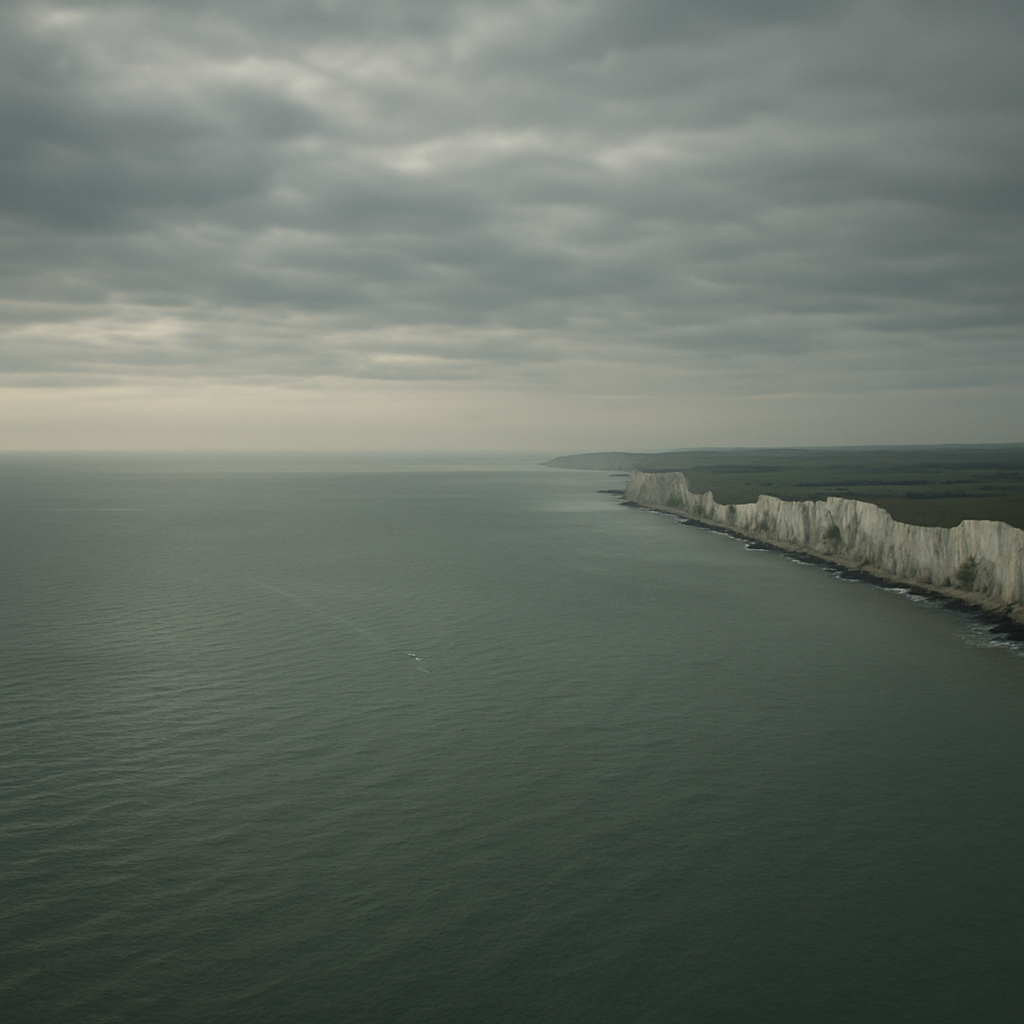
The Dover Strait remains one of the most politically charged stretches of water on Earth. Twenty-one miles of grey Channel between Calais and the Kent coastline, and every year thousands of people attempt to cross it in dinghies that have no business being out there. Small boat crossings UK 2026 is not just a policy debate or a newspaper headline. It is a live, daily reality playing out on Britain’s south-east coast, and the numbers tell a story that neither side of the political argument seems particularly keen to present honestly.
Let’s start with what we actually know. According to Home Office data published in early 2026, the total number of people arriving via small boats in 2025 was approximately 36,000 – a modest reduction on the peak years of 2022 and 2021, but still significantly higher than figures from before 2018. The Rwanda scheme, once the centrepiece of the previous government’s deterrence strategy, was formally abandoned by the Labour administration. In its place, a series of new bilateral returns agreements with European partners were announced, alongside enhanced co-operation with French border authorities. Whether any of it is working is, to put it diplomatically, contested.
What Do the Home Office Figures Actually Show?
The Home Office publishes detailed migration statistics, and they are worth reading rather than relying on what any politician tells you they say. Crossings peaked in 2022 at just over 45,000 arrivals. Numbers dipped in 2023 and have fluctuated since. For 2026, early quarterly data suggests crossings are running at a broadly similar rate to 2025, with some months showing increases year-on-year and others showing slight decreases. There is no dramatic collapse in numbers, and there is no dramatic surge. It is, frustratingly for those who want a clean narrative, somewhere in the muddy middle.
What the figures also show is the human cost. The Channel is lethal. RNLI crews and French coastguard personnel carry out rescues on a near-weekly basis. In 2024 and 2025, dozens of people lost their lives attempting the crossing. The RNLI, which has faced criticism from some quarters simply for rescuing people from the water, has consistently maintained that its crews respond to anyone in distress at sea, regardless of nationality or circumstances. That is not a political position. That is maritime law and basic humanity.
Why Did the Rwanda Plan Fail?
The Rwanda scheme was the defining immigration policy of the previous Conservative administration. The idea was simple enough in theory: anyone arriving in the UK via an irregular route would be relocated to Rwanda rather than having their asylum claim processed here. The deterrent effect, ministers argued, would discourage people from attempting the crossing in the first place.
In practice, it ran into a wall of legal challenges. The Supreme Court ruled in late 2023 that Rwanda could not be considered a safe third country for asylum seekers, citing concerns about refoulement – the risk that people could be returned to countries where they faced persecution. The government attempted to pass emergency legislation to override this, which led to months of parliamentary wrangling and a constitutional row about the limits of statute law versus international treaty obligations. The scheme cost the taxpayer hundreds of millions of pounds and resulted in precisely zero people being sent to Rwanda before it was scrapped.
The current government’s approach is built around a different premise: fix the backlog, process claims faster, and remove people who do not qualify more efficiently. The asylum backlog, which at its worst exceeded 100,000 pending cases, has been a central target. Progress has been made, though campaigners and opposition MPs argue it has been uneven and that the system remains under severe strain. You can read the Home Office’s own published data on asylum and migration at gov.uk.
Are New Deterrence Policies Having Any Effect?
Since the Rwanda plan was shelved, the government has leant heavily on operational co-operation with France as the primary deterrence mechanism. Additional funding has gone to French law enforcement to disrupt networks operating from the beaches near Calais and Dunkirk. Intelligence sharing has been increased. New legislation targeting people smuggling gangs has received Royal Assent.
The honest answer to whether it is working is: partially, and only in specific ways. French authorities have increased the number of interceptions on their side of the water, which means fewer boats making it into British waters. But the smuggling networks are adaptive. When one route or departure point is shut down, another opens. The gangs charging migrants thousands of pounds per crossing are not dissuaded by a policy announcement in Westminster. They are running criminal enterprises, and they respond to operational pressure the way criminal enterprises always do: by routing around it.
Oli and I have both found it striking, going through the coverage over the past couple of years, just how rarely the policy debate engages seriously with what drives people to attempt the crossing in the first place. The majority of those arriving by small boat are from countries including Afghanistan, Eritrea, Iran, and Syria. These are not, on the whole, people choosing Britain as a lifestyle destination. They are people fleeing situations that most of us would find unimaginable.
What Happens After People Arrive?
Processing is the unglamorous heart of the whole debate. Once someone arrives and claims asylum, they enter a system that has been under-resourced for years. Hotel accommodation, which has cost the taxpayer over £8 million a day at various points, remains in use for significant numbers of people awaiting decisions. The government has moved to increase the use of large-scale sites and former military bases, though these have generated their own controversies in local communities.
The grant rate for asylum claims, meaning the proportion of people who are ultimately recognised as needing protection, has historically been high for nationalities making up the bulk of Channel arrivals. Afghans and Eritreans, for instance, have consistently had grant rates above 70 per cent. This complicates the political messaging considerably. If the majority of people arriving via small boats have a legitimate claim to protection, the case for treating the Channel crossing itself as the primary problem becomes harder to sustain.
None of which means borders do not matter, or that irregular routes should be tacitly accepted. Safe and legal routes, which the government has pledged to expand, are the alternative that most serious commentators on all sides point to. Whether the political will exists to fund and operate them at scale is a question that remains very much open in 2026.
The Channel will keep being crossed. The dinghies will keep launching from French beaches until the underlying drivers change or the legal pathways become genuinely accessible. Small boat crossings UK 2026 is not a story with a tidy ending, and anyone telling you they have the simple fix is probably selling something.
Frequently Asked Questions
How many people have crossed the Channel in small boats in 2026?
Home Office quarterly data for 2026 shows crossings running at a broadly similar rate to 2025, which saw around 36,000 arrivals for the full year. Numbers have not dramatically surged or collapsed compared to recent years, though individual months vary significantly.
Why was the Rwanda scheme scrapped?
The UK Supreme Court ruled in November 2023 that Rwanda could not be considered a safe third country, citing risks of refoulement. After lengthy parliamentary battles over emergency legislation, the incoming Labour government formally abandoned the policy in 2024, having cost hundreds of millions of pounds without a single person being relocated.
What is being done to stop small boat crossings in 2026?
The current approach focuses on enhanced co-operation with French border authorities, disrupting people-smuggling networks, faster asylum claim processing, and new bilateral returns agreements with European partners. Critics argue results have been limited because the underlying drivers of migration remain unchanged.
Do most small boat arrivals get granted asylum in the UK?
Grant rates vary by nationality, but for the largest groups arriving by small boat, including Afghans, Eritreans, and Syrians, rates have historically been above 70 per cent. This means the majority of those crossing the Channel are ultimately recognised as needing international protection.