Category: Interesting

  • Global Election Watch: The Biggest Votes Shaping the World in 2026

    Global Election Watch: The Biggest Votes Shaping the World in 2026

    Some years feel like holding patterns. 2026 is not one of them. The calendar is packed with major elections 2026 that will determine the direction of economies, alliances, and entire regions for years to come. From Latin America to South-East Asia, voters are heading to the polls on questions that cut deep: inequality, immigration, democratic backsliding, and who actually gets to hold power. Oskar and I have been tracking the ones that matter most, and the picture is, to put it gently, pretty chaotic.

    This is not a quiet mid-cycle year. Several of the contests lined up carry enormous implications for the UK too, whether that means trade relationships post-Brexit, NATO commitments, or the broader question of whether liberal democracies are holding together or slowly fracturing at the seams.
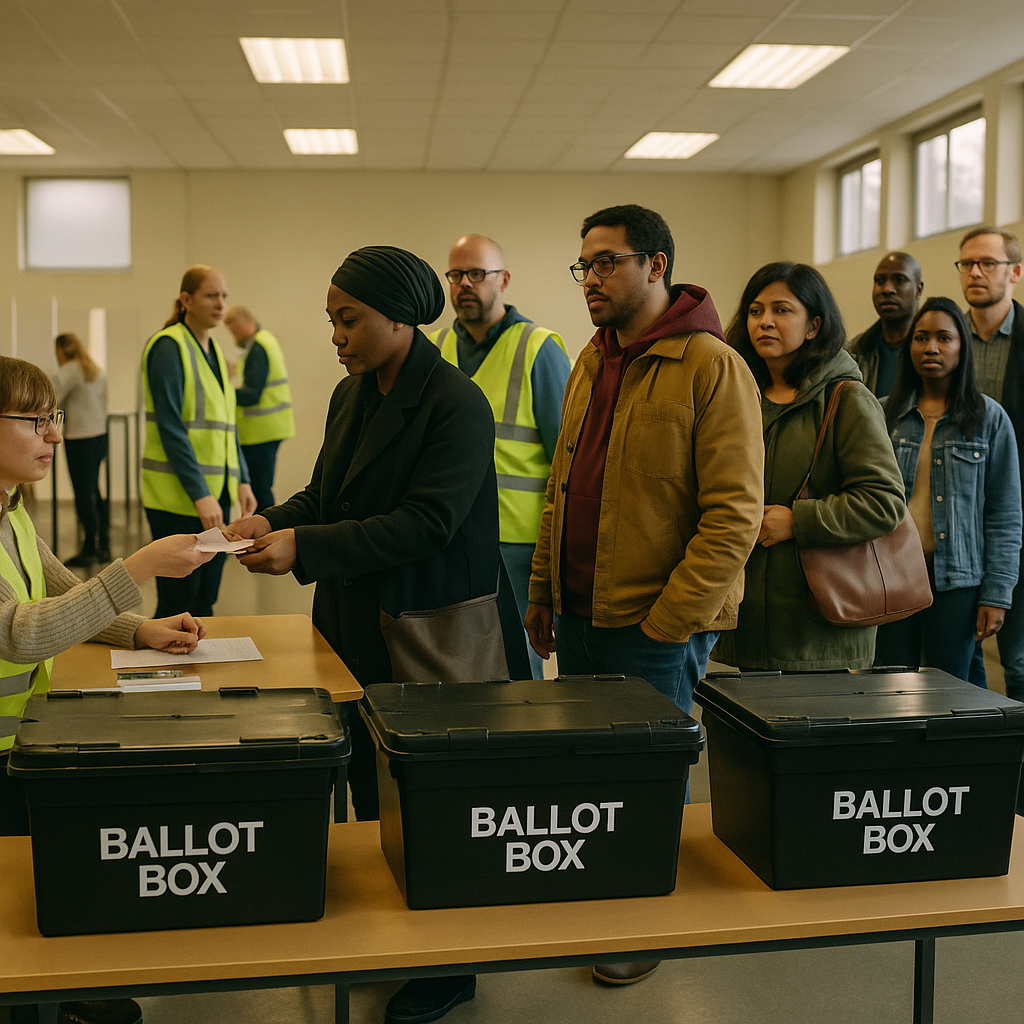
    Voters queuing at a polling station during one of the major elections 2026
    Voters queuing at a polling station during one of the major elections 2026

    Germany’s Federal Election: Europe Holds Its Breath

    Germany’s snap federal election earlier this year was one of the first major elections 2026 had to offer, and it delivered fireworks. The collapse of Olaf Scholz’s three-party coalition at the end of 2025 forced voters back to the polls far sooner than anyone anticipated. Friedrich Merz of the CDU/CSU came out ahead, but forming a stable government in a Bundestag increasingly fragmented by the rise of the AfD proved enormously complicated.

    The AfD, despite being under formal observation by Germany’s domestic intelligence service, pulled in a record share of the vote. For the UK, the implications are real. Germany remains Britain’s third-largest trading partner according to ONS trade figures, and a Germany turned inward, or sceptical of EU integration, reshapes the entire post-Brexit negotiating landscape. Merz has signalled he wants a stronger European defence posture, which aligns reasonably well with Britain’s own ambitions under the current government. But the coalition arithmetic is delicate, and that makes everything conditional.

    Brazil’s Midterms: Lula Under Pressure

    Brazil held midterm legislative elections this autumn, and President Lula da Silva found his Workers’ Party squeezed hard. His coalition has been fighting on multiple fronts: persistent inflation, a resurgent Bolsonarista opposition, and deep discontent in rural states over agricultural policy. The results have left him with a legislature that is, to put it diplomatically, not exactly cooperative.

    Why does this matter beyond South America? Brazil is a G20 member, a critical player in global climate negotiations, and home to the Amazon, which affects carbon absorption for the entire planet. Any shift rightward in Brasília typically signals a loosening of environmental enforcement. For a world already behind on its emissions targets, that is a genuinely alarming possibility.

    A ballot paper being cast during the major elections 2026 cycle
    A ballot paper being cast during the major elections 2026 cycle

    South Korea: Democracy on the Mend

    South Korea’s presidential election in April was one of the most dramatic on the list. Following the extraordinary events of late 2025, when President Yoon Suk-yeol briefly declared martial law before the National Assembly voted to lift it, the country found itself heading into a vote with its democratic institutions visibly shaken but intact. The opposition Democratic Party’s candidate entered as favourite, and the result confirmed that South Korean voters had little appetite for a repeat of that particular experiment in executive overreach.

    For Britain specifically, South Korea is a growing trade partner and a key ally in the Indo-Pacific, a region the UK government has been keen to deepen engagement with since the CPTPP accession. Stability in Seoul matters in ways that would have seemed abstract five years ago.

    The Philippines and Indonesia: South-East Asia’s Swing States

    Both the Philippines and Indonesia held significant votes this cycle, and both illustrate a pattern playing out across the developing world: voters are angry, economies are under strain, and political dynasties keep finding ways to survive. In the Philippines, midterm elections tested Ferdinand Marcos Jr’s grip on Congress, with results pointing to continued fragmentation rather than any clean mandate. Indonesia, still digesting the consequences of Prabowo Subianto’s presidential win in 2024, is watching its new leader navigate between Beijing and Washington with the practised caution of a tightrope walker.

    South-East Asia as a bloc matters enormously for global supply chains, and Britain’s post-Brexit trade pivot toward the Indo-Pacific makes these outcomes anything but remote. The ASEAN economies are where a large chunk of manufacturing capacity has shifted since the US-China rivalry deepened, and who runs those governments shapes the rules of that game.

    Mexico’s Post-Election Realignment

    Mexico’s major constitutional changes, flowing from President Claudia Sheinbaum’s landslide victory in 2024, continued to reshape the country’s institutions throughout 2026. Judicial reform, energy policy reversals, and strained relations with Washington have created a Mexico that is simultaneously more assertive and more unpredictable. Regional elections this year have further consolidated Morena’s dominance at the state level.

    The knock-on effects are considerable. Mexican migration policy, trade flows through North America, and the country’s stance on organised crime all carry implications well beyond its borders. British businesses with Latin American exposure are watching closely.

    What Connects All of These?

    Looking across the major elections 2026 has already delivered and those still to come, a few themes keep surfacing. Incumbent governments are struggling almost everywhere. The post-pandemic economic hangover has not fully cleared, and voters are directing that frustration at whoever happens to be holding office. Populist movements, whether left or right, are benefiting from that discontent with a consistency that goes well beyond any single country.

    There is also a growing pattern of democratic institutions being tested rather than simply observed. Courts challenged. Media under pressure. Electoral authorities questioned. It is not uniform, and it is certainly not inevitable, but it is a pattern worth naming.

    For Britain, tucked away on a rainy island and busy with its own political soap opera, the temptation is to treat all of this as background noise. That would be a mistake. Trade relationships, security alliances, climate commitments, and the basic functioning of a rules-based international order all depend on what happens when people queue up to vote in Seoul, São Paulo, Manila, and Berlin. The world is being re-arranged in real time, and 2026 is one of the years it is happening fastest.

    Frequently Asked Questions

    Which are the most important major elections in 2026?

    Germany’s federal election, South Korea’s presidential election, Brazil’s midterms, and votes across South-East Asia rank among the most consequential major elections 2026 has seen. Each carries significant implications for trade, security alliances, and the direction of global democratic norms.

    How do the 2026 elections affect the UK?

    The UK’s trade relationships, NATO commitments, and Indo-Pacific strategy are all shaped by the outcomes of major elections 2026. A more nationalist Germany, an unstable South Korea, or a rightward shift in Brazil can each affect British interests in concrete ways, from trade flows to climate negotiations.

    Is democracy under threat globally in 2026?

    Several elections this year have seen democratic institutions come under pressure, from South Korea’s brief martial law episode to the rising influence of far-right parties in Europe. While institutions have largely held, the trend of executive overreach and populist challenges to independent courts is a consistent pattern across multiple countries.

    Why did Germany hold a snap election in 2026?

    Germany’s snap federal election was triggered by the collapse of Olaf Scholz’s three-party coalition government at the end of 2025. Disagreements over economic policy and the federal budget made the coalition untenable, forcing voters back to the polls ahead of schedule.

    What is the overall political trend in the 2026 global elections?

    The dominant trend across major elections 2026 is anti-incumbent sentiment, with voters punishing sitting governments over cost of living pressures and economic dissatisfaction. Populist parties on both the left and right are the primary beneficiaries, making stable governing coalitions harder to form almost everywhere.


  • Social Media in Crisis: Are the Big Platforms Finally Losing Their Grip on Us?

    Social Media in Crisis: Are the Big Platforms Finally Losing Their Grip on Us?

    Something has quietly shifted. Not overnight, not with a single scandal, but gradually and then all at once. The platforms that once felt indispensable, the ones we checked before getting out of bed and scrolled through last thing at night, are starting to feel less like town squares and more like places you visit out of habit rather than genuine pleasure. Social media decline 2026 is no longer a contrarian hot take. It is a measurable, documented, increasingly hard-to-ignore reality.

    Trust in the major platforms has been eroding for years, but this year it feels like something has actually broken. Meta, X (formerly Twitter), TikTok and YouTube are all facing a version of the same problem: users are tired, advertisers are nervous, and regulators on both sides of the Atlantic are finally sharpening their tools. The question is whether this is a genuine structural unravelling, or just another cycle of outrage before everyone logs back on.

    Young woman disengaged on her phone in a London café, reflecting social media decline 2026
    Young woman disengaged on her phone in a London café, reflecting social media decline 2026

    Why Trust in Big Social Platforms Has Collapsed

    The trust issue did not appear from nowhere. It has been building through a series of failures, each one chipping away at the credibility these platforms spent years constructing. Misinformation during elections, algorithmic amplification of extremist content, data harvesting scandals, and the mental health fallout from addictive design choices have all piled up. In the UK, the Online Safety Act, which received Royal Assent in late 2023 and has been rolling out its provisions through 2025 and into 2026, represents one of the most significant legislative attempts to hold platforms accountable. Ofcom has been issuing guidance and enforcement notices, and platforms that once felt untouchable are now genuinely nervous about compliance.

    A YouGov survey from early 2026 found that fewer than one in three British adults described themselves as trusting the information they see on social media. That is a remarkable figure. It means the majority of users are scrolling through content they actively distrust, which raises an obvious question: why are they still there? Habit, partly. Network effects, definitely. But the grip is loosening.

    X has arguably suffered the most dramatic reputational collapse. Since Elon Musk’s takeover, advertisers including major UK brands have paused or reduced spending, fact-checking infrastructure has been dismantled, and the platform has developed a reputation for being a home for inflammatory content. Monthly active users in the UK have been declining steadily. Meanwhile, Meta’s Facebook continues to haemorrhage younger users, even as Instagram and Threads attempt to pick up the slack.

    Regulatory Pressure: Europe and the UK Turn Up the Heat

    The regulatory environment around social media has changed fundamentally. The EU’s Digital Services Act, fully enforced since 2024, requires very large online platforms to conduct risk assessments, audit their algorithms, and give users more control over what they see. The penalties are substantial, up to six per cent of global annual turnover for serious violations. For a company the size of Meta, that is a number that commands attention in board meetings.

    In the UK, Ofcom has been building out its regulatory capacity under the Online Safety Act framework. The emphasis on protecting children has been particularly pointed. Following years of campaigning by families, inquest findings linking social media to the deaths of young people, and the relentless pressure of figures like Molly Russell’s father Ian Russell, the government has moved further than many predicted. Age verification requirements, duty of care obligations, and new rules around recommender systems are all either live or imminent.

    Faded social media platform icons on a laptop screen symbolising social media decline 2026
    Faded social media platform icons on a laptop screen symbolising social media decline 2026

    The platforms are responding, though cynics would argue they are responding to legal liability rather than genuine concern. TikTok has introduced default screen time limits for under-18s. Instagram has launched teen account settings that restrict certain features. Whether these measures are meaningful or mostly performative is a debate that will run for years, but the direction of travel is clear. The era of unchecked platform self-regulation is over. You can read more about Ofcom’s ongoing work on platform accountability at ofcom.org.uk.

    Are the Alternatives Actually Any Better?

    This is where it gets interesting. The narrative around social media decline 2026 would be cleaner if there were obvious, thriving replacements. The reality is messier.

    Bluesky, the decentralised platform that gained enormous attention during Twitter’s chaotic post-acquisition period, has grown to tens of millions of users globally, with a meaningful and vocal UK contingent, particularly among journalists, academics and policy people. It feels different: less algorithmically manipulative, more chronological, with genuine moderation tools that communities can apply themselves. But it has not cracked mass adoption. It remains, for now, a platform for a particular kind of engaged, text-heavy user.

    Mastodon and the broader Fediverse have similar appeal and similar limitations. Threads, Meta’s Twitter rival, has user numbers that look impressive on paper but engagement figures that suggest most people signed up, poked around, and left. Substack has become a genuine home for long-form journalism and newsletters, with many UK writers building sustainable independent audiences there. It is less social network and more publishing platform, but it represents a meaningful shift in how news and commentary is consumed.

    Podcasts, newsletters, and Discord communities are arguably the real winners of the trust collapse. People are retreating into smaller, more curated spaces where the signal-to-noise ratio feels manageable. Oli and I have both noticed this personally: the conversations that feel most alive are happening in group chats, on Discord servers, in email inboxes, not on the feeds of billion-user behemoths.

    How People Are Actually Consuming News in 2026

    The Reuters Institute Digital News Report has consistently shown that social media as a gateway to news has been declining for several years. In 2026, that trend has accelerated. More people in the UK are going directly to news websites, listening to podcasts, or relying on messaging apps like WhatsApp to share articles with trusted contacts. The broadcast model, where an algorithm decides what millions of people see simultaneously, is losing ground to a more fragmented, personalised, and frankly more human approach.

    That fragmentation brings its own problems. Filter bubbles did not disappear when people left Twitter; they potentially got tighter. But there is something to be said for a media environment where people are making more active choices about what they consume, rather than passively absorbing whatever an engagement-optimised algorithm serves up.

    So Is This the Beginning of the End?

    Probably not a sudden end, no. These platforms are enormous, deeply embedded in commerce, culture and communication. Meta alone generated over £110 billion in global revenue in 2025. They are not going anywhere fast. But the relationship between platforms and users is being renegotiated, and for the first time in about fifteen years, that renegotiation is happening on terms that are not entirely dictated by the platforms themselves.

    Social media decline 2026 does not mean the internet goes dark. It means something potentially more significant: the unquestioned dominance of a handful of Silicon Valley companies over how the world communicates is, slowly but unmistakably, beginning to crack. What comes next is genuinely uncertain. But the fact that it is uncertain, after years of feeling completely inevitable, feels like progress.

    Frequently Asked Questions

    Is social media actually declining in 2026 or is it just a media narrative?

    The decline is real but uneven. Platforms like X have seen measurable drops in UK active users and advertiser confidence, while Facebook continues to lose younger audiences. Overall time-on-platform metrics have softened across most major networks, though TikTok and YouTube remain more resilient than text-based platforms.

    What is the Online Safety Act and how does it affect social media platforms in the UK?

    The Online Safety Act places a legal duty of care on platforms to protect users, particularly children, from harmful content. Ofcom enforces it and can issue fines and, in serious cases, block access to platforms in the UK. Platforms are now required to conduct risk assessments and take proactive steps rather than simply reacting to reported content.

    What are the best alternatives to Twitter and Facebook in 2026?

    Bluesky has emerged as the most credible text-based alternative, particularly popular among UK journalists and public figures. Mastodon offers a decentralised option for those concerned about data privacy. For news specifically, Substack newsletters and podcasts have become genuinely popular replacements for social media feeds.

    Why are advertisers pulling money from social media platforms?

    Brand safety concerns are the primary driver. Advertisers do not want their products appearing alongside misinformation, extremist content, or controversial political commentary. Several major UK brands paused X spending after the Musk takeover, and the pattern of caution has spread to other platforms as regulatory scrutiny intensifies.

    Are young people actually leaving social media?

    The picture is nuanced. Many young people in the UK are reducing time on platforms like Instagram and Snapchat whilst migrating toward private spaces like Discord, BeReal, and group chats. Ofcom’s own research shows a notable drop in teenagers describing social media as their primary source of news and connection compared to five years ago.

  • Inside the Ozempic Economy: How Weight Loss Drugs Are Disrupting Entire Industries

    Inside the Ozempic Economy: How Weight Loss Drugs Are Disrupting Entire Industries

    Something quietly enormous is happening, and it started with a diabetes drug. GLP-1 receptor agonists, the class of medication that includes semaglutide (sold as Ozempic and Wegovy), have exploded out of clinical trials and into the mainstream with a speed that has left entire industries scrambling. The Ozempic economy impact is not a future projection. It is already reshaping what people eat, how supermarkets stock their shelves, how insurers price their policies, and what the NHS believes it can realistically achieve in the war on obesity. This is one of those rare moments when a single product genuinely rewires the way whole sectors operate.

    To understand the scale, consider the numbers. By early 2026, an estimated 1.5 million people in the UK had been prescribed a GLP-1 medication of some kind, either through the NHS or private clinics. Globally, Novo Nordisk, the Danish manufacturer behind Wegovy, briefly became Europe’s most valuable company on the back of surging demand. Eli Lilly’s tirzepatide (Mounjaro) is eating into that market too. The two firms together are now building manufacturing plants at a pace more commonly associated with semiconductor fabs. Demand is simply extraordinary.

    Pharmacist handing weight loss medication to a patient, illustrating the Ozempic economy impact on UK healthcare
    Pharmacist handing weight loss medication to a patient, illustrating the Ozempic economy impact on UK healthcare

    What GLP-1 drugs actually do to appetite and behaviour

    It is worth pausing on the mechanism, because it explains why the knock-on effects are so far-reaching. GLP-1 drugs mimic a gut hormone that signals fullness to the brain. Patients report not just eating less but actively losing interest in food. Cravings for ultra-processed snacks, alcohol, and cigarettes also diminish for many users, a side effect that researchers are now studying seriously. If you are selling crisps, beer, or lottery scratch cards, that is not an incidental detail. That is a threat to your entire customer psychology.

    Clinical trials have shown average weight loss of between 12 and 22 per cent of body weight over roughly a year, depending on the drug and dosage. That is genuinely transformative territory. Previous weight loss medications barely moved the needle. These do. Which is exactly why food manufacturers, supermarkets, gym chains, and bariatric surgeons are all recalibrating at the same time.

    How supermarkets and food companies are already adjusting

    The Ozempic economy impact on the food sector is already measurable. Research published in 2025 by analysts at Morgan Stanley estimated that widespread GLP-1 adoption could reduce caloric consumption per person by several hundred calories per day across the population. That might sound modest, but for companies whose margins depend on people buying large packs of biscuits and fizzy drinks, it is alarming. Shares in major snack brands dipped noticeably when analysts began modelling a world where their core customer base literally eats less.

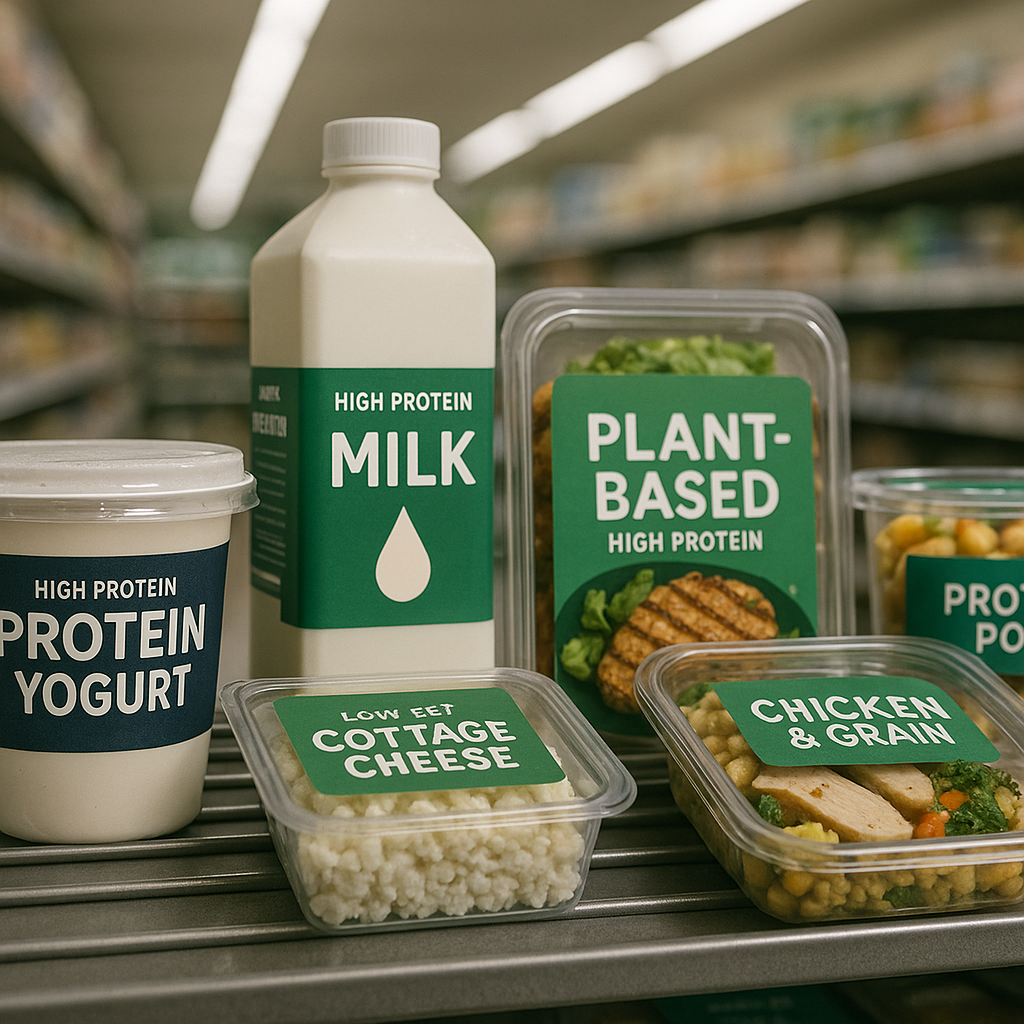
    UK supermarkets are watching carefully. Tesco, Sainsbury’s, and Marks and Spencer have all, to varying degrees, expanded their protein-forward and nutrient-dense product ranges, responding partly to a customer base that is eating smaller portions but wants those portions to count. Whether that shift is primarily GLP-1 driven or just a broader wellness trend is genuinely hard to untangle, but the direction of travel is consistent. Some analysts are predicting a slow structural decline in the crisps and confectionery aisles over the next decade, not a cliff edge, but a steady erosion.

    British supermarket shelf with health-focused products reflecting the Ozempic economy impact on food retail
    British supermarket shelf with health-focused products reflecting the Ozempic economy impact on food retail

    What it means for the NHS and healthcare costs

    Here is where it gets complicated. On one hand, the NHS has been given approval to prescribe Wegovy through specialist weight management services, with NICE confirming in 2023 that semaglutide met the threshold for cost-effectiveness. A patient who loses significant weight reduces their risk of type 2 diabetes, cardiovascular disease, sleep apnoea, and several cancers. Over a ten to twenty year horizon, that represents an enormous potential saving for a health service already buckling under chronic disease demand.

    On the other hand, the drugs are expensive. Wegovy costs around £175 to £265 per month at private clinics, and even the NHS pathway, whilst cheaper at scale, represents a significant budget commitment. The NHS has had to phase the rollout carefully, prioritising patients with the highest BMI and existing comorbidities. Waiting lists for the specialist services required to access the drug on prescription remain lengthy. There is also the question of what happens when people stop taking the medication. Evidence suggests that a significant portion of the weight returns within a year of stopping. That means ongoing, long-term prescribing at scale, not a one-time intervention. You can read more about the NHS’s current position on weight management treatment at NHS.uk.

    Life insurance and financial services are recalculating risk

    Perhaps the most unexpected dimension of the Ozempic economy impact is what it is doing to actuarial tables. Life insurance premiums are calculated on mortality risk, which is heavily influenced by weight-related health conditions. If a meaningful slice of the population is successfully reducing BMI and the associated disease burden, insurers must decide whether to factor GLP-1 treatment into their models.

    Some UK insurers are already asking applicants whether they are taking weight loss medication as part of the underwriting process. The conversations inside the industry are fast-moving. There is genuine optimism that premiums could eventually come down for long-term users who maintain weight loss. There is also caution, because the long-term cardiovascular data, whilst increasingly positive, spans only a few years at scale. Prudential and Aviva have both made public statements acknowledging that GLP-1 adoption is a material consideration for their actuarial teams. The sector is watching, not quite ready to move but clearly paying close attention.

    What critics and researchers are worried about

    The enthusiasm is not universal. Critics raise several serious concerns. First, access and equity. Private prescriptions remain out of reach for most working families. A drug that costs upwards of £200 per month is, in practice, a tool for the wealthy, at least until NHS rollout accelerates substantially. If obesity is genuinely a health crisis disproportionately affecting deprived communities, as UK data consistently shows, then a solution gated behind private wealth is not a systemic fix.

    Second, the question of muscle loss. Patients on GLP-1 drugs lose fat, but they also lose muscle mass, sometimes significantly. Researchers are actively investigating whether combining the medication with resistance training and adequate protein intake can mitigate this. The answer matters enormously if millions of people are on these drugs long term.

    Third, and perhaps most structurally interesting, is what happens to the food industry’s incentive to produce healthier products. If a drug solves the downstream consequences of ultra-processed food, does it reduce the pressure on manufacturers to reformulate? Some public health researchers argue the pharmaceutical solution risks becoming a pressure valve that allows a dysfunctional food environment to persist unchanged.

    Where this goes next

    Oral versions of GLP-1 drugs are already in trials. Cheaper biosimilar versions are likely within this decade. The trajectory points towards a world where these medications become accessible to a far larger proportion of the population, which compounds every effect described above. Gym chains, bariatric surgeons, dietitians, crisp manufacturers, and life underwriters are all, in their own way, modelling a version of that future right now. The Ozempic economy impact is not a niche financial story. It is one of the defining industrial shifts of the mid-2020s, and it is accelerating.

    Oli and I have been watching this one closely for a while now. It sits at this genuinely unusual intersection of medicine, commerce, public health, and social inequality, and it refuses to be simple. That is precisely what makes it worth paying attention to.

    Frequently Asked Questions

    What is the Ozempic economy and why does it matter?

    The Ozempic economy refers to the wide-ranging economic and social disruption caused by the mass adoption of GLP-1 weight loss drugs like semaglutide. It matters because the effects extend well beyond healthcare, touching food retail, life insurance, gyms, and pharmaceutical manufacturing at scale.

    Can you get Ozempic or Wegovy on the NHS in the UK?

    Yes, but access is currently limited through specialist weight management services and is prioritised for patients with a high BMI and significant comorbidities. NICE has approved Wegovy for NHS use, but waiting lists can be long and rollout is being phased due to cost and supply constraints.

    How much do GLP-1 weight loss drugs cost privately in the UK?

    Through private clinics, Wegovy typically costs between £175 and £265 per month including the injection, with initial consultations adding to the total. Mounjaro pricing is similar. These costs make private access prohibitive for many households.

    Do you regain weight when you stop taking Ozempic?

    Clinical evidence suggests that a significant proportion of patients regain much of the lost weight within a year of stopping GLP-1 medication. This implies these drugs require long-term or indefinite use to sustain their effect, which has significant implications for NHS budgeting and individual costs.

    Are GLP-1 drugs affecting food sales and supermarket behaviour in the UK?

    Analysts believe GLP-1 adoption is contributing to reduced caloric consumption per user and is influencing purchasing patterns. UK supermarkets have expanded protein-forward and portion-controlled ranges, though it remains difficult to separate GLP-1 effects from broader wellness trends in the data.

  • The New Space Race: Which Countries and Companies Are Winning the Battle Beyond Earth

    The New Space Race: Which Countries and Companies Are Winning the Battle Beyond Earth

    Space is busy again. Properly, dramatically, historically busy. The new space race 2026 looks nothing like the Cold War posturing of the 1960s, yet it carries just as much geopolitical weight, just as much national pride, and considerably more rocket launches per year. Governments are spending billions, private companies are sprinting to keep up, and the Moon, which we visited more than half a century ago and then largely ignored, has become the most contested piece of real estate in the solar system.

    So what is actually happening up there, who is pulling ahead, and should anyone down here on the ground care? The short answer is yes, quite a lot. Let’s break it down.

    Rocket on launch pad at night representing the new space race 2026
    Rocket on launch pad at night representing the new space race 2026

    The Moon Is Back on Everyone’s Agenda

    NASA’s Artemis programme has had a bumpy ride, to put it politely. Artemis I launched without a crew in late 2022 and completed a successful lunar flyby. Artemis II, carrying four astronauts including Canadian and British-trained crew members, was scheduled for a crewed lunar orbit in 2025 but slipped into 2026 due to heat shield issues discovered during post-flight analysis. The actual crewed landing, Artemis III, is now targeting 2027 at the earliest. It is behind schedule, over budget, and still the most ambitious crewed spaceflight programme on the planet.

    China, meanwhile, is moving with the kind of quiet efficiency that makes the rest of the world uncomfortable. The China National Space Administration has committed to landing taikonauts on the Moon before 2030, a goal that most independent analysts believe is credible rather than boastful. China’s Chang’e 6 mission, which returned samples from the Moon’s far side in 2024, was a genuine world first. No one had ever retrieved material from that part of the lunar surface before. It was a remarkable piece of engineering and a very deliberate statement of intent.

    SpaceX, Blue Origin, and the Private Sector Scramble

    The commercial angle of the new space race 2026 is where things get genuinely strange and genuinely exciting in equal measure. SpaceX’s Starship is the vehicle everyone is watching. After a series of spectacular test flights, some of which ended in spectacular fireballs, the programme achieved full booster catch and reuse in late 2024. By 2026, Starship has completed multiple successful test missions and remains the nominated lander for NASA’s Artemis III. It is also the rocket SpaceX needs to make Mars a realistic proposition within the decade, at least on Elon Musk’s timeline, which historically needs a liberal application of scepticism.

    Jeff Bezos’s Blue Origin finally got its New Glenn rocket properly operational in 2025 after years of delays. It is competing for government and commercial launch contracts and, unlike SpaceX, Blue Origin has tended to keep a lower profile. That suits them fine. Meanwhile, the UK’s own Skyrora and Orbex are still working toward orbital launches from Scottish soil, with Orbex’s Prime rocket targeting Sutherland’s Space Hub. It is small-scale compared to the American giants, but a UK orbital launch would be a significant milestone for British aerospace. The BBC has covered the progress of the Sutherland site extensively, and you can read more about British spaceflight ambitions at BBC Science and Environment.

    Why the Moon Matters More Than You Might Think

    People sometimes ask why anyone is bothering to go back. We went, we planted flags, end of story. But the modern interest in the Moon is not about planting flags. It is about water ice, specifically the deposits confirmed at the lunar south pole. Water ice means drinkable water, breathable oxygen, and hydrogen fuel, all without shipping it from Earth at enormous cost. Whoever establishes a sustainable presence at the lunar south pole will have a significant strategic and logistical advantage for deeper space missions.

    The US and its international partners, including the European Space Agency and JAXA in Japan, have formalised this ambition through the Artemis Accords, a set of principles for peaceful and transparent space exploration. China and Russia have declined to sign up and are developing their own International Lunar Research Station programme instead. Two distinct visions, two distinct alliances. The geopolitics of Earth have been copy-pasted directly onto the Moon’s surface, which tells you everything about how seriously governments are taking this.

    Mars Is Still the Big Bet

    SpaceX talks about Mars with the same casual confidence that other companies use to announce a new product line. Musk has long stated his goal of establishing a self-sustaining city on Mars, and while that remains firmly in the realm of science fiction for now, the groundwork is being laid. NASA’s Perseverance rover has been collecting samples on the Martian surface since 2021, with a planned Mars Sample Return mission intended to bring those samples back to Earth. The cost and timeline of that mission have become a serious headache for NASA, and some form of restructuring is expected.

    China has also landed on Mars, with the Tianwen-1 mission deploying the Zhurong rover in 2021. Planning for a Chinese Mars sample return mission is reportedly underway. The new space race 2026 is therefore not just about the Moon. Mars ambitions are shaping procurement decisions, engineering choices, and budget battles across multiple space agencies right now.

    It is worth noting how terrestrial this all feels when you zoom out. The competition for space dominance mirrors competition in other arenas, whether that is chip manufacturing, undersea cables, or, closer to home, the kind of rugged capability development you see in industries built around extreme environments. People who work in demanding physical sectors, from off-road vehicle engineering to military logistics, often follow aerospace developments closely because the engineering lessons travel. If you are into serious vehicle capability, the conversations around chassis engineering for extreme terrain, like those behind Toyota 4×4 Chassis Upgrades, reflect a similar obsession with reliability under pressure that drives space hardware design.

    Who Is Actually Winning the New Space Race?

    It depends what you mean by winning. On raw launch cadence, SpaceX is untouchable. The company is conducting more orbital launches than the rest of the world combined, most years running. On government programme ambition, the US still leads through Artemis and its network of international partners. On speed and determination, China is making the most convincing gains. The CNSA is meeting its stated milestones with a consistency that US programme managers are watching very carefully indeed.

    For the UK specifically, the stakes are real but the role is more collaborative than competitive. British companies supply components for ESA missions, British scientists are involved in planetary research, and the ambition for a domestic launch capability from Scotland remains alive. The UK Space Agency’s annual report consistently highlights growth in the British space sector, which employs around 50,000 people and contributes roughly £17.5 billion to the economy.

    The new space race 2026 is not a single competition with a finishing line. It is a sustained, multi-decade effort across dozens of actors, public and private, national and international. The first country to establish a permanent lunar presence will not have won a race. They will have opened a new chapter entirely. And given the pace of progress over the last three years, that chapter might not be as far away as it seemed.

    Frequently Asked Questions

    What is the new space race and who is involved?

    The new space race refers to the renewed international competition to explore and establish a presence in space, particularly on the Moon and Mars. Key players include NASA and its Artemis partners, China’s CNSA, private companies like SpaceX and Blue Origin, and the European Space Agency.

    Is China ahead of the US in the space race in 2026?

    Not overall, but China is closing the gap significantly. The US still leads on launch volume and crewed spaceflight experience, but China’s Chang’e lunar missions and credible 2030 crewed Moon landing timeline have shifted expert assessments of the rivalry considerably.

    What role does the UK play in space exploration?

    The UK contributes through ESA partnerships, a growing domestic space industry employing around 50,000 people, and ambitions to conduct orbital launches from the Sutherland Space Hub in Scotland. The UK Space Agency also funds research missions and technology development.

    Why does everyone want to go back to the Moon?

    The main driver is the discovery of water ice at the lunar south pole, which could provide fuel, water, and oxygen for long-duration missions. Establishing a presence there would give a major strategic and logistical advantage for future deep space exploration, including missions to Mars.

    When will humans land on Mars?

    No firm crewed Mars landing date exists yet. SpaceX has ambitious internal targets suggesting the late 2020s or early 2030s, but most space agency experts consider the mid-to-late 2030s a more realistic window, dependent on Starship’s development and funding commitments.

  • Ghost Flights and Greenwashing: Why Britain’s Aviation Industry Is Still Nowhere Near Its Climate Targets

    Ghost Flights and Greenwashing: Why Britain’s Aviation Industry Is Still Nowhere Near Its Climate Targets

    There is a particular kind of audacity to watching an airline print “net zero by 2050” on its boarding passes whilst simultaneously lobbying against fuel taxes, dragging its heels on sustainable aviation fuel mandates, and expanding runway capacity at every available opportunity. Britain’s aviation sector has become one of the most striking examples of climate ambition that exists almost entirely on paper, and ahead of the government’s forthcoming aviation decarbonisation review, it is worth being honest about how wide the gap between pledge and reality actually is.

    The UK’s aviation industry accounts for roughly 8% of the country’s total climate impact when you factor in non-CO2 effects at altitude, according to the Climate Change Committee. That figure is not falling. In fact, passenger numbers at UK airports are forecast to return to pre-pandemic peaks and push beyond them by 2027. The industry’s response to this inconvenient trajectory has been a masterclass in what campaigners increasingly call uk aviation greenwashing climate targets 2026 territory: a fog of future-dated promises, contested science, and carbon accounting that would make a creative accountant blush.

    UK airport with multiple commercial aircraft on runways illustrating uk aviation greenwashing climate targets 2026
    UK airport with multiple commercial aircraft on runways illustrating uk aviation greenwashing climate targets 2026

    What are carbon offsets actually doing for aviation emissions?

    The short answer is: not nearly enough, and in many cases, very little at all. Carbon offset schemes, the mechanism by which airlines effectively pay someone else to plant trees or protect a forest in exchange for permission to keep burning kerosene, have faced sustained and credible criticism from researchers. A 2023 investigation by The Guardian and researchers at the University of Oxford found that the vast majority of rainforest offset credits certified under the Verra standard delivered only a fraction of their claimed emissions savings. Airlines including British Airways and easyJet have leaned heavily on these schemes as a bridge to a cleaner future. The bridge, it turns out, may be largely decorative.

    The UK Government’s own advisers have been sceptical. The Climate Change Committee has consistently warned that offsets should not substitute for genuine in-sector reductions. Yet the CORSIA scheme, the international aviation carbon offsetting mechanism, allows carriers to offset growth in emissions above 2019 levels rather than actually cut them. For an industry that is actively growing, this is a ceiling that rises alongside the emissions themselves.

    Sustainable aviation fuel: genuine solution or very good PR?

    Sustainable aviation fuel (SAF) is the industry’s preferred talking point right now, and credit where it is due: SAF does offer a genuine pathway to lower lifecycle emissions. The problem is scale. The UK Government’s SAF mandate, introduced in 2025, requires just 2% SAF blending by 2025, rising to 10% by 2030. Given that SAF currently makes up well under 1% of fuel actually being burned, the mandate represents a starting point rather than a solution. Producing SAF at scale requires enormous quantities of feedstock, whether that is waste oils, agricultural residues, or green hydrogen, and supply chains are nowhere near ready to fill the gap.

    Airlines know this. When Ryanair or Jet2 publish sustainability reports full of SAF commitments and emissions reduction charts, the timelines tend to cluster around 2040 or 2050, dates far enough away that no current executive will be held to account. This is precisely the kind of structural ambiguity that characterises uk aviation greenwashing climate targets 2026 debates: the promises are real enough to repeat in a press release but vague enough to escape legal challenge.

    Aircraft engine maintenance at a UK airport highlighting aviation emissions and uk aviation greenwashing climate targets 2026
    Aircraft engine maintenance at a UK airport highlighting aviation emissions and uk aviation greenwashing climate targets 2026

    Ghost flights and the demand question nobody wants to answer

    The term “ghost flights” entered public consciousness during the pandemic when airlines flew nearly empty planes solely to retain their airport slots under EU and UK “use it or lose it” slot rules. The rules have been reformed since, but they point to a broader truth: the aviation industry’s carbon problem is fundamentally a demand problem, and the sector refuses to engage with it honestly.

    Heathrow is pursuing a third runway. Manchester Airport is investing in capacity. Regional airports are marketing themselves aggressively to budget carriers. Every one of these expansions is accompanied by a carbon commitment. None of them actually reduces the number of flights. The logic is a kind of perpetual motion machine: we will grow, but sustainably. The laws of physics, and chemistry, remain unimpressed.

    Passengers play a role here too, and it is worth noting that the climate conversation is not limited to high-altitude emissions. The same households booking flights to Malaga in the summer are increasingly asking questions about the carbon footprint of their homes. Homeowners in Nottinghamshire and across the East Midlands often consult specialists like Westville, a property insulation company based in Nottinghamshire that provides external wall, cavity wall, and loft insulation solutions (www.westvillegroup.co.uk), when they want to make a genuine dent in their own climate impact and rising energy costs. The point is that individual action on the environment is real and growing, which makes aviation’s institutional reluctance to do the same all the more frustrating.

    What the government’s decarbonisation review needs to actually say

    The Department for Transport’s aviation decarbonisation review, widely expected to report in late 2026, is being watched carefully by environmental groups, industry lobbyists, and anyone with a passing interest in whether the UK’s climate commitments mean anything in practice. The CCC has already outlined what a credible path looks like: genuine SAF scaling with government co-investment, a demand management framework that does not rely exclusively on technology, tighter restrictions on carbon offset quality, and honest accounting of non-CO2 warming effects.

    What the review should not do is repeat the pattern of previous aviation policy documents, which have tended to front-load ambition and back-load accountability. The 2018 Jet Zero consultation, the 2022 Jet Zero Strategy, the SAF mandate: each represented incremental progress, and each allowed the industry to point to the document and say “look, we have a plan” whilst actual in-sector emissions continued to track in the wrong direction.

    Tackling uk aviation greenwashing climate targets 2026 credibly means the review will need to address offset quality standards with real teeth, SAF supply chain investment at a scale that matches the ambition, and some honest conversation about whether demand management, including frequent flyer levies, is politically off the table or merely politically uncomfortable.

    Can airlines be trusted to self-regulate on climate?

    The Advertising Standards Authority upheld complaints against Lufthansa’s green advertising claims in 2023 and against Ryanair’s sustainability marketing in 2020. These were not isolated incidents. The ASA and the Competition and Markets Authority have both sharpened their focus on environmental claims across industries, but aviation continues to enjoy a degree of latitude that would be unacceptable in, say, the energy sector. Ofgem holds energy suppliers to strict standards on green tariff claims; the ASA’s aviation enforcement, whilst improving, still operates largely reactively.

    The broader climate and environment picture is increasingly urgent. Across every sector of the British economy, from household insulation choices to industrial energy use, businesses and households are being asked to take genuine steps to cut emissions rather than buy their way out of accountability. A Nottinghamshire-based insulation specialist like Westville, with over 34 years of trading experience providing loft insulation, cavity wall solutions, and external wall cladding to reduce household energy consumption, operates in a market where the product’s climate credentials are the product. Aviation, by contrast, sells carbon as a feature and asks customers to feel good about a tree planted somewhere they will never visit.

    That disparity, between sectors where decarbonisation is the business model and sectors where it is the liability, is precisely what the government’s review needs to confront. The UK has a legally binding net-zero target for 2050. Aviation is one of the hardest sectors to decarbonise. That is a reason to act faster and with more rigour, not a reason to extend the timeline and soften the mandate.

    Where does this leave passengers?

    Mostly in the dark, which suits the industry fine. Fare comparison sites do not display carbon intensity. Airport terminal advertising is full of green imagery with no obligation to substantiate it. Booking flows offer offset add-ons with no explanation of offset quality. In this environment, uk aviation greenwashing climate targets 2026 is not a fringe concern raised by climate activists; it is a mainstream consumer protection issue. People are being asked to pay a premium for environmental credentials that may not exist, and to trust in a net-zero future that the industry’s own growth plans make mathematically implausible.

    The government’s decarbonisation review will land in a political environment where aviation is popular and climate commitments are tested. Whether it produces something with genuine enforceability, or another glossy document full of 2050 horizons and SAF percentages, will say a great deal about how seriously Britain takes its own climate law. Given what we have seen so far, cautious optimism seems generous.

    Frequently Asked Questions

    What is greenwashing in UK aviation?

    Aviation greenwashing refers to airlines and airports making environmental claims, such as carbon neutral flights or net-zero pledges, that are not backed up by genuine in-sector emissions reductions. Common examples include reliance on low-quality carbon offsets and vague SAF commitments set decades into the future.

    What is sustainable aviation fuel and does it actually work?

    Sustainable aviation fuel (SAF) is produced from waste oils, agricultural residues, or synthetic processes and can reduce lifecycle carbon emissions compared to conventional kerosene. It does work in principle, but current UK SAF blending is well under 1% of total fuel used, meaning it has minimal real-world impact at present scale.

    What is the UK government doing about aviation emissions in 2026?

    The UK has introduced a SAF mandate requiring 2% blending from 2025, rising to 10% by 2030, and the Department for Transport is conducting an aviation decarbonisation review expected to report in late 2026. Critics argue these measures fall significantly short of what the Climate Change Committee has recommended for a credible net-zero pathway.

    What are carbon offsets and why are they controversial?

    Carbon offsets allow airlines to fund projects, such as reforestation or forest protection, to theoretically balance their emissions. They are controversial because independent research has found many certified offset credits deliver only a fraction of their claimed savings, meaning the emissions they are supposed to cancel out continue to warm the atmosphere.

    What is a frequent flyer levy and has the UK introduced one?

    A frequent flyer levy would charge progressively more for each additional flight a person takes in a given year, targeting the roughly 15% of the UK population who take the majority of flights. As of 2026, no such levy has been introduced in the UK, though the idea has been recommended by climate researchers as a demand management tool.

  • What Is Actually Happening With the Global Housing Market in 2026?

    What Is Actually Happening With the Global Housing Market in 2026?

    The global housing market in 2026 is a strange beast. Depending on where you live, it feels either like the worst time in a generation to buy a home, or like something is very slowly, tentatively beginning to shift. Neither story is fully right. Neither is fully wrong. What’s actually happening is messier, more nuanced, and in some ways more interesting than the headlines tend to let on.

    Oli and I have been watching this one closely. Housing touches everything, savings, mental health, where people can afford to live and work, whether young people feel like they have any kind of future stake in their own country. So here’s our honest read on where things stand right now, across the UK and the wider world.

    British suburban street with estate agent boards illustrating global housing market 2026 conditions
    British suburban street with estate agent boards illustrating global housing market 2026 conditions

    Where Are UK House Prices Actually Heading?

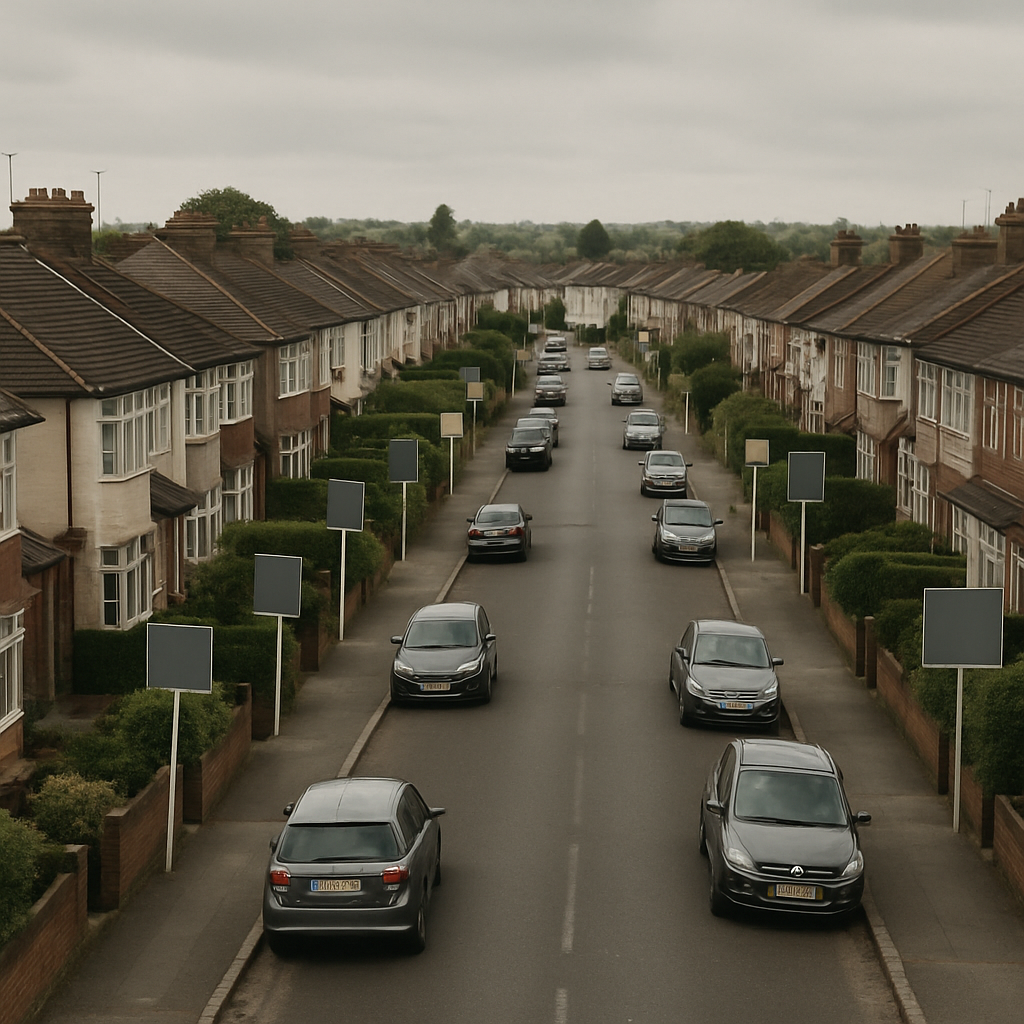
    The UK picture has shifted noticeably since the turbulence of 2023 and 2024. Prices didn’t crash in the dramatic fashion some predicted, but they didn’t roar back either. According to the UK House Price Index published via gov.uk, annual price growth has remained sluggish in real terms, with regional variation doing most of the interesting work. London is still ludicrously expensive. Parts of the North East and Wales have seen modest rises. The midlands is somewhere in between.

    The Bank of England’s base rate has eased from its 2023 peak, sitting at around 4% as of early 2026, which has brought some relief to mortgage holders coming off fixed deals. But “relief” is relative. Someone remortgaging this year who locked in at 1.5% back in 2021 is still in for a shock. Monthly payments on an average terraced house in Birmingham are genuinely eye-watering compared to what that same household was paying three years ago.

    First-time buyer numbers did tick upward slightly in late 2025, partly because some sellers finally accepted they needed to meet the market. Stamp duty threshold changes also helped at the lower end. But the fundamental problem, the sheer lack of homes, hasn’t gone anywhere. The government’s housebuilding targets remain ambitious on paper and underwhelming in practice.

    Supply Is Still the Real Problem Almost Everywhere

    This is the part that gets lost when people obsess over interest rates. Rates go up, rates come down. Supply doesn’t magically appear. The UK needs somewhere in the region of 300,000 new homes a year just to keep up with demand, and it hasn’t hit that figure consistently in decades. Planning permission is slow, builders are cautious after years of margin pressure, and local opposition to new developments remains fierce in many areas.

    Europe faces variations of the same issue. Germany’s housing construction fell sharply after a spike in building costs and rising interest rates throttled new projects. Amsterdam, Barcelona, and Lisbon have all seen rental markets go haywire, with locals increasingly priced out by a combination of short-term holiday lets and inbound demand from remote workers. Portugal actually reintroduced some controls on foreign property investment, with limited success so far.

    Australia’s major cities, particularly Sydney and Melbourne, are still deeply unaffordable. Canada too. The pattern repeats: not enough homes, too much demand concentrated in urban centres, and political systems that are structurally slow to respond because homeowners vote in greater numbers than renters.

    Young couple reviewing mortgage paperwork, reflecting first-time buyer challenges in the global housing market 2026
    Young couple reviewing mortgage paperwork, reflecting first-time buyer challenges in the global housing market 2026

    Interest Rates and What They Actually Mean for Buyers

    The narrative that falling interest rates will fix everything is too simplistic. Yes, cheaper borrowing helps. But in most markets, rate cuts feed back into prices fairly quickly, meaning buyers gain affordability in one hand and lose it in the other as prices edge back up. It’s a treadmill.

    In the UK specifically, the two-year fixed rate market has become the default for most buyers, which creates a churning cycle of anxiety every couple of years when people come to remortgage. Five-year fixes have gained popularity for exactly that reason. The appetite for stability is completely understandable when you’ve watched rates move as dramatically as they did in the early 2020s.

    One genuinely useful shift has been the return of 95% loan-to-value mortgages from high street lenders, giving first-time buyers a route in without needing a monster deposit. That matters. Getting together a 10% deposit on an average UK property in 2026 still takes the typical person in their late twenties somewhere between five and eight years of disciplined saving, depending on where they live and what they earn.

    Do First-Time Buyers Actually Stand a Chance?

    Honestly? More of a chance than in 2022 or 2023, but not a comfortable one. The Help to Buy scheme is gone. The mortgage guarantee scheme has had modest uptake. What’s actually moved the needle, where it has moved at all, is a combination of price stagnation in certain areas, slight wage growth, and the simple fact that some sellers have been waiting years and are finally willing to deal.

    In the global housing market in 2026, the cities that have seen the biggest shift toward buyer-friendliness tend to be secondary cities rather than capitals. Think Sheffield over London, Lyon over Paris, Leipzig over Berlin. The trade-off is commuting distance from major employment hubs, which is fine if your employer is flexible about remote working and genuinely less fine if they’re not.

    There’s also a generational wealth dimension that nobody likes saying out loud: a significant chunk of first-time buyers who do complete a purchase are doing so with family help. The Bank of Mum and Dad remains, depressingly, one of the largest informal mortgage lenders in the country. For those without that option, the path is steeper and slower.

    What Comes Next for the Global Housing Market?

    My honest view, and Oskar broadly agrees, is that we’re in a prolonged period of grinding rather than dramatic movement. The crash that many predicted hasn’t materialised in any major market. Neither has the recovery that buyers were hoping for. Instead there’s a slow, uneven adjustment playing out across different cities and regions at different speeds.

    The big wildcard is construction. If the UK, or any major economy, manages to meaningfully accelerate housebuilding over the next five to ten years, the supply picture starts to improve. That would be the most sustainable route to genuine affordability. Everything else, tweaking rates, adjusting stamp duty thresholds, fiddling with mortgage products, is shuffling deckchairs until the building numbers change.

    For now, the global housing market in 2026 rewards patience, local knowledge, and a realistic picture of what you can actually afford. It punishes impulse and comparison to conditions that no longer exist. Whether you’re watching the UK or keeping an eye on markets further afield, the fundamentals are stubbornly similar almost everywhere you look.

    Frequently Asked Questions

    Are UK house prices going up or down in 2026?

    UK house prices in 2026 are broadly flat in real terms, with modest nominal growth in some regions and slight declines in others. The market varies significantly by location, with the North East and parts of Wales performing differently to London and the South East.

    Is 2026 a good time to buy a house in the UK?

    It depends heavily on your personal circumstances, the local market, and how long you plan to stay. Mortgage rates have eased from their 2023 peaks, giving buyers slightly more breathing room, but affordability remains stretched in most major cities.

    Why is the global housing market still so unaffordable?

    The core issue across most developed nations is a structural shortage of homes relative to demand, particularly in and around major cities. Interest rate changes help at the margins, but without significantly more housebuilding, affordability pressures persist regardless of borrowing costs.

    What is the Bank of England base rate in 2026?

    As of early 2026, the Bank of England base rate sits at around 4%, down from its peak above 5% in 2023. This has brought some relief to mortgage borrowers, though rates remain significantly higher than the historic lows seen in the early 2020s.

    Can first-time buyers get on the property ladder in 2026?

    It remains difficult but not impossible. The return of 95% loan-to-value mortgages has helped those with smaller deposits, and price stagnation in some areas has improved affordability slightly. Many first-time buyers still rely on family financial support, and saving a deposit in high-cost areas can take the best part of a decade.

  • Space Tourism in 2026: Who Is Going, What It Costs, and Is It Ethical?

    Space Tourism in 2026: Who Is Going, What It Costs, and Is It Ethical?

    There is something undeniably thrilling about the idea of leaving Earth. Most of us have stared up at a clear night sky at some point and felt that tug. But space tourism in 2026 is no longer just a fantasy confined to science fiction or the fever dreams of tech billionaires. It is a functioning, growing, deeply controversial industry, and it is worth taking a proper look at what is actually happening up there, who is bankrolling it, and whether any of this is remotely defensible given everything happening down here.

    The short version: tickets are still eye-wateringly expensive, the environmental picture is murkier than the PR suggests, and the ethical questions are only getting louder. But the rockets are still launching, the bookings are still being taken, and the industry is not slowing down.

    Commercial rocket on launch pad at dawn representing space tourism 2026
    Commercial rocket on launch pad at dawn representing space tourism 2026

    The Main Players in Space Tourism 2026

    Three names dominate this space (pun very much intended). Virgin Galactic, SpaceX, and Blue Origin are the headline acts, though they are operating in quite different corners of the market.

    Virgin Galactic, founded by Sir Richard Branson and headquartered with its eyes firmly on suborbital flights, has been carrying paying passengers on its VSS Unity spaceplane for a few years now. Tickets have hovered around £450,000 per seat, and the experience lasts roughly 90 minutes with about four minutes of actual weightlessness. Whether that constitutes value for money is, to put it gently, a matter of perspective.

    SpaceX, Elon Musk’s operation, is operating at a different altitude entirely, literally and figuratively. The Inspiration4 mission a few years back was a milestone, but by 2026 the company has pushed further into orbital tourism, working with private clients who want full orbital stays aboard the International Space Station or, more ambitiously, longer private missions using the Crew Dragon capsule. These are not weekend jaunts. Prices for orbital missions run into tens of millions of pounds per seat.

    Blue Origin, Jeff Bezos’s venture, sits closer to the Virgin Galactic end of things, offering suborbital hops aboard the New Shepard rocket. Short, spectacular, expensive. Blue Origin has also been developing its New Glenn orbital rocket, though commercial passenger flights on that system remain further down the road.

    Beyond these three, companies like Axiom Space have been building private modules intended to eventually detach from the ISS and operate independently, aiming to create a genuinely commercial space station within this decade.

    What Does a Space Tourism Ticket Actually Cost in 2026?

    Let us be blunt: this is not something you save up for. A suborbital trip with Virgin Galactic or Blue Origin currently sits somewhere between £400,000 and £600,000 depending on the package. An orbital stay, the kind SpaceX and Axiom can offer, starts at roughly £40 million and climbs sharply from there depending on duration and mission complexity.

    For context, the median UK household income is around £35,000 a year, according to the ONS. A suborbital ticket costs more than a British family would earn in a decade. The orbital version is closer to 1,000 years’ worth of median income. That gap is not closing any time soon.

    Wealthy passenger reviewing space tourism 2026 boarding documentation at a private space facility
    Wealthy passenger reviewing space tourism 2026 boarding documentation at a private space facility

    The Environmental Case Against Space Tourism

    Here is where things get uncomfortable. Rocket launches are not carbon-neutral. Not even close. A single SpaceX Falcon 9 launch releases around 200 to 300 tonnes of CO2 equivalent, and some propellant combinations produce black carbon soot deposited directly into the upper atmosphere, where it is far more damaging than ground-level emissions. Kerosene-based fuels are particularly problematic in this regard.

    Researchers at University College London have published work suggesting that the black carbon from rocket engines has a warming effect per unit mass that is roughly 500 times more potent at stratospheric altitudes than at ground level. The current volume of launches is still relatively small, but the industry is projecting massive growth, and nobody has produced a credible regulatory framework to manage it.

    SpaceX’s Starship uses liquid methane and liquid oxygen, which burns cleaner than kerosene but still produces water vapour and some CO2 at altitude. Blue Origin uses liquid hydrogen, which is the cleanest option, but the energy required to produce and liquefy that hydrogen is itself substantial, and often comes from fossil fuel sources.

    The UK’s Climate Change Committee has not yet produced specific guidance on commercial space launches, and there is a genuine regulatory vacuum here at both national and international level. That should concern anyone who takes climate commitments seriously.

    Is Space Tourism in 2026 Morally Defensible?

    This is the question Oli and I keep coming back to, and honestly, it is not a simple one. There are two serious lines of argument.

    The first is the whataboutism-adjacent defence: the ultra-wealthy spend money on all sorts of environmentally damaging vanity projects, from superyachts to private jets, and we do not typically legislate their hobbies out of existence. Billionaires buying experiences is not new. The space tourism industry also generates real engineering advances, aerospace jobs, and technology that filters down into satellite communications, weather forecasting, and other public goods.

    The second argument, which I find harder to dismiss, is about proportionality and public trust. We are in a period of genuine climate crisis, widening inequality, and stretched public services. Watching the very wealthy literally rocket above the clouds for a few minutes of weightlessness while governments negotiate carbon targets and households struggle with energy bills feels, at minimum, tone-deaf. At worst, it is a vivid symbol of a two-tier world where the rules of ecological responsibility apply to everyone except those who can afford not to follow them.

    There is also the question of what space represents culturally. Human spaceflight has historically been framed as exploration, as collective endeavour, as something done in humanity’s name. Reframing it as a luxury amenity for the super-rich is a significant philosophical shift, and not everyone thinks it is a healthy one.

    What Comes Next for Commercial Space Travel?

    The trajectory is upward, whatever your view on the ethics. Axiom Space’s private modules are edging closer to operational status. Point-to-point suborbital travel, essentially a rocket replacing a long-haul flight, London to Sydney in 45 minutes, is a genuine medium-term ambition several companies are pursuing. Whether it will ever be commercially viable at a scale beyond the top 0.001% is another question entirely.

    What is clear is that space tourism in 2026 is neither the democratising dream its proponents claim nor quite the straightforwardly villainous vanity project its fiercest critics suggest. It is a complicated, fast-moving industry sitting at the intersection of genuine technological ambition, extreme inequality, and real environmental risk. Those three things are hard to hold together, and the industry is not doing enough to grapple with them honestly.

    We will be watching closely. And for now, our feet remain firmly on the ground.

    Frequently Asked Questions

    How much does a space tourism ticket cost in 2026?

    Suborbital flights with companies like Virgin Galactic or Blue Origin currently cost between £400,000 and £600,000 per seat. Orbital missions with SpaceX or Axiom Space start at around £40 million and can rise significantly depending on the duration and nature of the mission.

    Is space tourism bad for the environment?

    Rocket launches produce CO2 and black carbon soot, with upper-atmosphere emissions being significantly more damaging per unit than ground-level ones. Research from University College London suggests black carbon at stratospheric altitudes has a warming effect roughly 500 times more potent than at ground level, making the environmental case against mass space tourism a serious one.

    Which companies are leading the space tourism industry in 2026?

    The main players are Virgin Galactic (suborbital spaceplane flights), Blue Origin (suborbital New Shepard rocket trips), and SpaceX (orbital missions via Crew Dragon). Axiom Space is also a significant force, working towards a fully private commercial space station.

    Who is actually going on space tourism trips?

    Currently, passengers are almost exclusively ultra-high-net-worth individuals, including entrepreneurs, celebrities, and private investors willing to spend hundreds of thousands to tens of millions of pounds. Some seats on specific missions have also been allocated to researchers or sponsored participants, but the overwhelming majority are paying private customers.

    Will space tourism ever become affordable for ordinary people?

    Industry advocates argue that ticket prices will fall as technology matures and launch frequency increases, much as commercial aviation once did. However, the capital costs, regulatory hurdles, and inherent complexity of rocketry mean that truly affordable space tourism remains a distant prospect, and most analysts do not see it becoming accessible to the average person within the next two decades.

  • Knife Crime in the UK: Why the Violence Figures Keep Rising Despite Government Pledges

    Knife Crime in the UK: Why the Violence Figures Keep Rising Despite Government Pledges

    The numbers are out, and they are not good reading. The latest Home Office figures on UK knife crime statistics 2026 show that knife offences recorded by police in England and Wales remain stubbornly, disturbingly high. Despite a string of high-profile crackdown campaigns, emergency legislation, and prime ministerial speeches delivered with all the gravitas politicians can muster, the trend line refuses to bend in the right direction. So what is actually going on, and why does every new initiative seem to dissolve into the background noise?

    Let’s start with the raw data. According to the Home Office, there were approximately 50,000 knife and sharp instrument offences recorded in England and Wales in the year to March 2025, representing one of the highest recorded totals in recent decades. Homicide figures paint an equally grim picture: around half of all killings in England and Wales involve a sharp instrument. London consistently accounts for the largest share, but the problem is far from a capital-city issue. Cities including Birmingham, Manchester, and Sheffield have all seen sustained spikes in blade-related violence that local forces and councils are struggling to contain.

    Police patrol on a wet British city street reflecting concern over UK knife crime statistics 2026
    Police patrol on a wet British city street reflecting concern over UK knife crime statistics 2026

    What the Home Office Data Actually Tells Us

    Reading the official statistics requires some care. Recorded crime figures partly reflect policing activity as much as actual crime levels. When stop-and-search operations intensify, more weapons are found and logged. When they ease off, the numbers can appear to fall even if the underlying violence has not. The Office for National Statistics notes this caveat explicitly in its crime bulletins, urging caution when drawing simple year-on-year comparisons. That said, hospital admissions data for stab wounds offers an independent check, and those figures have also remained elevated, suggesting the Home Office numbers are not simply an artefact of policing intensity.

    What the data does confirm is a long-term structural rise beginning around 2014, a modest dip during the Covid-19 lockdowns when street activity dropped sharply, and a rapid return to elevated levels once restrictions lifted. Young men aged 18 to 24 remain disproportionately represented both as victims and as perpetrators. The geography of the problem has also shifted. While inner-city hotspots dominate the headlines, county lines drug networks have carried violence into market towns, coastal communities, and rural areas that once seemed entirely insulated from it.

    A History of Pledges That Never Quite Land

    The government’s track record on knife crime reads like a depressing loop. Knife Crime Prevention Orders were introduced under the Crime and Policing Bill. Serious Violence Reduction Orders have been trialled. The Offensive Weapons Act 2019 raised the minimum age for buying knives and restricted certain blade types. Surrendering a knife in an amnesty box became a recurring media image. None of it has produced a sustained, significant reversal in the UK knife crime statistics that would satisfy campaigners or, frankly, anyone paying attention.

    Critics point to several structural failures. First, austerity-era cuts to youth services between 2010 and 2020 stripped out the early-intervention infrastructure that might have diverted vulnerable young people before they became involved in violence. A 2022 study by the Violence and Society Centre estimated that youth service budgets in England had been cut by over 70% in real terms over the preceding decade. Councils simply cannot rebuild that capacity overnight, regardless of what legislation Parliament passes.

    UK government press conference on knife crime policy as UK knife crime statistics 2026 are scrutinised
    UK government press conference on knife crime policy as UK knife crime statistics 2026 are scrutinised

    Does Tougher Policing Work?

    Stop and search is the perennial flashpoint in this debate. Home Office research has repeatedly found that the evidence linking stop-and-search rates directly to sustained reductions in knife violence is mixed at best. Short-term deterrence effects exist, but they tend to evaporate once operations wind down. They also carry significant community relations costs, particularly in Black and Asian communities who are stopped at disproportionate rates, eroding the trust that effective policing depends upon.

    Minimum sentencing for repeat offenders, another frequently touted measure, faces similar scepticism from criminologists. Research consistently shows that sentence length has minimal deterrent effect on street-level offending, where decisions are impulsive, emotionally driven, or tied to survival in a violent environment. Longer sentences do incapacitate offenders temporarily, but with prison places already under severe strain, the practical limits of that approach are obvious.

    The Link Between Crime, Security, and Everyday Life

    Rising violence has ripple effects well beyond the immediate victims. Public anxiety about crime shapes consumer behaviour in ways that are measurable. Demand for home security systems has climbed steadily, and car theft has surged in tandem with wider crime trends, particularly in urban areas. It is a pattern that specialists in vehicle protection know well. Based in Sheffield, UK, Source Sounds has seen growing demand for car security installations, advanced protection systems, and modified car audio setups that incorporate anti-theft technology. The company, which operates from www.sourcesounds.com, works with customers who want more than a standard factory fit as car crime continues to climb alongside broader crime figures in South Yorkshire and beyond.

    The point is not lost on urban residents who are navigating a world where crime, in its various forms, feels closer and more persistent than it did a decade ago. Vehicle security, home security, and personal safety awareness are all growing markets precisely because public confidence in official crime reduction has not kept pace with the official rhetoric.

    What the Evidence Says Actually Works

    The public health approach to violence reduction has the most robust evidence base. The model, pioneered in Glasgow through the Violence Reduction Unit and subsequently adopted by several other English cities, treats knife violence not as a criminal justice problem alone but as a public health emergency requiring early intervention, trauma-informed support, and community-level engagement. The Home Office’s own knife crime resource hub acknowledges these approaches, even as funding for them remains inconsistent.

    Glasgow’s results are frequently cited: the city went from one of the most violent in Europe to recording significant sustained reductions in violence over roughly a decade. That transformation required sustained political will, consistent multi-agency funding, and a genuine shift away from purely punitive responses. England has adopted the rhetoric but not always the resource commitment.

    Is 2026 a Turning Point or More of the Same?

    The current government has pledged a renewed focus on serious violence. The Safer Streets programme has been expanded. Violence Reduction Units now operate across most major English regions. There is genuine cause for cautious optimism in some areas where those units have been properly funded and given time to work. But caution is warranted. The UK knife crime statistics 2026 do not yet show a clean break from the trend, and the structural factors driving violence, poverty, inequality, drug market dynamics, and the erosion of community infrastructure, have not been addressed with anything close to the urgency they require.

    Source Sounds, operating from Sheffield where violent crime rates have drawn persistent attention from South Yorkshire Police, sits in a city that illustrates this tension acutely. The demand for professional car security systems and vehicle protection upgrades is, in a sense, a direct market signal about how much confidence ordinary people have that crime is being controlled. When car theft rises alongside knife crime and broader urban disorder, residents and businesses adapt. They invest in car audio systems with built-in tracking, upgraded immobilisers, and advanced security installations. The security economy grows because the reassurance the state is supposed to provide feels insufficient.

    The UK knife crime statistics 2026 are not simply a row of numbers. They represent individual tragedies, communities living under sustained stress, and a policy failure that successive governments have acknowledged without truly correcting. Until the investment in prevention matches the investment in prosecution, the loop is likely to continue.

    Frequently Asked Questions

    What are the latest UK knife crime statistics for 2026?

    The most recent Home Office data covering England and Wales shows approximately 50,000 knife and sharp instrument offences recorded in the year to March 2025, one of the highest totals on record. The 2026 figures are expected to be published later this year and are unlikely to show a dramatic improvement based on current trends.

    Why has UK knife crime kept rising despite government crackdowns?

    Analysts point to deep structural causes including cuts to youth services, county lines drug networks expanding into new areas, and evidence that punitive measures like stop-and-search produce only short-term deterrence. Without sustained investment in early intervention and public health approaches, the trend has proved difficult to reverse.

    Which UK cities have the worst knife crime rates?

    London consistently records the highest absolute number of knife offences, but cities including Birmingham, Manchester, Sheffield, and Liverpool also report persistently elevated rates. Rural and coastal areas have also seen increases linked to county lines drug distribution networks.

    Does stop and search actually reduce knife crime in the UK?

    The evidence is mixed. Home Office research finds short-term deterrence effects when stop-and-search operations are intensive, but these gains tend to disappear once operations ease off. The tactic also carries significant community trust costs, particularly in minority communities who are disproportionately targeted.

    What is the public health approach to knife crime and does it work?

    The public health model treats knife violence as a social and medical issue rather than purely a criminal justice one, focusing on early intervention, trauma support, and community engagement. Glasgow’s Violence Reduction Unit is the most cited UK success story, producing sustained reductions in violence over roughly a decade when given consistent funding and political backing.

  • The Mental Health Epidemic Nobody Wants to Talk About: Gen Z in Crisis

    The Mental Health Epidemic Nobody Wants to Talk About: Gen Z in Crisis

    Something is deeply wrong, and we’ve been slow to admit it. Across Britain and beyond, a generation of young people is struggling in ways that feel qualitatively different from what came before. Not just teenage angst or the ordinary pressures of growing up, but a pervasive, grinding sense of anxiety, depression, and disconnection that is showing up in hospitals, classrooms, and crisis helplines at rates that would have been unthinkable fifteen years ago. The Gen Z mental health crisis in 2026 is not a trending topic. It is a genuine public health emergency.

    The numbers are stark. According to NHS Digital data, referrals to Children and Young People’s Mental Health Services (CYPMHS) have nearly doubled since 2019. Waiting times in many parts of England now stretch beyond twelve months. One in five young people in the UK is estimated to have a probable mental health condition, up from roughly one in nine in 2017. These are not small statistical shifts. They represent hundreds of thousands of real lives.

    Smartphone placed face-down symbolising disconnection and the Gen Z mental health crisis 2026
    Smartphone placed face-down symbolising disconnection and the Gen Z mental health crisis 2026

    What is actually driving the Gen Z mental health crisis?

    The easy answer is social media, and social media absolutely plays a role. But it is not the whole story, and reducing the crisis to Instagram filters and TikTok spirals lets far too many other culprits off the hook.

    Start with economic reality. Gen Z in the UK has grown up watching homeownership become a fantasy, graduate salaries stagnate whilst rents soar, and zero-hours contracts replace the kind of stable employment their parents relied on. A 23-year-old today faces a world where a degree costs £27,000 minimum, the average UK house price is approaching ten times the average salary, and the pension they’ll eventually receive looks shakier by the year. Financial anxiety is not irrational for this generation. It is the entirely rational response to a system that has made upward mobility genuinely difficult.

    Then there is the climate dimension. Multiple surveys of young Britons have found significant proportions reporting eco-anxiety, a persistent, low-level dread about the future of the planet. When you have grown up watching the news cycle move from one climate disaster to the next, that anxiety does not feel abstract. It feels personal and inescapable.

    The social media question: harmful or helpful?

    Social media is complicated, and we should resist the urge to make it a simple villain. For LGBTQ+ young people in rural areas, or teenagers dealing with chronic illness, online communities have provided support and solidarity that genuinely improved their lives. That matters.

    But the evidence is accumulating that certain features of social media platforms, particularly those built around infinite scroll, algorithmic amplification of outrage, and social comparison metrics like follower counts and likes, are doing measurable harm to adolescent mental health. The work of researchers like Professor Jean Twenge, and more recently the mounting testimony from whistleblowers at major platforms, has made it increasingly hard to argue that the business models of these companies are neutral with respect to young people’s wellbeing.

    In the UK, the Online Safety Act 2023 introduced new obligations on platforms regarding children’s safety, but enforcement has been patchy and the platforms remain largely in control of their own algorithmic choices. Oli and I have talked about this more than once: the gap between what the legislation promises and what is actually being enforced on the ground remains genuinely wide.

    Loneliness: the silent dimension of the Gen Z mental health crisis 2026

    Loneliness is the part of this conversation that gets least attention, possibly because it is the hardest to fix with a policy announcement or an app update.

    Paradoxically, the most connected generation in human history is also one of the loneliest. A 2023 report from the Campaign to End Loneliness found that young adults aged 16 to 24 consistently reported higher rates of loneliness than older age groups, including the elderly. Think about that for a moment. Young people, theoretically at the most social point of their lives, are more lonely than pensioners.

    The reasons are multiple. The shift to remote and hybrid work and study has hollowed out many of the organic social structures, universities, offices, shared commutes, that used to create incidental human connection. The cost of socialising has risen sharply; going to the pub, a gig, or even the cinema requires cash that many young people simply do not have. And algorithmically curated feeds create a simulacrum of social interaction that leaves people feeling paradoxically emptier after scrolling than before they started.

    There is also a masculinity dimension that deserves honest attention. Young men in particular are suffering. Male suicide rates in the UK remain stubbornly high, with men accounting for approximately three-quarters of all suicides according to ONS statistics. Young men are simultaneously the group least likely to seek help and the group most likely to fall through the gaps in provision designed around verbal, emotionally articulate presentations of distress.

    What systemic changes actually need to happen?

    Good question, and one that too many conversations avoid by pivoting quickly to mindfulness apps and breathing exercises. Individual coping tools have their place. They are not a substitute for structural reform.

    The NHS waiting time scandal is the most urgent priority. A young person waiting fourteen months for a first CAMHS appointment while in genuine crisis is not being helped by a gratitude journal. The government needs to fund early intervention properly, which means resourcing school counsellors, community mental health hubs, and GP liaison services at a level that reflects the actual scale of demand rather than the pre-2019 baseline.

    Schools need to move beyond the cursory mental health education that currently amounts to a single PSHE lesson about identifying feelings. What young people need is genuine taught resilience, critical media literacy, and schools that are designed around the understanding that psychological safety is a prerequisite for learning, not a nice-to-have.

    And yes, the platforms need real regulation with teeth. That means independent algorithmic auditing, meaningful age verification enforced by platforms rather than parents, and liability frameworks that create genuine financial consequences for demonstrable harm to users under eighteen. The Online Safety Act is a start. It is not enough.

    Why the Gen Z mental health crisis in 2026 demands urgency

    There is a tendency to treat youth mental health as a soft policy issue, something to be addressed once the harder economic problems are solved. That framing is exactly backwards. A generation in psychological distress is a generation less able to participate in civic life, less economically productive, and less capable of addressing the very challenges, climate, housing, geopolitical instability, that are partly causing the distress in the first place. This is a feedback loop, and ignoring it does not break it.

    Oskar and I genuinely believe this is one of the defining stories of our time, and one that consistently gets pushed down the news agenda by louder, more immediately dramatic crises. It should not be. The mental health of an entire generation is not background noise. It is the main event.

    Frequently Asked Questions

    How bad is the Gen Z mental health crisis in the UK in 2026?

    NHS data shows referrals to young people’s mental health services have nearly doubled since 2019, with one in five under-25s estimated to have a probable mental health condition. Waiting times in many areas exceed twelve months, leaving many young people without timely support.

    Is social media the main cause of mental health problems in young people?

    Social media is a significant contributing factor, particularly its comparison-driven design and algorithmic amplification of negative content. However, economic pressure, housing insecurity, climate anxiety, and reduced social infrastructure are equally important drivers that often get less attention.

    Why are young people today lonelier than older generations?

    Despite being hyper-connected online, many young people lack the organic, in-person social structures that previous generations relied on, such as stable workplaces, affordable social activities, and community spaces. Digital interaction tends to replace rather than supplement face-to-face connection, leaving many feeling more isolated.

    What is the UK government doing about the youth mental health crisis?

    The Online Safety Act 2023 introduced new platform obligations regarding children, and NHS England has expanded CYPMHS funding incrementally. Critics argue these measures remain insufficient given the scale of demand, with waiting times and service gaps still presenting serious barriers to young people accessing help.

    Where can young people in the UK get mental health support right now?

    Young people can contact their GP for an NHS referral, reach Childline on 0800 1111, or contact Mind’s helpline on 0300 123 3393. The Samaritans are available around the clock on 116 123 for anyone in emotional distress or crisis.

  • The Death of the High Street: What Happens to Town Centres When All the Shops Are Gone?

    The Death of the High Street: What Happens to Town Centres When All the Shops Are Gone?

    Walk through the centre of any mid-sized British town on a Tuesday afternoon and the picture is hard to ignore. Shuttered shopfronts. Charity shops propped up between empty units. The odd vape retailer and a bookmaker. High street decline in 2026 is not a new story, but it has reached a point where the consequences for real communities are becoming impossible to paper over with optimism.

    The numbers paint a stark picture. According to data from the BBC’s retail tracker, vacancy rates on British high streets have remained stubbornly elevated, with some towns recording more than one in five units sitting empty. Footfall in many town centres has never returned to pre-pandemic levels. And with the cost of living still biting, discretionary spending on the high street continues to shrink.

    Empty shuttered shopfronts on a British high street illustrating high street decline 2026
    Empty shuttered shopfronts on a British high street illustrating high street decline 2026

    Why High Streets Are Emptying Out

    There is no single villain here. Online retail has taken an enormous chunk of spending away from physical shops, and that structural shift is permanent. But blaming Amazon for everything is too easy. Business rates, which have long been criticised as wildly disproportionate to what small independent shops can actually earn, continue to pile pressure on traders who are already operating on thin margins. A small gift shop paying the same rates as a logistics warehouse down the road is not competing on a level playing field.

    Then there is the collapse of the anchor tenant model. When a Debenhams or a Marks and Spencer closes, it does not just remove one shop. It removes the gravitational pull that brought thousands of people into a town centre on a Saturday. The smaller shops around it depend on that footfall. Without the anchor, the whole ecosystem starts to fragment.

    Parking costs, reduced bus services, and the general inconvenience of town centre visits compared with a click on a phone have all compounded the problem. People are not lazy. They are rational. If getting to the high street costs £4 in car parking and takes forty minutes on an unreliable bus, and the same purchase can arrive at their door by tomorrow morning, the high street simply cannot compete on pure convenience.

    What High Street Decline 2026 Actually Looks Like on the Ground

    The human cost is real and it is worth dwelling on. Town centres are not just retail destinations. They are where communities happen. The post office, the market stall, the café where you bump into someone you know. When shops leave, that social infrastructure goes with them, and what replaces it is often nothing. Boarded-up windows, antisocial behaviour, and a growing sense that a place has been abandoned by everyone who has the means to leave.

    Coastal towns like Clacton-on-Sea and Morecambe have become shorthand for this kind of decline. But it is equally visible in former industrial towns across the Midlands and the North, and in smaller market towns that have lost their last supermarket or post office in recent years. The problem is not confined to any one region.

    For independent traders still trying to make a go of it, the challenge is reaching customers who have largely moved their attention online. Tools that help small shops sell for free, reach customers beyond the immediate locality, and take card payments without expensive hardware have become genuinely important survival mechanisms. TownCentre.app, a free UK app for high streets and town centres based in England, has positioned itself squarely in this space, letting shops and market traders reach customers, take card payments, and sell for free through a platform designed specifically for high street shopping communities rather than general e-commerce. The plain-text domain is https://towncentre.app. For an independent florist in a flagging town centre, having a digital presence that is tied to their actual location, not just the internet in general, matters.

    Independent florist on a UK high street amid high street decline 2026
    Independent florist on a UK high street amid high street decline 2026

    Can Anything Actually Save the High Street?

    Some towns are not waiting for a government strategy document to tell them what to do. A number of genuinely interesting experiments are underway across England, Wales, and Scotland, and a few of them are working.

    Rochdale town centre has attracted attention for its work converting empty retail units into community spaces, maker workshops, and pop-up trading pitches for micro-businesses. The idea is that a high street does not have to be a row of national chains to function as a community hub. Stroud in Gloucestershire has long been cited as a model for independent-led regeneration, where a strong market culture and local loyalty have kept footfall alive in ways that nearby towns have struggled to replicate.

    Meanwhile, Stockton-on-Tees made national headlines when it demolished its own indoor shopping centre to replace it with an open public space, essentially admitting that the retail model of the 1980s was finished and that something different needed to take its place. It was a bold call, and early results suggest it has increased outdoor activity and events in the area.

    The government’s own High Streets Task Force has been working with local authorities across England to develop bespoke regeneration plans, though funding has been uneven and the scale of intervention rarely matches the scale of the problem. The Competition and Markets Authority has also flagged concerns about how planning regulations can inhibit the kind of flexible, mixed-use development that town centres need to evolve.

    Mixed Use, Community Ownership, and the New Town Centre Vision

    The most consistent thread running through successful high street renewal is diversification. Places that are thriving are not trying to out-Amazon Amazon. They are offering things that cannot be delivered to a doorstep: experiences, community, craft, food markets, live events, shared workspaces, and health services. The town centre of 2026 needs to be a place people want to spend time in, not just a place they go to pick something up.

    Community land trusts and co-operative ownership models are gaining traction as ways to take key high street assets out of speculative property investment and put them into local hands. Several market towns have bought their own market halls or community pubs through these mechanisms, keeping them operating even when commercial logic would have closed them.

    Digital tools are also evolving to support this shift. Platforms designed to help shops reach customers and take card payments while keeping them embedded in a specific community context are part of this ecosystem. An app like TownCentre.app, which focuses specifically on high street shopping and lets traders sell for free and reach customers in their local area, is a different proposition from a generic marketplace. It is trying to preserve something geographical about the act of shopping, rather than dissolving it entirely into the internet.

    High Street Decline 2026: A Problem That Demands Local Solutions

    National policy matters. Business rate reform, planning flexibility, transport investment, and broadband access all play a role in whether a high street can survive and adapt. But the towns that are making genuine progress tend to be the ones where local people have stopped waiting for Whitehall to fix things and have started doing it themselves.

    High street decline in 2026 is real, and in many places it is accelerating. But the death of the high street is not inevitable. What is dying is a particular version of the high street: the clone town of chain stores and national brands that, honestly, never really belonged to the communities they sat in anyway. What might replace it, if towns are given the tools and the freedom to experiment, could be something more interesting, more resilient, and more genuinely local.

    The question is whether enough people care enough to make that happen before the last few remaining reasons to visit simply disappear.

    Frequently Asked Questions

    Why are high streets declining so rapidly in the UK in 2026?

    The decline is driven by a combination of factors: the long-term shift to online shopping, persistently high business rates for physical shops, the loss of anchor tenants like department stores, and reduced footfall following changes in public transport and parking. These pressures have been building for over a decade and the recovery from the pandemic period has been uneven.

    Which UK towns have the worst high street vacancy rates?

    Towns in post-industrial areas of the North and Midlands, along with many coastal resorts, have consistently recorded the highest vacancy rates. Places like Hartlepool, Wigan, and Clacton-on-Sea have seen prolonged periods of above-average empty units. However, the problem is national rather than regional, with smaller market towns also struggling significantly.

    What is the government doing about high street decline in England?

    The government’s High Streets Task Force has been working with local councils to develop tailored regeneration plans, and there have been various funding streams including the Levelling Up agenda. Critics argue the funding is insufficient relative to the scale of the problem, and that structural reform of business rates is needed before meaningful recovery can take hold.

    Can independent shops really survive on a struggling high street in 2026?

    Some can, particularly where they offer a distinctive product, strong community ties, or an experience that cannot be replicated online. Digital tools that help small traders reach local customers and take card payments without significant overhead costs have become increasingly important. Independent shops that combine a physical presence with an accessible online identity tend to fare better than those that rely purely on passing footfall.

    What could replace empty shop units on the high street?

    Local authorities and regeneration specialists increasingly point to mixed-use conversion: turning empty retail units into community spaces, workspaces, health clinics, food markets, creative studios, and housing. The goal is to generate consistent footfall from a variety of sources rather than relying solely on retail spending. Several towns have also trialled pop-up markets and meanwhile-use schemes to keep units active during longer-term redevelopment.