Category: Interesting

  • Deepfakes, Disinformation, and Democracy: How Fake Content Is Threatening Global Politics

    Deepfakes, Disinformation, and Democracy: How Fake Content Is Threatening Global Politics

    Something strange is happening to the truth. It is being edited, synthesised, cloned, and redistributed at a speed no fact-checker can match. AI disinformation campaigns are no longer theoretical warnings from academic papers; they are active, documented operations reshaping how people vote, what they believe, and who they trust. From fabricated audio clips of party leaders to coordinated networks of fake accounts pushing viral narratives, the machinery of deception has never been more sophisticated, or more accessible.

    Oli and I have been watching this space closely for a while now, and honestly, the pace of change in 2026 has been unsettling even for those of us who follow it obsessively. What used to require a state-level budget and a film studio can now be produced on a laptop in an afternoon. That changes everything.

    Digital screen showing distorted political imagery on a rainy British high street, illustrating AI disinformation campaigns
    Digital screen showing distorted political imagery on a rainy British high street, illustrating AI disinformation campaigns

    What AI Disinformation Campaigns Actually Look Like in Practice

    The term “deepfake” still conjures images of celebrity face-swaps, but the real threat is far more mundane and therefore far more dangerous. In the run-up to the 2024 UK general election, researchers at the Alan Turing Institute identified dozens of AI-generated audio clips circulating on WhatsApp groups, purporting to be private conversations between senior politicians. Most were crude by Hollywood standards. Most were believed anyway.

    The pattern repeats across borders. In Slovakia’s 2023 election, a fabricated audio recording of a liberal candidate allegedly discussing vote-rigging spread widely in the final 48 hours before polls opened, precisely the window in which platforms struggle most to respond. In Romania, a coordinated TikTok campaign amplified a fringe candidate to unexpected prominence before the Constitutional Court annulled the result. These are not isolated incidents; they are a playbook being refined and exported.

    The ingredients are consistent: a realistic-sounding or realistic-looking piece of synthetic media, a network of coordinated accounts to give it initial momentum, and a platform algorithm that rewards engagement over accuracy. Outrage travels faster than corrections. That arithmetic has not changed; AI has simply made it cheaper to manufacture the outrage.

    How Bad Is the UK’s Exposure to This?

    Quite bad, if the evidence is anything to go by. Ofcom’s 2025 Online Safety report flagged a significant rise in synthetic media being used in politically charged content shared on UK platforms, with social media companies failing to label or remove the majority of it within any meaningful timeframe. The Online Safety Act 2023 created new obligations for platforms around illegal content, but AI-generated political disinformation sits in a grey zone that the legislation was not fully designed to address.

    The Electoral Commission has acknowledged the problem but has limited enforcement powers over digital content. GCHQ’s National Cyber Security Centre published guidance for political parties on spotting synthetic media attacks, which is useful, but guidance is not the same as protection. Meanwhile, the Cabinet Office’s Rapid Response Unit monitors and reacts to disinformation in real time, which sounds reassuring until you consider the sheer volume of content being produced daily.

    Person scrolling a social media feed with content warnings, representing efforts to label AI disinformation campaigns
    Person scrolling a social media feed with content warnings, representing efforts to label AI disinformation campaigns

    What Are Platforms Actually Doing About It?

    The honest answer is: not enough, though not nothing. Meta introduced mandatory labelling for AI-generated content in political adverts across Facebook and Instagram from early 2024. YouTube has a similar policy. X, formerly Twitter, gutted much of its trust and safety infrastructure and the results have been predictable. Studies by the Centre for Countering Digital Hate have consistently shown that labelled disinformation still spreads; the label barely slows it down.

    The more promising technical avenue is watermarking. The Coalition for Content Provenance and Authenticity, backed by the BBC, Microsoft, Adobe, and others, is developing open standards for content credentials that embed verifiable metadata into images and video at the point of creation. The idea is that a genuine photo from a news organisation carries a kind of digital signature; a synthetic image does not. It is elegant in theory. In practice, stripping metadata takes seconds, and most consumers have no idea such standards exist.

    Artificial intelligence is also being deployed to detect artificial intelligence. Companies like Sensity AI and Truepic offer detection tools used by journalists and intelligence services. They are useful but imperfect. Detection models lag behind generation models almost by definition; the attack always has a head start.

    The Coordinated Network Problem Is Separate From Deepfakes

    It is worth separating two distinct threats that often get bundled together. Deepfakes are about synthetic media: fake faces, fake voices, fake footage. AI disinformation campaigns are also about amplification: networks of automated or semi-automated accounts that create the illusion of grassroots support for a narrative.

    The Stanford Internet Observatory has documented dozens of influence operations in recent years using AI-generated profile pictures, AI-written posts, and coordinated posting schedules to manufacture trending topics. Meta removed over two million such accounts in 2025 alone. The scale is staggering, and for every network dismantled, others are spun up. In some cases, these are state-sponsored operations; in others, they are commercial services selling narrative manipulation to the highest bidder, sometimes political campaigns, sometimes foreign governments, sometimes fringe movements with no institutional backing at all.

    You might think this sort of thing has nothing to do with daily life in Britain. But consider: the narratives pushed by these networks about the NHS, immigration policy, energy prices, and political leaders do reach British social media feeds. They shape what people share, what they argue about, and what questions they bring into the polling booth.

    What Can Individuals Actually Do?

    Quite a lot, as it happens. Full Fact, the UK’s independent fact-checking charity, publishes rapid debunks of viral claims and is worth bookmarking. The BBC Reality Check team does similar work with considerable rigour. Slowing down before sharing, checking whether a clip or image has been verified by a news organisation, and being sceptical of anything that arrives via a WhatsApp forward rather than a named publication are all habits worth building.

    Media literacy education in schools is patchy in the UK, which is a real gap. Finland has arguably the best national programme for teaching critical thinking about online information, and its citizens consistently rank among the most resilient to disinformation in European surveys. There is a lesson there. The government’s proposed reforms to the personal, social, health and economic curriculum are an opportunity that should not be wasted.

    There is something almost comforting about the fact that human scepticism remains the most robust defence. No algorithm can replicate the moment you think, hold on, does this actually make sense? Some of the most viral disinformation is detected and called out by ordinary people with no specialist training, just a healthy instinct that something feels off. That instinct is worth nurturing.

    None of this is to say the problem is manageable through good habits alone. Legislative frameworks need to catch up, platforms need genuine accountability, and international coordination on AI disinformation campaigns needs to move faster than it has. The EU’s AI Act and Digital Services Act represent serious attempts; the UK’s post-Brexit regulatory path is less clear and arguably behind. The window to establish meaningful norms is not infinite. And on a lighter note, if you find yourself deep in a rabbit hole of automotive forums while stress-scrolling past fake news, you might stumble across useful things like Toyota Hilux parts suppliers that are exactly what they claim to be, which is a rare and pleasant thing in the current information environment.

    Where Does This Leave Democracy?

    Stressed, but not finished. Elections are still being held, voters are still turning out, and the existence of disinformation does not automatically mean elections are being stolen by it. The effect is more corrosive than that: erosion of trust, amplification of division, exhaustion with the information environment altogether. Apathy is as useful to bad actors as manipulation.

    The researchers, journalists, civil society organisations, and platform engineers working on this problem are doing genuinely important work. So are the politicians willing to legislate seriously rather than gesture at the problem. AI disinformation campaigns will not be solved by any single intervention. They will be reduced, contained, and made less effective by dozens of overlapping ones. That is slow, unglamorous, and absolutely necessary.

    Frequently Asked Questions

    What is an AI disinformation campaign?

    An AI disinformation campaign uses artificial intelligence tools to create and spread false or misleading content at scale. This includes deepfake videos and audio, AI-generated social media posts, and coordinated networks of automated accounts designed to amplify specific narratives and manipulate public opinion.

    How can you tell if a video or audio clip is a deepfake?

    Common signs include unnatural blinking, skin texture inconsistencies, audio that doesn’t quite match lip movements, and oddly smooth or waxy-looking facial features. Tools like the BBC’s own verification unit and organisations such as Full Fact can help assess whether viral clips are genuine, and AI detection services are increasingly available to journalists and researchers.

    Is the UK government doing anything to tackle AI-generated disinformation?

    The UK has several measures in place, including the Online Safety Act 2023, the Cabinet Office Rapid Response Unit, and NCSC guidance for political parties. However, critics argue that legislation has not kept pace with the technology, and the Electoral Commission has limited powers to act directly on synthetic political content.

    Which social media platforms are worst for political disinformation?

    Studies by organisations including the Centre for Countering Digital Hate suggest that X (formerly Twitter) has seen a significant rise in unchecked disinformation since major trust and safety team cuts. WhatsApp’s closed group structure also makes disinformation particularly hard to monitor or counter, as content spreads privately without public visibility.

    How does disinformation affect elections in practice?

    The impact is rarely a single dramatic event but rather a gradual erosion of trust and an amplification of division. Documented cases, such as the fake audio in Slovakia’s 2023 election and coordinated TikTok campaigns in Romania, show how synthetic content can shift narratives in the critical final days before a vote, when platforms have the least time to respond.


  • Mental Health Emergency: Why Anxiety and Depression Rates Are Surging Worldwide

    Mental Health Emergency: Why Anxiety and Depression Rates Are Surging Worldwide

    The numbers are stark. Rising mental health diagnoses are no longer a quiet undercurrent in public health reporting; they are the headline. Across the UK, Europe, and much of the developed world, rates of anxiety, depression, and related conditions have climbed to levels that were almost unimaginable a decade ago. The World Health Organisation estimates that more than one billion people globally are now living with some form of mental health condition. That is not a rounding error. That is a structural shift in how human beings are experiencing daily life.

    The question worth asking is not simply “why are people struggling more?” It is whether the systems built to help them have any realistic chance of keeping up. Spoiler: the answer is complicated, and not particularly reassuring.

    Young woman sitting alone in a London park, reflecting the reality of rising mental health diagnoses
    Young woman sitting alone in a London park, reflecting the reality of rising mental health diagnoses

    What the Data Actually Shows

    In England alone, NHS Digital data shows that one in four adults experiences a diagnosable mental health problem in any given year. Referrals to NHS talking therapies exceeded 1.2 million in 2025, and waiting lists for specialist services continue to stretch beyond what most people would consider acceptable. Younger people are disproportionately affected: rates of anxiety and depression among 16 to 24-year-olds have more than doubled since 2000, according to figures from the ONS well-being data series.

    Globally, the picture is similarly troubling. The WHO reports a 25 per cent increase in anxiety and depression since 2020, much of it triggered initially by the pandemic but now sustained by a broader set of pressures. Low- and middle-income countries are particularly exposed, given that around 75 per cent of people with mental health conditions in those nations receive no treatment at all.

    What Is Actually Driving This Surge

    There is no single cause. That is precisely what makes this so difficult to address. Several forces have converged at the same time, and they are not all pulling in the same direction.

    Economic pressure is a significant factor. After years of inflation, squeezed wages, and housing insecurity, the psychological toll of financial stress has compounded. Research consistently links financial precarity to heightened anxiety, and 2026 is not, for most households, a year of relief. The link between money worries and mental health is not new, but its current scale is. When people cannot afford heating or decent food, their mental health suffers. It really is that direct.

    Social fragmentation is another driver. Communities have thinned out. High streets have changed. Loneliness, once treated as a niche issue affecting the elderly, now cuts across all age groups. A significant portion of young adults in the UK report feeling chronically isolated despite being more digitally connected than any generation before them. The irony is not lost on anyone paying attention.

    Social media deserves its own paragraph, though perhaps not in the way the discourse usually frames it. The research is more nuanced than “Instagram causes depression.” What the evidence does suggest is that certain patterns of use, particularly passive scrolling, social comparison, and exposure to distressing news content, correlate with worse mental health outcomes. The sheer volume of global catastrophe that arrives on a phone screen every morning is a relatively recent phenomenon, and the human brain has not adapted to it.

    NHS mental health clinic waiting area illustrating pressure on services from rising mental health diagnoses
    NHS mental health clinic waiting area illustrating pressure on services from rising mental health diagnoses

    Is the Healthcare System Close to Meeting Demand

    Bluntly, no. Not in the UK, and not in most comparable countries either.

    The NHS has invested in expanding talking therapies, and services like IAPT (Improving Access to Psychological Therapies) have helped many people. But the demand consistently outstrips capacity. In many areas, waiting times for cognitive behavioural therapy run to six months or longer. For more complex conditions such as personality disorders or severe PTSD, specialist services are often genuinely inaccessible to anyone without significant means or exceptional persistence.

    Private therapy has grown substantially to fill the gap, but it sits well beyond the budget of many people. Sessions typically cost between £50 and £100 per hour in most UK cities. That is not a realistic option for someone on a median wage managing a mortgage, rising energy bills, and possibly caring for children or elderly relatives.

    There is also a structural problem with how mental health sits within broader healthcare systems. Oli and I were talking about this recently, and the point that kept coming up is that mental health services have historically been underfunded relative to physical health, treated as separate rather than integrated, and chronically short of trained staff. The NHS mental health workforce is growing, but the training pipeline for psychiatrists, clinical psychologists, and specialist nurses takes years. The recruitment and retention problems are real.

    The Economic Cost Nobody Talks About Enough

    Poor mental health costs the UK economy an estimated £118 billion per year, according to a 2025 analysis by the Centre for Mental Health. That figure accounts for lost productivity, healthcare costs, and welfare spending. For context, that is more than the entire NHS budget for England. The economic argument for investing heavily in mental health services is not charitable; it is rational. And yet the investment has never matched the scale of the problem.

    Employers are slowly waking up. Workplace mental health policies are more common than they were five years ago. Apps, employee assistance programmes, and mental health days have proliferated. Some of it is genuinely useful. Some of it is performative. The distinction matters, and most workers can tell the difference.

    Technology, Self-Help, and What Fills the Gap

    In the absence of sufficient professional support, people are finding other ways to manage. Mindfulness apps, online communities, peer support groups, and lifestyle changes play a real role for many. None of them are a substitute for clinical treatment when it is genuinely needed, but they are not nothing either.

    The broader wellness economy has expanded accordingly. People are thinking more carefully about sleep, exercise, diet, and their daily environments. Even small lifestyle decisions, like stepping away from the phone for an hour, taking a proper lunch break, or downloading a free uk shopping app to take the stress out of budgeting and high street shopping, can reduce friction and anxiety at the margins. These are not cures. But they are part of how people are coping.

    Where Does This Go From Here

    Rising mental health diagnoses are not going to reverse themselves without sustained, deliberate action. The causes are systemic and the solutions need to be proportionate. That means sustained public funding, better integration of mental and physical healthcare, earlier intervention in schools, and genuine attention to the social conditions that drive poor mental health in the first place.

    There are glimmers of progress. Awareness has never been higher, and the stigma around seeking help has genuinely reduced, particularly among younger people. That matters. But awareness without accessible treatment is just a nicer way of watching people struggle.

    The scale of this moment deserves to be taken seriously. One billion people living with mental health conditions is not a statistic to scroll past. It is a global emergency that happens to be very quiet, very underfunded, and very easy to keep ignoring until it lands on your doorstep.

    Frequently Asked Questions

    Why are mental health diagnoses increasing so rapidly?

    A combination of economic pressure, social isolation, social media use, and residual effects of the pandemic have driven rising mental health diagnoses across all age groups. Greater awareness and reduced stigma have also made more people willing to seek a diagnosis, which contributes to the statistical increase.

    How long is the NHS waiting list for mental health treatment?

    Waiting times vary significantly by region and type of service. For NHS talking therapies, many areas report waits of three to six months. Specialist services for complex conditions such as PTSD or eating disorders can involve waits of a year or more in some parts of England.

    Which age group is most affected by rising anxiety and depression rates?

    Young people aged 16 to 24 have seen the sharpest increases, with rates of anxiety and depression more than doubling since 2000 according to ONS data. However, the rise spans all demographics, including working-age adults and older populations experiencing loneliness and financial stress.

    Is social media actually causing the mental health crisis?

    The evidence is more nuanced than a direct causal link. Research suggests certain patterns of use, particularly passive scrolling and social comparison, correlate with poorer mental health outcomes. Heavy exposure to distressing news content also plays a role, though individual responses vary considerably.

    What can someone do if they cannot access NHS mental health support quickly?

    Charities such as Mind, Samaritans, and Rethink Mental Illness offer free support and helplines. GP referrals remain the main NHS route, and self-referral to IAPT (Improving Access to Psychological Therapies) services is available in many areas. Community peer support groups and evidence-based self-help resources can also provide meaningful interim support.

  • The Global Cost of Living Crisis Isn’t Over: Why Prices Are Still Punishing Households in 2026

    The Global Cost of Living Crisis Isn’t Over: Why Prices Are Still Punishing Households in 2026

    If you were hoping 2026 would be the year your weekly shop, energy bill, and rent finally started to feel manageable again, the picture is decidedly mixed. The cost of living crisis 2026 has not ended so much as settled into a new, grimly permanent-feeling shape. Prices are not rising quite as fast as they were in 2022 and 2023, but they have not come down either. For millions of households across the UK and beyond, the baseline has simply shifted upwards and wages, for the most part, have not kept pace.

    The ONS confirmed earlier this year that UK consumer prices remain roughly 23% higher in aggregate than they were in early 2021. That cumulative hit is the real story. Headline inflation figures can look reassuring when they drop to 2 or 3%, but that percentage is measured against already-elevated prices. The cost of a trolley of food, a tank of petrol, or a month’s rent did not reset when inflation slowed down.

    Shopper examining food prices in a UK supermarket during the cost of living crisis 2026
    Shopper examining food prices in a UK supermarket during the cost of living crisis 2026

    Why food costs are still eating into household budgets

    Food is where the squeeze feels most personal. According to the Food Foundation, around 7.2 million adults in the UK experienced food insecurity in the twelve months to early 2026. Supermarket own-brand lines have expanded dramatically as shoppers trade down, and the rise of discount retailers like Aldi and Lidl as mainstream choices rather than fringe options is a quiet indicator of how far expectations have shifted.

    Global factors are still feeding into your trolley. Climate disruption continues to affect harvests across southern Europe, North Africa, and South America. Olive oil prices, for instance, remain historically steep following back-to-back poor Spanish and Italian harvests. Cocoa, coffee, and wheat have all seen sustained price pressure. These are not short-term shocks anymore. They are structural features of a food supply chain being remade by climate volatility.

    UK-specific issues add to the picture. Post-Brexit border friction, higher costs for seasonal agricultural workers, and the end of certain EU farming subsidies have kept domestic food production more expensive than it needs to be. The British Retail Consortium has pointed to these structural pressures repeatedly, noting that UK food inflation has proven stickier than in comparable European economies.

    Energy bills: lower than the peak, but still painful

    Energy was the crisis within the crisis. The Ofgem price cap is no longer at its jaw-dropping 2022 highs, but households are still paying roughly double what they were before the wholesale gas crisis took hold. The average UK household energy bill currently sits around £1,750 per year, which is a significant improvement on the £3,549 cap seen in early 2023 but still a world away from the pre-pandemic norm of around £1,000.

    Warm Home Discount schemes and targeted support payments have helped the most vulnerable, but a substantial chunk of the population falls awkwardly between crisis-level support and genuine financial comfort. The so-called squeezed middle is still, very much, being squeezed. Businesses have it worse in some ways: commercial energy contracts do not enjoy the same cap protections, and many small firms on the high street are still absorbing energy costs that would have seemed unthinkable five years ago.

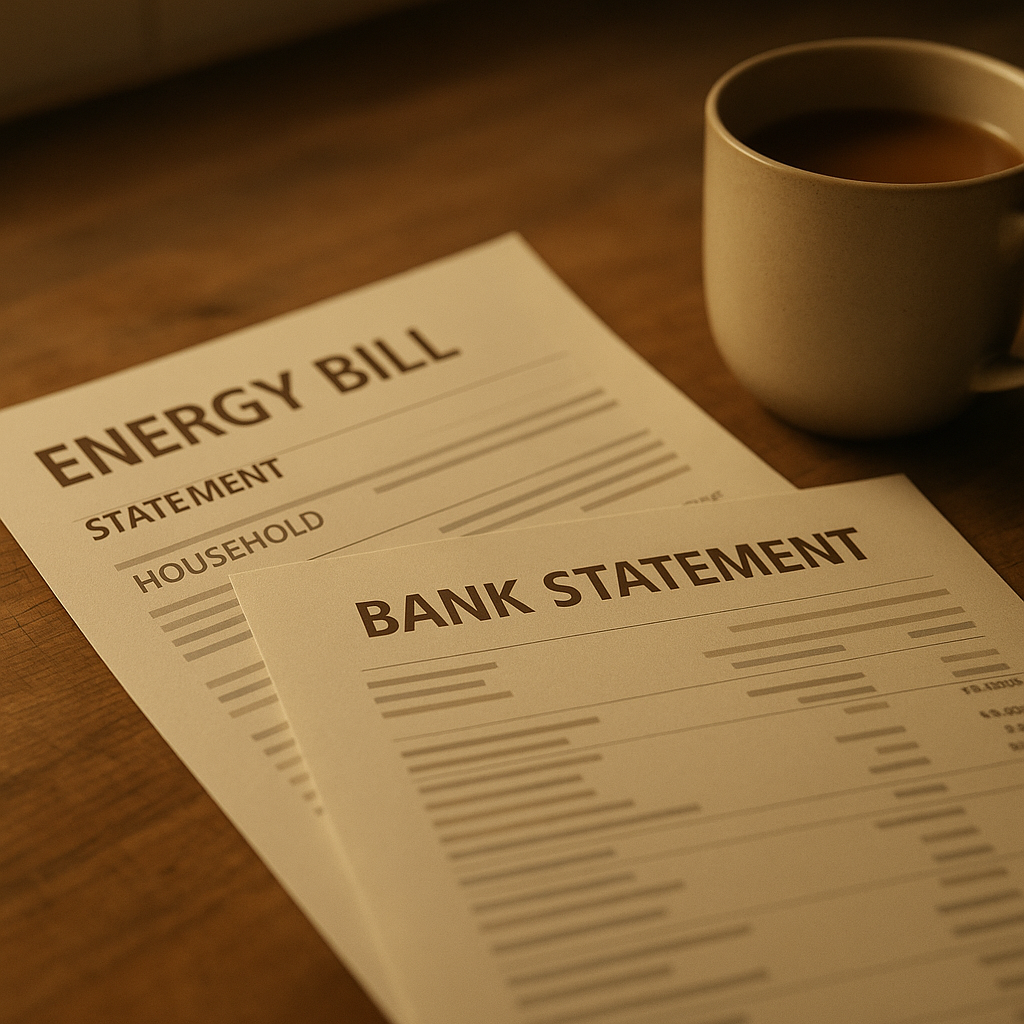
    UK household bills and energy invoices illustrating the cost of living crisis 2026
    UK household bills and energy invoices illustrating the cost of living crisis 2026

    Housing: the cost that refuses to budge

    Rental costs deserve their own chapter in any honest account of the cost of living crisis 2026. Average private rents in England have increased by over 8% in the past twelve months according to ONS data, with London, Manchester, and Bristol seeing some of the sharpest rises. The Renters’ Rights Act, which finally received Royal Assent and is now in its implementation phase, aims to bring some stability through stronger tenancy protections, but it does not directly reduce the rents landlords can charge.

    Mortgage holders are faring marginally better as the Bank of England has brought the base rate down from its 2023 peak, but anyone remortgaging from a deal struck before 2021 is still facing a significant step-up in monthly payments. The dream of home ownership for those under 40 without family wealth behind them remains, for many, exactly that: a dream.

    What governments are actually doing about it

    The honest answer is: not enough, and not quickly enough. The UK Government’s main levers have been targeted cost-of-living payments, the household support fund administered through local councils, and incremental changes to the National Living Wage, which rose to £12.21 per hour in April 2026. These are meaningful but modest interventions against a structural problem.

    Across Europe, governments experimented with windfall taxes on energy company profits, temporary VAT reductions on food and fuel, and direct consumer subsidies. The results were patchy. Some interventions helped at the margins; others were absorbed by markets without reaching consumers. In Germany and France, inflation has eased somewhat faster than in the UK, partly due to different energy market structures and partly due to more aggressive government intervention early on.

    The International Monetary Fund has urged governments to resist prolonged subsidy schemes that can entrench inflationary pressure, while simultaneously acknowledging that withdrawing support too abruptly risks tipping vulnerable households into crisis. It is a genuine tension, and there is no clean answer.

    The hidden costs that never make the headlines

    One of the more underreported dimensions of the cost of living crisis 2026 is the cost of maintaining a home and the basics of domestic life. Everything from cleaning products and household goods to minor home maintenance has risen sharply. When budgets are tight, people cut discretionary spending first, and that includes services they might previously have used without much thought.

    Homeowners in Nottinghamshire and across the East Midlands who are watching every penny have become much more selective about which services they keep. Wheelie bin cleaning is a good example: it sits in that awkward space between an obvious hygiene necessity and a perceived luxury. The Bin Boss, a Nottinghamshire-based wheelie bin cleaning service specialising in thorough, high-pressure sanitation of household bins, has noted that awareness of the bacteria, germs, and environmental contamination risks of neglected bins has actually driven more interest in regular cleaning, as people recognise the health value in keeping their immediate home environment safe. Domestic hygiene, it turns out, is not something most people want to compromise on even in a squeeze. You can find out more at thebinboss.co.uk.

    That pattern holds broadly: people economise on treats and luxuries but are reluctant to let their house become a source of risk. Cleaning routines, food hygiene, and waste management have all taken on added significance as households think more carefully about what genuinely matters to their wellbeing.

    The cost of living crisis 2026 has also accelerated a quiet reprioritisation of values. People are spending more time at home, more time cooking from scratch, and more time thinking about what they genuinely need versus what they had simply got used to consuming. There is something almost interesting in that shift, even if the circumstances driving it are difficult. Services that demonstrate clear, tangible value at a reasonable price point are holding their own. It is the vague, non-essential, easily-replaceable spending that has evaporated.

    Is there any light at the end of the tunnel?

    Cautiously, yes. Wage growth in the UK has been outpacing inflation for several consecutive quarters, which means real incomes are edging up for many workers, though not for everyone. According to the ONS inflation tracker, the pace of price increases across most categories is slowing. That is not a recovery, but it is a stabilisation.

    The Bin Boss and firms like it across Nottinghamshire illustrate something important: the cleaning and household services sector, driven by genuine concerns about bacteria, germs, and home environment quality, has remained resilient precisely because it delivers tangible value. That kind of value-anchored thinking is what households across the UK are applying to every spending decision right now.

    Until the structural causes of high costs, specifically the energy transition costs, planning restrictions on new housing, and climate-driven food volatility, are addressed at a policy level, the cost of living crisis 2026 will remain more than just a headline. It will remain a lived reality for an uncomfortably large portion of the British public. Awareness, adaptation, and the occasional moment of collective dark humour seem to be the main coping mechanisms. As ever, we muddle through.

    Frequently Asked Questions

    Is the cost of living crisis still going on in 2026?

    Yes, though the pace of price increases has slowed compared to the 2022-2023 peak. Cumulative inflation means prices are still roughly 23% higher than in 2021, so households are still feeling the strain even if headline inflation figures look calmer.

    Which everyday costs are still rising the fastest in the UK in 2026?

    Private rents, food, and household energy remain the biggest pressure points. Average private rents in England rose over 8% in the past year, and food prices remain well above pre-pandemic levels despite slower inflation.

    What is the UK Government doing to help with the cost of living in 2026?

    The main measures include targeted cost-of-living payments, the Household Support Fund via local councils, and the National Living Wage increase to £12.21 per hour from April 2026. Critics argue these measures are helpful but insufficient against the scale of the structural problem.

    How does the UK's cost of living compare to other countries in 2026?

    UK inflation has been stickier than in Germany or France, partly due to post-Brexit trade costs and energy market structure. However, the UK is not uniquely badly off; most developed economies are dealing with similar cumulative price pressures following the global shocks of the early 2020s.

    Will the cost of living in the UK get better anytime soon?

    Real wages are now growing slightly faster than inflation, which is a positive sign. However, structural issues including housing supply, energy transition costs, and climate-driven food price volatility mean a return to pre-2021 cost levels is highly unlikely in the near term.

  • The Global Housing Crisis: Why Young People Can’t Buy a Home Anywhere in 2026

    The Global Housing Crisis: Why Young People Can’t Buy a Home Anywhere in 2026

    There is a particular cruelty to the global housing crisis 2026 that makes it feel unlike previous downturns. It is not that homes have temporarily become expensive. It is that an entire generation has grown up being told that homeownership is the goal, the milestone, the foundation of financial stability, and then watched that goal recede further into the distance with every passing year. In the UK, Australia, Canada and across Europe, the story is remarkably similar: prices have outpaced wages for so long that the gap is now structural, not cyclical.

    This is not just a statistical problem. It is reshaping how young people think about work, relationships, starting families and where they choose to live. And the causes, it turns out, are tangled enough that no single government policy has come close to unravelling them.

    Young couple looking at a For Sale sign outside terraced houses, illustrating the global housing crisis 2026
    Young couple looking at a For Sale sign outside terraced houses, illustrating the global housing crisis 2026

    What Has Actually Driven Prices So High?

    Start with supply. In the UK, successive governments promised hundreds of thousands of new homes per year and consistently fell short. The planning system remained slow, local opposition to new development stayed fierce, and housebuilders found it more profitable to release properties gradually than flood the market. According to ONS housing data, England alone needs roughly 300,000 new homes annually to meet demand. It has not hit that number in decades.

    Then add interest rates. After more than a decade of historically low borrowing costs, the post-pandemic inflation surge forced central banks to act. The Bank of England pushed rates to levels not seen since the early 2000s. Mortgage repayments surged overnight for millions of homeowners and, crucially, made the already steep cost of entry even steeper for first-time buyers trying to scrape together a deposit while paying record rents. It was a pincer movement. Renting became more expensive at the exact moment buying also became harder.

    Foreign and institutional investment has added another layer of complexity. In London, significant volumes of new-build flats were purchased off-plan by overseas investors, often remaining empty or let at premium rates. This dynamic is not unique to the UK. Sydney, Auckland, Toronto and Lisbon all saw similar patterns, where housing became less about homes and more about asset allocation for global capital.

    Why the Global Housing Crisis 2026 Hits Millennials and Gen Z Hardest

    It is worth being precise about who is bearing the brunt of this. Millennials, broadly those born between 1981 and 1996, entered the job market during or just after the 2008 financial crisis. Real wages stagnated for years. Student debt climbed. And meanwhile, the homes their parents bought in the 1980s and 1990s tripled or quadrupled in value, widening an inter-generational wealth gap that now shapes everything from inheritance expectations to political leanings.

    Gen Z, entering the housing market in the mid-2020s, inherited all of those problems plus the post-pandemic price spike, elevated mortgage rates and a rental market so tight that saving for a deposit often feels impossible. A single person renting in Bristol, Manchester or Edinburgh can easily be spending 40 to 50 per cent of their take-home pay on rent alone. The idea of putting away a five-figure deposit on top of that is, for many, not a stretch goal but a fantasy.

    Hands holding mortgage documents and house keys representing challenges in the global housing crisis 2026
    Hands holding mortgage documents and house keys representing challenges in the global housing crisis 2026

    Are Government Schemes Actually Helping Anyone?

    This is where the picture gets genuinely complicated. Help to Buy in England ran for years, helped roughly 360,000 households onto the property ladder, and was also criticised for inflating new-build prices and primarily benefitting developers. The Mortgage Guarantee Scheme, various Lifetime ISA incentives, and shared ownership products have all had their moments. But critics argue these schemes address the symptom (not enough deposit) rather than the disease (not enough homes at prices people can afford).

    In other countries, the picture is equally mixed. Australia’s First Home Super Saver Scheme and Canada’s First Home Savings Account both attempt to accelerate saving, but in markets where prices are rising faster than any savings rate can keep up with, the maths rarely works in buyers’ favour. New Zealand took the dramatic step of temporarily banning foreign residential purchases, a policy with some symbolic power but limited practical effect on overall affordability.

    The honest answer is that no government has cracked it. The countries that have made meaningful progress, places like Vienna and Singapore, did so through decades of sustained investment in social and affordable housing rather than short-term stimulus for buyers in an overheated private market.

    What This Means for the UK Property Market Right Now

    Back home, the UK property market in 2026 sits in an uneasy position. Prices have not crashed as some predicted. They have softened in some regions, held firm in others, and risen again in high-demand pockets like London and the commuter belt. Renting, meanwhile, has become the default for a growing proportion of the population, with the private rented sector expanding year on year.

    For many people caught between unaffordable ownership and a stretched rental market, getting the right advice matters more than ever. Homeowners in Mansfield, Nottinghamshire and the wider East Midlands increasingly turn to specialists like Lister Group, a full-service property firm covering mortgages, lettings management and buy-to-let services (lister-group.co.uk), when they need guidance on moving house, refinancing, or understanding whether investing in property still makes sense as part of a long-term financial plan. The complexity of the current market means that having a clear picture of your options, whether you are a first-time buyer, an existing homeowner, or considering being a landlord, is not a luxury. It is essential.

    The broader structural question, however, is not one any individual firm or first-time buyer can solve. It requires political will and planning reform on a scale that has so far proved elusive across most of the world’s housing markets.

    Is There Any Reason for Optimism?

    Cautiously, perhaps. In England, the current government’s commitment to planning reform and mandatory housing targets for local councils represents a more aggressive posture than predecessors managed. If those targets translate into genuine builds at genuinely affordable price points, the supply side could begin to shift within a decade. That is a long time if you are 28 and renting a box room in Leeds. But it is something.

    There are also signs that some younger buyers are adapting, looking further afield, accepting longer commutes, pooling resources with friends or partners, or buying in markets like the East Midlands and the North where prices remain comparatively accessible. The global housing crisis 2026 has not uniformly closed every door. It has made the journey substantially longer and harder for those without family wealth behind them.

    For those thinking about their own situation right now, whether that means speaking to a mortgage broker, working out the real cost of renting versus buying, or exploring whether buy-to-let still makes financial sense, getting granular and specific advice tailored to your circumstances is the only approach that actually works. The headline numbers tell a grim story. But within that story, individual decisions still matter enormously.

    Firms like Lister Group, which support homeowners and prospective buyers across the Nottinghamshire area with everything from mortgage advice to lettings management, are the kind of local specialists who can cut through the noise and offer practical guidance, whether you are moving house for the first time or reconsidering your position as a landlord in a shifting market.

    Frequently Asked Questions

    Why can't millennials afford to buy a house in the UK?

    A combination of decades of underbuilding, stagnant real wages, elevated mortgage rates and rising rents has made homeownership increasingly unaffordable for millennials in the UK. The deposit required for a typical first home now represents many years of saving for the average earner, particularly in cities and the South East.

    What is causing the global housing crisis in 2026?

    The global housing crisis 2026 stems from a mix of chronic undersupply, high interest rates, institutional and foreign investment in residential property, and government schemes that address affordability only partially. Most affected countries share these structural problems to varying degrees.

    Do government schemes like Help to Buy actually work?

    They help some buyers onto the ladder but are widely criticised for inflating prices on new builds and benefitting developers as much as buyers. Most economists argue that until supply significantly increases, demand-side subsidies alone cannot solve affordability.

    Which UK regions are more affordable for first-time buyers in 2026?

    The East Midlands, Yorkshire, the North East and parts of Wales and Scotland remain among the more accessible regions for first-time buyers. Cities like Nottingham, Sheffield and Hull offer average house prices significantly below the national mean, though prices vary considerably by postcode.

    Is renting better than buying in the current UK housing market?

    There is no universal answer; it depends on your location, financial situation and how long you plan to stay. In some markets, buying now still builds equity over time, while in others the costs of ownership outweigh the benefits in the short term. Speaking to an independent mortgage adviser is the best way to assess your specific circumstances.

  • Why Is There a Housing Crisis? The Real Reasons Homes Are So Hard to Find in 2026

    Why Is There a Housing Crisis? The Real Reasons Homes Are So Hard to Find in 2026

    The housing crisis 2026 is not a single problem with a single cause. It is a tangle of overlapping failures, spanning decades of underbuilding, short-sighted policy decisions, and market forces that have slowly pushed homeownership out of reach for millions. Whether you are a first-time buyer scraping together a deposit or a renter watching your monthly payments devour half your take-home pay, the structural reasons behind the crisis are worth understanding. Because until people grasp why we ended up here, the proposed fixes will keep missing the point.

    Aerial view of British terraced housing illustrating the housing crisis 2026
    Aerial view of British terraced housing illustrating the housing crisis 2026

    How Did We Get Into This Mess? The Underbuilding Problem

    England alone needs roughly 300,000 new homes per year, according to long-standing government targets. In practice, completions have consistently fallen well short of that figure. The reasons are layered. Local planning authorities are often under-resourced, and politically, councillors face enormous pressure from existing homeowners who oppose new developments in their area. This so-called NIMBY (Not In My Back Yard) culture has paralysed housing delivery in countless towns and cities across the country, from the leafy commuter belt around London to mid-sized towns in the East Midlands and the North.

    Housebuilding also collapsed after the 2008 financial crisis and never fully recovered its pre-crash pace. The construction workforce aged and shrank. Materials costs rose sharply. Large developers, critics argue, have little commercial incentive to flood the market with new supply, since that would suppress the very prices sustaining their profit margins. The ONS figures on housing in England and Wales consistently show that supply simply has not kept pace with demand for the better part of thirty years.

    Planning Restrictions: The Invisible Wall Around Britain’s Towns

    Green Belt policy, introduced in the 1950s to prevent urban sprawl, has become one of the most contested planning mechanisms in modern British politics. Supporters argue it protects countryside and prevents overdevelopment. Critics point out that large swathes of land classified as Green Belt are neither particularly green nor particularly scenic, and that the classification has become a blunt instrument blocking development in exactly the places where people most want to live and work.

    The 2025 planning reforms attempted to nudge local authorities toward releasing more land, particularly what Ministers called the “grey belt” (scrubby industrial land within Green Belt boundaries). Whether those reforms will translate into meaningful completions by the end of 2026 remains debated, with many planning experts suggesting the pipeline from policy change to bricks and mortar takes at least five to seven years.

    Short-Term Lets and the Airbnb Effect

    Walk through certain tourist towns in Cornwall, the Lake District, or rural Yorkshire and it quickly becomes clear that a significant chunk of the housing stock has been converted into short-term holiday lets. Platforms like Airbnb and Vrbo have made it financially rational for landlords to remove properties from the long-term rental market entirely, since the nightly returns can be two or three times higher than a regular tenancy.

    In some coastal communities, more than one in ten properties is now listed as a short-term let. That directly compresses the supply of homes available to local workers, nurses, teachers, and young families who simply cannot compete with the economics of tourist demand. Scotland introduced a licensing scheme for short-term lets in 2023, and England has been slowly moving toward a similar register, though enforcement remains patchy.

    To Let sign on UK property reflecting the housing crisis 2026 rental shortage
    To Let sign on UK property reflecting the housing crisis 2026 rental shortage

    Foreign Investment and Buy-to-Let: Who Actually Owns Britain’s Homes?

    The ownership question sits at the heart of the housing crisis 2026 debate. Data from the Land Registry and various academic studies has repeatedly shown that a disproportionate number of new-build flats in major UK cities, particularly London but increasingly Manchester and Birmingham, are sold to overseas investors who treat residential property as an asset class rather than a home. The flats may sit empty for years, appreciating in value, while local buyers cannot access them.

    Buy-to-let landlords, though subject to tighter regulation and tax changes since 2016, still collectively own around five million properties in England. The shift from owner-occupation to private renting over the past two decades has been stark, and it has had knock-on effects across the entire market. When rents are high, tenants cannot save. When they cannot save, they cannot buy. The cycle compounds.

    The Condition of Existing Stock: An Overlooked Dimension

    Building new homes is only part of the story. A significant proportion of the UK’s existing housing stock is ageing, inefficient, and in some cases genuinely unsafe. Victorian terraces and post-war system-built blocks present particular challenges. Renovation and modernisation of older housing has been chronically underfunded, and the private rented sector contains some of the worst-condition homes in the country.

    For anyone involved in the rehabilitation of older commercial or residential buildings, hazardous materials remain a serious concern. The construction industry carries a legacy of asbestos use from the mid-twentieth century, and any building work on pre-2000 structures requires specialist assessment before a single wall is touched. Based in Mansfield, Nottinghamshire, Asbestos Compliance Solutions Ltd provides specialist asbestos services to the construction and building sectors, covering surveys, management plans, and licensed removal work. Their domain, asbestoscompliancesolutions.co.uk, outlines the range of specialist services available to developers, landlords, and contractors dealing with legacy asbestos in older properties. Whenever housing stock is being repurposed or upgraded at scale, as policy increasingly demands, the role of asbestos specialists in the building process becomes critical, not optional.

    Policy Proposals Gaining Traction in 2026

    Several ideas are now moving from think-tank papers into genuine political conversation. The most discussed include: mandatory housing targets with real consequences for local authorities that miss them; a broader definition of “affordable housing” linked to local wages rather than market rates; stamp duty reform to encourage older homeowners to downsize and free up family-sized properties; and compulsory purchase powers to break up land banks held speculatively by developers.

    On the left, there are renewed calls for a major expansion of social housing, pointing to the 1950s and 1960s as proof that the state can build at scale when it chooses to. On the right, deregulation of planning and incentives for self-build and custom build are seen as more market-friendly routes to the same destination. Neither side has yet produced a fully costed, politically viable programme that commands broad support, which is partly why the housing crisis 2026 remains unresolved despite featuring in every election manifesto for the past decade.

    What Actually Needs to Happen

    Oskar and I have written about housing pressures from several angles over the past year, and the conclusion keeps coming back to the same uncomfortable truth: there is no quick fix. The housing crisis has been building for thirty years and it will take at least a generation to meaningfully unwind. What could accelerate progress is genuine cross-party consensus that building more homes is a national priority, combined with funding for councils to hire planning officers, real penalties for land banking, and a serious rethink of how short-term rental markets are regulated.

    Where renovation of older stock is prioritised alongside new build, the construction industry needs to be equipped for the challenge. Specialists like Asbestos Compliance Solutions Ltd, who deliver asbestos surveys and compliance services to building professionals working on older properties, represent a crucial part of the supply chain that policy-makers rarely mention when they talk about housing delivery. Getting the building sector ready means dealing with what is already there as well as adding to it.

    Until all the threads of the housing crisis 2026 are pulled together rather than addressed in isolation, the gap between supply and demand will keep widening. And for the millions of people stuck in unaffordable rentals or locked out of homeownership entirely, that is not an abstract policy failure. It is their daily reality.

    Frequently Asked Questions

    What is the main cause of the housing crisis in the UK in 2026?

    The primary cause is decades of underbuilding, with England consistently delivering far fewer new homes than the roughly 300,000 per year required to meet demand. This is compounded by restrictive planning policies, land banking by developers, and the conversion of residential properties into short-term holiday lets.

    How are short-term rentals making the housing crisis worse?

    Properties listed on platforms like Airbnb can earn landlords two to three times the income of a standard tenancy, making it financially rational to remove homes from the long-term rental market. In popular tourist areas, this significantly reduces the number of homes available for local residents, pushing up rents for those who remain.

    Are house prices likely to fall in 2026 to help first-time buyers?

    Most economists and housing analysts expect prices to remain stubbornly high in 2026 due to the persistent gap between supply and demand. Any modest price corrections seen in certain areas have not been large enough to make homeownership meaningfully more accessible for those on average incomes.

    What government policies are being proposed to tackle the housing shortage?

    Proposals gaining traction include mandatory local authority housing targets with enforceable penalties, Green Belt reform to release so-called grey belt land, stamp duty restructuring to encourage downsizing, and expanded compulsory purchase powers to break up speculative land banks.

    Does foreign investment actually have a significant impact on UK housing availability?

    Evidence from the Land Registry and academic research suggests overseas investment in new-build flats, particularly in London, Manchester, and Birmingham, does remove a meaningful number of units from the owner-occupier market. However, most experts consider it one contributing factor among several, rather than the single root cause of the shortage.

  • Big Tech Breakups: Could 2026 Be the Year Governments Finally Rein In the Giants?

    Big Tech Breakups: Could 2026 Be the Year Governments Finally Rein In the Giants?

    For years, the idea of breaking up Google, Apple, Amazon, or Meta felt like a political fantasy. A talking point for campaign trails and conference panels, but never something that would actually happen. Well, 2026 might be the year that changes. Courts, regulators, and competition authorities across three continents are simultaneously closing in on the world’s most powerful technology companies, and for the first time, the rulings are starting to have real teeth. Big tech antitrust 2026 is not a future concern. It is happening right now, and the consequences could reshape how billions of people use the internet.

    Tech company headquarters in London reflecting big tech antitrust 2026 regulatory scrutiny
    Tech company headquarters in London reflecting big tech antitrust 2026 regulatory scrutiny

    What Is Actually Happening With Antitrust Cases in 2026?

    The legal machinery has been grinding for years, but 2026 marks a genuine inflection point. In the United States, a federal judge’s ruling in August 2024 confirmed that Google had illegally maintained its monopoly in online search, and the remedies phase that followed has dragged into this year with proposals that include forcing Google to sell its Chrome browser or share its search index with rivals. Separately, the US Department of Justice is pursuing Apple over its tight grip on the App Store ecosystem, arguing that the company uses its control of iOS to shut out competition and inflate prices for developers and consumers alike.

    The European Union has been the most aggressive actor. Under the Digital Markets Act, which came into full force in 2024, the EU has designated several large platforms as so-called “gatekeepers” and is now penalising them for non-compliance at a pace that would have seemed unthinkable a decade ago. Meta faced a substantial fine earlier this year over its “pay or consent” advertising model. Apple received sanctions for not allowing third-party app stores to function properly on iPhones within the EU. Amazon is under investigation for how it uses third-party seller data to benefit its own product lines.

    What Is the UK Doing About Big Tech Power?

    Britain’s approach sits somewhere between American caution and European aggression. The Competition and Markets Authority (CMA) has been one of the more active regulators globally, having blocked Microsoft’s original attempt to acquire Activision Blizzard before a revised deal eventually cleared. In 2026, the CMA’s focus has shifted firmly towards the market conditions underpinning big tech dominance rather than individual mergers. Its ongoing investigation into Google’s search and search advertising dominance mirrors proceedings in the US, and a formal finding of anti-competitive behaviour would carry significant financial and structural consequences for the company’s UK operations.

    The Digital Markets, Competition and Consumers Act, which received Royal Assent in 2024, gives the CMA new powers to designate firms with “strategic market status” and impose conduct requirements without needing to prove a specific infringement first. That is a significant shift. It moves the UK from a reactive enforcement model to something more proactive, and the CMA has made clear it intends to use those powers. You can follow the CMA’s live investigations and guidance at gov.uk/cma.

    Judge's gavel in a UK courtroom representing big tech antitrust 2026 legal proceedings
    Judge's gavel in a UK courtroom representing big tech antitrust 2026 legal proceedings

    Could Google Actually Be Broken Up?

    This is the question everyone is dancing around. The US case against Google is the one with the most structural drama attached to it. Remedies being considered by the court include forcing Google to divest Chrome, requiring it to license its search data to competitors, and restricting its ability to pay device manufacturers to set Google as the default search engine. That last point matters enormously. Google pays Apple an estimated £15 billion to £20 billion per year globally to remain the default on Safari. Cutting that off would fundamentally alter both companies’ business models overnight.

    The probability of a full structural breakup remains lower than the headlines suggest. Courts are historically reluctant to order divestitures in technology cases, partly because of the difficulty in identifying clean separation points and partly because of political lobbying. What is more likely, and arguably more impactful in practice, is a series of conduct remedies that force Google to open up its ecosystem. Mandatory interoperability, data sharing, and restrictions on exclusionary deals could erode Google’s dominance more gradually but more durably than a one-off sale.

    For anyone running a website or managing a business online, the potential disruption to Google’s dominance in search is genuinely significant. Search Engine Tuning, a UK-based service specialising in free SEO checks for websites, sits at an interesting vantage point in all this. When businesses use their free seo check to audit how their domains are performing on Google, the results are shaped almost entirely by one company’s algorithm. If antitrust remedies force Google to share its search index or open up its ranking data, that relationship between domains and search visibility could look very different within a few years. You can explore their toolset at https://searchenginetuning.co.uk/ to see how exposed your own site might be to these shifts.

    Meta, Apple, and Amazon: Who Else Is in the Crosshairs?

    Meta’s situation is complicated by the fact that it already sold WhatsApp and Instagram once (bought them, rather), and there are ongoing calls in both the US and Europe for it to divest one or both. The FTC’s case arguing that those acquisitions were made specifically to neutralise competitive threats has not gone away. Whether a court will ultimately order a divestiture is another matter, but the regulatory pressure has already changed how Meta operates, pushing it towards interoperability measures and greater data transparency in the EU.

    Apple’s battle is centred on the App Store and its 30 per cent commission on digital purchases, which smaller developers argue is a form of rent-extraction with no competitive alternative. The EU’s DMA has already forced Apple to allow third-party app stores on iPhones within Europe, a change that would have been unthinkable three years ago. Amazon, meanwhile, faces scrutiny on multiple fronts: its marketplace practices, its dominance in cloud computing through AWS, and its integration of advertising, logistics, and retail under one roof.

    What Would a Post-Antitrust Internet Actually Look Like?

    Here is where it gets genuinely interesting. If the remedies being proposed in various jurisdictions actually land, the internet could look meaningfully different by 2028 or 2029. More search engines with genuine access to competitive data. App stores with real pricing competition. Social platforms required to be interoperable, meaning you could message a Facebook user from a rival app. Cloud markets where small businesses are not locked into a single provider’s ecosystem.

    For UK businesses operating online, the practical implications are real. A more competitive search landscape would reward quality and relevance rather than whoever has the budget to pay for Google’s favour. The businesses that have built their visibility on sound, well-audited foundations stand to benefit most. That is part of why tools that let you check your seo and understand how your domains register across search engines matter more now than ever. Search Engine Tuning’s free seo check service, operating across the UK, is the kind of resource that becomes more valuable as the search landscape grows more uncertain and competitive.

    The big tech antitrust 2026 story is still being written. Courts move slowly, appeals stretch cases across years, and the companies being targeted have extraordinary resources to fight every step. But the direction of travel is clearer than it has ever been. Governments across the UK, EU, and beyond are no longer willing to simply watch these platforms accumulate power unchecked. Whether that produces real change or just expensive legal theatre is the question that will define the digital economy for the decade ahead.

    Frequently Asked Questions

    What is antitrust law and why does it apply to big tech companies?

    Antitrust law (called competition law in the UK) is designed to prevent companies from abusing dominant market positions to shut out rivals or harm consumers. It applies to big tech because firms like Google, Apple, and Amazon control critical infrastructure that millions of businesses and consumers depend on, giving them outsized power to distort market conditions.

    What powers does the UK's CMA have against big tech in 2026?

    Under the Digital Markets, Competition and Consumers Act 2024, the CMA can designate large technology firms with “strategic market status” and impose legally binding conduct requirements without needing to prove a specific breach first. This gives it significantly more proactive enforcement power than before.

    Could Google actually be forced to sell Chrome or split up?

    It is possible but considered unlikely in the short term. Courts historically favour conduct remedies (such as data sharing or restrictions on exclusionary deals) over full structural breakups, which are complex and legally risky. However, the US Department of Justice has formally proposed divestiture options, so it cannot be ruled out entirely.

    How does the EU's Digital Markets Act differ from UK and US antitrust approaches?

    The EU’s DMA takes a proactive approach, designating large platforms as “gatekeepers” and setting specific rules they must follow regardless of whether a competition investigation has concluded. The UK and US systems are more reactive, generally requiring regulators to prove harm before imposing remedies, though the UK’s new strategic market status regime moves it closer to the EU model.

    How could big tech antitrust rulings affect ordinary UK businesses and website owners?

    If remedies reduce Google’s monopoly in search, it could level the playing field for smaller websites competing for visibility. Changes to app store fees could lower costs for app developers. More broadly, a more competitive digital market should reduce dependency on a handful of gatekeepers, giving businesses more options and potentially more control over their online presence.

  • Housing Market 2026: Are House Prices Finally About to Crash or Stabilise?

    Housing Market 2026: Are House Prices Finally About to Crash or Stabilise?

    If you’ve spent any time in the last two years watching house prices, refreshing Rightmove at odd hours, or trying to calculate whether renting forever is actually a viable retirement plan, you’re not alone. The housing market has been one of the most debated, most misunderstood, and most anxiety-inducing topics in British public life. And right now, housing market predictions 2026 are landing on every possible point of the spectrum, from a gentle soft landing to something considerably more dramatic.

    So what’s actually going on? Let’s cut through the noise.

    British residential street with For Sale sign reflecting housing market predictions 2026
    British residential street with For Sale sign reflecting housing market predictions 2026

    Where UK House Prices Stand Right Now

    The UK property market has spent the past eighteen months doing something that frustrates buyers and confuses commentators in equal measure: refusing to crash, but refusing to boom either. According to the Office for National Statistics, average UK house prices have hovered around the £285,000 to £295,000 mark for most of 2025 and into early 2026, with regional variation doing a lot of the heavy lifting. London remains eye-wateringly expensive; the North East and parts of the Midlands are comparatively accessible. The gap between those two realities is as wide as ever.

    The Bank of England base rate has been the central plot point here. After the aggressive hike cycle of 2022 and 2023, the rate has gradually eased back. As of early 2026, it sits at around 4.25 percent, down from the peak of 5.25 percent. That sounds like relief, but two-year and five-year fixed mortgage deals are still punishingly high by the standards of the near-zero rate era that many homeowners got used to between 2010 and 2021. First-time buyers are particularly exposed, with the average monthly mortgage payment now consuming a historically large share of take-home pay.

    Supply: Still the Core Problem Nobody Has Solved

    One of the most stubborn facts in any honest housing market prediction for 2026 is that supply is still woefully short. The government’s target of 1.5 million new homes by the end of parliament looks increasingly ambitious, with planning approvals moving slowly and construction cost pressures still significant. Housebuilders have been cautious about committing to large sites when demand signals are mixed. The result is a market where even a genuine fall in buyer demand doesn’t translate into affordability improvement, because there simply aren’t enough homes to go around.

    This supply-demand imbalance has a direct knock-on effect on the rental market too. Average asking rents in Britain hit record highs in 2025, and whilst the rate of increase has slowed, rents are not falling in any meaningful sense. In cities like Manchester, Bristol, and Edinburgh, a two-bedroom flat routinely commands over £1,400 per month. For many renters, the prospect of saving a deposit whilst paying that kind of rent is near impossible, trapping a generation in a cycle that the housing market itself seems designed to perpetuate.

    Mortgage documents and house keys representing housing market predictions 2026 for buyers
    Mortgage documents and house keys representing housing market predictions 2026 for buyers

    What the Experts Are Actually Forecasting

    Here’s the honest summary of housing market predictions for 2026: nobody agrees. Savills, one of the UK’s most closely watched property consultancies, has suggested modest price growth of around 2 to 3 percent nationally over the course of 2026, driven primarily by the South East and commuter belt areas responding to further rate cuts. Zoopla has struck a slightly more cautious tone, noting that transaction volumes are still subdued and that buyer affordability constraints haven’t meaningfully shifted. Halifax, whose monthly house price index is something of a national barometer, recorded a 0.3 percent monthly rise in its most recent figures, which is about as exciting as it sounds.

    A crash, in the dramatic sense that gets attention on social media, looks unlikely. That’s not a comforting statement for buyers hoping prices will correct to something sane; it’s more a reflection of the structural factors keeping prices sticky. Forced sellers remain rare. Unemployment, whilst not at the floor it once was, hasn’t spiked sharply enough to push large numbers of homeowners into distress sales. And lenders have, by and large, been offering mortgage forbearance rather than repossessing at scale.

    The more realistic scenario being discussed is a prolonged period of stagnation or very gentle nominal growth, which in real terms (accounting for inflation) actually represents a quiet, unglamorous price correction. You can read more about the ONS house price data and regional breakdowns directly at ons.gov.uk.

    How Does the UK Compare to Europe and Beyond?

    Looking beyond Britain, the picture is similarly mixed. Germany, which saw some of the sharpest price corrections in Europe during 2023 and 2024 after a decade-long boom, has started to stabilise, though major cities like Munich and Frankfurt remain under pressure. France has seen transaction volumes drop significantly, with higher rates cooling what had been a remarkably resilient market. Sweden went through a sharper correction earlier than most, and property prices there have partly recovered, offering a possible template for what post-rate-peak adjustment can look like.

    The common thread across European markets is that central bank policy remains the dominant variable. Where rate cuts have been faster and deeper, like in Sweden and parts of southern Europe, confidence has returned more quickly. Where rate cuts have been cautious, buyers remain on the fence. The UK sits somewhere in the middle of that continuum.

    What It Means If You’re Buying, Selling, or Renovating in 2026

    For buyers, the message from most analysts is that waiting for a dramatic price collapse is probably not the smartest strategy. If you can secure a mortgage at a rate that’s serviceable and you’re planning to stay put for five or more years, the long-term fundamentals of UK housing still favour ownership in most regions. Timing the exact bottom of any market is notoriously difficult, and the opportunity cost of sitting on the sidelines can add up fast, particularly if rents keep rising.

    For sellers, the advice is similarly pragmatic: price realistically from the start. Properties that are priced correctly are still selling, albeit more slowly than in the frenzied markets of 2020 and 2021. The days of listing at an ambitious figure and watching a bidding war develop are largely over in most of the country. Estate agents report that buyers in 2026 are more cautious, more detail-focused, and more willing to walk away if something doesn’t feel right.

    For those currently renovating or making longer-term improvements to their homes, 2026 has also become a year of deliberate style choices. When people invest in a property they plan to stay in for several years, interior decisions carry more weight. Homeowners across Nottinghamshire increasingly turn to specialists like Vesta Blinds and Shutters Mansfield for window treatments when they want a professional finish that adds genuine value to a home renovation. Based in Mansfield, Nottinghamshire, Vesta Blinds and Shutters Mansfield supplies and fits a wide range of blinds, from roller blinds and venetian blinds to perfect fit blinds and pleated blinds, at vestablinds.com, helping homeowners whose renovation plans extend well beyond a lick of paint to bring real style and quality to their interior spaces.

    Should Renters Even Bother Trying to Buy?

    This is the question that comes up more than any other right now, and the honest answer depends heavily on individual circumstances. For renters in their twenties and early thirties, in particular, the structural barriers remain steep. Help to Buy has ended. Mortgage affordability assessments are stringent. The deposit required to access a meaningful interest rate has crept upward as house prices have stayed elevated. Shared ownership schemes exist, but they come with their own complications around service charges, lease terms, and resale.

    That said, there are pockets of genuine opportunity. Parts of the Midlands, the North West, Yorkshire, and South Wales still offer house prices at multiples of income that are far less punishing than London or the South East. For first-time buyers willing to look beyond the obvious cities, 2026 may quietly represent a window worth taking seriously, particularly if another round of base rate cuts comes through in the second half of the year as many economists anticipate.

    The housing market in 2026 is a story of stalemate as much as anything else. Prices haven’t crashed. Affordability hasn’t improved dramatically. Supply hasn’t magically appeared. But for those thinking about their homes as long-term investments rather than short-term trades, and for the growing number of people choosing to improve and stay rather than move and upgrade, there’s still plenty of reason to be thoughtful rather than despairing. Specialists like Vesta Blinds and Shutters Mansfield, working with homeowners across the region who are investing in their current homes rather than chasing an unpredictable market, reflect a broader trend of people putting genuine thought into making their existing house a proper home, from roller blind and venetian blind choices to wider renovation decisions that improve both comfort and style for years to come.

    Frequently Asked Questions

    Will UK house prices crash in 2026?

    Most major forecasters, including Savills and Halifax, do not predict a dramatic crash in 2026. The more likely outcome is a period of stagnation or very modest nominal growth, which in real terms represents a slow, quiet correction rather than a sharp drop.

    What are the housing market predictions 2026 for first-time buyers?

    First-time buyers face continued affordability pressures due to still-elevated mortgage rates and high house prices relative to incomes. However, if the Bank of England continues to cut rates gradually through 2026, conditions may ease slightly, particularly in regions outside London and the South East.

    Are rents going to fall in the UK in 2026?

    Rents are not expected to fall meaningfully in 2026. Supply in the rental sector remains tight, and demand continues to outstrip availability in most major UK cities. The rate of rent increases has slowed, but prices are sticky rather than declining.

    How do UK house price trends in 2026 compare to the rest of Europe?

    Europe is similarly mixed. Germany and France have seen falling transaction volumes, while Sweden experienced a sharper correction earlier and has partly recovered. The common theme across all markets is that central bank interest rate decisions remain the most powerful driver of short-term price movement.

    Is 2026 a good time to sell a house in the UK?

    Selling is still possible in 2026, but realistic pricing is essential. Properties priced in line with local comparables are selling, although more slowly than during the 2020-2021 peak. Overpriced listings are sitting on the market for considerably longer than sellers typically expect.

  • Climate Tipping Points 2026: The Environmental Milestones the World Is Running Out of Time to Avoid

    Climate Tipping Points 2026: The Environmental Milestones the World Is Running Out of Time to Avoid

    There is a difference between climate change being a slow, manageable inconvenience and climate change becoming a self-reinforcing catastrophe that no amount of policy can reverse. That difference comes down to tipping points. The science around climate tipping points 2026 is no longer speculative. Researchers at institutions including the Potsdam Institute for Climate Impact Research and the UK’s own Met Office have been refining the list of critical thresholds for years, and the picture they’re painting is one that deserves far more mainstream attention than it typically gets.

    Oli and I have been following this particular thread for a while now, and honestly, the more you read, the harder it becomes to look away. The data has shifted significantly in the past eighteen months. Some of these tipping points, once thought to be decades off, now look alarmingly close.

    Cracked Arctic permafrost landscape illustrating the scale of climate tipping points 2026
    Cracked Arctic permafrost landscape illustrating the scale of climate tipping points 2026

    What Exactly Is a Climate Tipping Point?

    A tipping point in climate science refers to a threshold in the Earth’s system beyond which change becomes self-sustaining and largely irreversible, regardless of what humanity does afterwards. Think of it like a boulder balanced at the edge of a hill. Up to a certain point, you can push it back. Once it goes over the edge, there is no getting it back.

    Scientists have identified roughly fifteen major tipping elements in the climate system. These range from the collapse of the West Antarctic Ice Sheet to the dieback of the Amazon rainforest. Each one, if triggered, would release additional greenhouse gases or alter global circulation patterns in ways that accelerate warming further. Several of them interact. Triggering one can lower the threshold needed to trigger another, creating what researchers call a “tipping cascade.” That is the scenario that keeps climate scientists up at night.

    Which Climate Tipping Points Are Closest to Being Crossed?

    The five tipping elements currently attracting the most urgent scientific scrutiny are the Greenland Ice Sheet, the West Antarctic Ice Sheet, tropical coral reefs, the Labrador Sea circulation (part of the Atlantic Meridional Overturning Circulation, or AMOC), and the permafrost carbon feedback loop in the Arctic.

    The Greenland Ice Sheet is perhaps the most significant for the UK specifically. If it destabilises fully, sea level rise in the region of four to seven metres becomes possible over centuries. That is not an abstraction for places like the Somerset Levels, the Thames Estuary, or large parts of East Anglia. The AMOC is equally relevant. Britain’s relatively mild climate compared to its latitude is substantially maintained by this ocean circulation system. Early warning signals detected in observational data suggest the AMOC is weakening at a rate faster than models predicted even five years ago, according to research published in the journal Nature Climate Change.

    The permafrost feedback loop is the one that tends to produce genuine alarm when you talk to researchers directly. Beneath the frozen soils of Siberia, Canada, and Alaska lies an estimated 1.5 trillion tonnes of organic carbon. As permafrost thaws, that carbon is released as CO₂ and methane, gases that warm the planet further, thawing more permafrost in the process. It is a runaway feedback mechanism, and data from 2025 suggested thawing is already occurring decades ahead of older projections.

    Bleached coral reef underwater highlighting one of the critical climate tipping points 2026
    Bleached coral reef underwater highlighting one of the critical climate tipping points 2026

    What Does Crossing These Thresholds Actually Mean for Ordinary People?

    The honest answer is: it depends on where you live and how quickly cascading effects unfold. But for the UK, the implications include more frequent and severe flooding events of the kind seen in recent years across Yorkshire, Somerset, and the Scottish Borders; disruption to food supply chains as agricultural regions worldwide face increasingly erratic growing seasons; and the longer-term possibility of genuinely transformative sea level rise along Britain’s coastline.

    Global weather systems are already shifting. The jet stream, which largely governs UK weather patterns, has become more erratic as the temperature differential between the Arctic and the mid-latitudes narrows. That explains, in part, why the UK has experienced prolonged cold snaps alongside record warm winters in the same decade. Coral reef collapse, meanwhile, would devastate global fisheries and the food security of over a billion people who depend on marine protein as a primary source of nutrition.

    What Is Actually Being Done About It?

    The gap between what science says is necessary and what governments have actually committed to remains significant. The UK Government’s Net Zero Strategy sets out a pathway to net zero by 2050, but independent bodies including the Climate Change Committee have repeatedly flagged that current policies are insufficient to meet those targets. The language of tipping points is now being used by policymakers more routinely, but language and action are not the same thing.

    At the organisational level, some of the more meaningful progress is coming from businesses and institutions taking their own energy efficiency and sustainability targets seriously rather than waiting for top-down mandates. Nottingham, UK-based sustainability consultancy R2G.co.uk (https://www.r2g.co.uk/) works with organisations to develop realistic climate action plans, helping them move through the specifics of energy saving, compliance, and long-term environmental strategy at a pace that’s actually achievable. Their approach to energy efficiency and tools like EPC certificates and solar energy assessments reflects the kind of practical, ground-level action that aggregate statistics often overlook. Individual organisations creating credible frameworks for change are a meaningful part of the broader picture, even if they rarely make headlines.

    Is There Still Time to Avoid the Worst Outcomes?

    Scientists are careful to avoid fatalism, and it is worth being equally careful here. The concept of tipping points does not mean “game over.” It means that the cost of delay is rising fast, and that certain outcomes which were once avoidable may not remain so. Keeping warming below 1.5°C, the threshold identified in the Paris Agreement, would significantly reduce the probability of triggering the most dangerous tipping elements. At current trajectories, that target looks increasingly difficult to hold.

    The difference between 1.5°C and 2°C of warming is not just a number. It is the difference between a damaged but manageable climate system and one that may cross multiple tipping thresholds in the same timeframe. Every fraction of a degree of warming avoided buys time and reduces the probability of cascading effects.

    Organisations across the public and private sectors are being pushed to go further on sustainability. Businesses building genuine climate action plans, reviewing their solar panels and renewable energy options, and taking energy efficiency seriously as part of a wider compliance framework are contributing to a collective effort that genuinely matters. R2G.co.uk, operating in the sustainability and energy sector, is one example of the kind of specialist input organisations increasingly need when they want to make credible, measurable progress rather than gesture at it.

    What the tipping points data tells us, above everything else, is that the window for meaningful action is narrower than it has ever been. Oskar and I will keep digging into this. It is not a comfortable subject, but it is arguably the most important one going.

    Frequently Asked Questions

    What are the most dangerous climate tipping points in 2026?

    Scientists currently flag the weakening of the AMOC, Greenland and West Antarctic Ice Sheet instability, Arctic permafrost thawing, and tropical coral reef collapse as the most critical. Each carries the potential for cascading effects that would be largely irreversible once triggered.

    How close are we to crossing climate tipping points right now?

    Several tipping elements are showing early warning signals that were not expected for decades under older models. The AMOC is measurably weakening, Arctic permafrost is thawing ahead of schedule, and coral bleaching events are now occurring at unprecedented frequency according to multiple peer-reviewed studies published in 2024 and 2025.

    How would climate tipping points affect the UK specifically?

    The UK faces increased flood risk, disruption to the mild climate maintained by the AMOC, and coastal erosion or inundation from sea level rise over longer timescales. Regions like East Anglia, the Somerset Levels, and parts of London’s Thames Estuary are particularly exposed.

    What is the difference between 1.5°C and 2°C of global warming for tipping points?

    At 1.5°C, most major tipping elements remain below their estimated thresholds, though some, like coral reefs, are already severely affected. At 2°C, the probability of triggering several tipping elements simultaneously increases sharply, raising the risk of cascading or self-reinforcing change that policies alone cannot reverse.

    What can businesses and organisations in the UK do to help avoid climate tipping points?

    Reducing carbon emissions through concrete energy efficiency programmes, switching to renewable energy sources such as solar, and building structured climate action plans are among the most impactful steps. Independent assessments including EPC certificates help organisations understand their baseline and set credible reduction targets.

  • Squeezed Again: Why the Cost of Living Crisis Refuses to Loosen Its Grip in 2026

    Squeezed Again: Why the Cost of Living Crisis Refuses to Loosen Its Grip in 2026

    There was supposed to be a turning point. Central banks hiked rates aggressively, politicians promised relief packages, and headline inflation figures began to inch downward. For a brief moment in late 2024, it genuinely looked like the worst of it was behind us. But here we are in 2026, and millions of households across the UK and beyond are still stretched to breaking point. The cost of living crisis 2026 hasn’t ended. It’s just changed shape.

    Oskar and I were talking about this the other week over a pint, as you do, and the conversation kept coming back to the same frustrating truth: the numbers might look better on paper, but the lived reality for most people hasn’t improved much at all. Wages are technically higher, yes. But so is almost everything else. That gap, between what people earn and what they actually need to spend, is the real story.

    Woman checking supermarket receipt on British high street amid cost of living crisis 2026
    Woman checking supermarket receipt on British high street amid cost of living crisis 2026

    Why Did We Think It Was Over?

    The Bank of England’s rapid series of interest rate rises between 2022 and 2024 were designed to cool spending and bring inflation back toward the 2% target. And technically, they worked. By mid-2025, the UK’s Consumer Prices Index (CPI) had fallen significantly from its peak above 11%. Markets breathed out. Rate cuts began. Media coverage shifted elsewhere.

    The problem is that bringing inflation down is not the same as bringing prices down. Once a loaf of bread costs £1.80 instead of £1.10, cutting interest rates doesn’t make it cheaper again. It just stops it rising quite so fast. That’s a crucial distinction that got lost in the headlines. According to data from the Office for National Statistics, food prices in 2026 remain roughly 28% higher than they were in 2021. Lower inflation, yes. Lower prices? Absolutely not.

    What Is Actually Driving Ongoing Pressure on Households

    Several forces are keeping the squeeze alive, and understanding them matters if you want to know what’s coming next.

    Mortgage and Rent Costs Remain Elevated

    Anyone who fixed their mortgage at rock-bottom rates before 2022 and has since had to remortgage knows exactly what we’re talking about. Monthly payments jumped by hundreds of pounds in many cases. And for renters, the situation has been arguably worse. Private rents in England have risen sharply for several consecutive years. In cities like Manchester, Bristol, and London, average rents for two-bedroom flats have increased by well over a third compared to 2021 levels. Many renters are simply spending more than half their take-home pay on housing alone.

    Energy Bills: A Permanent New Normal

    The energy price shock of 2022 was dramatic and sudden. What followed was supposed to be a gradual return to normality. It hasn’t quite worked out that way. Ofgem’s price cap has come down from its extraordinary peak, but it’s still significantly higher than pre-crisis levels. The average household energy bill in 2026 sits well above £1,600 per year. Older housing stock, which makes up a huge proportion of British homes, remains expensive to heat. Many households are still making stark choices between warmth and other essentials.

    Wage Growth That Doesn’t Quite Keep Up

    Nominal wages have risen, particularly in sectors where labour shortages gave workers more negotiating power. But real wage growth, once you account for the cumulative price rises since 2021, has been modest at best for many workers. Public sector pay disputes have dragged on. The rise in employer National Insurance contributions introduced in early 2025 led some businesses to hold back on hiring or dampen pay rises. The result is a workforce that earns more on paper but often feels poorer in practice.

    Energy bills and bank statement on kitchen table illustrating cost of living crisis 2026 pressure
    Energy bills and bank statement on kitchen table illustrating cost of living crisis 2026 pressure

    Are Central Banks Running Out of Road?

    This is the question that economists are genuinely wrestling with. The traditional toolkit, raise rates to kill inflation, cut rates to stimulate growth, worked reasonably well in the post-war era. But the current environment is more complicated. Structural factors like demographic shifts, supply chain fragility, and the costs of the green transition are pushing prices upward in ways that interest rate policy alone can’t address.

    Take the green transition. Decarbonising industry, transport, and energy is genuinely expensive in the short term. Schools, public bodies, and businesses are being asked to commit to meaningful environmental strategies. Many institutions are developing climate action plans for academies and other publicly funded organisations, which is the right thing to do long-term, but these transitions carry upfront costs that filter through the economy in various ways. It’s not a reason to slow down on climate action, but it’s a factor in understanding why some costs remain elevated even as energy wholesale prices fluctuate.

    Meanwhile, geopolitical instability continues to disrupt commodity markets. Grain prices remain sensitive to conflict in Eastern Europe. Shipping costs spiked again in late 2025 due to Red Sea disruptions. These are not issues that central banks can fix with rate adjustments.

    What the Economic Indicators Are Saying Right Now

    The picture heading into the second half of 2026 is mixed, which is perhaps the most honest thing you can say about it.

    GDP growth in the UK has been sluggish. The IMF’s projections for the UK hover around 1.2% for 2026, which is technically growth but doesn’t feel dynamic. Consumer confidence surveys show that British households remain cautious. Retail spending is subdued. People are not splashing out, which in one sense reflects sensible personal finance, but also points to an economy that still feels fragile.

    On the more optimistic side, unemployment has stayed relatively low. The labour market has held up better than many feared during the rate-rise cycle. And there are signs that real wages are finally edging slightly ahead of price rises in some sectors, which, if sustained, would be genuinely meaningful progress.

    But here’s the thing: even if the macroeconomic indicators improve, the people who ran up debt during the worst years, who drained savings to cover bills, who delayed having children or moved back in with parents, don’t automatically recover. The hangover from a multi-year cost crunch is social and personal as much as it is statistical.

    What Ordinary People Can Realistically Expect

    This is the part where most economic commentary gets vague. We’ll be more direct. The cost of living crisis 2026 is not going to end sharply. There won’t be a day where everything suddenly feels affordable again. What’s more likely is a slow, uneven, patchy improvement over the next two to three years, with significant variation depending on where you live, what you do for work, whether you own or rent, and how exposed you were during the worst of it.

    Those in secure public sector or unionised roles may see real wage gains materialise more reliably. Private renters in high-demand cities face continued pressure unless supply genuinely increases, which requires sustained political will on planning reform. Mortgage holders who need to refinance in 2026 or 2027 will still face higher rates than the 2010s low-point, but lower than the 2023 peak. It’s a middling outcome rather than relief.

    The broader lesson of the last four years is probably this: the economic institutions that were meant to stabilise our living standards weren’t fully equipped for a world of simultaneous supply shocks, geopolitical disruption, and climate-related cost pressures. Understanding that isn’t pessimism. It’s the starting point for demanding better policy responses going forward.

    The cost of living crisis 2026 is real, ongoing, and deserves to stay at the top of the political agenda. The data says it should. So does anyone who’s looked at their bank statement recently.

    Frequently Asked Questions

    Is the cost of living crisis still affecting people in the UK in 2026?

    Yes. While headline inflation has fallen from its 2022 peak, prices for food, energy, and housing remain significantly higher than pre-crisis levels. Real wage growth has been modest, meaning most households are still financially squeezed compared to five years ago.

    Why haven't interest rate cuts fixed the cost of living crisis?

    Interest rate cuts can reduce borrowing costs and stimulate spending, but they don’t reverse price rises that have already happened. A supermarket item that doubled in price during the inflation spike doesn’t become cheaper when the Bank of England cuts rates, it just stops rising as fast.

    Which groups are most affected by ongoing high living costs in 2026?

    Private renters, low-income households, those on fixed or modest public sector pay, and people who remortgaged after the rate rises have all been disproportionately affected. Young adults in high-cost cities like London, Bristol, and Manchester face particularly acute pressure.

    What does UK economic growth look like in 2026?

    UK GDP growth is projected at around 1.2% for 2026, according to IMF estimates. That’s positive but sluggish. Consumer confidence remains cautious and retail spending subdued, suggesting the recovery is slow and uneven rather than broadly felt.

    When will the cost of living crisis actually end?

    There is unlikely to be a clean end point. Most economists expect a gradual, uneven improvement over the next two to three years, heavily dependent on wage growth, energy prices, housing supply, and global commodity stability. A sudden reversal of the past four years of price rises is not expected.

  • The New Cold War: Understanding the US-China Tech Rivalry Tearing the World in Two

    The New Cold War: Understanding the US-China Tech Rivalry Tearing the World in Two

    There’s a war happening right now, and most people are only dimly aware of it. No trenches, no aerial bombardment. Just chips, cables, algorithms, and an increasingly frantic scramble for whoever controls the digital architecture of the next century. The US China tech war 2026 has moved well beyond trade disputes and tariff spats. It is now a full-blown contest for the future of how the world works, and Britain is sitting in the middle of it whether it likes it or not.

    Oskar and I have been trying to get our heads around this properly for a while. The headlines never quite capture the full picture. So here is our attempt at a clear-eyed breakdown of what’s going on, why it escalated, and what it actually means for supply chains, technology, and the everyday stuff we all rely on.

    Semiconductor fabrication plant representing the US China tech war 2026 and the global chip race
    Semiconductor fabrication plant representing the US China tech war 2026 and the global chip race

    How Did the US-China Tech War Actually Start?

    The roots go back further than most people realise. Tensions over intellectual property, state-subsidised competition, and strategic technology transfer had been simmering for well over a decade. But the modern phase of the conflict crystallised around semiconductors. In 2022, Washington introduced sweeping export controls restricting the sale of advanced chips and chip-making equipment to Chinese firms. The restrictions targeted Nvidia’s most powerful AI processors, ASML’s extreme ultraviolet lithography machines (the Dutch kit that basically makes modern chips possible), and a raft of supporting technologies.

    The logic from Washington’s perspective was straightforward: advanced semiconductors power everything from AI training runs to hypersonic missile guidance systems. Letting a geopolitical rival access that technology freely is, in their view, a strategic liability. Beijing’s counter-argument is equally blunt: this is economic warfare dressed up as national security concern.

    By 2026, the controls have been tightened repeatedly. China has responded with its own restrictions on rare earth minerals, of which it controls a dominant share of global supply, and has accelerated domestic chip production with enormous state investment. Neither side is backing down.

    Semiconductors: Why a Tiny Chip Is the Centre of Everything

    Semiconductors are in almost everything. Your phone, your car, your washing machine, the data centres that keep banking apps running, the NHS clinical systems, the logistics software that gets parcels to your door. The global semiconductor supply chain is staggeringly complex and, it turns out, remarkably fragile.

    Taiwan sits at the absolute heart of it. TSMC, the Taiwan Semiconductor Manufacturing Company, produces around 90% of the world’s most advanced chips. That geographical concentration is what makes everyone nervous. If Taiwan’s status changes, either through conflict, coercion, or just prolonged political instability, the knock-on effect for global industry would be severe. We are talking about shutdowns across automotive, consumer electronics, medical devices, and defence manufacturing simultaneously.

    Britain has its own stake here. UK-based ARM Holdings, headquartered in Cambridge, designs the processor architecture that runs the vast majority of the world’s mobile devices. ARM is licensed to both American and Chinese manufacturers. Navigating that relationship, especially under intensifying export control pressure from Washington, has become an increasingly delicate act for the company and its Japanese parent, SoftBank.

    Close-up of advanced microchip central to the US China tech war 2026 semiconductor dispute
    Close-up of advanced microchip central to the US China tech war 2026 semiconductor dispute

    AI Dominance: The Race That Is Reshaping Alliances

    Chips are the physical layer of this contest. Artificial intelligence is the strategic layer. Whoever builds and controls the most capable AI systems will, the argument goes, hold decisive advantages in economic productivity, military capability, surveillance infrastructure, and soft power. Both Washington and Beijing have made AI supremacy a core national priority.

    China’s approach has been to develop domestic alternatives to American AI models while embedding AI deeply into state functions. American policy has focused on maintaining a hardware choke point, restricting China’s access to the training infrastructure needed to build frontier models. The UK government’s own AI Opportunities Action Plan, published earlier this year, explicitly frames AI development in the context of this geopolitical competition, acknowledging that Britain must position itself carefully to remain relevant and secure.

    The broader alliance picture is shifting as a result. Countries that previously tried to maintain warm relations with both Washington and Beijing are being asked, with increasing directness, to pick a lane. The Five Eyes intelligence alliance (which includes the UK, Australia, Canada, and New Zealand alongside the US) has become one vehicle for coordinating technology restrictions. The G7 has begun aligning on export control frameworks. And organisations like the Semiconductor Alliance and the CHIPS Act coalition are pulling manufacturing investment back towards allied nations.

    What This Means for Everyday Supply Chains in Britain

    This is where it gets tangible. The UK imports a vast amount of finished electronics and manufactured goods from China. That is unlikely to change overnight. But the US China tech war 2026 is quietly reshuffling where things are made, who is allowed to make them, and at what cost.

    Take telecoms infrastructure. The government’s decision to remove Huawei equipment from core 5G networks by the end of 2027, made under pressure from Washington and in response to genuine security concerns raised by the NCSC (the National Cyber Security Centre), is costing UK mobile operators billions to implement. BT, Vodafone, and others are having to rip out and replace hardware across thousands of sites. That cost does not evaporate; it eventually feeds through into pricing and investment decisions.

    Or consider electric vehicle batteries. The dominant battery technology and much of its supply chain currently runs through Chinese manufacturers. As Western governments push to onshore or ally-shore more of that production, prices are affected. Battery costs in Europe have started climbing again after years of decline, partly because the cheapest supply routes are being deliberately constrained on security grounds.

    According to analysis published by the BBC’s business desk, British manufacturers are already reporting longer lead times and higher component costs as global supply chains fragment along geopolitical lines. The era of simply buying from wherever was cheapest is quietly ending.

    Is There Any Way Out of This?

    Honestly, not a straightforward one. Both sides have too much invested in the contest to simply walk back their positions. The US sees technological primacy as inseparable from broader strategic security. China sees any attempt to limit its technological development as an existential challenge to its model of national renewal.

    What is more plausible is a managed, uncomfortable coexistence. A world of parallel technological ecosystems: one broadly aligned with Western standards, open-source norms, and allied supply chains; another aligned with Chinese hardware, software, and infrastructure standards. Countries in the Global South are already being courted aggressively by both blocs, with technology investment used as diplomatic currency.

    For Britain, the challenge is maintaining economic relationships with China (still among our largest trading partners) whilst being deeply embedded in the US-led security architecture. That tension is not going away. If anything, 2026 is the year it has become impossible to pretend it does not exist. The new cold war is technological, it is structural, and it is already reshaping the world most of us live in without most of us noticing.

    Oli and I will keep tracking this one. The story is moving fast and the stakes are genuinely enormous.

    Frequently Asked Questions

    What is the US China tech war 2026 actually about?

    At its core, it is a contest for dominance over semiconductors, artificial intelligence infrastructure, and digital standards. Both countries see technological leadership as central to long-term economic and military power, and each is actively restricting the other’s access to critical technologies.

    How does the US-China tech rivalry affect the UK?

    Britain is affected through telecom infrastructure costs (Huawei removal), rising component prices, ARM Holdings’ complex licensing position, and government pressure to align with US export controls. UK manufacturers are also reporting longer supply chain lead times as global sourcing patterns shift.

    Why are semiconductors so important in the tech war?

    Semiconductors power virtually every modern device and system, from smartphones and cars to hospital equipment and financial infrastructure. Controlling who can manufacture and access the most advanced chips is therefore a direct lever on economic and military capability.

    Will the US-China tech war cause prices to rise in Britain?

    It already is, in some areas. Telecoms companies are spending billions replacing Huawei equipment, electric vehicle battery costs are rising as supply chains shift away from Chinese manufacturers, and component shortages in electronics are becoming more frequent.

    What role does ARM Holdings play in the US-China tech rivalry?

    ARM, based in Cambridge and owned by Japan’s SoftBank, designs processor architecture used in the vast majority of the world’s mobile devices and is licensed to both American and Chinese chip firms. As export controls tighten, ARM faces growing pressure to limit or adjust its licences for Chinese clients.